Cardamom Whole Green: How to Use Pods for Tea and Chai
The fastest way to make a cup feel hand-crafted is to work with cardamom pods instead of “mystery spice dust.” With cardamom whole green, you’re handling a tiny aromatic capsule that releases perfume in stages: first the bright, eucalyptus-like top notes, then a soft lemony sweetness, then a warm, resinous finish that lingers on the rim of the mug. This guide is written for tea makers who want repeatable results, whether you’re blending by the jar at home or building a small production workflow for daily service. You’ll get practical cracking methods, steep temperatures, and measurements in grams and teaspoons, plus ways to pair cardamom with clove for a chai that tastes deep without tasting harsh. Along the way, you’ll also learn how to keep aroma from fading, how to reduce sediment, and how to rescue a batch that went flat, sharp, or oddly dull.
What makes cardamom whole green pods taste so “alive”
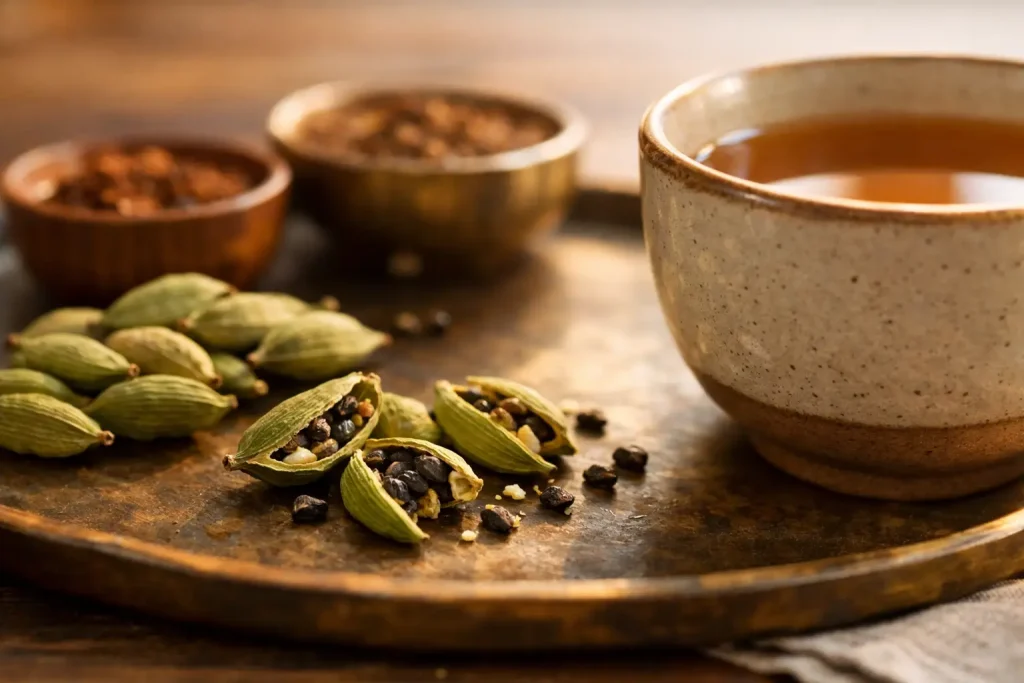
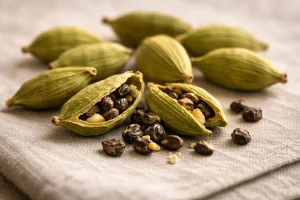 Cardamom is all about volatile aromatic oils. In a whole pod, those oils are protected from oxygen and humidity, which is why pods can taste vivid long after ground spice has turned sleepy. The pod itself isn’t the flavor hero, the small black seeds inside are. The pod acts like a natural jar, and your job is to open it just enough to let hot water or hot milk pull out the fragrance without turning everything bitter.
Tea makers often aim for “lift plus warmth.” Lift is that clean, almost minty brightness that makes a blend smell expensive. Warmth is the gentle sweetness that rounds black tea, creamy oat milk, or a jaggery-style sweetness. When you treat the pods gently, you get both. When you crush too hard, you push out woody notes from the pod husk and can make the cup feel dusty.
Production mindset: think in two controls. Control one is surface area (whole pod vs split vs lightly crushed). Control two is contact time (quick steep vs simmer vs steep-off-heat). Most “cardamom problems” come from pushing both controls too far at the same time.
Cardamom whole green: cracking and prepping pods without losing aroma
For consistent tea, crack pods the same way every time. Here are three methods, in order of delicacy:
Split method (cleanest cup): place pods on a board and press with the flat side of a knife until they pop open along a seam. You want a split, not a smash. This releases aroma while keeping most seeds contained.
Pinch-crack method (fastest for single cups): pinch one pod between thumb and forefinger until you feel it break. Drop it in immediately. This is great for a mug steep, but less consistent for big batches.
Mortar “tap” method (best for chai simmer): use a mortar and pestle with two gentle taps per pod. You’re bruising, not grinding. Stop while you still see pod pieces and intact seeds.
A simple, reliable workflow: weigh your pods, crack them in a dry bowl, then brew right away. If you crack and leave them exposed, aroma bleeds into the air before it reaches the cup.
If you’re building a spice-forward station, keep your pods in an airtight container and only set out what you’ll use in a shift. When you want a steady supply, reach for our organic cardamom whole green and pre-portion in small jars so you’re not opening the main container repeatedly.
A clean cardamom pod tea method for bright, clear flavor
This is the “tea-first” method. It highlights cardamom’s top notes and keeps the cup clear, not syrupy.
For 1 mug (300 ml):
2 pods (about 0.4–0.6 g), split
Water at 95–98°C (203–208°F)
Optional: black tea base steeped separately (see blending section)
Steps:
Warm the mug with hot water, dump it out. Warm ceramic holds aroma.
Add split pods and pour in 300 ml hot water.
Cover and steep 6–8 minutes. (Covering matters. Aroma is the first thing to escape.)
Strain if you want a clean cup, or drink as-is if you don’t mind a few seeds.
Batch version (1 liter):
6–8 pods (about 1.8–2.5 g), split
1 liter water at 95–98°C
Steep 8–10 minutes covered, then strain.
Taste cue: if it smells amazing but tastes thin, you’re under-extracting seeds. Crack a little more next time, or add 1–2 pods per liter. If it tastes woody, you crushed too hard or steeped too long.
Want a deeper base without “spice tea” vibes? Blend your spice infusion with a strong black tea concentrate instead of steeping everything together. That keeps the spice bright and lets the tea carry the body.
Chai with exact ratios in grams and teaspoons (pods plus clove)
Chai is where cardamom whole green shines, but it’s also where people overdo cloves and end up with a medicinal edge. Use clove as an accent, not the main event.
For 1 liter classic chai (about 3–4 servings):
Spice simmer (in water):
10 green cardamom pods (about 3.0 g), lightly tapped
1/4 teaspoon clove powder organic (about 0.6 g)
2 teaspoons ginger root cut (about 1.6 g)
1 tablespoon cinnamon chips (about 3.0 g)
Optional heat: 1/8 teaspoon black peppercorns whole (about 0.3 g), lightly cracked
600 g water (600 ml)
Tea + milk stage:
8 g black tea (or 6–8 tea bags equivalent), steeped after the simmer
400 g milk or oat milk (400 ml)
Sweetener to taste (add at the end)
Method:
Combine water and all spices. Bring to a gentle simmer, then hold at a low simmer 8 minutes. Keep it gentle: rolling boil throws aroma away.
Turn heat off, add black tea, cover, steep 4 minutes.
Strain into a pot, add milk, warm to 70–75°C (158–167°F). Do not boil once milk is in, it dulls the top notes.
Sweeten after heating. Taste, then adjust.
If you want a stronger spice profile, increase cardamom by 2 pods per liter before increasing clove. Cardamom gives perfume. Clove gives intensity and can dominate fast. For a deeper chai backbone, keep cinnamon steady and increase ginger a touch.
Production tip: if you make chai daily, build a “spice base” jar: pre-mix your dry spices by weight for 10 batches. Then you only measure one scoop per pot. Keep cardamom whole green separate until brew time so it stays loud.
Pairing and blend-building for tea makers (beyond “just chai”)
Cardamom is surprisingly flexible when you treat it like a top note. It works in black tea blends, creamy latte blends, and even herbal-leaning infusions that still feel “tea-like.”
A strong, clean base:
For a traditional anchor, try assam black tea. It gives malt and structure that lets cardamom float above it.
For a softer aromatic sweetness, add a touch of licorice root cut. Use it sparingly, it can sweeten a whole pot.
Simple blend template (dry blend for 10 servings):
20 g assam black tea
2.5 g split cardamom whole green pods (about 8–10 pods)
3 g cinnamon chips
1 g ginger root cut
Brew 2.5 g of blend per 250 ml water at 95°C for 4 minutes.
A pro move: keep cardamom as “inclusion” rather than grinding it into the blend. Whole inclusions look premium in jars and stay aromatic longer.
For warmth with a clean finish, add a pinch of fennel. It rounds spice edges and brings a bakery softness. In your next batch, experiment with fennel seed whole as a subtle bridge between cardamom and cinnamon.
Cold, iced, and lightly sparkling options (and why they sometimes go weird)
Cardamom can taste even more fragrant when chilled, but cold drinks highlight flaws fast. If your iced chai tastes sharp or thin, it’s usually because the tea base is too weak or the spice extraction was too aggressive.
Iced cardamom black tea (1 liter):
Make a hot spice infusion: 6 split pods in 300 ml water at 98°C, steep 10 minutes covered.
Brew black tea separately: 15 g black tea in 700 ml water at 95°C for 4 minutes.
Combine, sweeten lightly if desired, chill fast.
Sparkling version (good for cafes):
Build a concentrated chai base, then dilute with cold sparkling water over ice.
Keep the base low in sediment. Strain through fine mesh.
Add citrus only if you know the profile you want. Cardamom and citrus can be lovely, but too much acid makes the cup read “too tart.”
If you’re doing a fermented, kombucha-adjacent drink, spice can amplify carbonation and create foam, so keep spices in the steep stage, strain hard, and avoid leaving solids in the bottle. Aroma loss is common in carbonated drinks, so you may need a touch more cardamom, not more clove.
Troubleshooting (flat flavor, too tart, over-carbonation, sediment, aroma loss)
Flat flavor: Usually under-cracked pods or uncovered steeping. Split pods more cleanly and always cover the vessel. If you’re simmering, lower the heat and shorten the simmer, then steep off-heat.
Too tart: This shows up in chilled or sparkling versions, and in any drink with citrus or fermentation. Balance with a little sweetness, add milk for chai, or blend with a stronger tea base. Avoid “fixing” tartness by adding more clove, it makes the cup feel medicinal.
Over-carbonation: In sparkling or fermented drinks, spices can create nucleation points that release CO₂ fast. Strain more thoroughly and chill fully before opening. If bottling, leave more headspace and use less residual sugar. For service, build sparkle in the glass, not in the bottle.
Sediment: Comes from cracked seeds and powdery spices. Use split pods (not smashed) for clear tea. When using powders like clove, whisk into the hot water stage, then strain through fine mesh. Let the batch settle 5 minutes and decant, leaving the last cloudy layer behind.
Aroma loss: Heat and oxygen are the big thieves. Don’t boil hard and don’t leave lids off. Also don’t store cracked pods. For day service, keep a small airtight spice jar at the station and refill from your main container only once or twice.
Storage + Quality: keeping pods and spice blends at peak
Cardamom is sensitive to humidity. If your storage area is warm and damp, pods will go soft and the aroma will fade faster.
Best practice:
Airtight containers, ideally with minimal headspace.
Store in a cool, dark place, away from the stove.
Avoid refrigeration (condensation risk) unless you can guarantee dry, sealed containers.
Quality cues:
Fresh pods feel firm and slightly “springy.” Old pods feel papery and light.
When you split a pod, you should smell it immediately. If you have to search for the scent, it’s past its prime.
Seeds should be dark and aromatic, not dusty.
If you’re rotating stock for a small production line, label with open dates and aim to use your opened supply within a reasonable window for peak aroma. When you want consistent cups across batches, keep your core spice supply tight and rely on cardamom whole green as the signature note that signals freshness.
Safety (compliant, practical, no medical claims)
Cardamom and clove are traditional culinary spices used widely in food and beverage. In tea amounts, most people tolerate them well, but intensity matters. If someone is sensitive to strong spices, start with fewer pods and lighter clove. Avoid making medical promises about what these ingredients do. In beverage work, your focus is flavor, aroma, and craft.
Good practice for service and labeling: describe sensory notes and traditional use in culinary contexts (warming, aromatic, classic chai spice), and let the customer decide what fits their preferences. If someone is pregnant, nursing, on medication, or has specific health concerns, encourage them to consult a qualified professional before consuming concentrated herbal or spice preparations.
FAQ
How many pods should I use per cup?
For most palates, 2 split pods per 300 ml is a great starting point. Adjust based on how fresh your pods are.
Can I use ground cardamom instead of pods?
You can, but it’s harder to keep clean flavor and you’ll get more sediment. Pods stay brighter and more consistent.
Why does my chai taste harsh?
Usually too much clove or too long a boil. Keep the simmer gentle and use clove as a small accent.
Do I need to crush the seeds?
Light cracking is enough. Smash-grinding can pull woody notes from the husk and create a dusty finish.
How do I keep iced cardamom tea from tasting thin?
Build a stronger tea base and make the spice infusion separately, then combine and chill fast.
What’s the best way to store pods once opened?
Airtight, cool, and dry with minimal headspace. Don’t pre-crack for storage.
Can I pair cardamom with fennel or licorice?
Yes, both add roundness. Keep them subtle so cardamom stays the top note.
How do I keep the aroma strong without over-spicing?
Cover while steeping, avoid hard boiling, and use fresher pods. Technique beats brute force. For signature aroma, cardamom whole green is the cleanest lever to pull.
When you treat cardamom like a living aromatic (not just “spice”), your tea and chai get a lift that feels instantly intentional. Crack gently, cover your steeps, and build structure with a solid tea base. Use clove in measured amounts, strain for clarity, and store everything airtight and dry. With a few repeatable ratios and a production-minded workflow, you’ll get cups that smell as good as they taste, batch after batch, using cardamom whole green as your signature note.