How to Build a Chai Blend With Organic Whole Spices
An organic chai blend recipe built from whole spices delivers a depth of flavor that pre-ground powders simply cannot match. The essential oils locked inside intact seeds, pods, and bark release slowly during simmering, producing a cup that is aromatic, layered, and satisfying. This guide walks you through every step of assembling a balanced blend at home, from selecting the right spices to steeping a proper pot of masala chai. Whether you are making a small personal batch or scaling up for a cafe or product line, the ratios and techniques here are rooted in South Asian culinary tradition and adapted for North American kitchens.
You will learn which spices form the backbone of the blend, which ones add warmth or brightness, and how to adjust the formula to your own palate. All of the ingredients referenced below are available as certified organic, whole or cut-and-sifted botanicals from Hatton Naturals, so you can source everything from one reliable supplier and maintain consistent quality across every batch.
Why Whole Spices Produce a Superior Blend
Ground spices begin losing volatile aromatics the moment they are milled. Within weeks, the top notes that give chai its signature floral-pepper-citrus complexity have dissipated, leaving a flat, one-dimensional powder. Whole spices, by contrast, act as natural capsules. The cell walls of a cinnamon stick or cardamom pod keep essential oils intact until heat and liquid break them open during brewing. There is a practical advantage as well. Whole spices have a significantly longer shelf life, typically 12 to 24 months when stored correctly, compared to three to six months for ground versions. For anyone following an organic chai blend recipe with serious intentions, starting with intact botanicals is the single highest-impact decision you can make.
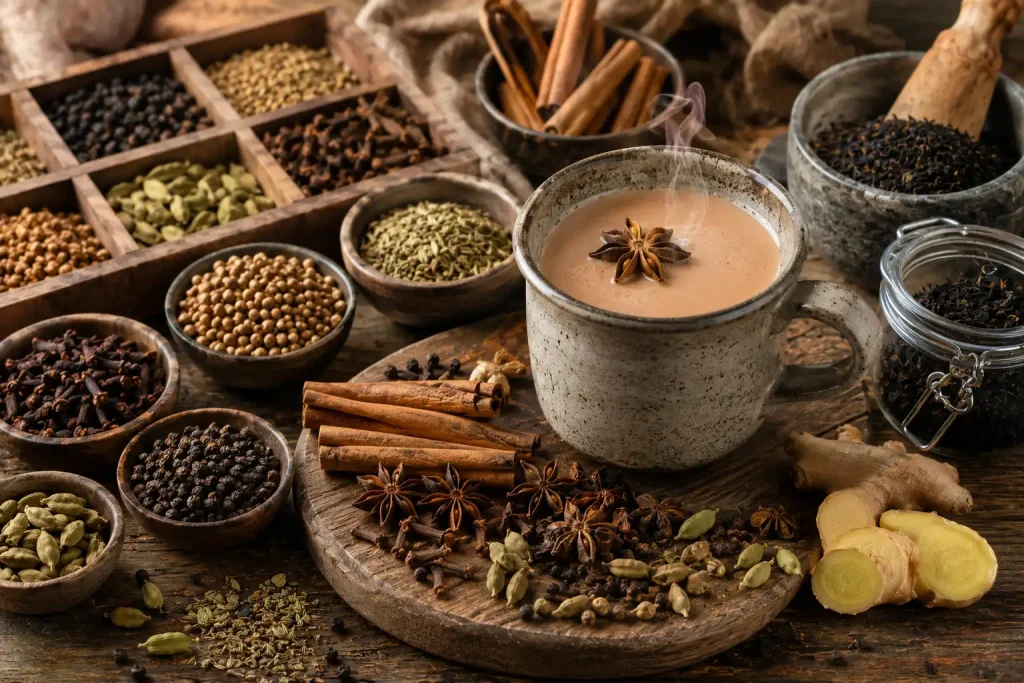
The Core Six Spices and Their Roles
- Cardamom. The most aromatic element. Green Cardamom (Cut and Sifted) provides floral, citrus-adjacent top notes that lift the entire blend.
- Cinnamon. Cinnamon Cassia Sticks bring warmth and mild sweetness that rounds out sharper spices.
- Cloves. Organic Cloves Whole contribute deep, resinous warmth. A small quantity goes a long way.
- Black pepper. Black Pepper TBC creates the characteristic gentle heat of masala chai.
- Ginger. Dried ginger root provides a clean, sharp bite. Browse options at the Hatton Naturals shop.
- Black tea. Organic Assam TGFOP is the classic base because its bold, malty character holds up against heavy spice.
Two Optional Spices That Elevate the Blend
Star anise adds mild licorice sweetness. Organic Star Anise Whole releases flavor gradually. Use one or two whole stars per 100 grams of blend.
Nutmeg brings subtle sweetness and depth. Organic Nutmeg (Cut and Sifted) integrates smoothly into a dry blend.
Organic Chai Blend Recipe: Ratios and Instructions
Dry blend formula (makes approximately 150 grams):
- 70 g Organic Assam TGFOP
- 30 g Green Cardamom (Cut and Sifted)
- 15 g Cinnamon Cassia Sticks, broken into small pieces
- 10 g Dried Ginger Root, coarsely chopped
- 8 g Black Pepper TBC
- 7 g Organic Cloves Whole
- 5 g Organic Nutmeg (Cut and Sifted)
- 5 g Organic Star Anise Whole, broken
Blending steps:
- Break cinnamon sticks into 1-2 cm segments.
- Lightly crush cardamom to crack the outer pod without fully grinding.
- Combine all spices with the Assam tea in a large mixing bowl. Stir gently for two to three minutes.
- Transfer to an airtight container. Label with the blend date. Rest 24-48 hours before first use.
To brew one cup: Combine 350 ml water, 150 ml whole milk (or plant-based alternative), and 2 heaped tablespoons of blend in a small saucepan. Bring to a gentle boil, reduce heat, and simmer for eight to ten minutes. Sweeten with honey, jaggery, or sugar. Strain and serve immediately.
How to Adjust the Blend for Different Preferences
For a more floral chai, increase cardamom by 5 grams and reduce black pepper. For spicier heat, add two to four grams of additional black pepper or increase dried ginger. If you’re looking for a sweeter character, lean into cinnamon and nutmeg at the expense of cloves and pepper. For a lighter-bodied blend suitable for iced chai, reduce the Assam by 10 grams. This is what makes following your own organic chai blend recipe so rewarding: total control over every dimension of the cup.
Storage and Quality
Store your finished blend in an airtight container, preferably glass or food-grade tin, in a cool, dark location. A well-sealed blend of whole and cut spices will maintain peak quality for 10 to 14 months at room temperature. For individual ingredient storage, the same rules apply. Buy in quantities you can use within six to 12 months. Never store spices in plastic bags left open.
Troubleshooting Common Chai Blending Problems
Chai tastes flat: Under-extraction. Simmer for at least eight minutes at a true gentle boil. Lightly crack whole spices before blending to increase surface area.
Blend is too spicy: Reduce black pepper and cloves first. Increasing the tea-to-spice ratio by adding 10-15 grams of Assam also dilutes intensity.
Cardamom flavor is absent: Cut-and-sifted cardamom needs moisture and heat. Switch to stovetop simmer method.
Chai is bitter: Over-simmering black tea. Strain promptly after eight to ten minutes.
Blend looks clumped: Moisture exposure. Discard and rebatch with fresh ingredients.
Safety
The spices in a standard chai blend are culinary ingredients with long histories of safe consumption. Cloves and nutmeg are potent and used in small quantities. Do not exceed the amounts listed. Individuals who are pregnant, nursing, or managing specific health conditions should consult a healthcare provider. Black pepper may interact with certain medications. None of the information in this post constitutes medical advice.
Frequently Asked Questions
What is the difference between masala chai and regular chai?
“Chai” simply means tea in Hindi. “Masala chai” refers to tea brewed with a spice mixture. In North American usage, “chai” typically implies the spiced, milk-based preparation.
Can I use Ceylon cinnamon instead of cassia?
Yes, though the flavor will differ. Ceylon is lighter and more delicate. Cassia is bolder and holds up better against strong Assam and assertive spices.
How much blend should I use per cup?
Two heaped tablespoons per 500 ml of liquid (water plus milk) is a reliable starting point.
Can this organic chai blend recipe be made caffeine-free?
Yes. Replace the Assam with rooibos or honeybush. The spice ratios remain the same.
Is this blend suitable for iced chai?
For iced chai, brew double strength, cool to room temperature, and pour over ice.
How long does a batch last?
Stored in a sealed container away from heat and light, the dry blend remains at peak quality for 10-14 months.
Can I grind the whole spices before blending?
You can, but grinding reduces shelf life significantly. Lightly crack or bruise instead.
Do the spices need to be toasted before blending?
Toasting is optional. Dry toast in a skillet for two to three minutes until fragrant. Cool completely before mixing with the Assam. Toasted spices have shorter shelf life.
Following a thoughtful organic chai blend recipe is ultimately about understanding each ingredient and giving yourself freedom to iterate. Start with these ratios, brew a test batch, take notes, and adjust. With whole organic spices from Hatton Naturals, every batch gives you the raw material to build something genuinely excellent.