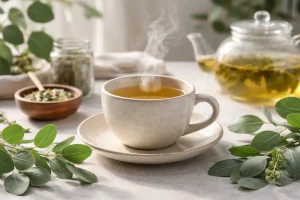
Organic Lemon Myrtle: Brew Citrus Without Bitterness
If you want a cup that smells vividly citrusy yet lands soft and clean on the palate, organic lemon myrtle is one of the most useful leaves to keep in a tea kitchen. Herbalists and tea makers value it for its lifted lemon fragrance, its naturally bright top note, and its ability to bring freshness without the sharp sourness you might get from fruit acids or peels. Brewed well, it gives a pale, luminous liquor with a rounded lemon character that feels elegant rather than aggressive.
That balance matters. Many aromatic herbs smell wonderful dry, then turn rough, woody, or flat in the cup. Lemon myrtle behaves differently when handled with care. A measured dose, the right water temperature, and a modest steep will pull out its sweet citrus perfume while avoiding harsh edges. It is especially useful in gentle morning blends, calming evening infusions, and light sparkling tea bases where clean aroma is more important than weight or tannin. In a production-minded tea room, it also earns its place because a little goes far, it blends easily with flowers and soft roots, and it can brighten a formula without making it taste crowded.
Why organic lemon myrtle works so well in tea blends
The beauty of lemon myrtle is not just that it tastes lemony. It gives a high, fresh citrus note without turning a blend sour, sticky, or candy-like. That makes it helpful when you want lift and clarity instead of obvious fruitiness. In sensory terms, think of the aroma as clean lemon zest in the air, while the flavor in the cup is softer, greener, and less sharp.
For tea makers, organic lemon myrtle is especially practical because it acts like a bridge ingredient. It can connect floral notes, soften minty notes, and add brightness to creamy or honeyed herbs without dominating them. It is often at its best when supported rather than pushed too hard.
Try organic lemon myrtle (go to organic lemon myrtle Cut & Sifted product page) when you want a citrus lead that stays elegant in a pale herbal blend.
How to brew organic lemon myrtle without bitterness
The biggest mistake with lemon myrtle is treating it like a coarse root or a strong black tea. It does not need boiling water and a long extraction. Too much heat or time can flatten the bright top notes and pull more dry, woody character into the cup.
A reliable starting point for a single mug is:
1.5 to 2 grams organic lemon myrtle
About 1 to 1 1/2 teaspoons, depending on cut size
240 milliliters water
85 to 90°C water (185 to 194°F)
4 to 6 minutes steep time
For a small teapot or tasting set:
4 grams leaf
About 3 teaspoons
500 milliliters water
88°C water
5 minutes steep time
If you want more aroma, increase leaf slightly before increasing steep time. That is usually the cleaner move. An extra half gram will often give you more fragrance without pulling extra dryness. If you need a softer, rounder cup, lower the temperature a little rather than shortening the steep too aggressively.
When brewing for service, pre-warm the pot or server, add the leaf, pour in the water, and cover immediately. Aroma escapes fast. In small-batch production, keeping vessels covered is one of the easiest ways to preserve the first bright notes.
For a soothing floral version, try chamomile tea whole flowers beside lemon myrtle for a soft apple-like body under the citrus.
Best ratios for hot tea, iced tea, and sparkling tea bases
Lemon myrtle is flexible, but the ratio should follow the final drink style.
Hot tea
For a clear daily infusion, stay near 1.5 to 2 grams per 240 milliliters. This gives a refined, aromatic cup with enough flavor for repeated drinking. If the leaf is very fine or broken, lean lower.
Iced tea concentrate
For iced tea, brew slightly stronger because dilution changes the aromatic perception.
Use:
8 grams leaf
About 6 teaspoons
750 milliliters water
88 to 90°C
6 minutes steep time
Strain, cool, then pour over plenty of ice. If serving unsweetened, a small amount of chamomile or licorice can help round the finish.
Sparkling tea base
For a still infusion that will later meet sparkling water:
6 grams leaf
About 4 1/2 teaspoons
500 milliliters water
85 to 88°C
5 minutes steep time
Chill thoroughly before topping with carbonated water. This keeps the aroma lively and the body light. When the goal is a bright tea spritz, organic lemon myrtle performs best when the base is fragrant but not dense.
For extra lift in iced service, try organic spearmint in small amounts for a cool, sweet-green finish.
Pairing lemon myrtle with flowers, leaves, and roots
 Lemon myrtle plays well with ingredients that are gentle, aromatic, and not too heavy. The most natural partners usually fall into three groups: soft flowers, refreshing leaves, and sweet or warming roots.
Chamomile is one of the best pairings because it brings body and a calm orchard note. Lavender works when used lightly, adding a perfumed floral edge that suits evening blends. Mint family herbs bring freshness and length to the finish. Sweet roots can fill out the mid-palate if the blend feels too thin.
A simple floral-citrus blend for a teapot:
3 grams lemon myrtle
2 grams chamomile
0.25 gram lavender
500 milliliters water at 88°C
Steep 5 minutes
A bright mint-citrus blend:
3 grams lemon myrtle
1 gram peppermint
1 gram spearmint
500 milliliters water at 88°C
Steep 4 to 5 minutes
A rounder evening cup:
3 grams lemon myrtle
1.5 grams chamomile
0.5 gram licorice root
500 milliliters water at 90°C
Steep 5 to 6 minutes
Try:
- organic peppermint leaf when you want a colder, cleaner finish.
- organic lavender flowers when you want a gentle perfumed accent.
- organic licorice root when a blend needs sweetness and body without adding sugar.
Building a balanced morning blend
A good morning herbal tea should smell vivid and feel clean, but it should not shock the palate. Lemon myrtle is excellent here because it creates the impression of freshness and clarity without demanding acidity. To keep the cup from turning thin, pair it with a soft backbone and one supporting accent.
A balanced morning formula might look like this:
4 parts lemon myrtle
3 parts chamomile
2 parts tulsi
1 part ginger root
The chamomile provides roundness. Tulsi contributes a gentle aromatic depth that keeps the cup from feeling one-dimensional. Ginger, used modestly, adds warmth under the citrus rather than obvious spice.
This kind of blend is also service-friendly. It smells inviting as soon as water hits the leaf, which matters in retail settings, tea flights, and sample stations. The first impression is bright, but the cup stays calm.
Try:
- organic tulsi leaves for added herbal depth in a morning blend.
- organic ginger root when you want a warmer finish beneath the citrus.
Troubleshooting
Even a simple herbal infusion can go off balance. Here is how to correct the most common issues.
Flat flavor
Usually this means too little leaf, stale material, or water that was not hot enough. First increase the dose slightly. If the dry leaf smells faint before brewing, the issue may be age or poor storage.
Too tart
Lemon myrtle itself is more aromatic than sour, so excessive tartness often comes from another ingredient in the blend or from over-concentration in iced service. Dilute a little, or add chamomile or licorice to round the edges.
Over-carbonation
If you use a tea base in sparkling service, excessive fizz can mute aroma and make the finish feel sharp. Lower the proportion of carbonated water or use a slightly stronger still tea base so the herbal note remains present.
Sediment
Fine cut herbs and flowers naturally shed particles. Use a finer filter, strain twice, or allow the liquor to settle before bottling. Sediment is not always a flaw, but too much can dull visual clarity.
Aroma loss
This is common when tea is left uncovered during steeping or cooled too slowly in a large vessel. Cover the brewer, strain on time, and chill quickly for iced batches. In long service windows, aromatic herbs fade first, so brew smaller batches more often.
When organic lemon myrtle seems disappointing in the cup, the problem is usually extraction or storage, not the leaf itself.
Storage + Quality
Good storage is simple but non-negotiable. Keep lemon myrtle in an airtight container, away from direct light, heat, and humidity. Aromatic leaf loses charm quickly when exposed to repeated air exchange, especially in a warm prep area.
Look for these quality cues:
Dry leaf should smell bright, lemony, and clean
Color should remain lively, not dull brown or gray
The brewed liquor should be pale and clear, not muddy
Aroma should rise quickly once hot water hits the leaf
If the leaf smells dusty, weak, or vaguely woody before brewing, expect a flatter cup. In production settings, divide larger stock into smaller working jars so the main reserve stays sealed. This matters because organic lemon myrtle depends heavily on aroma, and aroma is the first thing poor handling steals.
Safety
Lemon myrtle is best discussed as a culinary and traditional herbal ingredient. Keep descriptions centered on flavor, aroma, brewing method, and blend behavior. Avoid disease claims or therapeutic promises. Herbalists often use fragrant leaves like these to create calming, refreshing, or comforting tea experiences, but those impressions should stay general and sensory.
For commercial copy and product education, it is safer to say that lemon myrtle brings bright citrus aroma, a clean finish, and versatility in tea blending. That language is accurate, useful, and compliant. If you are serving the blend to others, label ingredients clearly, keep tools clean, and separate strongly aromatic herbs from delicate flowers during storage so scents do not drift.
A simple conclusion for tea makers
When handled with a light hand, organic lemon myrtle gives something many herbs promise but few deliver: real citrus character without bitterness, heaviness, or sharp acidity. It can carry a simple single-herb cup, brighten a floral blend, or anchor a chilled tea for warm weather service. Start with moderate leaf, keep the water below a hard boil, cover the vessel, and strain on time. From there, small adjustments in partner herbs will let you move the blend toward soft, minty, floral, or gently spiced directions without losing that clean lemon lift.
FAQ
What does organic lemon myrtle taste like?
It tastes bright and citrusy, with a clean lemon-like aroma and a softer flavor than lemon juice or peel.
Can I cold brew organic lemon myrtle?
Yes. Use about 4 grams per 500 milliliters cold water and steep in the refrigerator for 8 to 12 hours for a soft, fragrant result.
Why does my lemon myrtle tea turn bitter?
Usually from water that is too hot, too much leaf, or a steep that runs too long.
What pairs best with lemon myrtle in tea?
Chamomile, peppermint, spearmint, tulsi, lavender, and a little licorice root are all useful partners.
Is lemon myrtle better hot or iced?
Both work well. Hot service highlights aroma, while iced service emphasizes its clean, refreshing character.
How much should I use per cup?
A dependable range is 1.5 to 2 grams, or about 1 to 1 1/2 teaspoons, per 240 milliliters water.
How should I store it?
Keep it airtight, dry, and away from heat and light. Aroma is the best freshness marker.
Can I blend it with stronger herbs?
Yes, but use care. Lemon myrtle shines with gentle partners and can disappear behind very heavy spices or roasted ingredients.