Elderflower Herb: How to Brew a Floral Cup That Tastes Clean
Elderflower herb is one of those quiet-power ingredients that can taste like fresh air when you brew it right, or like “dusty perfume” when you push it too hard. This guide is about keeping elderflower herb clean, pale, and lifted, with the kind of repeatable technique a kombucha maker can actually scale. You’ll learn a simple base infusion, a concentrate method for 2F that behaves batch after batch, and a few blend moves that make elderflower read as “springy and bright” instead of “soapy and thick.”
The key with elderflower is respect for delicacy. Think lower temps, shorter steeps, accurate weighing, and airtight storage. Elderflower herb rewards restraint, and it also rewards structure: pre-infusions, standardized dosing, and notes that track grams, steep time, and carbonation behavior. If you like florals but hate the way they can get cloying, this is your lane.
What elderflower tastes like when it’s brewed clean
Elderflower herb has a soft honeyed floral note, a light pear-like sweetness, and a faint green edge that can feel refreshing when it stays in balance. “Clean” elderflower reads as airy, not heavy. It should sit above the tongue, not coat it.
The off-flavors usually come from one of three things: water that’s too hot, steep time that’s too long, or herb that’s stale or poorly stored. Over-extraction can pull a dull, pollen-like bitterness that turns perfumey fast. Under-extraction can taste like plain warm water with a hint of flowers. The sweet spot is a short, gentle infusion with accurate dosing.
If you’re blending, elderflower is best treated like top-note architecture. It’s the aroma that greets you, while another ingredient carries the body.
Choosing elderflower herb that will actually perform
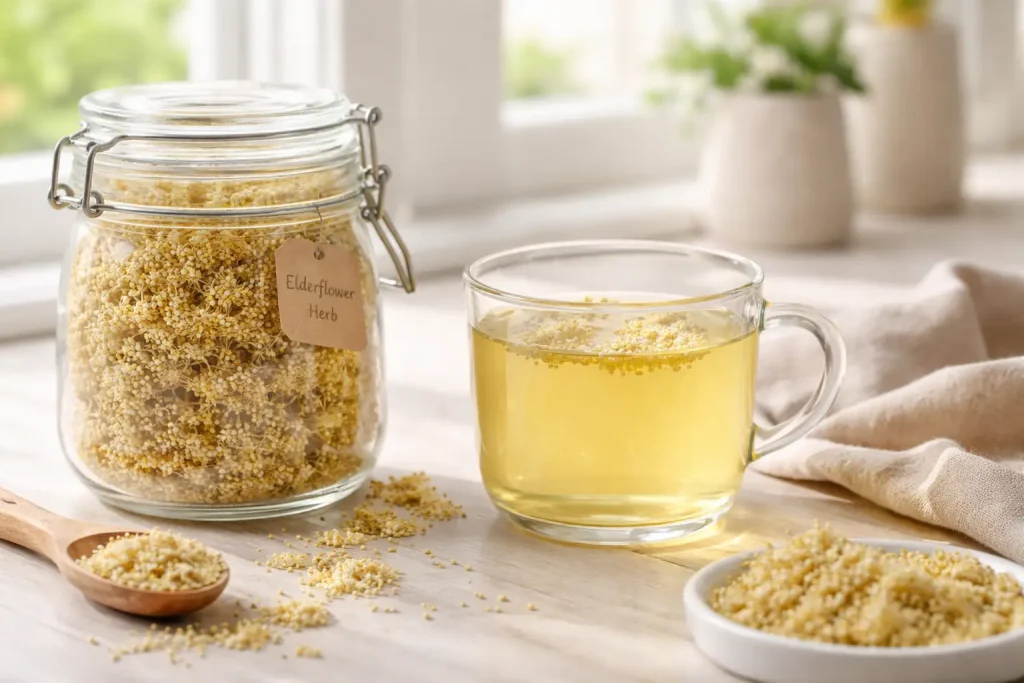
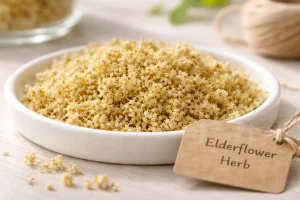
For consistent results, your elderflower herb should look pale and intact, not browned, crushed into dust, or overly stemmy. Color matters here more than with many roots or barks: browning often signals oxidation and aroma loss.
Smell the jar. You want a bright, sweet floral scent that feels “alive.” If it smells flat, hay-like, or musty, you’ll get a muted cup no matter how perfect your technique is.
Production-minded tip: keep a small reference sample. Every new lot of elderflower herb gets compared against the reference for aroma intensity and color. If the new lot is stronger, you adjust grams down slightly. If it’s weaker, you either increase dose or use it in blends where the floral note is supported.
Try building a floral toolkit with our organic elderflower herb as your top note base.
Pair it with organic dried rose petals for a rounder, more romantic floral profile.
Water, temperature, and steep time (the “no-perfume” rules)
If you want elderflower herb to taste clean, stop treating it like black tea. High heat is the fastest way to turn it cloying.
Use these ranges as a starting point:
Water temperature: 80–88°C (176–190°F)
Steep time: 4–7 minutes
Covered steep: yes (trap aroma)
Strain promptly: yes (do not “park” it hot)
Water quality matters. Chlorine and heavy mineral water can blunt florals and add a dull edge. If your water tastes harsh on its own, your elderflower will taste harsher too.
For kombucha production, think about temperature control like a flavor dial. If you standardize 85°C and 6 minutes, you can repeat the same aromatic lift every run, then tune dosage rather than guessing.
If you want a bright lift without sharpness, try a small amount of organic lemon myrtle in blends to sharpen the top note without pushing acidity.
Base brew ratios for a clean cup (grams + teaspoons)
These ratios are designed to keep elderflower herb readable without getting loud. Use a scale whenever possible. Teaspoons vary too much with flower density.
Single-herb infusion (clean, delicate):
1.0–1.5 g elderflower herb per 250 ml (8.5 oz) water
About 1–1.5 tsp per 250 ml (loosely filled, not packed)
85°C (185°F), 5–6 minutes, covered
Stronger “blend-ready” infusion (still clean):
2.0 g elderflower herb per 250 ml water
About 2 tsp per 250 ml
85°C (185°F), 6 minutes, covered, strain promptly
Batch for multiple cups (1 liter):
4–6 g elderflower herb per 1 liter
85°C (185°F), 5–6 minutes, covered
The goal is to make elderflower herb feel like a clear, pale tea that smells more intense than it tastes. Aroma leads. Flavor follows lightly.
For a classic floral bridge, try adding organic dried rose petals at 0.3–0.6 g per liter. It expands the floral “body” without turning perfumey when kept low.
Elderflower + rose: a clean floral blend that doesn’t get soapy
 This is the pairing that reads like “fresh bouquet” instead of “grandma potpourri,” if you keep the rose dose disciplined.
Clean floral blend (1 liter):
4.5 g elderflower herb
0.5 g organic dried rose petals
1.0–1.5 g citrus peel (optional, for lift)
Brew at 85°C (185°F) for 5–6 minutes, covered. Strain promptly.
Why this works: elderflower herb provides the airy top note. Rose adds velvet and length, but at small grams so it doesn’t dominate. A tiny citrus peel dose brightens perception so the blend tastes “cleaner” even at the same sweetness level.
Try adding orange peel powder for a gentle citrus halo in tea blends.
For a brighter snap in kombucha, try dried lemon peel to keep the finish crisp.
How to build an elderflower concentrate for repeatable kombucha 2F
For production, the best way to get consistent elderflower herb flavor in 2F is a tea concentrate. It gives you clean dosing, predictable extraction, and fewer floating botanicals to trigger gushers.
Concentrate method (recommended for 2F):
Heat water to 85°C (185°F).
Use 10 g elderflower herb per 500 ml water.
Steep 6 minutes, covered.
Strain immediately.
Cool fast (ice bath or shallow pan) to preserve aroma.
Store cold, sealed, and use within 48 hours for best top notes.
Optional supporting notes for concentrate (keep light):
Add 1 g organic dried rose petals per 500 ml for a slightly rounder floral profile.
Add 1–2 g citrus peel per 500 ml for lift.
Label your concentrate with: herb lot, grams, water volume, steep time, temp, date/time made. If you do nothing else, do that. It turns “art” into “repeatable craft.”
Try our organic elderflower herb as your primary floral top note in 2F concentrates.
If you want a softer floral middle, try organic dried rose petals in tiny grams.
Kombucha 2F: strict, repeatable method (two options)
This section is designed for consistency. Elderflower can vanish if you under-dose, and it can read perfumey if you over-dose. Keep it measured.
Option A: Tea concentrate dosing (recommended)
Per 16 oz / 473 ml bottle:
Elderflower concentrate dose: 15–35 ml per bottle
(Start at 20 ml for a “clean floral” profile)If concentrate includes rose: start lower, 15–25 ml
Process:
Prepare bottles, funnel, and scale.
Add measured concentrate to each bottle first.
Add finished kombucha, leaving 1.5–2.5 cm headspace.
Cap tightly.
2F at 20–24°C (68–75°F) for 24–72 hours.
Burp only if you’ve learned your system and you need it. Otherwise, standardize time and temp instead.
Refrigerate 12–24 hours before opening to reduce foaming and lock aroma.
Option B: Direct botanicals in bottle (optional)
Per 16 oz / 473 ml bottle:
0.2–0.5 g elderflower herb (about 1/4–1/2 tsp, loose)
Optional: 0.03–0.08 g organic dried rose petals (a pinch)
Use a fine strainer when pouring to serve
Direct-botanical tips:
Use whole blossoms if possible, not powdery fragments.
Keep contact time short by chilling early if aroma is perfect.
Expect more sediment and variable carbonation.
Consistency tips for both options:
Weigh everything. Even “tiny” additions matter with florals.
Use the same bottle type and fill level.
Keep batch notes: dose, 2F hours, room temp, carbonation outcome, aroma strength.
If your elderflower herb lot changes, run a 3-bottle test at 15 ml, 25 ml, 35 ml concentrate dosing before you commit the whole batch.
Try building a bright top note with organic elderflower herb concentrate in your standard 2F workflow.
For a cleaner citrus finish, try dried lemon peel in micro-doses in the concentrate.
Flavor architecture: keeping elderflower “lifted” instead of cloying
Elderflower herb behaves best when it has contrast. If everything is floral, the cup can feel thick. You want one of these supporting structures:
Citrus lift (perceived cleanliness)
A touch of citrus peel makes florals feel fresher. It also helps the aroma read as “bright” even at low sugar.Gentle tart backbone (for kombucha)
A small tart note gives florals a place to sit. Not sour candy. Just enough to keep the finish crisp.Soft spice shadow (optional)
A whisper of warm spice can make elderflower feel more “tea-like” and less “perfume,” but keep it minimal.
Practical blend moves:
Elderflower + rose + lemon peel: clean, bouquet-like, bright finish.
Elderflower + hibiscus (tiny): floral with a crisp edge (go very light to avoid overpowering).
Elderflower + ginger (micro): adds structure without reading spicy.
Try adding hibiscus flowers in very small amounts when you need a tart backbone for 2F.
For subtle warmth, try ginger root pieces as a background note in concentrates.
Troubleshooting: flat flavor, tartness, over-carbonation, sediment, aroma loss
Flat elderflower flavor
Most common cause: under-dosing or weak/stale elderflower herb. Increase concentrate dose by 5–10 ml per bottle or increase steep grams slightly.
Check steep temp: if too low and too short, you may not extract enough aroma.
Fix: standardize 85°C and 6 minutes, and use concentrate within 48 hours.
Too tart (floral disappears behind acidity)
Kombucha acidity can mask florals. Increase elderflower concentrate dose modestly, and consider adding a small citrus peel note to lift perception.
Chill longer before tasting. Cold reduces perceived sharpness and lets aroma show.
Over-carbonation or gushers
Direct botanicals can create nucleation points and accelerate carbonation. Switch to Option A concentrate dosing.
Standardize residual sugar. If you add juice, measure it. If you add sugar, weigh it.
Reduce 2F time or lower temp.
Sediment
Normal with flowers, especially direct-bottle method. Use a finer strain, or switch to concentrate.
Avoid powdery elderflower herb fragments when possible.
Aroma loss (it smelled amazing, then vanished)
Heat and oxygen are the enemies. Keep steep covered, cool quickly, and store concentrate sealed and cold.
Old stock loses top notes. Refresh inventory and store airtight.
If you want aroma that holds longer, try supporting elderflower herb with organic rose petals in tiny grams for mid-palate staying power.
For a cleaner “snap,” try orange peel powder as a citrus halo that doesn’t add much bitterness.
Storage + quality: keeping elderflower fresh in a working pantry
Elderflower herb is aroma-first, so storage is not optional. Treat it like you treat hops: protect the volatile compounds.
Best practices:
Airtight container (tight lid, minimal headspace)
Cool, dark storage (cabinet, not above warm equipment)
Low humidity environment (flowers can pick up moisture quickly)
Keep scoops dry and avoid steam exposure
Quality cues:
Color: pale, creamy-white blossoms are ideal. Browning suggests oxidation.
Scent: should be bright and sweet. Flat, hay-like aroma means weaker performance.
Texture: intact blossoms are easier to dose consistently than dusty fragments.
Production note: if you’re scaling, consider portioning elderflower herb into smaller working jars so the main stock is opened less often.
Try stocking organic elderflower herb in an airtight glass jar and only keeping a one-week working supply on the bench.
For other aroma-forward florals, try organic dried rose petals with the same storage discipline.
Safety and compliant herbal use language
This article is about flavor, brewing craft, and beverage making. Elderflower herb is traditionally used by herbalists in many contexts, but here we’re focusing on taste and process. Avoid framing any beverage as treatment for a condition. If you’re selling products, keep your language compliant: talk about aroma, tradition, and sensory experience.
General safety notes:
Use food-grade botanicals from a supplier that handles herbs properly.
If someone is pregnant, nursing, has allergies, or is under medical care, they should consult a qualified professional before using herbal products.
Start with small servings when trying new botanicals, especially florals.
Keep your messaging clean: “traditionally used,” “herbalists often use,” and “may support general wellness” are safer than claims.
Try focusing your product description on the clean floral cup you can make with our organic elderflower herb, and the blend elegance of organic dried rose petals.
Conclusion: clean floral is a technique, not a vibe
Elderflower herb tastes clean when you brew it gently, dose it accurately, and protect its aroma like it’s precious, because it is. Keep your water around 85°C, keep your steep short, cover the vessel, and strain promptly. For kombucha, elderflower herb shines most when you standardize a concentrate and dose it per bottle, then track your time and temperature like any other production variable. Florals do not forgive improvisation, but they absolutely reward good process.
If you want a reliable signature floral, start with elderflower herb, support it with organic dried rose petals in tiny grams, and use citrus peel as your “brightness lever.” Make notes, run small tests when lots change, and you’ll get that pale, lifted cup that tastes like it smells.
FAQ
What is the best water temperature for elderflower herb?
80–88°C (176–190°F) keeps elderflower herb bright and clean. Boiling water tends to push it perfumey.
How long should I steep elderflower herb for a clean cup?
Start with 5–6 minutes, covered, then strain promptly. Longer steeps increase dull, pollen-like notes.
Can I blend elderflower with rose without it tasting soapy?
Yes. Keep rose extremely low (about 0.5 g per liter) so elderflower stays airy and the blend reads clean.
How do I use elderflower herb in kombucha 2F consistently?
Use a standardized concentrate and dose 15–35 ml per 16 oz / 473 ml bottle. Record dose, time, and temperature.
Should I put elderflower herb directly into the bottle for 2F?
You can, but it’s less consistent and can increase sediment and carbonation variability. Concentrate dosing is more repeatable.
Why did my elderflower aroma disappear after bottling?
Heat, oxygen, and time. Cover the steep, cool concentrate fast, store sealed and cold, and use within 48 hours for best top notes.
How do I store elderflower herb to keep it fresh?
Airtight, cool, dark, low humidity. If it browns or smells flat, it will brew weaker.
Does elderflower herb need to be sweetened to taste good?
Not necessarily. It often tastes clean at low sweetness, especially with a tiny citrus peel note for lift.