Herbal Infusion Overnight: Deep Brewing
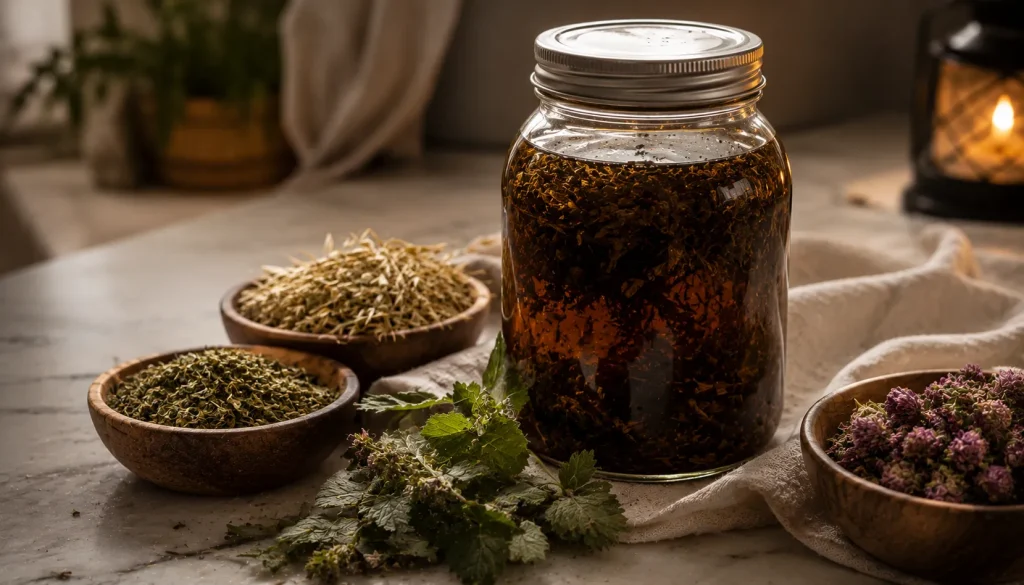
Herbal infusion overnight, also called a long infusion or nourishing herbal infusion, is a simple brewing technique that maximizes what you extract from dried herbs. Unlike a standard cup of tea steeped for a few minutes, an herbal infusion overnight rests for eight to twelve hours in room-temperature or slightly warm water. The result is a darker, more flavorful, and more concentrated liquid than a brief steep can produce.
Herbalists and traditional plant practitioners have used this method for a long time. They recognized that longer contact time between water and plant material draws out a broader range of constituents — particularly those that are slow to dissolve. For this reason, the overnight method is especially popular for nutrient-dense herbs like nettles, oatstraw, and rose hips.
Why Choose Herbal Infusion Overnight Over Regular Steeping?
A standard herbal tea steep lasts 5-15 minutes. That is enough time to extract volatile aromatic compounds and many easily soluble constituents. However, certain plant compounds — including many minerals and some polysaccharides — require extended contact time to fully release into the water.
An herbal infusion overnight gives the water eight or more hours to draw out these slower-to-extract elements. The resulting liquid is noticeably darker and more robust than a brief steep. Moreover, the cold or room-temperature water used in many overnight infusions preserves delicate constituents that might degrade under boiling temperatures.
Traditional herbalists like Susun Weed popularized this method, referring to these long infusions as “nourishing herbal infusions.” The concept emphasizes using generously measured herbs — typically one ounce of dried herb per quart of water — rather than the light quantities used in standard tea bags.
Best Herbs for an Herbal Infusion Overnight
Not all herbs are equally suited to overnight infusions. The method works best with leaf and root material that can withstand prolonged contact without becoming overly bitter or astringent. These four herbs are among the most popular choices:
Nettle leaf is perhaps the most classic choice for a nourishing overnight infusion. In folk herbalism, nettle has long been valued as a mineral-rich herb. Dried nettle leaf cut and sifted infuses beautifully overnight, producing a deep green liquid with an earthy, slightly grassy flavor.
Rose hips contribute a tart, fruity profile to any overnight blend. They are rich in plant compounds and pair naturally with nettle. Rose hips cut and sifted soften significantly during a long infusion and release a pleasant, ruby-colored liquid.
Oatstraw adds a mild, slightly sweet, hay-like flavor that balances the earthiness of nettle and the tartness of rose hips. Herbalists value oatstraw as a calming, nourishing herb. Organic oatstraw cut and sifted is an excellent addition to an overnight blend for those who enjoy a more rounded, mellow flavor.
Peppermint is a bright, refreshing counterpoint to heavier herbs. However, peppermint is aromatic and volatile — it can lose its characteristic flavor in very long infusions. For this reason, add peppermint in moderation or use it in cold overnight infusions rather than warm ones. Peppermint cut and sifted adds a pleasant cooling note that makes the blend more refreshing when served cold the following morning.
Ratios and Quantities
The traditional nourishing herbal infusion uses one ounce (approximately 28 grams) of dried herb per quart (approximately one liter) of water. This is a much larger quantity than standard tea brewing. It produces a potent, concentrated liquid.
For a lighter overnight infusion, use one to two tablespoons per cup of water. This produces a more tea-like drink suitable for daily use. Adjust ratios based on the herb — potent herbs like peppermint need less, while mild, bulky herbs like nettle and oatstraw can handle the full traditional ratio.
How to Make an Herbal Infusion Overnight
The method is straightforward. First, place your measured herbs in a quart jar or a heat-safe container with a lid. If using hot water, bring it to just below boiling (around 190°F). Overly boiling water can degrade some plant constituents and may make certain herbs more bitter. Pour the water over the herbs and stir briefly to ensure even saturation.
Next, place a lid or plate over the jar to trap volatile aromatic compounds. Allow the infusion to sit at room temperature for eight to twelve hours. Morning preparations the night before work well — the infusion is ready when you wake up.
After the infusion period, strain the liquid through a fine mesh strainer or cheesecloth. Press the spent herbs gently to extract all remaining liquid. Store any unused infusion in the refrigerator. Consume within 48 hours for optimal freshness.
Cold vs. Warm Overnight Infusions
Both cold and warm overnight methods yield excellent results, though with slightly different profiles. A warm start — using near-boiling water that cools to room temperature overnight — extracts more robustly and produces a deeper, more concentrated liquid. A cold start — using room-temperature or even refrigerated water — extracts more slowly and gently, often producing a lighter, sweeter result.
Cold overnight infusions work especially well in summer and for herbs like peppermint and hibiscus. Warm overnight infusions are better suited for dense plant material like roots, bark, or seeds that benefit from the initial hot water to open up the plant cells.
Blending Your Own Overnight Mix
A simple starting blend combines equal parts nettle leaf, oatstraw, and rose hips with a smaller amount of peppermint. This produces a balanced infusion that is earthy, slightly tart, and refreshed by mint. Adjust the ratios to taste over time.
As your experience grows, you can introduce other herbs — red clover, linden flower, chamomile, or raspberry leaf — to customize your blend. Additionally, dried fruit like hibiscus or elderberries can be added to increase tartness and color.
Safety Disclaimer
The herbs discussed in this post — nettle, rose hips, oatstraw, and peppermint — are widely used culinary and traditional herbs. In folk herbalism, they have long been regarded as gentle, nourishing plants appropriate for regular use. However, anyone with known plant allergies, those who are pregnant or nursing, or those taking prescription medications should consult a qualified healthcare professional before beginning a regular herbal infusion practice. This post is for informational and culinary purposes only and does not constitute medical advice.
Frequently Asked Questions
How long is too long for an herbal infusion overnight?
Eight to twelve hours is the ideal range for most herbs. Going beyond sixteen hours risks over-extraction, which can produce a bitter or astringent flavor. Some very mild herbs like oatstraw can handle up to twenty-four hours, but most blends are best consumed after eight to twelve hours.
Do I need to refrigerate an herbal infusion overnight?
If your kitchen is warm, it is safer to refrigerate the infusion while it steeps to prevent bacterial growth. In cooler temperatures, room-temperature steeping is generally fine. Always refrigerate any leftover infusion and consume within 48 hours.
Can I reheat an overnight herbal infusion?
Yes. Gently warming the strained infusion to just below simmering is fine. Avoid boiling it, as this may diminish the flavor and degrade some volatile aromatic compounds, particularly in mint-containing blends.
How much of an overnight infusion should I drink?
One to four cups per day is a common range for nourishing herbal infusions. Start with one cup and increase gradually to assess how your body responds. Because these infusions are more concentrated than standard tea, moderation is sensible when beginning.
Explore our full selection of organic dried herbs and botanicals to build your ideal overnight infusion blend.