Mugwort Tea Benefits: From Digestion to Dream Support
Mugwort tea benefits have been recognized by herbalists and traditional healers for thousands of years across multiple cultures and continents. From ancient Roman soldiers who placed mugwort in their sandals to ease tired feet, to Chinese practitioners who have used it in moxibustion therapy for millennia, this unassuming herb has earned a remarkably prominent place in the history of botanical medicine. Today, mugwort continues to attract attention for its traditional associations with digestive comfort, vivid dreaming, and general relaxation.
Known botanically as Artemisia vulgaris, mugwort belongs to the same plant family as wormwood, tarragon, and sagebrush. Despite its somewhat humble appearance as a common roadside plant, mugwort carries a depth of traditional use that few herbs can match. Whether you are a seasoned herbalist or simply curious about expanding your tea collection, understanding the traditional benefits and proper use of mugwort tea is well worth your time.
A Brief History of Mugwort
Mugwort holds a special place in the herbal traditions of nearly every continent. In European folk medicine, it was considered one of the nine sacred herbs listed in the Anglo-Saxon “Nine Herbs Charm,” a 10th-century medical text. People believed the plant offered protection during travel, and it was commonly placed in shoes or hung in doorways.
In Traditional Chinese Medicine (TCM), mugwort has been a cornerstone herb for over 3,000 years. Practitioners dry and process the leaves into “moxa,” which they burn near the skin during moxibustion treatments — a therapy still widely practiced today. Furthermore, Native American communities have historically used various species of artemisia for smudging ceremonies and digestive remedies.
The name “mugwort” likely derives from the Old English “muggia wort,” meaning “midge plant,” possibly because the herb was traditionally used to repel insects. Others suggest the name comes from “mug,” referring to its historical use in flavoring beer before hops became the standard bittering agent.
Traditional Digestive Support
Among the most well-documented traditional uses of mugwort is its role in supporting healthy digestion. Herbalists have long categorized mugwort as a “bitter herb,” and bitters have played a fundamental role in digestive wellness across virtually every herbal tradition.
When you sip mugwort tea before or after a meal, the bitter compounds stimulate the taste receptors on your tongue. In turn, this triggers a cascade of digestive responses — your mouth produces more saliva, your stomach increases acid secretion, and your liver and gallbladder release bile. All of these responses work together to help your body break down food more efficiently.
Traditional herbalists have specifically recommended mugwort tea for:
- Occasional bloating and gas: The carminative properties traditionally attributed to mugwort may help ease uncomfortable gas and bloating after meals.
- Sluggish digestion: As a bitter tonic, mugwort has been used to “wake up” a slow digestive system, particularly after heavy or rich meals.
- Appetite support: In European folk medicine, a small cup of mugwort tea before meals was traditionally used to stimulate appetite in those who needed it.
- General digestive discomfort: Many herbalists include mugwort in digestive tea blends alongside other carminative herbs like chamomile and ginger.
For a well-rounded digestive blend, consider combining wild-harvested mugwort with chamomile flowers. The bitterness of mugwort complements chamomile’s gentle, soothing qualities, creating a balanced after-dinner tea.
Dream Enhancement and Lucid Dreaming
Perhaps the most fascinating traditional use of mugwort is its long-standing association with vivid and lucid dreaming. Across cultures, mugwort has earned nicknames like “dream plant” and “visionary herb,” and its reputation in this area has persisted for centuries.
In European folk tradition, people placed mugwort under their pillows or brewed it as a tea before bedtime to encourage memorable, vivid dreams. Some practitioners of lucid dreaming — the practice of becoming aware that you are dreaming while still asleep — report that mugwort tea before bed noticeably enhances dream recall and vividness.
While scientific research on mugwort and dreaming is extremely limited, the traditional reports are remarkably consistent across different cultures and time periods. Some herbalists speculate that mugwort’s mild nervine properties may promote a particular quality of sleep that is more conducive to dream recall, though this remains firmly in the realm of traditional knowledge rather than proven science.
If you want to explore mugwort’s dream-enhancing reputation, try drinking a cup of mugwort tea about 30 to 60 minutes before bedtime. Keep a dream journal on your nightstand so you can write down any dreams immediately upon waking, before the details fade.
Relaxation and Nervous System Support
Mugwort has traditionally been classified as a mild nervine — an herb that supports the nervous system and promotes a sense of calm. While it is not as well known for relaxation as herbs like valerian or passionflower, mugwort has quietly held its place in calming tea blends for generations.
Herbalists often describe mugwort’s nervine action as gentle and grounding. Rather than producing drowsiness, it is traditionally said to ease tension and promote a quiet, centered state of mind. This quality makes it a good choice for evening teas when you want to wind down without feeling sedated.
For a deeply calming evening blend, try combining mugwort with valerian root and passionflower. Valerian root is traditionally used for its stronger sedative-like qualities, while passionflower adds gentle calming support. Together with mugwort, this trio creates a well-rounded blend that many herbalists recommend for restful evenings.
Mugwort for Women’s Wellness
Throughout history, mugwort has held particular significance in women’s herbal traditions. In European folk medicine, it was one of the most commonly recommended herbs for supporting a healthy menstrual cycle. Traditional herbalists used mugwort tea to help promote regular cycles and ease occasional menstrual discomfort.
The herb is classified as an emmenagogue in traditional herbalism, meaning it was traditionally believed to help stimulate or regulate menstrual flow. Because of this property, mugwort has been a staple in women’s wellness formulas for centuries. However, this same property is precisely why mugwort should be strictly avoided during pregnancy — a point covered in more detail in the safety section below.
Additionally, some traditional midwifery texts reference the use of mugwort-based moxa in moxibustion to help with breech presentation during pregnancy, a practice that some modern acupuncturists continue to offer under professional supervision. This application falls firmly within the scope of professional practice and should never be attempted at home.
How to Brew Mugwort Tea
Brewing mugwort tea requires a bit of attention to get the best balance of flavor and potency. The herb has a distinctly bitter, aromatic profile that some people love immediately and others need time to appreciate.
Basic mugwort tea:
- Use 1 to 2 teaspoons of dried mugwort herb per 8 ounces of water.
- Bring water to a full boil (212 degrees Fahrenheit).
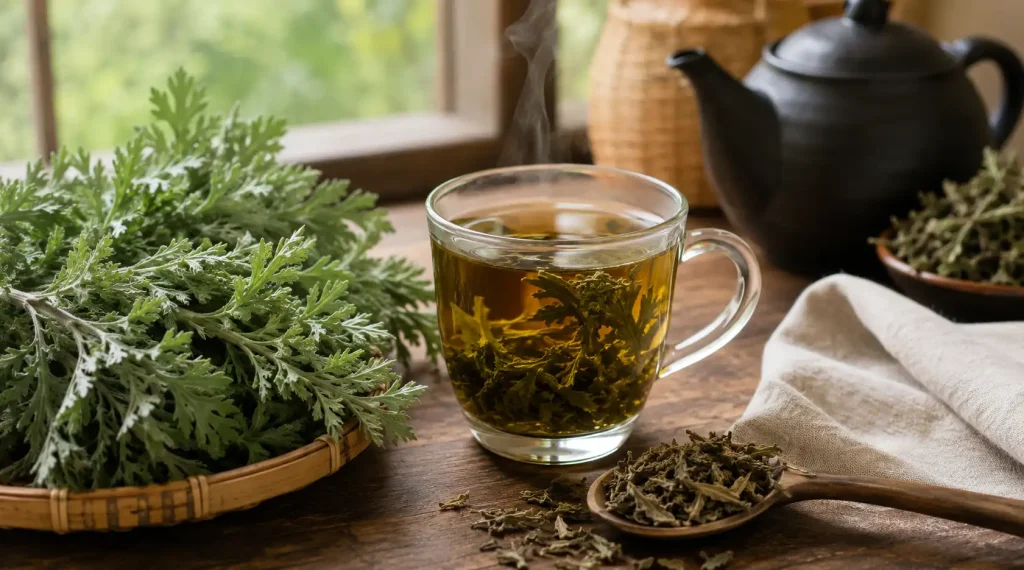
- Pour over the herb and steep for 5 to 10 minutes, covered.
- Strain and drink. Start with a shorter steep if you are new to bitter herbs.
Because mugwort is genuinely bitter, many people prefer to blend it with sweeter or milder herbs. Honey is also a welcome addition for those who find the bitterness too intense on its own. Over time, many tea drinkers find that they develop a taste for mugwort’s unique aromatic bitterness and come to appreciate it as a distinctive flavor.
Dream-time blend:
- 1 teaspoon mugwort
- 1 teaspoon chamomile flowers
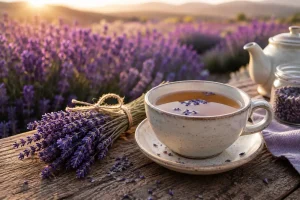
- 1/2 teaspoon lavender buds
- Steep together for 7 to 10 minutes. Drink 30 to 60 minutes before bed.
Digestive bitter blend:
- 1 teaspoon mugwort
- 1/2 teaspoon chamomile
- A small piece of fresh ginger or 1/4 teaspoon dried ginger
- Steep for 5 to 7 minutes. Sip before or after meals.
Mugwort vs. Wormwood: Understanding the Difference
Because mugwort and wormwood both belong to the Artemisia genus, people frequently confuse the two. While they share some similarities, they are distinct plants with different traditional applications and safety profiles.
Mugwort (Artemisia vulgaris) is generally considered the milder of the two. It has a softer bitterness and a more aromatic, herbaceous flavor. Wormwood (Artemisia absinthium), on the other hand, is significantly more bitter and contains higher levels of thujone, a compound that requires careful attention to dosage.
In traditional herbalism, wormwood has been used primarily as a strong bitter digestive tonic and as the key ingredient in absinthe. Mugwort, meanwhile, has had a broader range of traditional applications, from digestive support to dream work to women’s wellness. If you are new to the artemisia family, mugwort is generally considered the gentler starting point.
Sourcing and Quality Considerations
The quality of your mugwort matters significantly. Wild-harvested mugwort, gathered from clean environments away from roadsides and industrial areas, is generally preferred by experienced herbalists. Because mugwort grows abundantly along roads and in disturbed soils, commercially foraged mugwort should always come from trusted sources who harvest responsibly.
Look for mugwort that has a strong, aromatic scent — this indicates freshness and potency. The dried herb should appear grayish-green with visible leaf structure, not brown or powdery. At the Hatton Naturals shop, you can find carefully sourced wild-harvested mugwort that meets these quality standards.
Safety and Precautions
Mugwort is generally well tolerated by most adults when consumed in moderate amounts as a tea. However, several important safety considerations apply. Mugwort should be strictly avoided during pregnancy due to its traditional classification as an emmenagogue — it may stimulate uterine contractions. People with allergies to plants in the Asteraceae/Compositae family (ragweed, chrysanthemums, marigolds, daisies) may also be allergic to mugwort and should exercise caution. Additionally, mugwort may interact with certain medications, including blood thinners and anticonvulsants. As with all herbal products, this content is for educational purposes only and does not constitute medical advice. Always consult a qualified healthcare provider before incorporating new herbs into your wellness routine, especially if you are pregnant, nursing, taking medications, or managing a health condition.
Frequently Asked Questions
What does mugwort tea taste like?
Mugwort tea has a distinctly bitter, aromatic flavor with herbaceous and slightly sage-like notes. Many people find it pleasantly complex once they develop a taste for bitter herbs. If the bitterness is too strong for you at first, try blending mugwort with chamomile or adding a spoonful of honey.
Can mugwort tea really help with lucid dreaming?
Many herbalists and traditional practitioners report that mugwort tea before bedtime enhances dream vividness and recall. While there is limited scientific research to confirm this effect, the traditional reports are remarkably consistent across cultures. Individual experiences vary, so the best approach is to try it yourself and keep a dream journal.
How often can I drink mugwort tea?
Most herbalists suggest that 1 to 2 cups of mugwort tea per day is appropriate for short-term use. Because mugwort is a potent bitter herb, many practitioners recommend taking breaks — for example, using it for a few weeks and then pausing for a week. As always, consult a healthcare professional for personalized guidance.
Is mugwort tea safe during pregnancy?
No. Mugwort is classified as an emmenagogue and is traditionally believed to stimulate uterine contractions. It should be strictly avoided during pregnancy. Nursing mothers should also consult a healthcare provider before consuming mugwort tea.
Can I grow mugwort at home?
Yes, mugwort grows readily in most temperate climates and is considered a hardy, low-maintenance plant. However, be aware that it can spread aggressively and may become invasive in garden settings. Many gardeners choose to grow it in containers to keep it under control.
What is the difference between mugwort and sage?
While mugwort and sage share some aromatic similarities, they are different plants from different genera. Mugwort belongs to the Artemisia genus, while common sage is Salvia officinalis. They have different traditional uses, flavor profiles, and active compounds, though both are valued in herbalism.
Does mugwort tea contain caffeine?
No, mugwort tea is completely caffeine-free. This makes it suitable for evening consumption, which aligns well with its traditional use as a dream-enhancing and relaxation herb. You can enjoy it before bed without concerns about caffeine-related sleep disruption.
Can I combine mugwort with other sleep-supporting herbs?
Absolutely. Mugwort blends well with many calming herbs, including chamomile, valerian root, passionflower, and lavender. Start with small amounts of each herb and adjust proportions to your taste and desired effect.