Linden Flower Tea: The European Remedy for Stress and Calm
Linden flower tea benefits have been cherished across Europe for centuries, where families have passed down the tradition of brewing this delicate, honey-scented infusion to soothe frayed nerves and promote restful sleep. From the boulevards of Paris to the villages of the Balkans, linden (also known as Tilia or lime blossom) remains one of the most widely consumed herbal teas on the continent. In fact, the French refer to it simply as tilleul, and it holds a place of honor in pharmacies and kitchen cupboards alike.
Yet despite its long European heritage, linden flower tea remains surprisingly underappreciated in North America. If you have been searching for a gentle, naturally caffeine-free tea to help you unwind after a long day, linden deserves a place at the top of your list. In this guide, we will explore the traditional uses of linden flower tea, walk through how to brew it properly, and share creative ways to incorporate it into your daily wellness routine.
A Brief History of Linden Flower Tea in European Herbalism
Linden trees have held deep cultural and medicinal significance throughout European history. In Germanic and Slavic traditions, the linden tree was considered sacred and often planted in the center of villages as a gathering place. Moreover, herbalists across the continent documented linden flower tea as a go-to remedy for nervous tension and restlessness as early as the Middle Ages.
During the 18th and 19th centuries, European apothecaries routinely recommended linden blossom infusions for what they called “nervous complaints.” The flowers were harvested in early summer when the trees burst into fragrant bloom, then carefully dried and stored for year-round use. To this day, linden flower tea remains one of the best-selling herbal teas in France and Germany, where it is often the first beverage offered to someone feeling stressed or unable to sleep.
This rich tradition speaks volumes about the enduring trust that generations of herbalists and everyday families have placed in linden blossoms. As a result, modern herbalists continue to regard linden flower tea as a cornerstone of any relaxation-focused herbal collection.
Traditional Uses and Wellness Properties
Herbalists traditionally recommend linden flower tea for a range of calming purposes. While scientific research continues to explore these uses, centuries of folk wisdom point to several key areas where linden blossoms have been valued most.
Relaxation and stress relief. Above all, linden flower tea is traditionally used to ease feelings of tension and promote a sense of calm. European herbalists have long considered it a mild nervine, meaning it gently supports the nervous system without causing drowsiness during the day. Consequently, many people enjoy a cup in the afternoon when stress levels tend to peak.
Sleep support. In addition to daytime relaxation, linden blossom tea has been traditionally used as a bedtime beverage to encourage restful sleep. Herbalists often suggest combining it with other calming herbs like chamomile or valerian root for a more potent nighttime blend.
Respiratory comfort. Traditionally, linden flower tea has also been used during the cold and flu season. European folk medicine valued it as a diaphoretic, meaning herbalists believed it helped the body manage fevers naturally by promoting gentle perspiration. For this reason, a hot cup of linden tea with honey remains a common home remedy in many European households during winter months.
Digestive ease. Furthermore, some herbalists recommend linden blossom tea after meals to support comfortable digestion. Its mild, pleasant flavor makes it an easy choice as an after-dinner tea, especially when paired with a touch of lemon.
What Does Linden Flower Tea Taste Like?
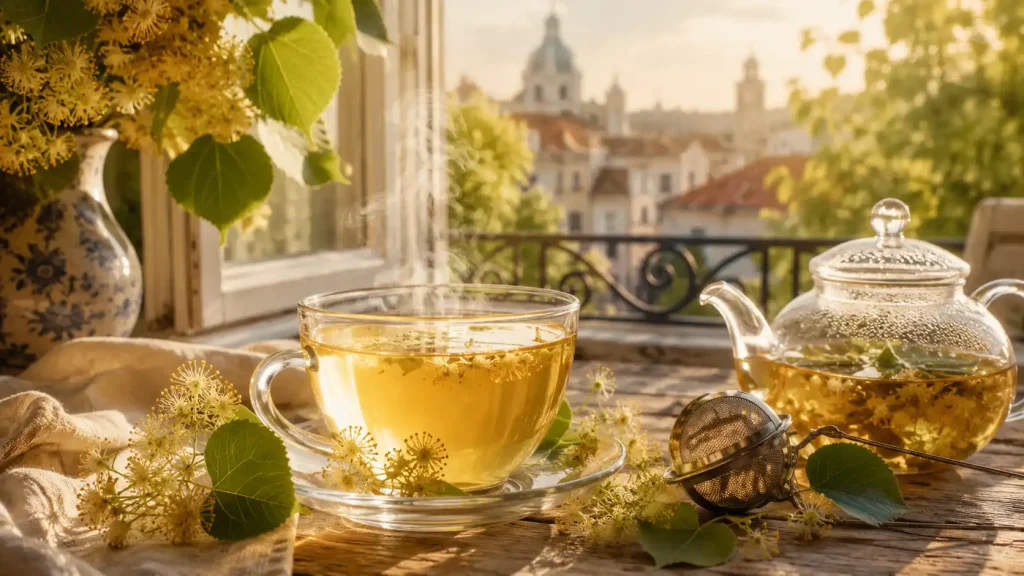
One of the most delightful aspects of linden flower tea is its flavor profile. Unlike some herbal teas that can taste medicinal or overly grassy, linden blossoms produce a naturally sweet, floral infusion with distinct honey-like notes. The aroma alone is enough to begin the relaxation process, as the fragrant steam rises from your cup.
The taste is gentle and smooth, with a light body that feels almost silky on the palate. Some tea drinkers detect subtle notes of vanilla or fresh hay, while others pick up a faint citrus undertone. Because the flavor is so mild and naturally sweet, most people find that linden flower tea requires no sweetener at all.
This approachable taste profile also makes linden an excellent base for herbal tea blends. It pairs beautifully with lavender for a deeply aromatic relaxation tea, or with lemon balm for a brighter, more uplifting blend.
How to Brew the Perfect Cup of Linden Flower Tea
Brewing linden flower tea is straightforward, but a few simple techniques will help you extract the best flavor and the most beneficial compounds from the blossoms.
Basic brewing method:
- Measure 1 to 2 tablespoons of dried organic linden leaves and flowers per 8-ounce cup.
- Heat fresh, filtered water to approximately 200 to 210 degrees Fahrenheit (just below boiling).
- Pour the hot water over the linden blossoms in a teapot or infuser.
- Cover and steep for 5 to 10 minutes. A longer steep will produce a stronger, more aromatic infusion.
- Strain and enjoy as-is, or add a small drizzle of raw honey if desired.
Pro tip: Always cover your cup or teapot while steeping linden flower tea. The essential oils that contribute to both flavor and traditional wellness properties are volatile, so covering the vessel prevents them from escaping with the steam.
For a stronger therapeutic infusion, some herbalists recommend steeping the blossoms for up to 15 minutes. However, even a 5-minute steep will yield a flavorful and aromatic cup.
Calming Linden Tea Blend Recipes
While linden flower tea is wonderful on its own, blending it with complementary herbs can create targeted relaxation formulas. Here are three blends that herbalists frequently recommend.
Evening Wind-Down Blend
- 2 parts linden flower
- 1 part chamomile
- 1 part passionflower
This blend combines three of the most well-regarded calming herbs in traditional herbalism. The linden provides a sweet, honey-like base, while chamomile adds a gentle apple-like note. Meanwhile, passionflower brings additional traditional support for winding down before bed.
Stress-Relief Afternoon Tea
- 2 parts linden flower
- 1 part lemon balm
- 1/2 part lavender
This lighter blend works well as a mid-afternoon pick-me-up when you need to de-stress without feeling sleepy. Lemon balm adds a refreshing citrus quality, and just a touch of lavender rounds out the aroma beautifully. As a result, this blend offers both mood support and a genuinely enjoyable drinking experience.
Winter Wellness Blend
- 2 parts linden flower
- 1 part chamomile
- 1/2 part lemon balm
- A pinch of raw honey and fresh lemon juice after brewing
Traditionally, this type of blend was prepared during the cold months to promote comfort and warmth. The combination of linden and chamomile creates a soothing base, while the honey and lemon add both flavor and a comforting quality that many people associate with feeling cared for during times of seasonal discomfort.
Linden Flower Tea vs. Other Calming Herbal Teas
If you already enjoy calming herbal teas, you may wonder how linden compares to other popular options. Each herb brings its own unique strengths, and understanding these differences can help you choose the right tea for the right moment.
Linden vs. chamomile: Both are mild and gentle, but linden tends to have a more floral, honey-like flavor compared to chamomile’s apple-like sweetness. Herbalists sometimes consider linden to be slightly more effective for nervous tension, while chamomile is traditionally favored more for digestive comfort. Of course, the two work wonderfully together in blends.
Linden vs. passionflower: Passionflower is generally regarded as a stronger nervine in traditional herbalism. As a result, herbalists often recommend passionflower for more pronounced feelings of restlessness, while linden serves well as an everyday calming tea that can be enjoyed freely throughout the day.
Linden vs. valerian root: Valerian root is traditionally used specifically for sleep support and has a strong, earthy flavor that some find challenging. Linden, on the other hand, is far more pleasant-tasting and versatile. Many herbalists suggest using linden during the day and reserving valerian for bedtime use only.
Tips for Buying and Storing Linden Blossoms
Quality matters significantly when it comes to linden flower tea. Because the delicate blossoms can lose their flavor and aromatic compounds quickly if handled improperly, sourcing high-quality, properly dried linden flowers is essential.
Look for whole, intact blossoms that still have their characteristic pale yellow-green color. The dried flowers should have a noticeable sweet, floral aroma even before brewing. If the blossoms appear brown, dusty, or lack fragrance, they have likely been stored too long or dried improperly. You can find premium organic linden leaves and flowers in our shop.
Once you have your linden blossoms, store them in an airtight container away from light, heat, and moisture. A glass jar with a tight-fitting lid kept in a cool, dark cupboard works perfectly. Under these conditions, dried linden flowers will maintain their quality for up to one year.
Safety Considerations and Precautions
Linden flower tea is generally considered safe for most adults when consumed in moderate amounts. However, as with any herbal tea, there are a few important considerations to keep in mind. Individuals who are pregnant, nursing, or taking prescription medications (especially heart medications or sedatives) should consult a healthcare provider before adding linden tea to their routine. Additionally, people with known allergies to Tilia species should avoid linden flower tea entirely. This article is for informational purposes only and is not intended to diagnose, treat, cure, or prevent any disease. Always seek the advice of a qualified healthcare professional with any questions regarding a medical condition.
Frequently Asked Questions
What are the main linden flower tea benefits?
Linden flower tea has been traditionally used to support relaxation, promote restful sleep, ease occasional digestive discomfort, and provide comfort during the cold and flu season. European herbalists have valued it for centuries as a gentle nervine that calms the mind without causing excessive drowsiness.
How many cups of linden flower tea can I drink per day?
Most herbalists suggest that 2 to 3 cups per day is a reasonable amount for most adults. However, individual tolerance varies, so it is wise to start with one cup and observe how your body responds before increasing your intake.
Can I drink linden flower tea while pregnant?
There is limited research on the safety of linden flower tea during pregnancy. Therefore, if you are pregnant or breastfeeding, you should consult your healthcare provider before consuming linden tea or any other herbal beverage.
Does linden flower tea contain caffeine?
No, linden flower tea is naturally caffeine-free. This makes it an excellent choice for evening consumption or for anyone looking to reduce their caffeine intake without sacrificing the ritual of a warm, comforting cup of tea.
What does linden flower tea taste like?
Linden flower tea has a delicate, naturally sweet flavor with honey-like and floral notes. Many drinkers also detect subtle hints of vanilla or fresh hay. It is considered one of the most pleasant-tasting herbal teas available, and most people enjoy it without any sweetener.
Can I blend linden flower tea with other herbs?
Absolutely. Linden blends exceptionally well with chamomile, lavender, lemon balm, passionflower, and valerian root. Its mild, sweet flavor acts as a harmonious base that complements rather than competes with other herbal flavors.
How long should I steep linden flower tea?
For a standard cup, steep the blossoms for 5 to 10 minutes with the vessel covered. If you prefer a stronger infusion, you can extend the steeping time to 15 minutes. Using water just below boiling (200 to 210 degrees Fahrenheit) will yield the best results.
Where can I buy high-quality linden flowers?
Look for organic, whole linden blossoms from a reputable supplier. At Hatton Naturals, we offer organic linden leaves and flowers that are carefully sourced and properly dried to preserve their delicate flavor and aromatic compounds.