Dandelion Leaf Tea: Light and Nutritious
Dandelion leaf tea is a light, slightly bitter herbal brew made from the dried leaves of Taraxacum officinale. Unlike dandelion root tea, which has a roasted, earthy character, the leaf produces a greener, more vegetal cup with a mild bitterness reminiscent of spinach or arugula. Furthermore, dandelion leaf has a long tradition in European and Asian folk herbalism as a nutritive herb.
In folk herbalism, dandelion leaf has been traditionally used as a spring tonic and nutritive tea. Herbalists value it for its mineral content and its status as one of the most widely available wild herbs in temperate regions. Additionally, it is one of the few herbs used both as food and as a folk medicine across many cultures.
Dandelion Leaf Tea vs. Dandelion Root Tea
These two teas come from the same plant but offer distinctly different experiences. Dandelion leaf tea is light green to yellow in color and has a mild, grassy bitterness. On the other hand, dandelion root tea is darker, earthier, and has a roasted quality that some people compare to coffee.
In folk herbalism, the leaf and root have traditionally been used for different purposes. Herbalists have valued the leaf primarily as a nutritive herb, while the root has been associated with digestive and liver support. As a result, many practitioners recommend each form at different times or for different purposes.
You can also find both a whole leaf form and a cut and sifted leaf form. The dandelion leaf cut and sifted works well in standard infusers, while dandelion leaf whole suits teapots and French press brewing.
Nutritional Profile of Dandelion Leaf
Dandelion leaves are notably rich in nutrients. In fact, they contain higher levels of several vitamins and minerals than many common salad greens. Dried dandelion leaf retains much of this nutritional value, making the tea a worthwhile addition to an herb-based wellness routine.
Key nutrients found in dandelion leaf include:
- Vitamin A (as beta-carotene)
- Vitamin C
- Vitamin K
- Iron and calcium
- Potassium
Furthermore, dandelion leaf is considered one of the most nutrient-dense of all commonly brewed herbal teas. Consequently, it is sometimes called a “nutritive herb” in folk herbalism to distinguish it from purely aromatic or bitter herbs.
How to Brew
Brewing dandelion leaf tea is simple. Follow these steps:
- Heat water to just below boiling, around 195–200°F (90–93°C).
- Add one to two teaspoons of dried dandelion leaf per eight ounces of water.
- Pour hot water over the leaves and cover the cup or teapot.
- Steep for five to ten minutes. Longer steeps increase bitterness.
- Strain and serve. Add lemon or honey to balance the bitter notes.
For a milder cup, steep for only five minutes. Similarly, blending dandelion leaf with a lighter herb such as nettle leaf creates a nutritive green blend that is less bitter and more rounded in flavor.
Flavor Profile: What Does Dandelion Leaf Tea Taste Like?
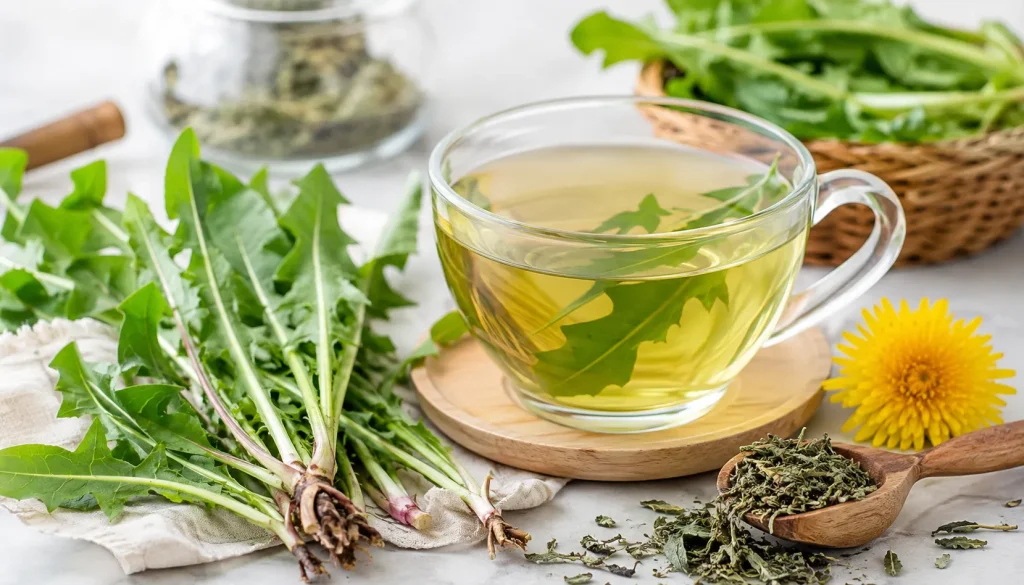
Dandelion leaf tea has a mild to moderate bitterness that is clean and refreshing rather than harsh. The color is a soft yellow-green, and the aroma is grassy and vegetal. Moreover, the bitterness is significantly milder than dandelion root, making it more accessible for those new to bitter herbal teas.
In culinary terms, the flavor is comparable to a light green tea without the astringency. Additionally, the tea has a subtle earthiness that pairs naturally with lemon, honey, or a sprig of fresh mint.
Dandelion Tea Blends
Dandelion leaf is a versatile blending herb. Consider these popular combinations:
- Dandelion Leaf and Nettle: A classic nutritive spring tonic blend, rich in minerals and naturally light in flavor.
- Dandelion Leaf and Lemon Balm: Softens the bitterness with a bright citrus note.
- Dandelion Leaf and Peppermint: A refreshing blend with cooling minty notes that balance the earthiness.
- Dandelion Leaf and Root: For a more complex, full-spectrum dandelion experience, combine leaf and dandelion root cut and sifted.
Furthermore, dandelion leaf blends well with any herb that has a mild, green flavor. Therefore, it is a great base for creating custom nutritive tea blends.
Traditional Uses of Dandelion Leaf in Folk Herbalism
Dandelion has been used as food and medicine across Europe, Asia, and North America for centuries. In folk traditions, dandelion leaf was particularly prized as a spring herb. It was one of the first plants available after winter, making it a historically important nutritive food and tonic. Herbalists traditionally recommended dandelion leaf tea as a gentle cleansing herb and as a support for healthy kidney function. Moreover, its use as a salad green in Europe extends back to at least the medieval period.
Buying and Storing Dandelion Leaf
Look for dried dandelion leaf that is green to grayish-green in color with a distinct herby aroma. Avoid material that is brown, dull, or has no aroma, as this indicates age or poor storage. Additionally, organic certification is preferable for any herb used in tea. Store in a sealed glass jar away from heat, moisture, and light. Properly stored dried dandelion leaf retains potency for up to two years.
Safety and Precautions
Dandelion leaf tea is generally considered very safe and is even consumed as a food. However, individuals with allergies to plants in the daisy family (Asteraceae) should use caution, as dandelion belongs to this family. Additionally, dandelion leaf is a natural diuretic in folk herbalism, which means it may increase urination. For this reason, people taking diuretic medications should consult a healthcare provider before drinking dandelion tea regularly. This content is educational only and does not constitute medical advice.
Frequently Asked Questions
How is dandelion leaf tea different from dandelion root tea?
Dandelion leaf tea is lighter, greener, and milder in flavor. Dandelion root tea is darker, earthier, and has a roasted quality. In folk herbalism, each part is traditionally valued for different purposes, with the leaf being more nutritive and the root more associated with digestive support.
Is dandelion leaf tea bitter?
Dandelion leaf tea has a mild to moderate bitterness that is much lighter than the root. Adding honey or lemon juice softens the bitterness significantly. Moreover, blending with lighter herbs like nettle or lemon balm also reduces the perceived bitterness.
Can I drink dandelion leaf tea every day?
For most healthy adults, one to two cups per day is considered moderate and generally well-tolerated. However, if you are pregnant, taking medications, or have specific health conditions, consult a healthcare provider for personalized guidance.
What does dandelion leaf tea look like?
When brewed, dandelion leaf tea is a soft yellow-green color, similar to a light green tea. The liquid is clear and the aroma is grassy and slightly herby. It is one of the more visually appealing herbal teas due to its natural green hue.
Explore premium dandelion leaf cut and sifted and our full range of dried herbs at the Hatton Naturals shop.