Kelp Powder Benefits: Thyroid, Skin, and Daily Use Guide
If there is one sea vegetable that earns a permanent place in a functional wellness pantry, it is kelp. Understanding kelp powder benefits is the best way to decide whether it belongs in yours. Kelp refers to large brown algae in the order Laminariales, including Ascophyllum nodosum, Laminaria digitata, and related species that form vast underwater forests in cold, nutrient-dense ocean waters. When dried and milled into powder, kelp becomes one of the most concentrated, food-safe sources of iodine, trace minerals, and marine bioactive compounds available.
Traditional coastal communities from Japan to Norway have incorporated kelp into daily diets for thousands of years, not as a medicine but as an ordinary food that happened to deliver extraordinary nutrition. Today, powdered kelp is finding its way into smoothies, soups, capsules, skin preparations, and herbal blends at an accelerating pace, and for good reason. This guide covers everything you need to know about kelp powder benefits across thyroid health, skin wellness, and practical daily use.
What Is Kelp Powder?
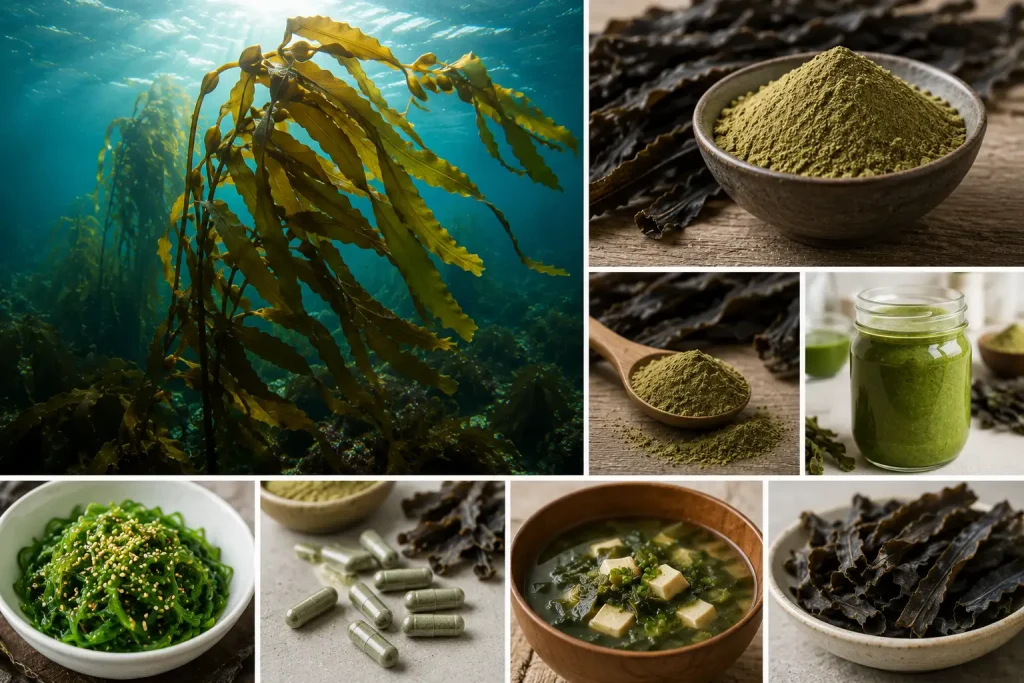
Kelp powder is simply dried kelp that has been ground into a fine, dark green to olive-colored powder. The drying and milling process concentrates the plant’s naturally occurring iodine, minerals, and polysaccharides without the need for chemical extraction. A single teaspoon of kelp powder can contain meaningful amounts of iodine, iron, magnesium, potassium, calcium, and folate alongside fucoidan, alginates, and chlorophyll.
Ascophyllum nodosum, the species carried by Hatton Naturals in their Organic Kelp, is one of the most studied and widely used kelp species in herbal and nutritional contexts. It grows in the cold North Atlantic and is harvested sustainably from clean coastal waters.
Kelp Powder Benefits for Thyroid Health
The most prominent of all kelp powder benefits is its role as a natural, food-based iodine source. The thyroid gland uses iodine as the primary raw material for producing thyroid hormones T3 and T4, which regulate metabolism, core body temperature, heart rate, cognitive function, and energy production. Without adequate iodine, the thyroid cannot produce sufficient hormone, and the resulting deficiency affects virtually every system in the body.
Kelp has been traditionally used for sluggish thyroid function and goiter in herbal practice for well over a century. Traditional herbalists prescribed kelp decoctions and powders to clients presenting with fatigue, cold intolerance, weight gain, and mental sluggishness. These symptoms are historically associated with low thyroid activity. While kelp is not a treatment for diagnosed thyroid disease, it may support healthy thyroid function as a food-based iodine source in individuals whose dietary iodine is insufficient.
It is worth noting that kelp’s iodine content is naturally variable. The concentration depends on species, growing location, season, and processing method. This variability is one reason why food-based iodine sources like kelp are generally considered safer for everyday use than high-dose isolated iodine supplements. This way the body processes food-matrix iodine more gradually.
Kelp Powder Benefits for Skin Health
Kelp’s benefits extend well beyond internal nutrition. Traditional coastal cultures frequently applied seaweed preparations topically for skin conditions, and contemporary cosmetic formulators have followed suit with kelp extracts appearing in moisturizers, serums, and masks. The skin-related kelp powder benefits stem from several of its key compounds:
Fucoidan: This sulfated polysaccharide has been studied for its potential to support skin barrier function and hydration. Fucoidan is structurally similar to hyaluronic acid and may support the skin’s moisture-retention mechanisms.
Antioxidant phlorotannins: These brown algae-specific polyphenols may help protect skin cells from oxidative stress, which is a primary driver of premature aging.
Mineral content: Zinc, selenium, and magnesium present in kelp all play established roles in skin repair, barrier integrity, and inflammatory regulation. Internal consumption of mineral-rich foods like kelp may support skin health as part of a nutrient-dense diet.
Alginates: These natural polysaccharides are widely used in professional facial treatments for their film-forming and hydrating properties. Kelp-based DIY masks leverage the same compounds.
Internally, consistent consumption of mineral-rich foods like kelp powder is traditionally associated with improvements in skin clarity and hydration, though individual results depend heavily on overall diet, hydration, and lifestyle factors.
Kelp Powder in Daily Nutrition: Practical Uses
One of the most appealing things about kelp powder benefits is how easily the powder integrates into ordinary food. Its flavor is mild and ocean-like and it blends invisibly into most recipes. Here are the most practical daily uses:
Smoothies: Add one quarter to one half teaspoon to any green smoothie. The flavor pairs naturally with cucumber, spinach, citrus, and apple-based blends. The dark color disappears into most green drinks.
Soups and broths: Stir a teaspoon into vegetable or bone broths for an umami boost and a significant mineral contribution. Kelp is a traditional base ingredient in Japanese dashi broth for exactly this reason.
Seasoning blends: Mix kelp powder with sea salt, garlic powder, and sesame to create a mineral-rich table seasoning for grains, eggs, and roasted vegetables.
Capsules: For those who prefer not to taste the seaweed, filling capsules with kelp powder at home is straightforward and inexpensive.
Herbal teas: Combine cut-and-sifted kelp with bladderwrack and Irish moss for a traditional seaweed mineral tea. Simmer for 15 to 20 minutes and strain before drinking.
Kelp vs Bladderwrack vs Irish Moss: Understanding the Differences
These three seaweeds are often discussed together, and for good reason. They complement each other well. But understanding how they differ helps you make better decisions about which to prioritize:
Kelp (Ascophyllum nodosum): A large brown algae with very high iodine content, significant fucoidan, and alginates. Best known for thyroid mineral support and general mineral density. Mild flavor, works well as a daily food supplement.
Bladderwrack (Fucus vesiculosus): Another brown algae, also iodine-rich and fucoidan-containing. Has a longer documented history in Western herbal practice for thyroid and metabolic support. Slightly more bitter than kelp. Hatton Naturals carries Organic Bladderwrack as a complementary option.
Irish Moss (Chondrus crispus): A red algae with high carrageenan content, excellent mucilaginous and gelling properties, and a broad mineral profile. Lower iodine than the brown algae but rich in other trace minerals and traditionally used for respiratory and digestive soothing. Available at Hatton Naturals as Organic Irish Moss.
Many practitioners combine all three for a synergistic mineral and phytochemical blend that no single seaweed provides alone.
How to Choose a Quality Kelp Powder
Not all kelp powder is equal. Here are the factors that determine quality:
Species transparency: The label should list the Latin species name. Ascophyllum nodosum and Laminaria digitata are among the most studied and reliable species for nutritional use.
Organic certification: Certified organic kelp is harvested from waters tested for contaminants and processed without synthetic additives. This is the most reliable indicator of quality for any seaweed product.
Heavy metal testing: Seaweeds bioaccumulate minerals from their environment. It includes undesirable heavy metals like arsenic, lead, and cadmium. Reputable suppliers test every batch and make results available.
Sourcing location: Cold North Atlantic waters (Norway, Iceland, Ireland, eastern Canada) consistently produce kelp with high mineral density and low contamination risk compared to some other harvest regions.
Processing method: Low-temperature drying preserves heat-sensitive compounds better than high-heat processing. Look for suppliers who specify gentle drying methods.
Suggested Daily Amounts and How to Start
Most traditional herbal references suggest one half to one teaspoon of kelp powder per day as a reasonable food-supplement amount for adults. This range provides a meaningful iodine contribution without exceeding safe daily intake thresholds for most people.
If you are new to seaweed, start with one eighth to one quarter teaspoon and increase gradually over one to two weeks. This allows your digestive system to adjust and gives you the opportunity to observe how your body responds. Some people are more sensitive to iodine shifts than others, and gradual introduction is always the safer approach.
Do not attempt to compensate for a deficiency or treat a health condition by consuming very large amounts of kelp. More is not always better with iodine-rich foods, and excess iodine can paradoxically suppress thyroid function in some individuals.
Kelp Powder in Traditional and Culinary History
The use of kelp as a daily food is not a modern wellness trend. It is one of the oldest documented dietary practices in coastal cultures. Japanese communities have consumed Laminaria (kombu) as a food staple for at least one thousand years. Norwegian and Icelandic coastal populations incorporated local kelp species into bread and animal feed for centuries. Native communities along the Pacific Northwest coast of North America used giant kelp (Macrocystis pyrifera) as both food and medicine.
This extensive cross-cultural history of safe, regular kelp consumption provides a meaningful traditional safety record that supports its contemporary use as a dietary supplement. The fact that populations consuming kelp daily over generations showed no widespread adverse effects. And in fact appeared to benefit in terms of thyroid health and longevity. It is part of what makes kelp one of the most trusted sea vegetables in herbal traditions worldwide.
Safety and Precautions
Kelp powder is safe for most healthy adults when used in food-appropriate amounts. However, its high iodine content makes it unsuitable as a high-dose supplement for everyone. People with hyperthyroidism, Graves’ disease, or Hashimoto’s thyroiditis should consult a physician before using kelp powder, as excess iodine can trigger or worsen thyroid dysfunction in these conditions. Individuals taking thyroid hormone replacement medication (such as levothyroxine) should discuss kelp supplementation with their prescribing doctor, as changes in iodine intake can affect medication requirements. Those on anticoagulant medications should also exercise caution, as fucoidan in kelp may have mild blood-thinning properties. Pregnant individuals should not exceed recommended iodine intake levels without medical guidance. Always choose certified organic, heavy-metal-tested kelp from a reputable supplier. Hatton Naturals’ Organic Kelp and the broader Hatton Naturals shop offer certified organic options that meet these quality standards.
Frequently Asked Questions
What are the most important kelp powder benefits for everyday use?
The most broadly applicable kelp powder benefits are its natural iodine content for thyroid mineral support, its rich trace mineral profile for general nutrition, and its fucoidan content for potential immune and skin support. As a daily food supplement, it is one of the most mineral-dense options available in a single ingredient.
How much iodine does kelp powder contain?
Iodine content varies significantly by species and batch. Ascophyllum nodosum typically contains between 500 and 8,000 micrograms of iodine per gram, though most supplement-grade kelp powders are standardized or tested to fall within safer ranges. Always check the label for iodine content per serving if available.
Can kelp powder help with weight management?
Kelp has been traditionally associated with metabolic support, partly because thyroid function is central to metabolic rate regulation. Kelp may support healthy weight management as part of a balanced diet when used to address iodine insufficiency, but it is not a weight loss supplement and should not be marketed as one.
Is kelp powder the same as spirulina or chlorella?
No. Spirulina and chlorella are microalgae (single-celled organisms), while kelp is a macroalgae (a large, multicellular seaweed). Their nutritional profiles are quite different. Kelp is notably higher in iodine and fucoidan; spirulina and chlorella are higher in protein and chlorophyll.
Can I use kelp powder on my skin directly?
Yes. Kelp powder can be mixed with water, aloe vera gel, or honey to create a simple face mask. Apply a thin layer, leave on for 10 to 15 minutes, and rinse thoroughly. The minerals and fucoidan in kelp are thought to support skin hydration and may help with mild inflammation when used topically.
How do I store kelp powder to keep it fresh?
Store kelp powder in an airtight container away from light, heat, and moisture. A dark pantry or cupboard works well. Properly stored, dried kelp powder retains potency for one to two years. Avoid storing near the stove or in humid environments, as moisture exposure degrades quality quickly.
What is the difference between kelp and bladderwrack?
Both are brown algae with high iodine content, but they are different species. Kelp (typically Ascophyllum nodosum or Laminaria species) and bladderwrack (Fucus vesiculosus) have overlapping but distinct phytochemical profiles. Many herbal practitioners use both together for broader coverage of brown algae compounds.
Where can I buy quality organic kelp powder?
Hatton Naturals offers Organic Kelp (Ascophyllum nodosum) as a certified organic, cut-and-sifted product that can be powdered at home or used as-is for teas and decoctions. You can also explore the full Hatton Naturals shop for complementary seaweeds including bladderwrack and Irish moss.
Conclusion
The range of kelp powder benefits makes this sea vegetable one of the most practical additions to a whole-food wellness routine. With a long history of traditional use across multiple cultures and a compelling mineral profile, kelp powder earns its place as a daily pantry staple for anyone serious about foundational nutrition from natural, marine sources.