Adaptogens are a category of herbs prized for their ability to help the body adapt to everyday demands. They work best when used consistently over time as part of a balanced lifestyle. This guide walks you through everything: choosing your herbs, understanding their traditional roles, measuring the right ratios, brewing techniques, storage, and troubleshooting common mistakes. By the end, you will have a reliable, customizable recipe you can return to again and again using high-quality organic botanicals sourced from a trusted supplier.
What Makes a Tea “Adaptogenic”?
The term adaptogen refers to botanicals that have been traditionally used to support the body’s ability to handle physical and mental stress. Unlike stimulants that spike and crash, adaptogens are considered tonic herbs meant for regular, long-term use. Not every herb qualifies as an adaptogen. The most widely recognized ones include ashwagandha, schisandra, tulsi (holy basil), and maca. When combined thoughtfully, these herbs create a layered, complex brew that is both pleasant to drink and rich in traditional wellness history.
The best adaptogenic tea blend recipe balances earthy, tangy, sweet, and spicy notes so the cup is enjoyable enough to drink daily. Flavor balance matters because consistency is key to any wellness routine. If you dread the taste of your tea, you will not drink it.
The Six Hero Herbs in This Blend
Understanding each ingredient helps you customize and troubleshoot your adaptogenic tea blend recipe.
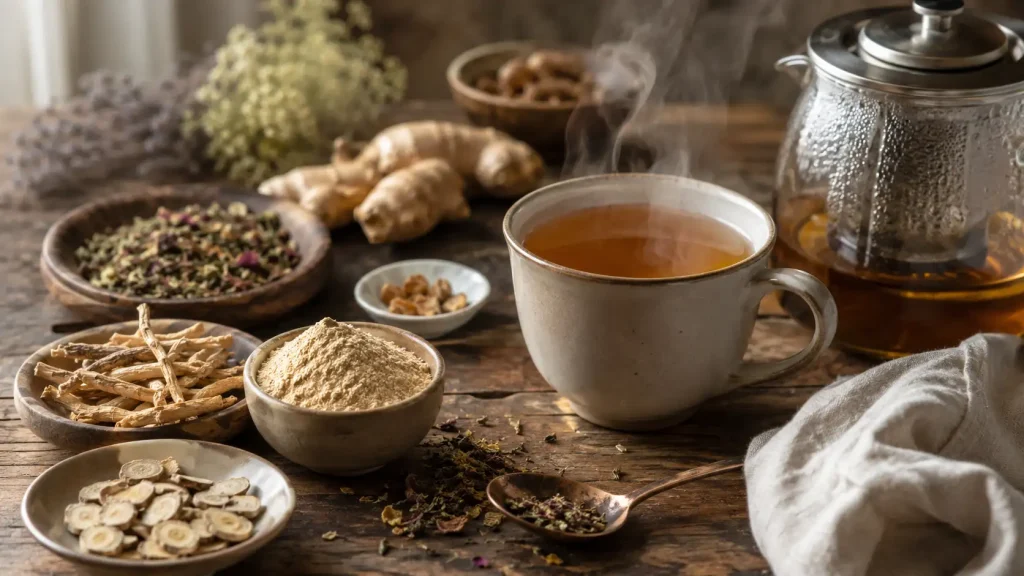
Ashwagandha (Cut and Sifted): This root is one of the most recognized adaptogens in Ayurvedic tradition. It has a slightly bitter, earthy flavor that blends best with warming spices. Hatton Naturals carries organic ashwagandha cut and sifted, which is ideal for loose-leaf tea making.
Schisandra Berry: Known as the “five-flavor fruit” in Chinese herbalism, schisandra delivers sour, sweet, salty, bitter, and pungent notes all at once. A small amount goes a long way. Find it at Hatton Naturals as organic schisandra berry.
Tulsi (Vana, Cut and Sifted): Also called holy basil, tulsi is a classic Ayurvedic adaptogen with a clove-like, slightly peppery aroma. It brightens any blend and makes it more aromatic. Hatton Naturals offers tulsi vana cut and sifted.
Maca Powder: Maca root from the Peruvian Andes has a malty, butterscotch-like flavor that softens the bitterness of ashwagandha. Use the organic maca powder from Hatton Naturals, which stirs easily into hot water.
Lemon Balm: A gentle herb from the mint family, lemon balm adds a citrusy lift that balances earthier roots. You can find lemon balm at the Hatton Naturals shop.
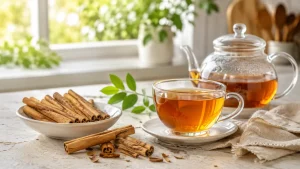
Cinnamon (Cassia Sticks): Cinnamon ties the blend together with warmth and sweetness. Use cinnamon cassia sticks from Hatton Naturals, broken into small pieces for steeping.
Ingredients and Ratios
This recipe makes a dry bulk batch that stores well for up to six months. The ratios below are for a 100-gram master blend. Once made, use two teaspoons of the blend per eight-ounce cup of hot water.
- Ashwagandha root, cut and sifted: 25 grams
- Tulsi (vana), cut and sifted: 25 grams
- Lemon balm, cut and sifted: 20 grams
- Schisandra berry, whole or lightly crushed: 10 grams
- Maca root powder: 10 grams
- Cinnamon cassia, broken into small fragments: 10 grams
You can halve or double the batch. The maca powder tends to sink to the bottom of the jar, so stir or shake your dry blend before measuring each serving.
Step-by-Step Brewing Instructions
Follow these steps carefully the first time you brew your adaptogenic tea blend recipe. Once you are comfortable, adjust steep times and ratios to your preference.
Step 1 – Gather your equipment. You will need a fine-mesh strainer or reusable tea infuser, a small saucepan or kettle, a mug, and a small bowl for measuring.
Step 2 – Measure your blend. Scoop two level teaspoons of the dry blend into your infuser. If using a saucepan method (recommended for harder roots like ashwagandha), add two teaspoons directly to the pot.
Step 3 – Use the right water temperature. Bring eight ounces of filtered water to a full boil (212 degrees Fahrenheit). Root herbs and berries need higher temperatures to release their compounds, unlike delicate green teas.
Step 4 – Simmer for tougher roots. If your blend includes a significant amount of ashwagandha root pieces, simmer the mixture in the covered saucepan for 10 to 15 minutes rather than just steeping. This is called a decoction and it extracts more from woody plant material.
Step 5 – Add tulsi and lemon balm last. After the decoction, remove from heat, add the tulsi and lemon balm portion directly to the pot, cover, and steep for another five minutes. This two-phase method preserves the aromatic oils in leafy herbs while fully extracting the roots.
Step 6 – Strain and sweeten. Pour through a fine-mesh strainer into your mug. Sweeten with raw honey, maple syrup, or a splash of oat milk to taste. The maca powder will naturally add a mild sweetness.
Customizing Your Blend
One advantage of making your own adaptogenic tea blend recipe is the ability to adjust for your taste and goals. Here are a few ideas:
- For a more energizing morning cup, increase tulsi to 30 grams and reduce lemon balm to 15 grams.
- For a more grounding evening cup, reduce schisandra and increase ashwagandha slightly.
- Add a pinch of black pepper to improve the bioavailability of certain compounds.
- Blend in a teaspoon of coconut oil or ghee after brewing for a creamy, fat-soluble version.
Troubleshooting Common Issues
The tea tastes too bitter. Ashwagandha root is naturally bitter. If the bitterness is overpowering, reduce your ashwagandha by five grams and increase lemon balm or cinnamon. Adding honey or oat milk also helps considerably.
The maca powder clumps. Maca powder does not dissolve the way instant coffee does. Whisk briskly or use a small frother for 20 to 30 seconds after pouring hot water over the strained tea.
The tea is too tangy. Schisandra is intensely sour. If the tang is too sharp, cut the schisandra to five grams or crush the berries less before blending so fewer compounds are released during steeping.
The aroma seems flat. Aromatic herbs lose volatile oils when over-steeped. Make sure you are adding tulsi and lemon balm after removing from heat rather than simmering them with the roots.
The tea is too weak. Increase steep time by five minutes or use a gentle saucepan simmer instead of a passive steep. Also check that your herbs are fresh. Old or improperly stored herbs lose potency quickly.
Storage
Proper storage is essential for any adaptogenic tea blend recipe to remain flavorful and effective over time.
Store your dry bulk blend in an airtight glass jar away from heat, light, and moisture. A dark glass jar or an opaque container is ideal. Do not store it near the stove or in a cabinet directly above a dishwasher where steam can penetrate. At room temperature in proper conditions, the blend stays fresh for up to six months. Individual herbs like maca powder may absorb odors more quickly, so keep the jar tightly sealed between uses. Label the jar with the blend date so you always know when you made it.
Safety
This adaptogenic tea blend recipe is made from culinary-grade and traditionally used herbs. Even so, there are a few considerations to keep in mind.
Ashwagandha belongs to the nightshade family. Those with nightshade sensitivities should consult a healthcare provider before using it regularly. Schisandra may interact with certain medications that are processed by liver enzymes. Maca is a cruciferous root, so people with thyroid conditions who need to limit raw cruciferous vegetables should check with a qualified professional. Tulsi and lemon balm are gentle and widely consumed but should be avoided in large amounts during pregnancy without professional guidance. None of the herbs in this blend are intended to diagnose, treat, cure, or prevent any disease. Always consult your healthcare provider before beginning any new herbal routine, especially if you take medications or have a health condition.
Frequently Asked Questions
How many times a day should I drink this adaptogenic tea blend recipe?
Most herbalists suggest one to two cups per day for consistent results. Starting with one cup in the morning allows you to gauge how your body responds before adding a second serving.
Can I make this tea as a cold brew?
Root herbs like ashwagandha extract better with heat. If you prefer a cold drink, brew the tea hot, let it cool, then refrigerate and pour it over ice. Do not attempt a standard cold brew with this particular blend.
How long does it take to notice any changes from adaptogens?
Adaptogens are not fast-acting supplements. Most traditional practitioners suggest four to eight weeks of consistent use before expecting noticeable effects. Patience and consistency are important.
Can I use ashwagandha powder instead of the cut-and-sifted root?
Yes. If you use ashwagandha powder, reduce the amount to about one teaspoon per cup rather than a full tablespoon, since powders are more concentrated. Be aware that powder produces a cloudier tea and more sediment.
Is this adaptogenic tea blend recipe safe for teenagers?
Most adaptogenic herbs are considered adult-use herbs. Teenagers and children should not consume potent adaptogenic herbs without guidance from a pediatrician or qualified herbalist.
Can I add sweeteners to this blend?
Absolutely. Raw honey, maple syrup, coconut sugar, or date syrup all work well. Avoid artificial sweeteners if your goal is a clean, whole-food approach. Oat milk and almond milk also add natural sweetness and body to the cup.
Where do I buy the highest quality herbs for this recipe?
Quality matters enormously with adaptogens. Look for certified organic, single-origin herbs from a trusted supplier. Hatton Naturals offers all the herbs in this recipe with clear sourcing and no unnecessary additives.
Can I blend this recipe with green tea or black tea?
Yes. Adding a small amount of green tea (about five grams per 100-gram batch) introduces caffeine and additional antioxidants. Black tea would overpower the subtler herbs. Green tea pairs well with tulsi and lemon balm in particular.
Conclusion
Building your own adaptogenic tea blend recipe is a simple, rewarding way to bring traditional herbal wisdom into your daily routine. With quality organic herbs from Hatton Naturals and the step-by-step guidance above, your perfect stress-relief brew is just a kettle away. Start with the base recipe, adjust to your taste, and enjoy the ritual of making something truly your own.