Ginkgo Biloba Meaning: Origin and Herbal Context
When people search for ginkgo biloba meaning, they are often looking for more than a dictionary definition. They want to understand what this plant represents, where it comes from, why herbalists still talk about it, and how it fits into a practical herbal routine. Ginkgo is one of those rare botanicals that carries a strong identity before it ever reaches the teacup. Its fan-shaped leaves are instantly recognizable, its lineage reaches back into deep botanical history, and its place in herbal culture feels both ancient and surprisingly current. For tea makers, the interest goes even further. Ginkgo brings a story, a visual signature, and a subtle herbal character that can be used with care in thoughtful blends. In traditional herbal practice, it is appreciated not only for what it is, but for what it symbolizes: endurance, continuity, and a living bridge between past and present. Understanding ginkgo biloba meaning gives more depth to the ingredient itself, and that depth matters when you are choosing herbs for a blend meant to feel intentional, balanced, and memorable.
What the Name Ginkgo Biloba Actually Refers To
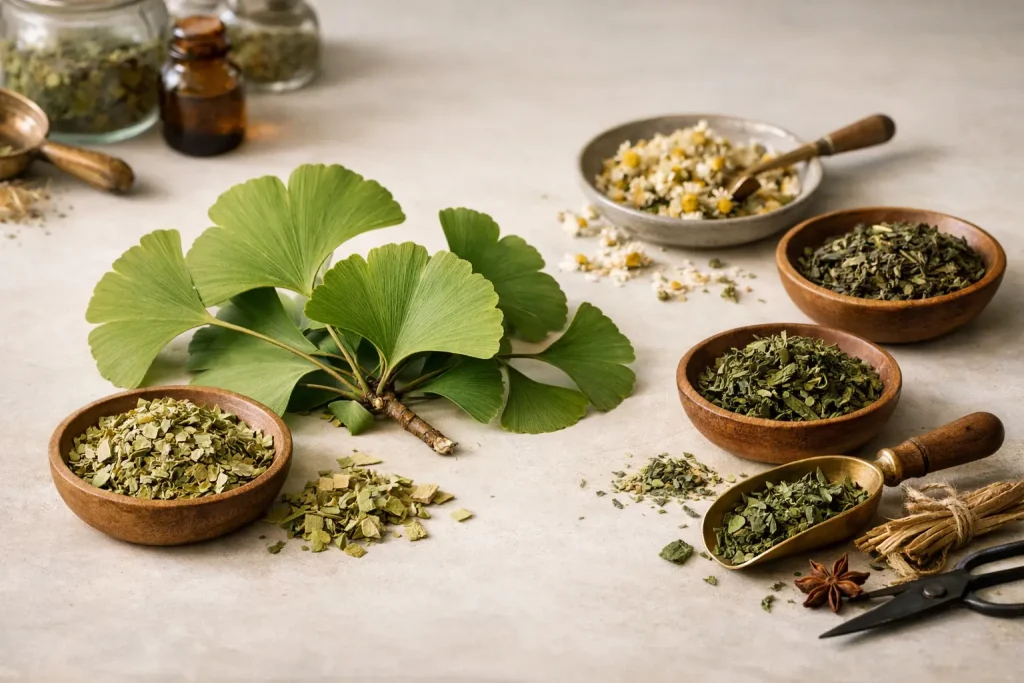
At the most basic level, ginkgo biloba meaning begins with the plant’s name. “Ginkgo” refers to the tree itself, while “biloba” points to the distinctive two-lobed shape of its leaves. That leaf shape is one of the reasons the herb is so visually striking. Even dried and cut for tea, the plant carries a sense of design. It is easy to see why it has fascinated gardeners, herbalists, and botanical illustrators for centuries.
The name is also a reminder that herbal identity often starts in morphology. A plant’s shape, texture, aroma, and structure help define how people remember it. Ginkgo leaves are unlike most common tea herbs. They do not look soft and feathery like chamomile, nor broad and culinary like peppermint. They have a clean, almost architectural form that makes them stand out in both fresh and dried material.
For tea makers, this matters because identity is part of product experience. Ingredients that have a recognizable story are easier to position in specialty blends. A tea built around ginkgo can feel botanical, refined, and historically grounded, especially when paired with clean companion herbs such as green tea, peppermint leaf, or elder flowers.
Ginkgo as a Living Fossil in Botanical History
A fuller understanding of ginkgo biloba meaning includes the plant’s age and reputation. Ginkgo is often described as a living fossil because its lineage stretches back millions of years. Long before modern herbal commerce, long before contemporary tea blending, this tree was already part of the earth’s botanical story. That deep timeline is one reason ginkgo feels so symbolically rich.
Herbal traditions often preserve more than plant use. They preserve reverence. Ginkgo has long been associated with longevity, resilience, and continuity because the tree itself appears to embody those traits. Its ability to endure through time gave it a kind of presence that few botanicals can claim. Even in a modern apothecary context, that symbolism still resonates.
For a tea maker, this historical depth can guide formulation and presentation. A blend centered on ginkgo does not need to be loud. It works best when the rest of the formula supports its calm, established character. Try combining Ginkgo Biloba Leaf C/S with green tea when you want a blend that feels classic, clean, and rooted in long botanical tradition.
Cultural and Herbal Context Around the World
Another layer of ginkgo biloba meaning comes from cultural memory. Ginkgo has been valued across generations, especially in East Asian settings where the tree has long been planted near temples, gardens, and places of reflection. Over time, the plant came to represent steadiness, age, and quiet strength. Herbalists often value that kind of context because herbs are never just raw material. They arrive with associations, habits of use, and a mood.
In practical herbal work, that mood can shape how a tea is composed. Ginkgo tends to suit blends that aim for clarity of flavor rather than sweetness or heavy spice. It invites cleaner companions and restrained ratios. That does not mean it must be bland. It means the blend benefits from discipline.
A thoughtful pairing is chamomile flowers if you want a soft floral edge, or dried apple pieces if you want a gentle roundness without overwhelming the profile. These additions help create a more accessible cup while preserving the plant’s dignified, botanical character.
Flavor, Aroma, and Why It Needs Care in Blending
People asking about ginkgo biloba meaning are sometimes surprised to learn that meaning also lives in sensory character. Ginkgo is not usually chosen because it tastes lush or fruity. Its flavor is more restrained. Depending on cut, origin, and brewing style, it may come across as mildly green, slightly earthy, somewhat dry, and gently herbal. That subtlety is exactly why it deserves careful handling.
This is not a leaf to bury under aggressive spices or heavy tart notes. If the blend is overloaded, ginkgo disappears as an idea even if it remains in the formula physically. In tea making, some herbs function as a lead vocalist. Others are structural. Ginkgo often acts like structure. It adds tone, posture, and identity.
A good baseline ratio for a loose tea blend is:
- 6 grams ginkgo leaf (about 3 teaspoons)
- 4 grams green tea (about 2 teaspoons)
- 1 gram peppermint leaf (about 1 teaspoon loosely packed)
- 1 gram chamomile flowers (about 1 teaspoon)
This makes a 12 gram small-batch trial blend. For one 10 to 12 ounce cup, use 2.5 to 3 grams total blend (about 1.5 teaspoons) and infuse at 80 to 85°C for 2 to 3 minutes if green tea is included. If making an herbal-only version without green tea, use 90 to 95°C for 4 to 6 minutes.
Try adding peppermint leaf for a cooler finish that keeps the blend bright without stealing focus.
How Tea Makers Can Use Ginkgo in Modern Blends
In production-minded terms, ginkgo biloba meaning becomes most useful when translated into blend design. Ginkgo works well in small percentages in leaf-forward formulas. It is not usually the herb you push to the front by force. It is the herb you frame well. That means choosing ingredients with compatible shape, aroma, and extraction behavior.
Here are several strong directions for modern use:
Clean daily botanical blend
Use ginkgo with green tea and peppermint for a brisk, clear cup.
Soft contemplative blend
Pair ginkgo with chamomile and elder flowers for a gentler floral expression.
Warm balanced blend
Pair ginkgo with a very light touch of ginger root c/s and dried apple for body and warmth.
Small-batch trial formula for a balanced botanical tea:
- 5 grams Ginkgo Biloba Leaf C/S (about 2.5 teaspoons)
- 5 grams Green Tea (about 2.5 teaspoons)
- 2 grams dried apple pieces (about 2 teaspoons)
- 1 gram ginger root c/s (about 1/2 teaspoon)
- 1 gram elder flowers (about 1 teaspoon)
Steep 3 grams of the blend in 10 ounces of water at about 82°C for 3 minutes. If you want more body and less briskness, reduce green tea slightly and increase apple by 1 gram.
Try adding ginger root c/s when you want a little warmth and lift in a cooler-weather blend.
Troubleshooting Ginkgo Tea and Sparkling Herbal Blends
Even a well-built herbal blend can misbehave. This is especially true if you use ginkgo in still tea, iced tea concentrate, or a lightly sparkling herbal preparation. A troubleshooting mindset helps protect flavor and consistency.
Flat flavor
This usually means the blend is under-dosed, stale, or brewed too cool for the formula. Increase the total leaf by 0.5 to 1 gram per cup, or check whether the ginkgo and companion herbs have lost aroma in storage. Green tea can also flatten if brewed too cool and too briefly.
Too tart
Ginkgo itself is not usually the source of tartness. The issue often comes from companion ingredients, fermentation, or acidic additions. If the profile feels too sharp, reduce apple acidity sources or avoid adding extra bright fruits. Keep the formula cleaner and greener.
Over-carbonation
If you adapt a ginkgo blend into a sparkling herbal beverage or secondary fermentation format, use caution with sugars and bottling time. Excess sweetness or warm holding conditions can create too much pressure. Bottle only when fermentation behavior is understood and chill promptly.
Sediment
Fine cut herbs and broken leaf particles naturally settle. Use a larger cut when possible, strain through a fine mesh, and avoid over-handling the blend during packing.
Aroma loss
This is often a storage issue rather than a formulation issue. Delicate companion herbs such as elder flowers and chamomile fade faster when exposed to air and humidity.
Try using elder flowers when you want a gentle floral note, but keep the storage conditions tight so the aromatics stay alive.
Storage + Quality
Quality is where meaning becomes tangible. A tea herb may have a beautiful story, but if the material is dull, dusty, or poorly stored, that story stops at the bag. When working with ginkgo, start with leaf that looks clean and properly dried. Color should still feel alive rather than gray or tired. The aroma should be mild but present, not empty.
Store ginkgo and all companion herbs in airtight containers away from humidity, direct light, and heat. For small production environments, use lined pouches or well-sealed jars and avoid frequent unnecessary opening. If you pack in clear containers for display, rotate inventory quickly.
Watch for these quality cues:
- Color remains natural, not faded or brown-gray
- Aroma is subtle but identifiable
- Leaf particles are not excessively powdery
- No damp feel, clumping, or stale odor
This is also where ginkgo biloba meaning becomes practical. The plant’s identity is tied to elegance and longevity, so the ingredient should look and behave accordingly. Try adding dried apple pieces for roundness in a blend, but only if the fruit pieces are fully dry and stored airtight to prevent softness or humidity transfer.
Safety
A responsible herbal article needs a clear safety section. Ginkgo has a long history of traditional use, but that does not mean every preparation suits every person. Herbalists often use careful wording here because practical respect is part of good craft.
Use ginkgo in moderate, well-formulated amounts. Avoid exaggerated claims. Do not present the herb as a cure or treatment for disease. When discussing tradition, phrases such as “traditionally used,” “herbalists often use,” and “may support” are more appropriate than medical language.
If you sell or serve beverages containing ginkgo, clear labeling matters. Ingredient transparency, brewing guidance, and reasonable serving suggestions help customers use the product appropriately. This is especially relevant when the blend also contains caffeinated ingredients like green tea.
For a softer profile, try chamomile flowers to mellow the blend rather than forcing higher ginkgo levels.
Why Ginkgo Still Matters to Herbalists and Tea Makers
In the end, ginkgo biloba meaning is about more than translation. It is about recognizing a plant with a distinct shape, deep history, and calm but memorable place in herbal culture. Ginkgo does not need to dominate a blend to matter. Its presence can be quiet and still meaningful, especially when paired with ingredients that respect its structure and story.
For tea makers, this herb offers something valuable: identity. It can anchor a formula visually, conceptually, and botanically. It works especially well in blends that aim for elegance rather than intensity. If you build around freshness, good leaf quality, restrained ratios, and careful companions, ginkgo becomes more than a novelty ingredient. It becomes a thoughtful one.
That is the real value of understanding ginkgo biloba meaning. It helps you work with the herb not as a trend, but as a botanical with lineage, symbolism, and practical blending potential. For a refined herbal direction, try Ginkgo Biloba Leaf C/S alongside green tea in a clean, balanced formula that lets the plant’s character speak clearly.
FAQ
What does ginkgo biloba meaning refer to?
It refers to the identity of the ginkgo tree and its two-lobed leaf shape, along with the herb’s broader botanical and traditional context.
Is ginkgo used more for flavor or for herbal identity in tea?
Usually more for herbal identity and structure. Its flavor is subtle, so it benefits from careful pairing.
What herbs pair well with ginkgo in tea blends?
Green tea, peppermint leaf, chamomile flowers, elder flowers, ginger root c/s, and dried apple pieces can all work well depending on the style of blend.
Can ginkgo be used in iced tea?
Yes. Brew it as part of a balanced formula, strain well, and chill quickly to preserve clarity and aroma.
Why does my ginkgo blend taste dull?
The most common reasons are low dosage, stale ingredients, poor storage, or an unbalanced formula.
Does ginkgo work in sparkling herbal drinks?
It can, but use care. The flavor is subtle, and over-carbonation or overly tart companions can easily overpower the blend.
How should ginkgo be stored?
Keep it airtight, dry, and away from light and heat. Check color and scent regularly for freshness.
Why is ginkgo so distinctive in herbal practice?
Because ginkgo biloba meaning includes its ancient lineage, unusual leaf shape, and long-standing symbolic value in herbal and botanical culture.