Gotu Kola Benefits: Mind and Body Herb
Gotu kola benefits have been valued in Ayurvedic and traditional Southeast Asian medicine for thousands of years, establishing Centella asiatica as one of the most revered herbs in the Eastern herbal canon. Known in Sanskrit as mandukaparni and in Chinese as ji xue cao, gotu kola is a small, creeping herb native to the wetlands and riverbanks of Asia, Africa, and parts of the Pacific Islands. Despite its name suggesting a connection to kola nut, gotu kola is caffeine-free and unrelated to that plant.
What Is Gotu Kola?
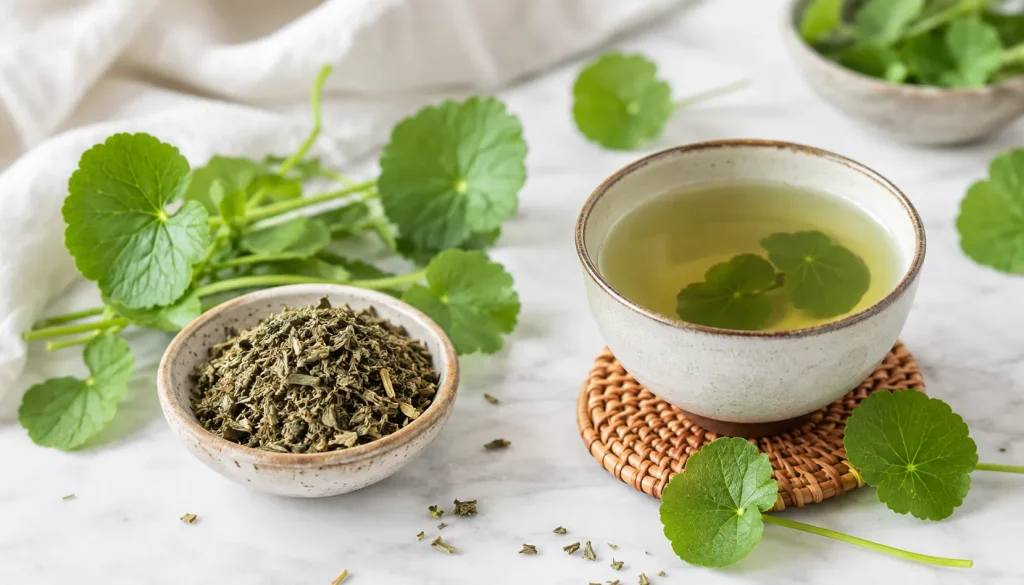
Gotu kola is a slender, herbaceous perennial that spreads along moist ground, producing fan-shaped leaves on long, thin petioles. The leaves are its primary medicinal part — small, rounded, and bright green, they are harvested fresh or dried for use in teas, powders, and traditional preparations. The plant thrives in tropical and subtropical climates with consistent moisture.
The chemistry of gotu kola is dominated by triterpenoid saponins — specifically asiaticosides, brahminosides, madecassoside, and asiatic acid. These compounds are responsible for most of its documented biological activities. Additionally, gotu kola provides flavonoids, polyacetylenes, polyphenols, and a range of amino acids and minerals.
Furthermore, gotu kola has a long history as a food plant in Sri Lanka, India, and Southeast Asia. It is eaten fresh in salads, blended into juices, and incorporated into traditional dishes. This food history underlines its safety profile for regular use.
Gotu Kola Benefits in Ayurvedic Tradition
In Ayurvedic medicine, gotu kola is classified as a medhya rasayana — an herb that supports the mind and cognitive function. It is traditionally used to promote mental clarity, enhance memory, support concentration, and calm the nervous system. In other words, it is simultaneously considered a nervine tonic and a cognitive enhancer.
Besides that, yurvedic texts describe gotu kola as beneficial for pitta imbalances involving inflammation and stress, and as a cooling, calming herb that nourishes the brain and nervous tissue. It is often paired with brahmi (Bacopa monnieri) in classical formulas targeting cognitive function, as the two herbs have overlapping yet complementary actions.
Traditional use also extends to skin health, where gotu kola has been applied topically for wound healing, burns, and skin diseases. The triterpenoids stimulate collagen synthesis and support tissue regeneration — properties that have attracted significant attention from modern cosmetic formulators and researchers alike.
How to Brew Gotu Kola Tea
Gotu kola tea is mild, slightly bitter, and vaguely grassy in flavor. Use one to two teaspoons of gotu kola cut and sifted per eight ounces of hot water. Steep for ten to fifteen minutes with the vessel covered to retain volatile compounds. Strain and drink one to three cups daily.
The flavor is subtle and earthy — not unpleasant, but lacking the dramatic character of herbs like peppermint or ginger. Many people choose to blend gotu kola with more flavorful herbs to make the tea more enjoyable. It pairs well with lemon balm, spearmint, and adaptogenic herbs like ashwagandha.
For a stronger preparation, a long cold infusion works well. Steep two tablespoons of gotu kola in a quart of cold water overnight, then strain in the morning. This method extracts water-soluble triterpenoids effectively while producing a very smooth, mild drink suitable for warm weather.
Gotu Kola Powder: An Alternative Form
Beyond cut and sifted herb, gotu kola powder offers a convenient alternative for those who prefer not to brew tea. The powder can be blended into smoothies, stirred into juices, mixed into warm milk preparations, or encapsulated for those who find the taste unappealing.
In Ayurvedic practice, mixing herbal powders into warm milk with honey — a preparation called anupana — is a classical delivery method for nervine herbs. Gotu kola powder in warm almond or cow’s milk with a small amount of honey and a pinch of cardamom is a traditional tonic preparation that many people find much more enjoyable than plain tea.
The powder form also allows for topical use in face masks and skin preparations, connecting to gotu kola’s traditional role in skin healing. Mix the powder with honey or aloe vera gel for a simple skin mask.
Gotu Kola and Skin Health
One of the most commercially significant aspects of gotu kola benefits is its role in skin health and wound healing. Asiaticosides and related triterpenoids have been shown in numerous studies to stimulate collagen synthesis, accelerate wound healing, and reduce scar tissue formation. As a result, gotu kola extracts appear in numerous cosmetic and pharmaceutical products targeting skin repair, stretch marks, and cellulite.
Traditional healers in Asia have used gotu kola poultices and washes for burns, cuts, ulcers, and psoriasis for centuries. Modern clinical research on wound healing has largely validated these traditional applications. It makes gotu kola one of the better-studied botanicals in dermatology.
For topical home use, strong gotu kola tea can be used as a facial rinse or applied to minor skin irritations using a cotton pad. Similarly, gotu kola oil infusions — made by steeping dried herb in carrier oils — are used in traditional massage and skin care preparations across South and Southeast Asia.
Gotu Kola in Longevity Traditions
Gotu kola holds a special place in multiple longevity traditions. In Sri Lanka, it is said that elephants — observed to eat gotu kola regularly — live exceptionally long lives because of it. Whether or not this attribution is accurate, gotu kola has been a component of longevity formulas in Ayurveda, traditional Chinese medicine, and Southeast Asian herbal traditions for millennia.
The herb is associated in these traditions with slowing aging, maintaining cognitive sharpness into old age, and preserving joint health and flexibility. Modern research on its antioxidant and anti-inflammatory properties provides plausible mechanisms for some of these traditional claims. Moreover, its long history as a food plant in Asia supports its safety for long-term regular consumption.
Safety and Considerations
Gotu kola is considered safe for most adults when used in food and tea quantities. High doses over extended periods have been associated with rare cases of liver toxicity in a small number of reports. For that reason, moderation is advisable and regular breaks from use are traditionally recommended. Individuals with liver disease should consult a healthcare provider. Gotu kola may have mild sedative properties and could potentiate sedative medications. It should not be used in the two weeks before surgery due to possible blood-thinning effects. Pregnant women should avoid therapeutic use. This post is educational only and is not medical advice.
Frequently Asked Questions
Is it the same as brahmi?
The name “brahmi” has a relationship with to two different plants in Ayurveda — Centella asiatica (gotu kola) and Bacopa monnieri. The confusion is longstanding and regional, with some parts of India using “brahmi” for one and some for the other. They are botanically distinct plants with overlapping traditional uses for cognitive support but different chemical profiles.
Does gotu kola have caffeine?
No. Despite popular confusion with kola nut, gotu kola is completely caffeine-free. It is suitable for all-day use, evening consumption, and people sensitive to stimulants.
How long does gotu kola take to work?
Like most tonic herbs, gotu kola is associated with gradual, cumulative effects rather than immediate results. Traditional Ayurvedic use typically involves taking it consistently for three to six months for cognitive and nervous system support. Topical effects on skin healing may be more rapid.
Can I take gotu kola every day?
Traditional Ayurvedic practice supports daily use for extended periods. However, some contemporary herbalists recommend cycling — taking the herb for several weeks, then taking a break. Given the rare reports of liver toxicity at high doses, moderation and also periodic breaks are sensible precautions for long-term use.
Gotu kola is an herb with an extraordinary depth of traditional use and benefits across multiple medical systems and continents. Explore our gotu kola cut and sifted and our full range of mind and body botanicals at the Hatton Naturals shop.