Hyssop Herb Uses: Tea and Tradition
Hyssop herb uses trace back to antiquity — hyssop is one of the oldest documented plants in herbal medicine, appearing in the Bible, the writings of Hippocrates, and the works of Dioscorides. Hyssopus officinalis is a small, aromatic shrub native to southern Europe, the Middle East, and central Asia, producing slender spikes of violet-blue flowers above narrow, lance-shaped leaves that carry a complex fragrance somewhere between mint, sage, and camphor. Today it remains a valued herb in European and Mediterranean herbal traditions.
What Is Hyssop?
Hyssop belongs to the mint family (Lamiaceae) and shares many characteristics with its aromatic relatives. The plant grows as a semi-woody perennial reaching one to two feet in height, producing abundant foliage from spring through fall and flowering from mid-summer to early fall. It is drought-tolerant and thrives in the poor, rocky soils of Mediterranean regions.
The essential oil of hyssop is rich in monoterpenes and sesquiterpenes, including pinocamphone, isopinocamphone, beta-pinene, and camphene. These compounds give hyssop its distinctive aroma and contribute significantly to its herbal properties. Additionally, the plant contains flavonoids (particularly diosmin and hesperidin), tannins, caffeic acid derivatives, and bitter principles.
Herbalists use both the flowering tops and leaves, either fresh or dried. The dried herb is most commonly used in tea and culinary applications, where its potent, camphor-mint flavor profile contributes character to blends and dishes alike.
Hyssop Herb Uses in Traditional Medicine
The primary traditional use of hyssop has always been as a respiratory herb. European herbalists traditionally recommended hyssop tea for coughs, bronchitis, and catarrhal conditions. The herb’s expectorant and antispasmodic properties were valued for loosening congestion and soothing irritated airways. For this reason, it appears in traditional cough syrups, lozenges, and throat preparations throughout European folk medicine.
In religious tradition, hyssop holds particular significance. The Hebrew ezov mentioned in the Bible as a purifying herb is widely believed to refer to Hyssopus officinalis or a related species. Benedictine monks cultivated hyssop in monastery gardens as both a medicinal and culinary plant, and its use as an ingredient in Chartreuse liqueur continues to this day.
Folk herbalism also valued hyssop for digestive complaints, particularly flatulence and bloating. The volatile oils stimulate digestive secretions and help relax smooth muscle in the gastrointestinal tract. Moreover, hyssop was traditionally applied topically to bruises and minor wounds for its vulnerary properties.
How to Brew Hyssop Tea
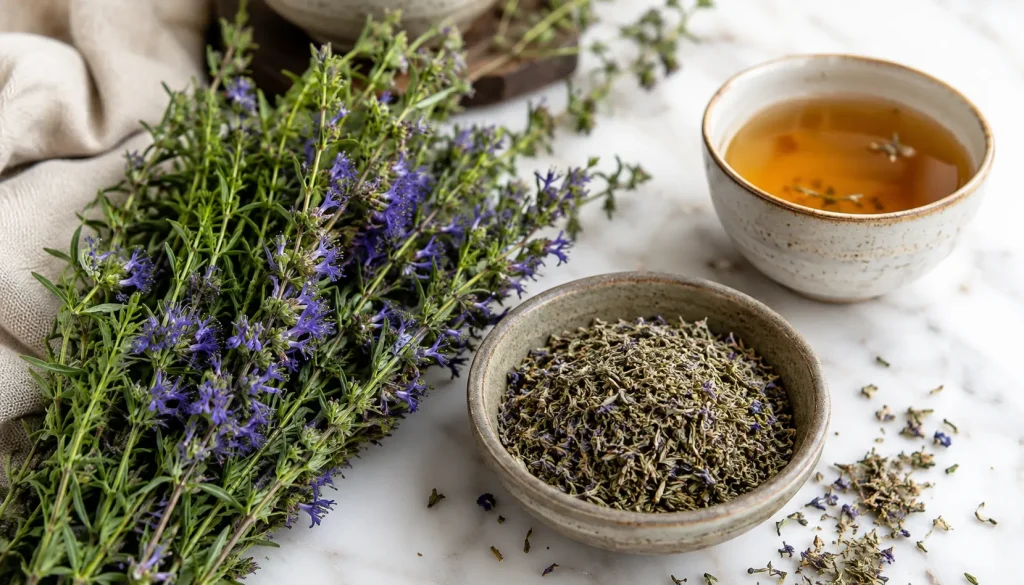
Hyssop tea is intensely aromatic and distinctively flavored. Use one teaspoon of dried hyssop wild harvested cut and sifted per eight ounces of hot water. Pour water just off the boil and steep for five to eight minutes, covered to prevent volatile aromatic compounds from escaping with the steam.
The resulting tea is bold, herbal, and slightly medicinal, with a warming, camphor-mint character. It is quite strong — many people prefer to start with half a teaspoon per cup and adjust to taste. Adding a small amount of honey softens the intensity and adds complementary sweetness.
Hyssop blends exceptionally well with other aromatic Mediterranean herbs. A classic pairing is hyssop with sage leaf, which adds another layer of aromatic depth and traditional respiratory support. For a more complete respiratory blend, add thyme to the mixture — the three herbs together represent a classic European expectorant blend used for centuries.
Hyssop in Culinary Tradition
Beyond herbal tea, hyssop has a genuine culinary tradition in Mediterranean cooking. Its pungent, somewhat bitter flavor adds complexity to dishes in the way that rosemary or sage do. In fact, talking about hyssop herb uses, it was a common potherb in medieval European cooking before it gradually fell out of fashion.
Traditional culinary uses include adding fresh or dried hyssop to bean dishes, soups, and stuffings. The herb pairs well with fatty meats, where its bitter, aromatic qualities cut through richness. In liqueur production, hyssop is an ingredient in Chartreuse, Benedictine, and Absinthe — a testament to its complex aromatic profile.
When using hyssop in cooking, less is more. The flavor is powerful and can easily overwhelm a dish. Start with a small pinch of dried herb or a single fresh sprig and adjust from there. Similarly, in tea blending, hyssop is best used as a supporting herb rather than the primary ingredient unless you specifically enjoy its intense character.
Growing Hyssop in the Garden
Hyssop is a rewarding garden plant that is easy to grow in temperate climates. It thrives in full sun with well-drained, slightly alkaline soil — conditions that mimic its native Mediterranean habitat. The plant is drought-tolerant once established and requires minimal care beyond occasional pruning to prevent woodiness.
Harvest hyssop just before the flowers fully open, when the volatile oil content is highest. Cut the flowering tops six to eight inches down from the tip. Dry quickly in small bunches hung upside down or spread on mesh screens, using low heat or good airflow. Dried hyssop retains its aroma well for one to two years when stored in airtight containers.
Hyssop is also an excellent pollinator plant — its flowers attract bees and butterflies throughout the summer. Furthermore, it is said to repel certain insect pests when planted near brassicas and grapes, making it a traditional companion plant in kitchen gardens.
Purchasing and Storing Hyssop
When buying dried hyssop, look for herb that is clearly green with visible purple flower remnants and a strong, characteristic aroma. The scent should be immediate and pronounced — camphor, mint, and something slightly medicinal. Herb that smells faint or simply grassy is likely old or poorly dried.
Wild-harvested hyssop is particularly aromatic because the plant grows under stressful conditions that concentrate its essential oils. Store dried hyssop in a sealed glass jar away from light and heat. Given its potent volatile oil content, properly stored hyssop can maintain excellent quality for two years or more.
Safety and Considerations
Hyssop is safe for most adults when used in typical culinary and tea amounts. However, the essential oil — used in concentrated aromatherapy applications — contains high levels of pinocamphone, a neurotoxic compound that can cause convulsions in large doses. This applies primarily to the pure essential oil, not to normal tea use. Pregnant women should avoid therapeutic doses of hyssop, as it has historically been associated with emmenagogue effects. Individuals with epilepsy should avoid hyssop in any form. This post is educational only and does not substitute for professional medical advice.
Frequently Asked Questions on Hyssop Herb Uses
Is hyssop the same as anise hyssop?
No. True hyssop (Hyssopus officinalis) and anise hyssop (Agastache foeniculum) are different plants from different genera, though both belong to the mint family. Anise hyssop has a sweet licorice-anise flavor, while true hyssop is more savory and camphor-like. They are not interchangeable in traditional formulas.
How often can I drink hyssop tea?
Traditional use suggests one to two cups per day over short periods — two to four weeks — particularly for respiratory support. Hyssop is not typically used as a long-term daily tonic in the way that gentler herbs like chamomile or nettle are. Take breaks between courses of use.
What does hyssop tea taste like?
Hyssop tea has a strong, complex flavor with camphor, mint, and slightly medicinal notes. It is more intensely flavored than most common herbal teas. The taste is distinctive and not universally loved on first encounter — it often grows on you with repeated use, particularly when you experience its effect on congestion or digestion.
Can I use fresh hyssop for tea?
Yes. Fresh hyssop makes excellent tea. Use about two teaspoons of lightly bruised fresh hyssop herb per cup. The flavor is somewhat more vibrant and green compared to dried herb. Fresh hyssop tea is particularly pleasant as a hot drink during cold season when the herb is in season.
Hyssop is a botanically rich herb with centuries of documented use across medicine, cuisine, and spiritual tradition. Explore our wild-harvested hyssop and browse the full collection of aromatic herbs at Hatton Naturals.