Vanilla Powder Perfume: Soft Scent Ideas and Appeal
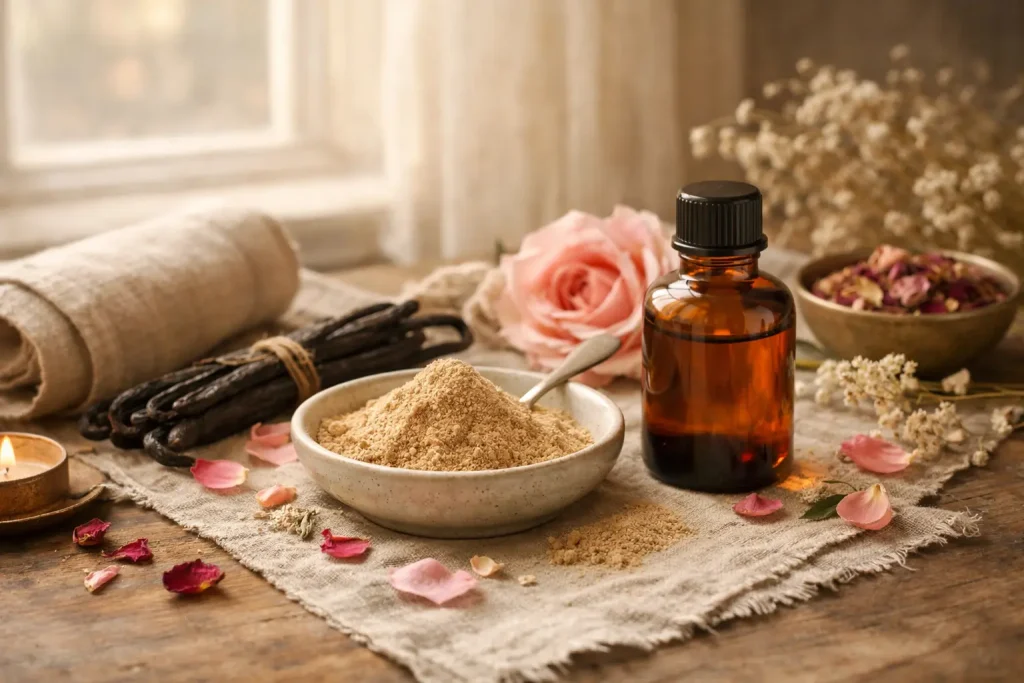
Vanilla powder perfume has a quiet kind of beauty. It does not arrive like a sharp synthetic fragrance or a loud dessert note. Instead, it opens slowly, with a soft, rounded sweetness that feels warm, creamy, and familiar. Herbalists, tea blenders, and natural product makers have long appreciated vanilla not only for flavor, but for the way its aroma shapes mood and texture in a blend. In dry tea work, syrup building, and botanical gifting, vanilla powder can make a formula feel more complete, more comforting, and more refined without overpowering the rest of the ingredients. That is part of the lasting appeal of vanilla powder perfume in natural fragrance styling.
For tea makers especially, vanilla powder offers something useful: scent that reads elegant rather than sugary when handled with restraint. It can support floral notes, soften sharp roots, and bring a gentle rounded finish to aromatic blends. Paired with petals, peels, leaves, or warming spices, it creates a fragrance profile that feels close to skin, close to steam, and close to the cup. This article looks at how that fragrance appeal works, what kinds of botanicals pair naturally with it, and how to use vanilla powder with care so the final result stays beautiful, stable, and practical.
What Makes Vanilla Powder Perfume So Appealing?
The charm of vanilla powder perfume starts with texture. Vanilla in powdered form behaves differently from a liquid extract. It smells drier, softer, and more diffused. The sweetness feels less glossy and more velvety. That matters in botanical fragrance work because dry aroma often reads more natural and more grounded.
Vanilla also plays well with memory. Herbalists often notice that vanilla seems to make other botanicals feel more intimate. A floral blend becomes gentler. A spicy blend becomes smoother. A citrus note becomes less bright and more rounded. In that sense, vanilla acts almost like a bridge note in the natural perfumer’s palette.
For tea makers, this matters beyond fragrance alone. Aroma is part of flavor perception. When vanilla powder is used in a dry blend, it can help the nose anticipate softness before the first sip. That is one reason it appears so often in cozy herbal formulas, dessert-style tisanes, chai-inspired blends, and winter gift mixtures.
Try working with organic vanilla powder when you want a soft aromatic foundation that feels warm rather than heavy.
Dry Aroma vs Liquid Fragrance in Botanical Blending
One reason people are drawn to vanilla powder perfume is that dry aromatic materials create a different sensory experience than oil-based perfume. A dry blend feels quieter. It sits closer to the senses. It does not project aggressively. Instead, it invites attention.
This can be very useful in tea-related product design. Think of sachets, tea gift jars, dry botanical drawer blends, or steam-lifting loose leaf formulas where aroma is part of the ritual. Vanilla powder is especially good in these spaces because it contributes scent while still fitting naturally inside an herbal framework.
Liquid vanilla extracts are often stronger in immediate impact, but they can also add moisture, alcohol, or stickiness. Powder keeps the blend dry. It is easier to combine with petals and cut herbs, and easier to scale in small-batch production.
A practical starting range for dry aromatic blending is:
8 grams vanilla powder per 100 grams total blend
2 1/2 teaspoons vanilla powder per 1 cup of dry botanicals
For a lighter aromatic touch:
3 to 5 grams vanilla powder per 100 grams blend
About 1 to 1 1/2 teaspoons per 1 cup of dry botanicals
These are gentle working ranges for tea makers who want scent support without turning the blend muddy or overly sweet.
Try folding in organic rose petals when you want the vanilla note to lean floral, soft, and gift-worthy.
Best Botanical Pairings for a Soft Vanilla Scent
Vanilla becomes more interesting when it is paired with botanicals that change its direction. This is where the artistry begins. Herbal tradition and practical blending both suggest that vanilla works best when the supporting notes have clear roles.
Floral companions
Rose, chamomile, and lavender can all soften vanilla in different ways. Rose makes it more romantic and velvety. Chamomile makes it feel honeyed and calm. Lavender gives it a cleaner, slightly lifted edge.
Try adding chamomile flowers for a soft, honeyed floral note that keeps vanilla from feeling too dense.
Try blending lavender flowers in tiny amounts when you want the aroma to feel cleaner and more perfumed.
Peel and spice companions
Orange is often classic, but for this formula family it helps to move in a subtler direction. Cardamom and cinnamon bring warmth without too much brightness. Ginger adds a dry spicy hum under the sweetness.
Try using cardamom pods to give vanilla a more elegant, tea-house style fragrance.
Try layering cinnamon chips when you want warmth that feels comforting and familiar.
Leaf and root companions
Tulsi, oatstraw, and licorice root each pull vanilla in a different direction. Tulsi adds clarity and lift. Oatstraw adds softness. Licorice intensifies sweetness and should be used carefully.
Try pairing tulsi leaves with vanilla for an aromatic profile that feels bright, herbal, and balanced.
Try a light amount of licorice root c/s if you want to deepen sweetness without adding sugar.
Vanilla Powder in Tea Blends and Perfume-Inspired Tisanes
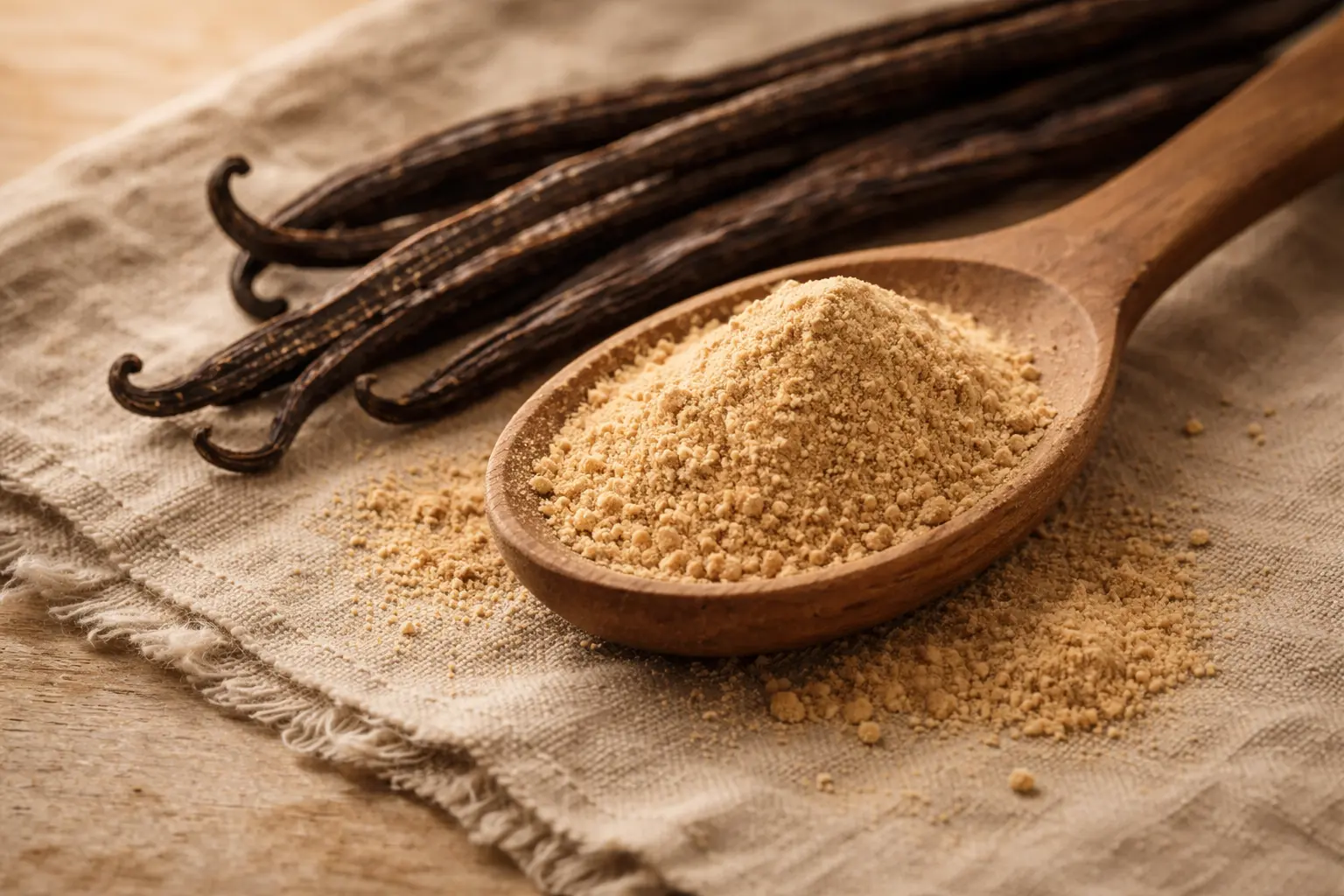 Vanilla powder perfume is especially useful when a tea maker wants a blend to feel fragrant before it even reaches the cup. This is less about making perfume in the traditional sense and more about creating perfume-like aroma in tea.
A perfume-inspired tisane can be built around three layers:
Top notes
These are the first aromas you notice. Think lavender, tulsi, or a very light floral accent.
Heart notes
These shape the identity of the blend. Rose, chamomile, and vanilla often sit here together beautifully.
Base notes
These linger and make the blend feel complete. Vanilla, cinnamon, licorice, and some roots can serve this role.
A simple soft aromatic tisane formula might look like this:
20 grams chamomile flowers
12 grams organic rose petals
10 grams organic vanilla powder
6 grams tulsi leaves
3 grams lavender flowers
2 grams cinnamon chips
By volume, that is roughly:
4 teaspoons chamomile
3 teaspoons rose petals
2 1/2 teaspoons vanilla powder
2 teaspoons tulsi
1 teaspoon lavender
1/2 teaspoon cinnamon chips
Steep 1 heaping tablespoon in 240 ml hot water at about 90 to 95°C for 7 to 10 minutes. Covered steeping helps preserve delicate aroma. The result is not sugary. It is soft, rounded, floral, and comforting.
Try building a fragrant tisane with organic vanilla powder and tulsi leaves when you want warmth without heaviness.
Using Vanilla Powder in Syrups, Steam Blends, and Garnish Work
Tea makers often think first about infusion, but vanilla powder can do more than that. It can shape aroma in syrups, steaming blends, and garnish elements for specialty service.
In a syrup, vanilla powder creates a fuller nose than sugar alone. For a small batch:
250 grams water
200 grams sugar
6 grams vanilla powder
2 grams chamomile flowers
1 gram cardamom, lightly crushed
Simmer gently for 5 minutes, cover, steep 15 minutes, then strain as finely as possible. A second fine strain may be needed because vanilla powder can leave a soft sediment. This style of syrup works well in milk tea, herbal lattes, and floral iced drinks.
For steam blends or tea service theater, a pinch of vanilla with rose, chamomile, or lavender near the lid or dry garnish area can create a beautiful opening aroma as the vessel is uncovered.
Try using chamomile flowers in vanilla syrup for softness, or cardamom pods for a more refined spiced finish.
Troubleshooting Aroma and Blend Performance
Even a beautiful formula can behave unpredictably. This is especially true when working with powder-fine botanicals.
Flat flavor
If the cup smells good dry but tastes dull when brewed, the blend may need a brighter companion note. Tulsi or a touch of lavender can help lift the aroma. Vanilla alone can feel too round without contrast.
Too tart
If a perfume-inspired tea feels sharper than expected, another floral or spice may be dominating. Reduce the sharper ingredient and slightly increase vanilla or chamomile for balance.
Over-carbonation
In kombucha-style aromatic experiments, avoid adding too much syrup or sugar-heavy fragrant material during second fermentation. Vanilla powder itself is not the main carbonation driver, but accompanying sweeteners can push pressure upward quickly.
Sediment
Vanilla powder is fine and naturally prone to settling. Use a finer strainer, or blend it with larger-cut botanicals so it distributes more evenly. In syrups, strain twice and allow the mixture to settle before bottling.
Aroma loss
If the dry blend smells beautiful on day one and weak a week later, exposure to air or humidity is usually the cause. Vanilla and florals are both vulnerable to careless storage.
Vanilla powder perfume works best when the formula has both soft body and a small amount of aromatic lift. If it feels muted, the answer is usually contrast, not just more vanilla.
Storage + Quality
Vanilla powder is sensitive to air, light, and moisture. Because it is finely ground, it offers more surface area to the environment than whole beans do. That means storage matters.
Keep it airtight from the start. Use jars or pouches with excellent seals. Avoid repeated exposure to steam, damp spoons, or open shelf storage near the kettle. Humidity can cause clumping, aroma fade, or a dull flattened scent.
Color is one quality clue. Good vanilla powder should usually look rich tan to medium brown depending on grind and source. A faded or grayish appearance may suggest age or poor handling. Scent is an even better clue. Fresh powder should smell warm, creamy, and naturally sweet, not dusty or stale.
For blended formulas, store away from strong competing odors. Vanilla absorbs ambient scent easily. That can ruin subtle floral work.
Try keeping organic vanilla powder with other delicate aromatics only in tightly sealed containers, and keep lavender flowers equally well protected to preserve balance in the final blend.
Safety
Vanilla-centered herbal blends are often associated with comfort, femininity, romance, and calm, but it is important to keep the language responsible. Vanilla powder perfume can be discussed in terms of sensory appeal, traditional use, and botanical craft without moving into medical claims.
For production-minded makers, this also means being careful with labeling. If the blend is for tea, describe aroma, flavor, ingredients, and preparation. If the blend is a dry aromatic sachet or gifting botanical, label it clearly and do not confuse topical fragrance language with ingestible product language.
Vanilla powder perfume is best understood as a fragrance idea expressed through natural botanicals. That framing keeps the product beautiful, useful, and compliant.
Why Soft Fragrance Profiles Work So Well in Herbal Products
A strong fragrance can impress quickly, but soft fragrance often creates deeper loyalty. In herbal products, that matters. People tend to return to aromas that feel easy to live with. Vanilla is one of the classic examples because it supports rather than dominates.
In tea, a softer scent also leaves more room for texture, temperature, and ritual. Steam rises. The cup warms the hands. The dry jar gives off a gentle sweetness when opened. These are small experiences, but they are memorable. That is where vanilla powder perfume finds its strongest place.
For makers, it offers flexibility. It can move floral, creamy, spicy, woody, or almost resinous depending on the company it keeps. It suits gift blends, evening tisanes, sachet-style aromatic projects, and café-style tea menus that want elegance without excess.
Try combining cinnamon chips and organic vanilla powder for a cozy aromatic base, or soften a floral blend with organic rose petals when you want a more delicate finish.
Conclusion
Vanilla powder perfume is appealing because it brings warmth, familiarity, and quiet luxury into botanical work without becoming loud or artificial. In tea blending, it helps create the kind of aroma that lingers gently in the jar, in the steam, and in memory. Used with care, it can soften florals, round out spices, and give herbal formulas a polished, inviting character. For tea makers and natural product makers alike, vanilla powder perfume is less about sweetness alone and more about balance, texture, and the art of making a blend feel complete.
FAQ
What is vanilla powder perfume in a botanical context?
Vanilla powder perfume usually refers to the soft fragrance appeal created by vanilla powder in dry botanical blends, tea formulas, sachets, or perfume-inspired herbal styling.
Does vanilla powder smell the same as vanilla extract?
No. Vanilla powder usually smells drier, softer, and more muted than extract, with less sharpness and more powdery warmth.
Can vanilla powder be used in tea blends?
Yes. It is often used in herbal tea blends to add warmth, sweetness of aroma, and a rounded finish.
What flowers pair well with vanilla powder?
Rose, chamomile, and lavender are among the most natural pairings, each giving vanilla a different direction.
Why does vanilla powder leave sediment?
Because it is finely ground, some particles naturally settle in water or syrup. Fine straining helps.
How much vanilla powder should I use in a dry blend?
A practical starting point is 3 to 8 grams per 100 grams of dry blend, depending on how noticeable you want the aroma.
How should vanilla powder be stored?
Keep it airtight, dry, and away from heat, light, and humidity to preserve scent and color.
Is vanilla powder perfume only for fragrance projects?
No. It is also useful in tea making, syrup work, aromatic gift blends, and other sensory botanical products.