Bulk Organic Cardamom Pods: Grades, Pricing & Uses
Cardamom holds a special place in the global spice trade. Known as the “queen of spices,” it ranks among the most valuable botanicals by weight, trailing only saffron and vanilla. For tea blenders, spice companies, and food manufacturers, buying bulk organic cardamom wholesale is both a flavor decision and a financial one that demands careful attention to grade, origin, and supplier transparency. Green cardamom pods carry an unmistakable aroma: eucalyptus-bright, resinous, with sweet citrus undertones that transform chai blends, Scandinavian pastries, and Middle Eastern coffee alike. Yet not all cardamom is equal. Grading systems, processing methods, and organic certification standards create meaningful differences in quality and price. This guide covers everything wholesale buyers need to know, from understanding the grading hierarchy and reading a certificate of analysis to selecting the right product format and pairing cardamom with complementary botanicals for finished formulations.
The Market for Bulk Organic Cardamom Wholesale
Global cardamom consumption has climbed steadily over the past decade, driven by growth in specialty tea, craft baking, and wellness products. Guatemala and India remain the two largest producers, with Guatemala dominating volume and India (particularly the Kerala and Karnataka regions) commanding a reputation for aromatic complexity. Organic production represents a growing share of the market as consumer preference shifts toward certified, traceable ingredients. Buyers sourcing bulk organic cardamom wholesale benefit from the premium positioning that organic certification provides, especially in natural food retail and specialty e-commerce channels where customers actively seek out the USDA Organic seal.
Understanding Cardamom Grades and Formats
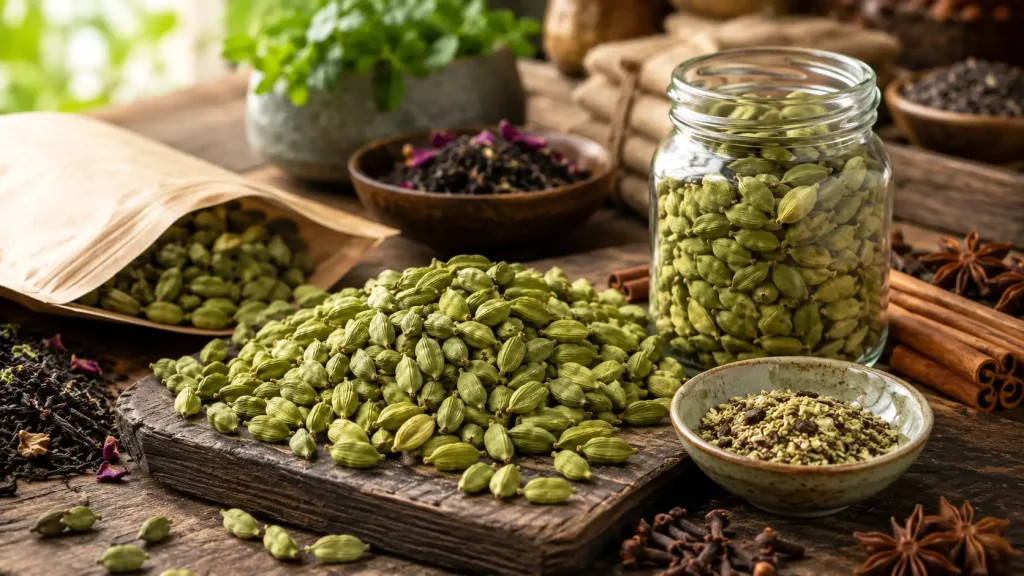
Cardamom is commercially available in several formats, each serving different applications. Whole green pods are the most versatile and shelf-stable format. The outer husk protects the volatile essential oils inside the seeds, preserving flavor for months when stored properly. Hatton Naturals offers Organic Whole Green Cardamom that retains its vivid green color and intense fragrance, indicators of careful drying and storage.
Decorticated cardamom consists of the seeds removed from the pod. This format saves processing time for manufacturers who would otherwise need to dehusk pods before grinding or extracting. The Organic Cardamom Decorticated option delivers concentrated flavor without the fibrous husk, making it efficient for spice blends and extract production.
Ground cardamom powder offers maximum convenience for direct incorporation into recipes and formulations. Organic Green Cardamom Powder eliminates the need for in-house grinding, though it does sacrifice some shelf life compared to whole pods. Plan to use powder within six months of opening for peak aroma and potency.
What Buyers Should Know About Cardamom Pricing
Cardamom pricing is notoriously volatile. Auction prices at the Spices Board of India can swing 20 percent or more within a single week, influenced by weather events, harvest timing, and speculative buying. When evaluating bulk organic cardamom wholesale offers, several factors determine the final cost per kilogram. Grade is the most significant variable. Bold green pods (8 mm and above) command the highest prices, while smaller pods and those with slight discoloration trade at a discount. Organic certification adds a premium of roughly 15 to 30 percent over conventional cardamom of the same grade, reflecting the additional costs of organic farming, documentation, and annual audits.
Volume commitments typically unlock better pricing. Suppliers who maintain U.S. warehouse inventory (rather than shipping direct from origin for every order) can offer more stable pricing and faster delivery. Request quotes for multiple quantity tiers and lock in pricing when the market favors buyers, usually during the post-harvest window between August and November for Indian cardamom.
Sourcing and Quality Indicators
Evaluating cardamom quality before committing to a large order requires both sensory assessment and documentation review. Visually, premium whole green cardamom pods should be uniformly green (not yellowed or bleached), plump, and closed at both ends. Crush a pod between your fingers: the aroma should be immediate, sharp, and complex, with no musty or flat notes. Seeds inside should be dark brown to black, sticky with essential oil, and intensely aromatic.
On the documentation side, a complete certificate of analysis should list volatile oil content (minimum 3 percent for quality lots, with premium lots reaching 6 to 8 percent), moisture percentage (ideally below 12 percent), and standard microbial panels. Verify the supplier’s USDA Organic certificate through the Organic Integrity Database. For buyers exploring the full range of bulk organic cardamom wholesale options, Hatton Naturals provides COA documentation accessible through their COA search page.
Culinary and Commercial Applications
Cardamom’s versatility makes it a staple across multiple product categories. In the tea and beverage industry, whole pods are essential for authentic chai formulations. A single crushed pod per cup releases enough flavor to define the entire blend. Tea companies building chai recipes often combine cardamom with Ceylon Cinnamon Sticks, Organic Ginger Root, and Whole Cloves for a balanced, warming profile.
In baking, cardamom powder drives the flavor of Nordic breads, Finnish pulla, and Indian mithai. Savory applications include biryanis, pilafs, and spice rubs where cardamom’s cooling heat complements black pepper and cumin. The essential oil extracted from cardamom seeds also finds use in aromatherapy and natural fragrance formulations, opening additional revenue channels for businesses that process their own botanicals.
Complementary Botanicals for Cardamom-Based Blends
Building a complete spice or tea blend around cardamom means sourcing several companion ingredients. Beyond the chai staples already mentioned, Organic Fennel Seeds pair beautifully with cardamom in digestive tea blends, offering a sweet anise note that rounds out cardamom’s bright intensity. Whole Black Peppercorn adds warming pungency in masala chai and savory spice blends. For buyers building diverse product lines, sourcing all of these ingredients from a single supplier streamlines procurement and ensures consistent organic certification across every component. The Bulk Organic Herbs page at Hatton Naturals lists the full catalog available for wholesale ordering.
Bulk Ordering Logistics and Packaging
Wholesale cardamom ships in several packaging configurations depending on volume and buyer preference. Standard options include 250 g, 500 g, and 1 kg resealable kraft pouches for smaller wholesale buyers. Larger orders may ship in food-grade poly-lined boxes or bulk bags of 5 kg and above. For businesses that repackage under their own brand, requesting plain bulk packaging without retail labels reduces cost and gives full control over branding.
When placing bulk organic cardamom wholesale orders, confirm lead times carefully. Domestic shipments from U.S. warehouses typically arrive within three to seven business days. Custom orders or unusual formats may require additional processing time. Plan inventory around seasonal demand spikes, particularly the October through December holiday season when chai blends, baked goods, and gift sets drive cardamom consumption to its annual peak.
Storage and Shelf Life Management
Whole green cardamom pods offer the longest shelf life of any format, maintaining quality for up to 18 months when stored in airtight containers at room temperature, away from heat and direct sunlight. The pod’s natural husk acts as a protective barrier for the volatile oils within the seeds. Once that barrier is broken (through decortication or grinding), the clock accelerates. Decorticated seeds should be used within eight to 10 months, and ground powder within four to six months of opening for optimal aroma and flavor delivery.
Humidity is cardamom’s greatest enemy in storage. Moisture above 65 percent relative humidity promotes mold growth and accelerates flavor degradation. If your storage environment fluctuates seasonally, consider desiccant packets inside storage containers and monitor conditions with a simple hygrometer.
Safety and Regulatory Considerations
Cardamom is classified as generally recognized as safe (GRAS) for food use by the FDA. For products marketed as USDA Organic, every link in the supply chain must maintain valid organic certification. Confirm that your supplier’s organic certificate covers the specific product format you are purchasing (whole, decorticated, or powder), as some facilities hold certification for certain formats but not others. Standard food safety documentation should accompany every bulk organic cardamom wholesale lot, including microbial analysis, heavy metals screening (lead, arsenic, cadmium, mercury), and pesticide residue testing confirming compliance with the National Organic Program standards.
Cross-contamination with allergens is uncommon in dedicated spice facilities, but always confirm with your supplier if your finished products carry allergen-free claims. Proper labeling of country of origin is mandatory for retail products containing cardamom in the United States.
Frequently Asked Questions
What is the difference between green and black cardamom?
Green cardamom (Elettaria cardamomum) is the variety used in most culinary, tea, and wellness applications worldwide. It has a bright, complex aroma. Black cardamom (Amomum subulatum) is a different species entirely, with a smoky, camphor-like flavor used primarily in savory South Asian cooking. When buyers reference bulk organic cardamom wholesale, they almost always mean green cardamom.
How many pods are in a kilogram of whole green cardamom?
The count varies by pod size. Bold grade pods (8 mm and above) typically yield 700 to 900 pods per kilogram. Smaller pods may count 1,000 to 1,200 per kilogram. Always confirm approximate count with your supplier when pod count matters for your formulation.
Can I grind whole cardamom pods myself instead of buying powder?
Yes, and many manufacturers prefer this approach for maximum freshness. Use a burr grinder or commercial spice mill. Grind pods with husks for a milder flavor, or remove seeds first for a more concentrated result. Grind in small batches and use promptly.
What is decorticated cardamom best used for?
Decorticated cardamom (seeds without husks) is ideal for extract production, essential oil distillation, and applications where the fibrous husk is undesirable. It saves processing time compared to buying whole pods and removing husks manually.
How do I evaluate cardamom quality from a sample?
Crush one pod and inhale immediately. High-quality cardamom delivers a sharp, complex aroma with eucalyptus, citrus, and resinous notes. Flat, musty, or faint aromas indicate age, poor drying, or improper storage. Also check that pods are uniformly green and closed at both ends.
What certifications should I look for when buying organic cardamom?
At minimum, USDA Organic certification issued by an accredited certifying agent. For international markets, EU Organic or equivalent certifications may be required. Kosher and non-GMO project verification are additional credentials that many wholesale buyers request.
Is cardamom safe to use in products for children?
Cardamom has a long history of culinary use across all age groups. As with any ingredient, use age-appropriate quantities and consult relevant food safety guidelines for products specifically formulated for infants or young children.
When is the best time to buy cardamom for the best price?
Indian cardamom harvest peaks between August and February, with auction prices often softening in the post-harvest glut. Buying during this window, particularly November through January, may offer pricing advantages for large orders.
Buying bulk organic cardamom wholesale rewards careful attention to grade, origin, and supplier credibility. From bold green pods destined for chai blends to finely ground powder for baking premixes, the right cardamom elevates every product it touches. Explore the complete range of organic cardamom formats and complementary spices at Hatton Naturals, and build your next formulation on a foundation of certified quality.