Buy Ceylon Cinnamon: What to Look For
When you decide to buy Ceylon cinnamon, you are making a deliberate choice for quality and authenticity. True Ceylon cinnamon — Cinnamomum verum — is a fundamentally different spice from the common cassia cinnamon sold in most grocery stores. It has a softer, more delicate flavor and a composition that distinguishes it from its more widely available cousin. Yet most cinnamon shoppers have never tasted real Ceylon and do not know how to identify it.
This guide covers everything you need to know before you buy Ceylon cinnamon, from how to spot the real thing to the different formats available and how to get the most out of each one.
Ceylon Cinnamon vs. Cassia: The Key Differences
The cinnamon most people grew up eating is cassia — specifically Chinese cassia (Cinnamomum cassia) or Vietnamese cassia (Cinnamomum loureiroi). Cassia is bolder, more pungent, and sweeter than Ceylon. It is also far cheaper to produce, which is why it dominates the spice market in the United States.
Ceylon cinnamon, by contrast, has a more complex, almost citrusy sweetness with floral undertones. The heat is much gentler, and the aftertaste is clean rather than lingering. Professional pastry chefs and serious home cooks often prefer Ceylon for delicate desserts where they want cinnamon’s flavor without overpowering everything else.
The other major difference is coumarin content. Cassia cinnamon contains relatively high levels of coumarin, a naturally occurring compound that the European Food Safety Authority has flagged as a concern at high intake levels. Ceylon cinnamon contains only trace amounts of coumarin. For people who consume large quantities of cinnamon daily — in smoothies, coffee, or supplements — this distinction may be worth considering.
How to Identify True Ceylon Cinnamon
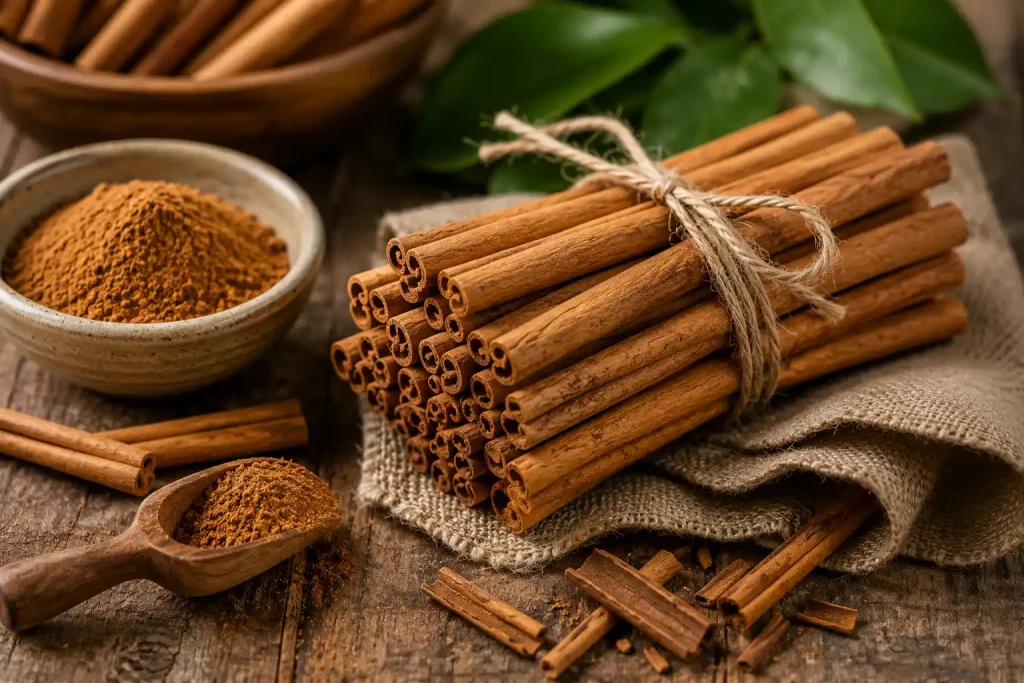
When you buy Ceylon cinnamon in stick (quill) form, identification is straightforward. True Ceylon forms thin, tightly rolled layers, like a cigar with multiple nested tubes inside. The quills are light tan to golden brown, with a papery, almost feathery texture. They crumble easily when you press them.
Cassia sticks, by contrast, are hard, woody, and typically single-layer — one thick roll of bark that you cannot easily break by hand. Cassia is dark reddish-brown and has a rough texture on the outside. Biting down on a cassia stick feels like chewing a twig. Ceylon crumbles between your fingers.
In powder form, identification is harder but not impossible. Ceylon powder is typically lighter in color — a warm, pale tan — and has a more delicate aroma compared to cassia’s aggressive, sharp smell. If you are buying powder and authenticity matters, purchase from a reputable supplier who specifies the species on the label. The label should say Cinnamomum verum or “true Ceylon cinnamon,” not just “cinnamon.”
Ceylon Cinnamon Formats: Quills, Chips, Cut and Sifted, and Powder
When you buy Ceylon cinnamon, you will encounter several formats, each suited to different uses. Understanding the differences helps you choose the right one for your kitchen.
Quills are whole cinnamon sticks. They are ideal for infusing flavor into liquids — mulled wine, chai, cider, poaching liquids, and rice dishes. Drop a quill into the pot and let it simmer with the liquid. Remove before serving. Ceylon cinnamon quills are also beautiful as a garnish in warm drinks.
Cut and sifted cinnamon consists of bark that has been cut into small pieces and sifted to remove dust and fine powder. This format releases flavor faster than whole quills and is excellent for teas, spice blends, and pickling brines. Ceylon cinnamon cut and sifted works well when you want infusion speed without committing to grinding.
Chips are irregular pieces of cinnamon bark, typically larger than cut-and-sifted but smaller than quills. They are great for steeping in liquids or making homemade extracts and tinctures. Ceylon cinnamon chips offer a more rustic option for infusion projects.
Powder is the most versatile format for everyday cooking. It is pre-ground and ready to measure directly into recipes. Use it in baked goods, spice rubs, oatmeal, coffee, and smoothies. Ceylon cinnamon powder is convenient and delivers consistent flavor every time.
Cooking with Ceylon Cinnamon
Ceylon cinnamon’s gentler flavor makes it versatile across both sweet and savory applications. In baking, it shines in recipes where the cinnamon is a supporting player rather than the star — spiced shortbread, apple pie, and rice pudding all benefit from Ceylon’s nuanced sweetness without cinnamon becoming overpowering.
In savory cooking, Ceylon performs well in Moroccan tagines, Persian rice dishes, and Indian biryanis. These cuisines have long used true Ceylon, and the spice’s floral, slightly citrusy notes complement lamb, chicken, and slow-cooked vegetables beautifully. Add a quill to the braising liquid and let it infuse for a subtle but complex background note.
Ceylon cinnamon also makes excellent cinnamon tea. Steep a small chip or half a quill in boiling water for eight to ten minutes. Add honey and a slice of ginger for a warming, aromatic cup. The flavor is noticeably smoother and more complex than cinnamon tea made with cassia.
Ceylon Cinnamon in Coffee and Beverages
Many coffee drinkers add cinnamon to their morning cup. Ceylon is the better choice here because its delicate flavor enhances rather than overwhelms the coffee’s natural notes. A quarter teaspoon of Ceylon powder stirred into your cup or added to the grounds before brewing is all you need.
In lattes and cappuccinos, Ceylon dusted on top provides a warm, aromatic finish. Golden milk — warm milk blended with turmeric, ginger, black pepper, and a touch of sweetener — is another popular application where Ceylon’s milder profile lets the turmeric take center stage.
For homemade chai, combine Ceylon cinnamon with cardamom, cloves, black pepper, and ginger. Simmer in milk and water for fifteen minutes. The result is a fragrant, layered chai that showcases each spice individually rather than blending into an undifferentiated warmth.
Storage Tips for Ceylon Cinnamon
Store Ceylon cinnamon in an airtight container away from heat, light, and moisture. Whole quills and chips stay fresh for two to four years under proper conditions. Ground powder loses potency more quickly — expect about one to two years before the flavor begins to fade.
Buy only what you will use within a reasonable timeframe. While bulk buying is economical, there is no advantage to purchasing large amounts of ground spice if it will sit for years. Quills and chips hold their quality much longer, so bulk purchasing makes more sense for those formats.
Label containers with the purchase date. Taste a small amount before using old stock — if the cinnamon lacks aroma and flavor, it is time to replace it. Fresh Ceylon should have a distinctly sweet, floral, complex smell the moment you open the container.
Note: This post covers culinary uses and identification of Ceylon cinnamon. It does not constitute medical or nutritional advice. Consult a qualified healthcare provider for guidance specific to your health needs.
Frequently Asked Questions About Buying Ceylon Cinnamon
Why is Ceylon cinnamon more expensive than regular cinnamon?
Ceylon cinnamon is more labor-intensive to produce. The bark must be hand-peeled from young branches and carefully rolled into the characteristic multi-layer quills. Cassia bark is stripped in thicker pieces and requires much less processing. Sri Lanka, the primary producer of Ceylon cinnamon, also has limited growing area compared to the countries that produce cassia at industrial scale.
Can I substitute Ceylon cinnamon for cassia in recipes?
Yes, you can substitute one for the other in equal amounts. Keep in mind that Ceylon has a milder flavor, so some people increase the amount slightly when switching from cassia. If a recipe calls for a bold, assertive cinnamon presence — like a strongly spiced cookie — you may want to add an extra pinch of Ceylon to compensate for the flavor difference.
Does Ceylon cinnamon powder taste different from the sticks?
The flavor profile is the same, but the intensity differs slightly. Freshly ground cinnamon from sticks has a brighter, more aromatic flavor than pre-ground powder that has been sitting in a container. If you want the fullest flavor from your Ceylon, grind small batches from quills or chips using a spice grinder as needed.
Where does the best Ceylon cinnamon come from?
Sri Lanka — formerly Ceylon — is the traditional and highest-regarded source. The island gives true cinnamon its common name. High-quality Ceylon is also produced in Madagascar, Seychelles, and parts of India, though Sri Lankan-origin Ceylon is generally considered the gold standard. Look for origin information on the label when you buy Ceylon cinnamon.
Ready to stock your spice rack? Shop Ceylon cinnamon cut and sifted, quills, chips, and powder at Hatton Naturals — bulk pricing available with no compromise on quality.