Coriander vs Cilantro: Same Plant
Coriander vs cilantro is one of the most common points of confusion in the kitchen, and the answer is surprisingly simple once you understand the botanical facts. Both coriander and cilantro come from the same plant — Coriandrum sativum — but refer to entirely different parts of it. Furthermore, their flavors are so different that you would never guess they share an origin.
This guide clears up the confusion around coriander vs cilantro, explains when to use each, and provides practical cooking guidance drawn from the culinary traditions that have relied on this remarkable plant for thousands of years. Additionally, you will learn why this naming discrepancy exists and how different countries handle it.
The Botanical Truth: One Plant, Two Names
Coriandrum sativum is a flowering annual herb in the Apiaceae family, related to parsley, dill, and caraway. The entire plant is edible, but different parts have radically different flavors and culinary applications.
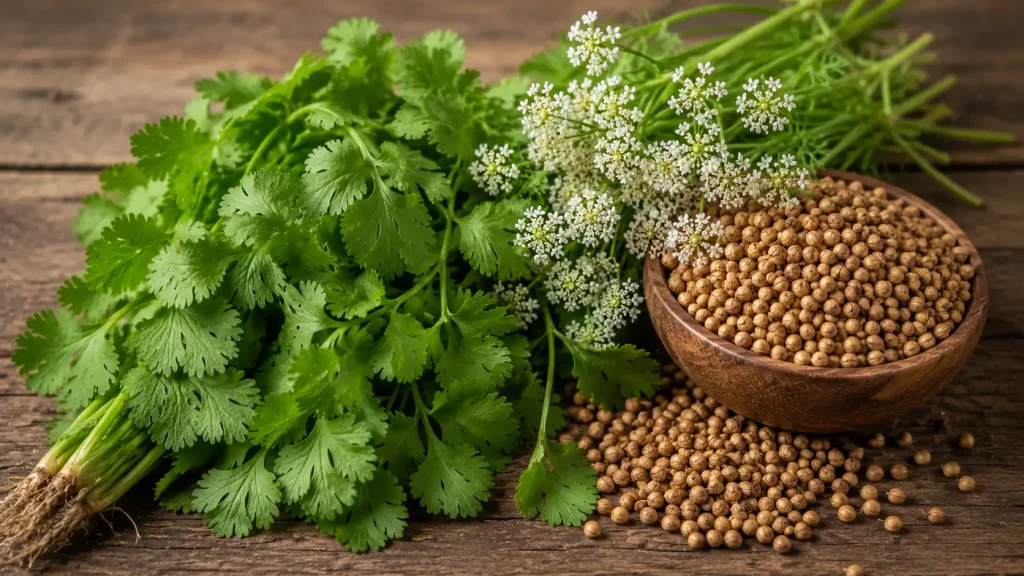
In North American English, cilantro refers to the fresh green leaves and stems of the plant. Coriander refers to the dried, mature seeds. This is the standard convention in the United States and Canada. However, in British English and across much of the world, both the leaves and seeds are called coriander — the fresh herb is simply “fresh coriander” or “coriander leaves.”
The word “cilantro” comes from Spanish, where it is the name for the fresh herb. As a result, American English adopted the Spanish term through Mexican culinary influence, particularly in the Southwest. This linguistic history explains exactly why the coriander vs cilantro confusion persists — two different names from two different language traditions for the same plant part.
Flavor Comparison: Coriander Seeds vs Cilantro Leaves
The flavor difference between coriander seeds and fresh cilantro leaves is dramatic. Coriander seeds have a warm, citrusy, slightly sweet and earthy flavor. They are gentle and rounded, without any sharpness. Toasting them intensifies their nuttiness and brings out lemon-like notes.
Fresh cilantro leaves taste bright, intensely herbaceous, and polarizing. Many people love the fresh, slightly citrusy, almost soapy quality of cilantro. However, a significant portion of the population has a genetic variant that makes cilantro taste overwhelmingly like soap — this is caused by aldehyde compounds in the leaf that these individuals detect much more strongly.
Dried coriander seeds contain entirely different aromatic compounds than fresh leaves. Linalool is the dominant compound in seeds, while fresh leaves contain a higher proportion of the aldehyde compounds that cause the “soap” effect. Therefore, people who dislike cilantro leaves often have no problem with coriander seed flavor.
Coriander Seeds in the Kitchen
Whole coriander seeds are a versatile spice used across South Asian, Middle Eastern, Latin American, and European cuisines. They appear in curry blends, pickling spices, sausage seasonings, bread recipes, and spice rubs for meat.
Like cumin, coriander seeds benefit enormously from toasting before use. Dry-toast whole seeds in a skillet over medium heat for sixty to ninety seconds until fragrant. Grind them immediately or store for up to a week. Freshly ground coriander is a revelation compared to commercial pre-ground powder that has been sitting on a shelf.
Coriander powder is convenient for everyday cooking and works well in sauces, marinades, and spice blends where a smooth texture matters. Moreover, coriander powder forms the largest single component by volume in most commercial curry powder blends, reflecting just how central this spice is to South Asian cooking.
Classic Coriander and Cumin Pairing
In the coriander vs cilantro question, coriander seeds almost always appear alongside cumin in savory cooking. These two spices have a natural affinity — coriander’s citrus brightness balances cumin’s earthy depth. Together, they form the base of dozens of spice blends.
A standard ratio in many curry masalas is two parts coriander to one part cumin. This combination goes into garam masala, ras el hanout, chermoula, and countless regional spice blends. Furthermore, both spices bloom beautifully in hot oil during the tadka technique that anchors South Asian cooking.
Cumin seeds and coriander seeds used together from whole form is a foundational habit for any serious home cook interested in global spice traditions.
Fresh Cilantro in the Kitchen
Fresh cilantro leaves and tender stems are used as a finishing herb rather than a cooking herb. Adding cilantro to a hot dish wilts and dulls it almost instantly. Instead, add it raw at the end — scattered over finished tacos, stirred into cold salsa, or laid across a plated curry just before serving.
In Mexican and Central American cooking, fresh cilantro is non-negotiable for dishes like guacamole, pico de gallo, and pozole. In Indian cooking, fresh coriander chutney (made from blended cilantro leaves, green chili, and lime) is a standard condiment. Similarly, Southeast Asian cuisines use cilantro as a garnish for soups and rice dishes.
The roots of the cilantro plant are also edible and used in Thai cooking, where they add a deeper, earthier flavor than the leaves. Consequently, the entire coriander plant from root to seed has culinary value.
Can You Substitute One for the Other?
No — coriander seeds and fresh cilantro are not interchangeable. They serve completely different culinary functions. Coriander seeds add warm, slow-building depth as a cooked spice. Fresh cilantro adds bright, raw herbal flavor as a garnish or fresh component.
If you dislike fresh cilantro, there is no substitute that perfectly replicates its flavor. However, flat-leaf parsley provides a fresh green herbaceous quality without the polarizing soapy notes. It works reasonably well in dishes where cilantro is used primarily for color and freshness rather than its specific flavor character.
Conversely, if you do not have coriander seeds, there is no direct substitute among other herbs. A combination of caraway seed and a small amount of fennel seed approximates part of the flavor profile, but not completely. For this reason, keeping whole coriander seeds stocked in your pantry is worthwhile.
Storing Coriander Seeds and Fresh Cilantro
Whole coriander seeds store exceptionally well — up to two to three years in an airtight container away from light and heat. Their hard structure protects the aromatic oils effectively. Ground coriander powder retains peak flavor for six to twelve months.
Fresh cilantro is far more perishable. It keeps for one to two weeks in the refrigerator when stored with its stems in a glass of water, loosely covered with a plastic bag. Additionally, fresh cilantro freezes reasonably well — chop it, spread it on a baking sheet to freeze individually, then store in a sealed bag for up to three months.
Important note: This article is for culinary education purposes. Both coriander seeds and fresh cilantro are food ingredients with a long history of safe use. Individuals with specific spice or herb allergies should exercise appropriate caution.
Frequently Asked Questions
Is coriander vs cilantro a matter of geography or language?
Both. In the United States, “cilantro” (from Spanish) is used for the fresh herb and “coriander” for the seed. In the United Kingdom, Australia, and most other English-speaking countries, both the leaf and seed are called coriander. The distinction is purely linguistic, not botanical — it is the same plant throughout.
Why do some people think cilantro tastes like soap?
This is a well-documented genetic response. People who carry variants of the OR6A2 olfactory receptor gene are particularly sensitive to certain aldehyde compounds in fresh cilantro leaves, which taste strongly of soap to them. Research suggests roughly 4 to 14 percent of the population experiences this. Coriander seeds do not contain the same aldehyde profile, so those individuals can typically enjoy coriander seeds without issue.
Can I grow coriander from the seeds I buy as a spice?
Yes, with some caveats. Whole coriander seeds sold as spice are sometimes viable if they have not been heat-treated or irradiated. Crack the seeds lightly to improve germination rates and sow them directly in garden soil. However, if you specifically want fresh cilantro leaves, buy seeds labeled for herb growing, which are often a more leaf-productive variety.
What is the best way to use coriander seeds in a recipe?
Toast them whole in a dry pan first, then grind or use whole depending on the dish. For spice blends and sauces, grinding gives the best results. For pickling, whole seeds work beautifully. Additionally, in tadka (hot oil tempering), whole coriander seeds bloom alongside cumin and add a gentle citrus-warm note to the entire dish.
Get freshly sourced organic coriander seeds at Hatton Naturals and bring this essential spice into your kitchen in its most flavorful whole form.