Blue Cornflower Tea Recipe and Brewing Guide
A good blue cornflower tea recipe begins with understanding what cornflower actually brings to the cup. Blue cornflower petals are not usually the loudest herb in a blend. They are more delicate than that. Their value lies in color, visual lift, soft floral nuance, and the way they make a tea feel refined without becoming perfumed or heavy. Herbalists and tea makers have long appreciated cornflower for this quiet elegance. It can brighten a simple infusion, soften a stronger formula, and make a loose leaf blend look alive before hot water even touches it. In practical blending, blue cornflower petals are often used to add light floral character and visual contrast to darker leaves, fruit pieces, and tart flowers.
That is why a blue cornflower tea recipe works best when approached with restraint and intention. Too little and it disappears. Too much and it can become dry, papery, or decorative without purpose. The best use is usually somewhere in the middle, where the petals have room to open, float, and contribute their subtle personality. This guide covers how to brew blue cornflower with precision, how to pair it intelligently, and how to protect its color and aroma from field to storage shelf. For tea makers, this is less about novelty and more about balance, texture, and sensory design.
What Makes a Blue Cornflower Tea Recipe Worth Brewing
A strong blue cornflower tea recipe is not built on intensity. It is built on elegance. Cornflower petals tend to contribute a mild floral note that can read slightly green, slightly honeyed, or simply clean depending on what surrounds them. On their own, the petals produce a light infusion. In a blend, they act more like a finishing herb, helping shape aroma and appearance while supporting the main body of the tea.
This is why cornflower is so useful in loose leaf work. It gives a blend lift. When dark botanicals, roots, or tart fruits dominate, cornflower can soften the visual and sensory profile. A tea maker looking for a polished retail blend often uses petals this way. They catch the eye first, then contribute just enough grace in the cup to justify their presence.
For a classic floral-tart combination, blue cornflower petals bring color and softness to the leaf mix from the start.
How Blue Cornflower Tastes in the Cup
People often expect a bold floral tea and are surprised by how gentle cornflower really is. The flavor is usually mild, clean, and lightly floral. Some lots lean faintly sweet in aroma. Others feel greener and drier. Much depends on freshness, cut, storage, and what the petals are blended with.
On its own, cornflower is usually too subtle to carry a dramatic infusion unless you enjoy whisper-light herb teas. Where it shines is in supporting roles. It works especially well with black tea, green tea, fruit pieces, mint, and selective flowers. Its flavor does not usually overpower. Instead, it rounds sharp edges and gives a blend a more layered finish.
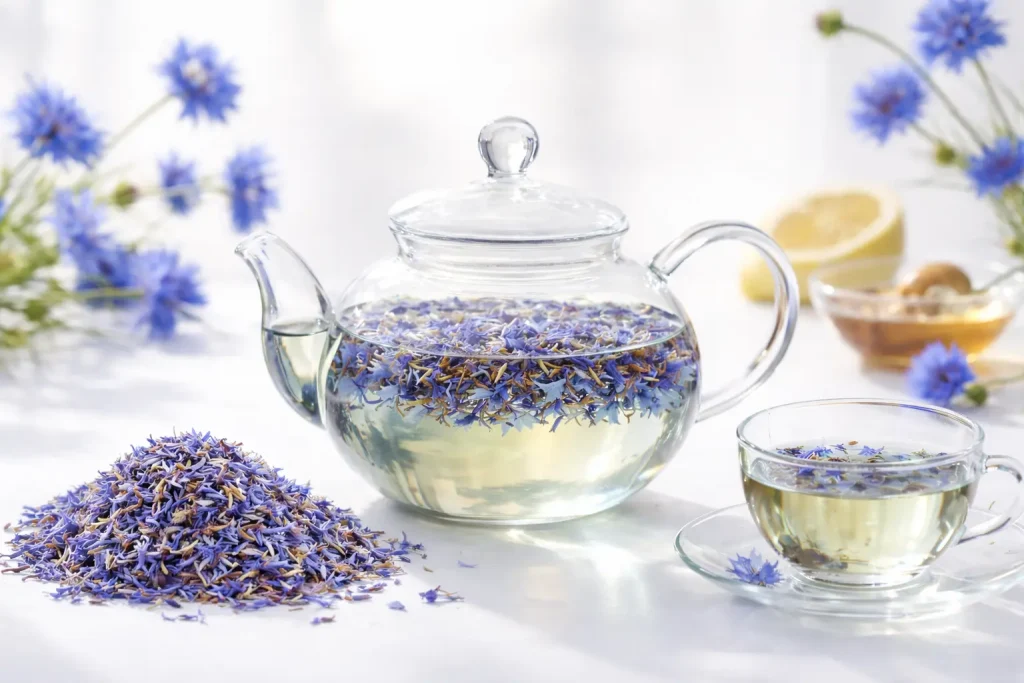
The texture also matters. Whole or large petals open attractively in hot water and create a floating, almost suspended look in a glass vessel. That visual effect is one reason tea makers and herbal brands keep returning to cornflower. It performs well in transparent teapots and clear cups, where beauty is part of the beverage experience.
If you want a more fruit-led profile beneath the floral top note, hibiscus flowers can add brightness and a ruby backbone when used carefully.
Blue Cornflower Tea Recipe Basics: Ratios, Water, and Time
The best blue cornflower tea recipe depends on whether you want a pure petal infusion or a balanced blend. For a simple petal-forward cup, start with 1 to 1.5 grams of blue cornflower petals per 8 ounces of water. That is about 2 to 3 teaspoons of light, fluffy petals, depending on petal size. Use water at 200°F (93°C) and steep 5 to 7 minutes, covered.
For a more complete signature blend, this ratio works well:
- 1.5 grams cornflower petals (about 3 teaspoons)
- 1 gram hibiscus flowers (about 1 teaspoon loosely packed)
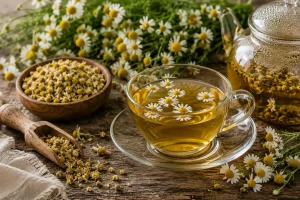
- 1 gram chamomile flowers (about 1 tablespoon whole flowers)
- 0.5 gram spearmint leaf (about 1 teaspoon)
- 8 to 10 ounces water at 200°F (93°C)
- Steep 6 to 8 minutes, covered
This produces a floral cup with visible blue petals, a soft tart edge, and enough aromatic movement to feel complete. If the tartness rises too far, reduce hibiscus before reducing cornflower. Cornflower works best when not asked to compete with aggressive acidity.
Tea makers working on retail-friendly appearance can also reserve a small pinch of petals to add at the very end of blending so the visual color stays more intact. For a calming floral middle note, chamomile flowers pair especially well with cornflower in warm evening-style blends.
Why the Color and Aroma Matter So Much
A blue cornflower tea recipe succeeds partly because we drink with our eyes before we drink with our mouth. Blue petals in a dry blend signal freshness, care, and botanical complexity. Once brewed, they create motion in the teapot. Petals rise, drift, and settle. That visual rhythm can transform a simple infusion into something that feels crafted.
Aroma is more delicate. Cornflower is not a loud flower like lavender. Its contribution is quiet. If it smells dusty or nearly absent in storage, the tea maker may still keep it for color, but the sensory quality is already slipping. Good cornflower should smell faintly floral and clean, never stale, cellar-like, or flat.
This matters for production because cornflower is easy to overestimate. People assume color equals flavor. It does not. In the best blends, color and aroma work together. The petals invite the eye while the supporting herbs carry much of the body. That balance keeps the blend honest.
If you want to extend the fresh, lifted impression of cornflower without making the cup heavy, lemon verbena adds a bright leafy elegance that stays refined.
Building Better Blends Around Cornflower
The smartest way to use a blue cornflower tea recipe is to think in layers. Ask what your body note is, what your lift is, and what your finish is. Cornflower usually belongs in the lift. It is not typically the deepest note and not usually the lasting base. It is a floral bridge.
For a vivid botanical fruit blend, combine cornflower with hibiscus and apple. For a greener, cleaner style, combine it with lemon verbena and mint. For a softer floral profile, pair it with chamomile and a light tea base. If you are using black tea, keep the cornflower visible enough to matter visually. Dark leaf can swallow the petals if you underdose.
One useful method for small-batch tea makers is to blend by volume first, then refine by weight. Cornflower petals are light and fluffy, so a blend that looks balanced in a scoop can turn out very different on a gram scale. Once you find the visual balance you want, weigh everything and keep records. That is how a beautiful blend becomes repeatable.
For a gentle orchard sweetness that softens tart floral blends, dried apple pieces are an easy addition that most customers understand immediately.
Troubleshooting
Flat flavor usually means the blend depends too much on petals and not enough on body ingredients. Cornflower alone is mild. Add a supporting herb such as chamomile, mint, or a tea base.
Too tart is most often caused by excess hibiscus. Pull it back in small increments. Cornflower should not have to fight for space in the cup.
Over-carbonation becomes relevant if you are using the infusion as a base for sparkling tea, fermented soda, or secondary bottle work. Reduce residual sugar, chill sooner, and bottle only when pressure is predictable.
Sediment can happen when flower fragments are too fine or the blend is handled roughly. Use a finer infuser or double strain before serving in glassware.
Aroma loss usually comes from age, heat, or poor packaging. Cornflower that has sat exposed to light or humidity can still look pretty while contributing very little.
If a blend feels visually beautiful but aromatically weak, spearmint leaf can restore freshness without drowning the floral profile.
Storage + Quality
Storage determines whether your cornflower remains useful as a tea ingredient or becomes mere decoration. Keep petals in airtight packaging away from heat, humidity, and direct light. Blue petals are especially vulnerable to fading. Once color dulls toward gray-blue and the scent thins out, your blending window is narrowing.
The best quality cues are visual and aromatic. Good petals should hold a strong blue tone, feel dry but not brittle like paper dust, and smell fresh and lightly floral. If the petals clump, soften, or carry a stale odor, moisture has likely entered the batch.
For working inventory, use smaller containers and refill from bulk stock as needed. Repeatedly opening a large master bag exposes the whole lot to humidity and scent loss. Tea makers who care about presentation should also handle petals gently. Rough scooping crushes them and makes the final blend look tired.
For cooler, more apothecary-style formulas, lavender flowers can be used in very small amounts with cornflower, especially when visual elegance is part of the goal.
Safety
Cornflower is commonly used in tea blends and botanical preparations, but practical caution still matters. Use only petals intended for tea or food use, not decorative flowers of uncertain handling. Clean sourcing matters because flowers can be delicate and easily affected by poor drying or storage conditions.
Keep language compliant. Cornflower is traditionally used in herbal practice and may support a pleasant, soothing tea ritual, but it should not be presented as a treatment for disease or as medical advice. For tea companies, that distinction matters. A beautiful cup can be described in terms of flavor, aroma, tradition, and experience without crossing into risky claims.
Anyone sensitive to flowers or botanical ingredients should test gently. And if you are blending commercially, consistency is part of safety too. Keep batch notes, steeping standards, and storage controls tight.
The best blue cornflower tea recipe is not complicated. It is measured, fresh, and visually thoughtful. When the petals are good and the supporting ingredients are chosen with discipline, the result is a tea that feels airy, graceful, and complete. That is why the blue cornflower tea recipe continues to earn a place in herbal blending. It works not by force, but by precision.
FAQ
What is the best blue cornflower tea recipe for beginners?
A simple beginner blue cornflower tea recipe is 1 to 1.5 grams of petals per 8 ounces of water, steeped 5 to 7 minutes at 200°F.
Does blue cornflower tea have a strong flavor?
No. It is usually mild and lightly floral, which is why it works best in blends.
Can I blend blue cornflower with hibiscus?
Yes. It is a classic pairing, but keep hibiscus moderate so the cornflower is not buried.
Why does my blue cornflower tea recipe taste weak?
Usually because cornflower is subtle by nature or because the petals are old and have lost aroma.
How many teaspoons of cornflower petals should I use?
About 2 to 3 teaspoons per 8 ounces is a good starting point for a petal-forward cup.
How should I store cornflower petals?
Keep them airtight, dry, and away from light to protect color and aroma.
Can I use blue cornflower in iced tea?
Yes. It works beautifully in iced floral blends, especially with mint or fruit pieces.
Why does the blue cornflower tea recipe work so well in clear teapots?
Because the petals float and open attractively, adding visual movement as well as a light floral note.