Vanilla Supplier Wholesale Guide for Bulk Buyers
Choosing a vanilla supplier is rarely just about price. In real production, vanilla is one of the ingredients most likely to expose weak sourcing decisions because its aroma is complex, its quality can swing widely from lot to lot, and its cost invites shortcuts all along the supply chain. That is why a serious vanilla supplier wholesale search should begin with a practical question: can this supplier help you maintain flavor, consistency, and honest specification over time. For tea makers, beverage formulators, bakers, private label brands, and apothecary-style product companies, vanilla has to do more than sound premium on paper. It has to perform in batch work, survive storage, and deliver the same sensory profile when you reorder.
A good vanilla supplier wholesale relationship is built on clarity. You should know what form you are buying, what grade or specification applies, how moisture and aroma are being protected, how the ingredient behaves in your application, and whether the supplier can scale without degrading quality. This guide breaks that process down in commercial terms, with attention to whole vanilla beans and vanilla powder, plus the quality, storage, and blending details that actually matter once the ingredient reaches your production shelf.
Why Vanilla Is Harder to Source Well Than It Looks
Vanilla sounds simple because most people think of it as one familiar flavor. In practice, vanilla is a difficult ingredient to buy well. Whole beans differ in size, moisture, flexibility, appearance, aroma strength, and curing quality. Powder differs in grind, purity, carrier use, color, and flavor persistence. Some lots are rich and rounded. Others smell flat, woody, or thin. The gap between a premium lot and a disappointing one can be large, even when the paperwork looks similar.
This is why the vanilla supplier wholesale process needs more rigor than many buyers expect. A supplier may offer attractive photos and low pricing, but the commercial question is whether the ingredient will function repeatedly in your product line. Whole beans used for extracting, infusing, or visual premium positioning need different strengths than powder used in dry blends or beverage bases.
For applications where visual appeal matters as much as aroma, vanilla beans are often the best starting point for premium product development and menu presentation.
Understanding the Difference Between Vanilla Beans and Vanilla Powder
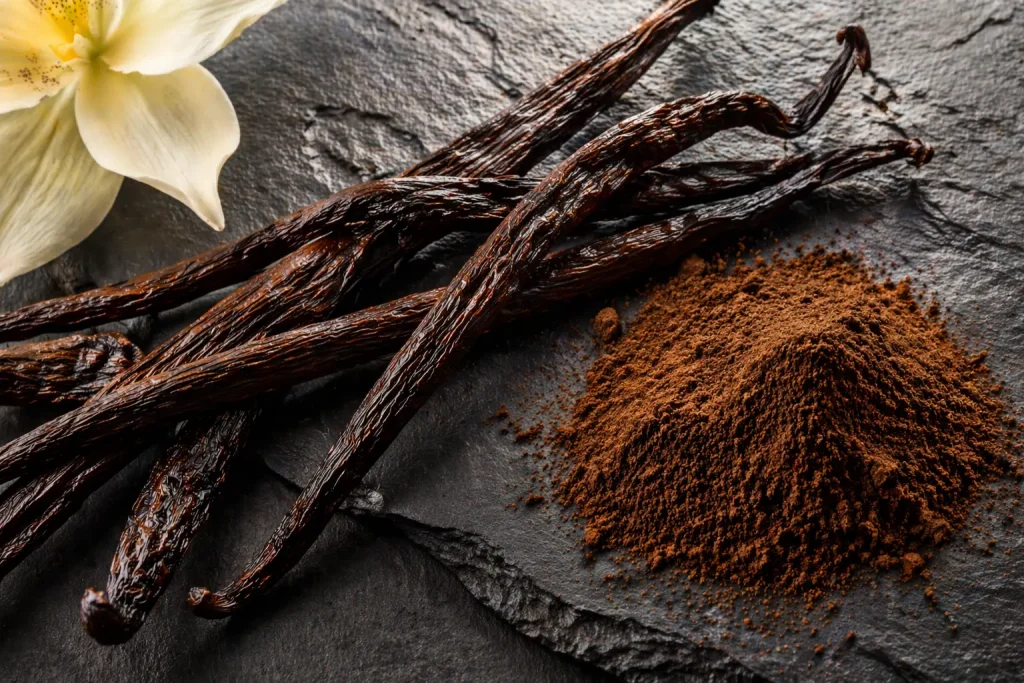
Before evaluating a supplier, define which form of vanilla you actually need. Whole vanilla beans are ideal when you want maximum sensory authenticity, visual premium cues, and flexible use across infusions, syrups, dairy, bakery, or botanical formulas. Beans allow you to split, scrape, steep, or grind in-house. They also help you judge quality directly because appearance and aroma are easier to inspect.
Vanilla powder is different. It is useful when speed, consistency, dry blending, and even dispersion are more important than appearance. Powder can be excellent in tea blends, baking mixes, drink powders, and seasoning-style applications. But not all vanilla powder is equal. Some are true ground vanilla. Others are diluted with carriers or sweeteners. That difference matters commercially.
A strong vanilla supplier wholesale partner should be able to tell you exactly what the powder contains, what the grind looks like, whether anti-caking agents are used, and how flavor compares from lot to lot. The more specific the answers, the better your odds of avoiding unpleasant surprises.
If you need easier incorporation into dry formulas or tea blends, vanilla powder can offer faster scaling and more uniform batch work.
What to Ask Before Choosing a Vanilla Supplier Wholesale Partner
A good buyer asks better questions than “what is your best price.” Start with specification and handling. Ask about origin, grade, moisture protection, packaging format, minimum order sizes, and lot consistency. Ask how the vanilla is stored before shipping and whether samples are available from the exact lot you may purchase.
You should also ask application-based questions. Does the vanilla hold up in hot-fill products. Does the aroma stay visible in dry tea blends and the powder clump in humid environments. Are the beans pliable and oily enough for extraction work, or are they dry and better suited for grinding. A supplier who understands commercial use will answer in practical language, not just marketing language.
For repeat buyers, supply continuity matters almost as much as quality. A beautiful first lot is not enough if the second lot arrives weaker, drier, or visually inconsistent. Reliable sourcing means the supplier can explain what varies naturally and what they do to manage that variation.
If your vanilla products lean into warm bakery or chai-style profiles, cinnamon chips are a natural supporting ingredient for sampling and blend testing.
Sensory Evaluation: How to Judge Quality Like a Practical Buyer
Commercial buyers should learn to evaluate vanilla with the senses first, then let documents confirm what the nose and hands already suspect. With whole beans, look for flexibility, sheen, length consistency, and a rich aromatic profile. Good beans are usually pliable rather than brittle. They should smell deep, warm, creamy, and complex, not dusty or sharply woody.
For powder, look at aroma, color, texture, and purity cues. The grind should suit the intended application. A tea blend may tolerate a slightly more textured powder than a fine bakery mix. Aroma should be round and clear. If the powder smells muted or excessively sweet in a way that suggests fillers, ask harder questions.
This is where the vanilla supplier wholesale choice becomes practical instead of theoretical. Good suppliers understand that serious buyers compare lots with their nose, not only with spreadsheets. Sensory stability is one of the strongest signs of supplier maturity.
To round out vanilla in fruit or floral tea trials, chamomile flowers can soften the profile without overpowering the creamier notes.
Bulk Buying Strategy: Price Per Unit Versus Usable Yield
A common mistake in vanilla purchasing is buying the cheapest unit price rather than the best usable yield. Cheap beans that are dry, thin, or low in aroma may cost more in the end because you need more material to reach the same sensory result. Powder with fillers may appear economical but weaken the integrity of your finished product.
So compare suppliers on real performance. Ask how much vanilla you need per kilogram or per gallon in your actual application. Run side-by-side tests. A more expensive lot may outperform a cheaper one by enough margin to make it the better commercial choice.
For small pilot testing, a useful benchmark is this:
- Whole beans for infusion: 4 to 6 grams per 16 ounces liquid base
- Powder for dry blend testing: 1 to 2 grams per 100 grams finished mix
- Powder by volume: about 1 to 1.5 teaspoons per 100 grams blend, depending on grind density
These are starting points, not final formulas, but they help buyers compare aroma efficiency. If one powder needs twice as much to show up cleanly, it is not actually the cheaper ingredient.
For bakery, chai, and warming beverage concepts, cardamom pods can help you test how well your vanilla holds up in more aromatic frameworks.
Packaging, Documentation, and Logistics That Matter
Once quality is confirmed, logistics decide whether the relationship is scalable. The vanilla supplier wholesale decision should include packaging suitability, lead times, shipping stability, and basic documentation discipline. Whole beans need packaging that protects moisture and aroma. Powder needs barriers against humidity, scent drift, and clumping.
Ask how the product is packed for transit. Bulk plastic liners, vacuum formats, heat-sealed bags, and case sizing all matter. Vanilla is not a casual commodity. It can lose value quietly through poor handling. The best supplier will treat packaging as part of quality, not as an afterthought.
Documentation should also be clean. You want a supplier who can state product identity clearly and keep the commercial conversation straightforward. If the answers around spec sheets, packaging details, or basic batch traceability feel evasive, that is usually a bad sign.
If you are building seasonal commercial concepts, dried apple pieces can be useful for testing vanilla across cider-style, bakery-inspired, and autumn blends.
Troubleshooting
Flat flavor is often caused by low-aroma vanilla, old stock, or underdosing in a formula with stronger competing notes. Test fresh lots and compare usable yield before assuming the formula is wrong.
Too tart becomes relevant when vanilla is blended with fruit acids or sharp florals. In those cases, the issue may not be vanilla weakness but poor balance. Reduce acidic ingredients first.
Over-carbonation matters if vanilla is being used in sodas, kombucha-style formulas, or sparkling botanical beverages. Vanilla itself is not the cause, but sweet bases built around vanilla are often bottled too early.
Sediment is common with vanilla powder in dry tea blends or beverage bases. Check particle size and whether the powder disperses cleanly in your intended format.
Aroma loss usually points to poor storage, repeated exposure to air, or packaging that does not protect volatile compounds. Beans and powder both fade when treated casually.
When testing vanilla in cooler herbal products, rooibos tea can help reveal whether the vanilla is deep enough to carry a naturally sweet base without added flavoring.
Storage + Quality
Vanilla should be stored like a valuable aromatic ingredient, not like a generic pantry item. Whole beans need airtight protection, darkness, and stable cool conditions. They should not be refrigerated casually if condensation risk is high. Powder needs the same basic protection plus stronger humidity control because fine particles absorb moisture quickly and can lose freshness fast.
Check beans regularly for flexibility, aroma, and surface condition. They should remain supple and fragrant. Powder should remain loose enough to dose consistently and smell full when the container is opened. If the color has dulled and the aroma feels faint or woody, your quality window is narrowing.
For commercial teams, storage should be standardized. Label open dates. Use first-in, first-out inventory practice. Keep master stock closed and work from smaller daily-use containers. That one habit alone can protect expensive vanilla better than many people realize.
For a clean leafy note that can brighten warm vanilla blends in tea applications, lemon verbena is often a smart secondary ingredient in sample work.
Safety
Vanilla is familiar, but commercial use still requires discipline. Buy from suppliers who handle food or tea-grade material appropriately, describe the product honestly, and package it in ways that preserve its integrity. For powder, confirm whether the product is pure vanilla or a blend with carriers. That is not only a quality issue. It is also a labeling issue.
Keep product language compliant. Vanilla can be described in terms of aroma, flavor, sourcing, and sensory experience. It should not be marketed with unsupported medical claims. If you sell finished goods, your ingredient records and internal specifications should be clear enough that your team can answer basic customer and compliance questions confidently.
The best vanilla supplier wholesale relationship is not based on charm or low quotes. It is based on repeatable quality, clear communication, and realistic commercial handling. When a supplier can deliver whole beans and powder that smell alive, perform predictably, and arrive protected, your product development gets simpler and your brand gets stronger. That is the real goal behind a careful vanilla supplier wholesale search.
FAQ
What does vanilla supplier wholesale mean?
It usually refers to sourcing vanilla in commercial quantities for resale, manufacturing, food service, or private label use.
Should I buy vanilla beans or vanilla powder?
Choose beans for premium extraction, visual appeal, and flexible use. Choose powder for dry blends and easier batch scaling.
How can I tell if vanilla beans are good quality?
They should be aromatic, flexible, and visually consistent rather than brittle, dry, or dull-smelling.
Why does my vanilla powder seem weak?
It may be old, diluted, poorly stored, or simply less concentrated than your formula requires.
How do I compare suppliers fairly?
Compare usable yield, aroma strength, storage stability, and specification clarity, not only price per unit.
Can vanilla powder create sediment?
Yes. Fine grind and application type affect sediment, especially in tea blends and beverage bases.
How should I store commercial vanilla?
Keep it airtight, cool, dry, and away from light. Use smaller working containers to protect bulk stock.
Why is vanilla supplier wholesale selection so important?
Because vanilla is expensive, variable, and highly sensitive to quality loss, so supplier choice strongly affects your final product.