Cornflower Petals Wholesale: What Buyers Need to Know
Sourcing from a cornflower petals bulk supplier looks straightforward until the first order arrives pale, crumbly, and useless in a finished product. The wholesale botanical market carries real quality variance for cornflower specifically, more than for most other dried herbs, because the primary value the plant delivers, vivid blue anthocyanin pigment, degrades faster and more visibly than almost any other botanical quality indicator. A chamomile batch that has aged six months too long produces a weaker cup. A cornflower batch that has aged six months too long looks like a completely different product. That visual failure cascades directly into the finished goods of anyone using cornflower in tea blends, skincare formulations, culinary applications, or botanical displays.
This article gives buyers the framework to evaluate cornflower petals bulk suppliers before committing to a relationship, what documentation to request, how to read a sample accurately, how pricing maps to quality, and how to structure the supply relationship to protect product consistency over time. The goal is not to recommend specific companies. It is to make you a buyer who cannot be sold inferior material at quality prices.
What a Cornflower Petals Bulk Supplier Actually Sells
Not every supplier selling cornflower petals in bulk is selling the same product. The category includes material ranging from hand-harvested, high-altitude organic petals at peak color to mechanically harvested, low-altitude commodity material that spent a year in an uncontrolled warehouse before reaching your door. Both arrive in bags labeled dried cornflower petals. The difference is visible immediately to anyone who knows what to look for, and it shows up in every downstream application.
The Three Quality Tiers
Premium grade: Hand-harvested at peak color from certified organic cultivation in high-altitude southeastern European growing regions (Kosovo, Bulgaria, North Macedonia). Forced-air dried at controlled low temperatures. Deep, saturated blue color. Recognizable petal structure. Faint sweet herbaceous aroma. Harvest date within twelve months of purchase. This material performs in applications where visual quality is part of the product proposition.
Mid-grade: Machine-assisted or less selective hand harvest. Organic or transitional certification. Color is present but less saturated, trending toward medium blue-violet rather than deep blue. Petal structure more fragmented. Suitable for applications where color contribution matters but premium visual standards are not critical.
Commodity grade: Mechanically harvested, often from lower-altitude growing regions including Egypt and parts of Asia. Minimal or no organic certification. Color ranges from pale blue to gray-lavender. Heavily fragmented material with significant stem and leaf contamination. Suitable for applications where cornflower functions as a label ingredient rather than a visible quality component.
The mistake most first-time wholesale buyers make is assuming that organic certification separates premium from commodity. It does not. Organic certification is necessary but not sufficient. A certified organic cornflower petal that was harvested at the wrong stage, dried at excessive temperature, or stored without light and humidity control produces a pale, flat product despite its certification. Quality requires the right origin, the right harvest, the right processing, and the right storage, all of them together.
Evaluating a Cornflower Petals Bulk Supplier: The Sample Protocol
Every serious purchase relationship with a cornflower petals bulk supplier starts with a sample evaluation. A supplier who refuses to send samples before a bulk order is not a supplier worth working with. Samples cost the supplier almost nothing. Refusing them signals either that the material will not survive scrutiny or that the supplier lacks basic customer service competence. Either outcome tells you something useful.
Requesting the Right Sample
When requesting a sample, specify what you need. Ask for a sample from the current available lot, not from a reference sample or display stock. Request the harvest date, the lot number, and the organic certificate alongside the physical sample. A supplier who sends the sample without being able to provide these three pieces of information does not have meaningful lot-level traceability into their supply chain.
Request at minimum 50 g of material. Smaller samples do not give you enough to evaluate color consistency across the lot, conduct a proper infusion test, or share with a formulation or quality team member for independent evaluation.
The Five-Point Sample Evaluation
Run every cornflower petals bulk supplier sample through the same five-point check before forming an opinion.
Point one, dry color under consistent lighting
Evaluate the sample in natural daylight or under a daylight-balanced light source. Incandescent and warm LED lighting masks color degradation. Deep, saturated blue is the benchmark. Hold a reference image of peak-quality cornflower next to the sample if you have one. Color memory is unreliable across evaluations separated by days or weeks.
Point two, petal structure and contamination
Spread a tablespoon of the sample on a white surface. Look at what is actually there. Ray floret fragments should constitute the majority of the material. Check for stem segments, leaf fragments, receptacle tissue, and fine dust. Some fragmentation is normal. Heavy contamination with non-petal material and excessive dust indicate poor harvest selectivity or over-processing.
Point three, aroma check
Place a small amount of the sample in your palm and warm it gently with your other hand for thirty seconds. The aroma should be faint, sweet, and mildly herbaceous. No aroma at all means old or severely degraded stock. Any musty, hay-like, or off-putting smell means moisture damage at some point in the supply chain.
Point four, infusion color yield
Steep 2 g of the sample in 200 ml of filtered water at 195°F / 90°C for five minutes. Strain and observe the color of the infusion. Quality material produces a visible pale blue to violet tint. High-quality material produces a noticeably blue infusion. No visible color means the anthocyanin content is negligible. This is the most objective single test you can run on a cornflower sample without laboratory equipment.
Point five, pH response check
Add a few drops of lemon juice to the strained infusion from point four. Quality material shifts visibly toward pink or red, confirming active anthocyanin content. No color shift means the pigment content is too low to respond. This test confirms that the color you observed in point four comes from genuine anthocyanin content rather than from dyes or other colorants.
Documentation a Cornflower Petals Bulk Supplier Should Provide
A professional cornflower petals bulk supplier maintains documentation at the lot level and provides it on request without delay. The documents you need before placing an order are specific and non-negotiable for any serious quality operation.
Certificate of Organic Certification
The organic certificate must identify the certification body by name, the certified operator (the farm, cooperative, or processor holding the certification), the certified products and processes, and the validity period of the certification. Do not accept certificates that are expired, that name a different operator than the one you are buying from, or that you cannot verify with the issuing body.
Verification takes under five minutes. Go to the certification body’s website or contact them directly and confirm that the certificate on file matches what the supplier provided. Certificate fraud exists in the dried botanical market. Verification is not an insult to the supplier. It is standard practice.
Certificate of Analysis
A certificate of analysis (CoA) documents the test results for a specific lot of material. A complete CoA for cornflower petals covers moisture content (acceptable below 10%), total aerobic plate count and yeast and mold counts for microbial safety, heavy metal levels (lead, cadmium, arsenic, mercury), and pesticide residue screening. Some suppliers include additional parameters relevant to the intended use, such as aflatoxin testing for food-grade material.
The CoA must be lot-specific. A general CoA covering the product category rather than the specific lot you are purchasing is not useful for quality assurance purposes. Match the lot number on the CoA to the lot number of the material you receive.
Country of Origin and Traceability Documentation
Country of origin documentation matters for import compliance in many markets and for supply chain transparency claims in product marketing. A supplier who can provide region-level origin (Kosovo Dukagjini plain, Plovdiv region Bulgaria) rather than just country level has genuine supply chain visibility. That level of detail is worth asking for even if you do not strictly require it for compliance, because it tells you whether the supplier actually knows where their material comes from.
Safety Data Sheet for Cosmetic Applications
Buyers incorporating cornflower petals into cosmetic or skincare formulations need a safety data sheet (SDS) and INCI name confirmation (Centaurea cyanus flower) from the supplier. In EU markets, cosmetic product dossiers require ingredient documentation that traces back to the raw material supplier. Confirm that your cornflower petals bulk supplier can provide this documentation before committing to a cosmetic formulation that depends on it.
Pricing Structure and What It Signals
Wholesale cornflower pricing reflects real cost differences in production. Understanding what drives price helps you evaluate whether a given quote represents genuine value or a quality compromise priced attractively.
Cost Drivers in Cornflower Production
Hand harvesting at peak color during a narrow bloom window requires skilled labor deployed daily across the harvest period. This labor cost is real and non-trivial. It shows up in the price of quality material compared to mechanically harvested commodity product.
Organic certification involves inspection fees, documentation costs, and compliance overhead across the entire supply chain from farm to export. These costs are passed through in the price of certified material. Organic cornflower priced at the same level as uncertified commodity material is presenting a contradiction that deserves scrutiny.
Low-temperature forced-air drying requires equipment, energy, and time. Rapid high-temperature drying is cheaper and faster. The color difference between the two methods is visible in the dried petal. The price difference between a supplier using controlled drying and one cutting corners on processing shows up in the quote.
High-altitude southeastern European origin carries a geographic premium. Growing conditions that concentrate anthocyanin pigment also make large-scale industrial cultivation harder. Supply from these regions is tighter and commands higher prices than commodity production from lower-altitude regions.
Reading a Price Discrepancy
When one supplier quotes significantly below the market range for certified organic cornflower from high-quality origin, one of four things is usually true. The material is not from the origin claimed. The certification is not current or genuine. The lot is old and the supplier is liquidating aging inventory. Or the quality tier is lower than described and the supplier is competing on price rather than quality.
Ask the question directly: what explains the price difference from other suppliers I am talking to? A good supplier answers this with specifics. A supplier who deflects or responds with vague reassurances about quality is not giving you useful information.
Supply Relationship Structure: Getting Consistency Over Time
A one-time good order from a cornflower petals bulk supplier does not guarantee that the next order will match it. Lot-to-lot variation in dried botanicals is real, and cornflower is more vulnerable to it than most herbs because color intensity varies with growing conditions, harvest timing, and processing. Structuring the supply relationship correctly from the start protects your product consistency.
Written Quality Specifications
Before placing any substantial order, establish written quality specifications with the supplier. These specifications should define minimum color standards (ideally referencing a color swatch or Pantone range), maximum moisture content, minimum infusion color yield, acceptable moisture and microbial limits from the CoA, and packaging requirements.
Specifications in a purchase order are enforceable. Verbal assurances are not. A supplier who resists putting quality specifications in writing is telling you something important about how they handle disputes over material that does not meet expectations.
Pre-Shipment Sample Approval
For ongoing supply relationships, implement a pre-shipment sample approval process. Before the supplier ships each new lot, they send a sample from that specific lot for your approval. You evaluate it against your specifications and either approve the lot for shipment or reject it before it ships.
This process adds a few days to the lead time. It eliminates the problem of receiving a non-conforming lot, rejecting it, and then waiting for replacement material while your production schedule slips. The time cost of pre-shipment approval is smaller than the time cost of a rejected delivery.
Lot Documentation on Delivery
Every delivery from your cornflower petals bulk supplier should arrive with the corresponding lot number, CoA, organic certificate, and country of origin documentation either included in the shipment or delivered electronically before or concurrent with the shipment. Do not accept deliveries without this documentation and do not accept assurances that the paperwork will follow later.
File all lot documentation with your incoming quality control records. If you ever need to trace a quality issue back to a specific supplier lot, or if a regulatory inspection requires documentation of your ingredient sourcing, these records are what protect you.
Troubleshooting the Supplier Relationship
Lot arrives with color noticeably different from the approved pre-shipment sample: This indicates either that the supplier shipped a different lot than the one sampled, or that the lot was not uniform and the sample was not representative. In either case, do not accept the material until the discrepancy is explained and documented. Request a replacement lot with a new pre-shipment sample approval.
Supplier cannot provide harvest date for current inventory: This is a supply chain visibility gap. Push for the information. If the supplier genuinely does not know when their current stock was harvested, they do not have meaningful traceability into their source, which affects your ability to manage shelf life and your ability to make credible sourcing claims.
Organic certificate expires mid-relationship: Certificates require annual renewal. Track expiry dates for all supplier certificates in your documentation system and request renewal certificates before expiry. A gap in certification coverage creates a compliance exposure for any product that carries organic claims based on that ingredient.
Price increases between orders without explanation: Raw material prices fluctuate with harvest quality and seasonal supply. A modest increase is normal. A large increase warrants a direct conversation about what changed and whether alternative lots or suppliers represent better value at the new price point.
Moisture content on CoA is borderline (8 to 10%): Material at the high end of acceptable moisture content has a shorter effective shelf life than material at 6% or below. Factor this into your inventory planning and storage protocols. Request that the supplier target lower moisture content in future lots if borderline readings become a pattern.
Storage and Inventory Management for Bulk Buyers
Proper storage at the buyer end protects the investment made in sourcing quality material. Cornflower petals stored incorrectly lose their primary value, color, within weeks regardless of how good they were when they arrived.
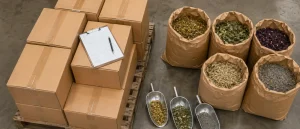
Store in sealed, food-grade containers away from light. Amber or opaque containers are preferable to clear ones for light-sensitive anthocyanin pigments. For large volumes, sealed food-grade poly-lined kraft bags or sealed food-grade bins in a dark storage area are appropriate formats.
Maintain storage temperature below 65°F / 18°C consistently. Keep relative humidity below 60% in the storage environment. Fluctuating temperature and humidity accelerate quality degradation more than stable suboptimal conditions. A warehouse that holds steady at 68°F is better than one that swings between 60°F and 80°F daily.
Implement first-in, first-out rotation from day one. Label every incoming lot with receipt date, lot number, supplier, and certificate reference. Conduct visual quality checks at receiving, at six months of storage, and immediately before each production run that draws from a given lot.
Effective shelf life for properly stored bulk cornflower petals runs 12 to 18 months from harvest date. Plan order quantities so that you turn over your entire inventory within this window. Holding more than 12 to 18 months of usage volume in stock at any given time creates a quality risk that no amount of careful storage fully eliminates.
Safety and Regulatory Compliance
Cornflower petals carry food ingredient approval in both the EU and the US. Cosmetic ingredient use follows applicable regulations in the destination market, with INCI name Centaurea cyanus flower.
Maintain complete lot documentation for every incoming batch of cornflower petals. Make this documentation available to customers, auditors, or regulatory inspectors on request. Track organic certificate validity dates and request renewals proactively.
Cornflower belongs to the Asteraceae family. Products containing cornflower that make allergen disclosures should address this family membership under applicable market regulations. Review requirements in your specific market rather than applying a one-size-fits-all approach.
Make no health or structure-function claims about cornflower in product marketing without prior regulatory review. Frame all traditional use references in compliance with applicable food and cosmetic labeling regulations in every market where your products sell.
Frequently Asked Questions
Q: How do I verify that a cornflower petals bulk supplier is genuinely organic? A: Request the organic certificate and verify it directly with the certification body named on the document. Most certification bodies maintain online databases of certified operators. A thirty-second search confirms whether the certificate is current and covers the product you are buying.
Q: Can I source cornflower petals in bulk directly from farms in Kosovo or Bulgaria? A: Direct farm sourcing is possible but operationally complex for most buyers. Individual farms rarely hold the export licenses, documentation infrastructure, or minimum volumes that international buyers require. Most quality Kosovo and Bulgarian material reaches international buyers through regional exporters or aggregators who handle these logistics. Direct farm relationships make practical sense only for buyers purchasing consistently at large scale with the capacity to manage import operations.
Q: What documentation should arrive with every bulk cornflower order? A: Every order should include the lot number, a lot-specific certificate of analysis covering moisture, microbial counts, heavy metals, and pesticide residues, the current organic certificate, and country of origin documentation. Cosmetic-grade buyers should also receive a safety data sheet and INCI name confirmation. Request all of these before or at the time of delivery, not after.
Q: How do I compare multiple cornflower petals bulk suppliers objectively? A: Request samples from each supplier simultaneously and evaluate them under identical conditions on the same day. Steep equal weights in equal volumes of the same water at the same temperature and compare color yield side by side. Assess dry color under the same light source. Request quotes alongside the samples and compare price per kilogram only after establishing what quality level each price is actually buying.