Rose Petal Kombucha: Elegant 2F That Actually Tastes Good
Rose petal kombucha has a reputation for being either ethereally beautiful or disappointingly thin, and the difference almost always comes down to how the botanicals are sourced and handled during second fermentation. A well-made rose petal kombucha offers a layered, aromatic complexity that feels genuinely elegant, with soft floral notes supported by the natural tartness of the kombucha base. A poorly made version tastes like watered-down perfume with no character beyond a vague floral sweetness. This guide gives you the exact ratios, pairing strategies, and technique details needed to produce rose petal kombucha that falls firmly in the first category. From choosing the right rose botanicals to building carbonation and layering complementary flavors, every step is covered so your results are consistent, balanced, and repeatable.
What Makes Rose Petal Kombucha Different From Other Floral 2Fs
Rose has a more complex aromatic profile than most other floral botanicals used in kombucha. It contains hundreds of volatile compounds, with geraniol, citronellol, and damascenone being the most prominent contributors to that rich, multi-layered scent. This complexity is an advantage in second fermentation because rose does not collapse into a single-note flavor the way some simpler florals can.
Unlike lavender, which can quickly tip into soapy territory, rose is more forgiving with over-extraction. The main failure mode with rose is not soap taste but rather a flat, perfume-water effect that happens when there is not enough acid or tannin backbone to give the floral notes something to sit against. The solution is building your rose petal kombucha around supporting flavors that provide structure, not just sweetness.
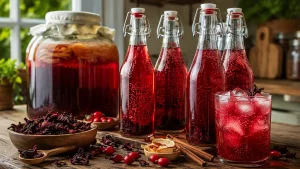
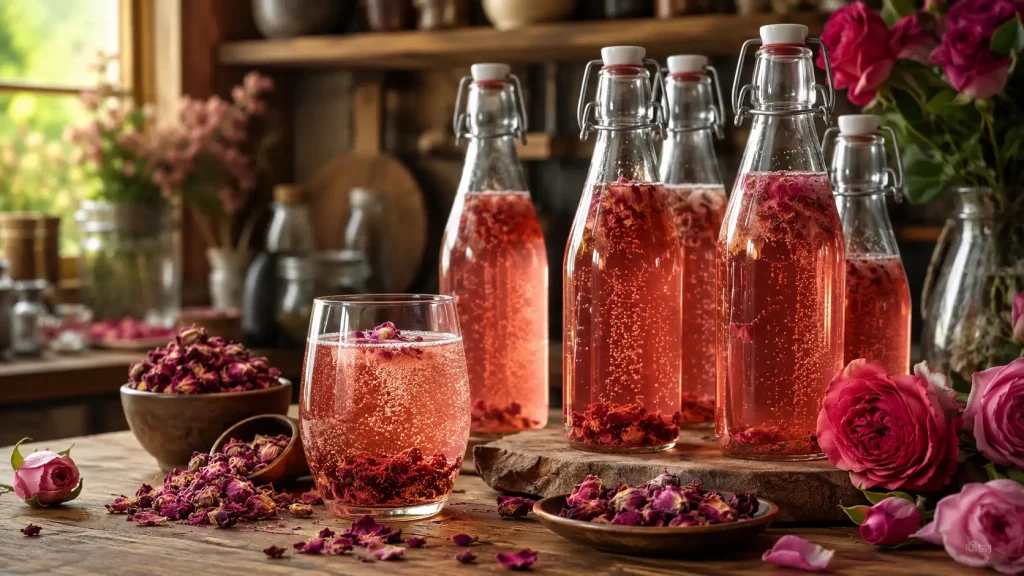
The other key difference is color. Rose petals and rose buds release a beautiful pink to deep rose color into the kombucha during second fermentation, which makes the visual presentation genuinely striking. That color also deepens and becomes more saturated with longer steep times, so it can serve as a rough visual indicator of extraction progress.
Selecting Your Rose Botanicals
The most important rule for rose petal kombucha is using food-grade, unsprayed, pesticide-free rose botanicals only. Ornamental roses are treated with pesticides and fungicides that are not safe to consume, and they will introduce those compounds directly into your ferment.
Organic Rose Buds and Petals from Hatton Naturals are an ideal starting point. This product combines whole dried rose buds with petals, giving you both the concentrated aromatic intensity of the bud and the surface area of the petals for color and flavor extraction. The organic certification ensures no pesticide residue and consistent quality batch to batch.
Dried rose botanicals work better than fresh for second fermentation because they have a more predictable moisture content and release their aromatics at a controlled rate. Fresh rose petals can introduce additional water into the bottle and have a highly variable aromatic intensity depending on the specific variety and how recently they were harvested.
Ratios and Starting Points
For rose petal kombucha, the starting ratio is more generous than with lavender because rose is less likely to over-extract into an unpleasant territory. Tested starting points per 16 oz bottle:
- Rose Buds and Petals (dried whole): 1 teaspoon per 16 oz bottle for a moderate floral character
- For a more pronounced rose flavor: up to 1.5 teaspoons per 16 oz bottle
- For a subtle background note: 1/2 teaspoon per 16 oz bottle
As with any botanical 2F, running a test bottle before sealing your full batch is the safest approach. Fill one bottle at your intended ratio, burp it at 24 hours, taste it, and adjust the remaining bottles based on what you find.
Rose petal kombucha typically reaches its best flavor window between 36 and 48 hours at room temperature. The flavor continues to develop during the first 24 to 48 hours of refrigeration as well, so if the taste seems slightly underdeveloped when you first refrigerate it, give it another day or two before judging the final result.
Supporting Flavors That Build Real Depth
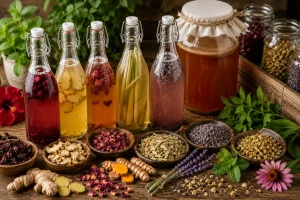
The biggest upgrade you can make to a basic rose petal kombucha is adding one or two supporting botanicals that provide the structural backbone the rose needs to express itself fully. Here are the most effective options:
- Hibiscus: Hibiscus Cut and Sifted adds tartness, body, and a deeper ruby color that complements the rose beautifully. Use 1/2 teaspoon per 16 oz bottle alongside your rose. The combination creates a flavor profile that is floral, tart, and genuinely complex.
- Cardamom: Green Cardamom Cut and Sifted adds a warm, slightly spicy note that grounds the floral sweetness and prevents the rose from feeling one-dimensional. Use 1/8 teaspoon per 16 oz bottle. This is a small amount that makes a significant difference.
- Chamomile: Chamomile Flowers Whole adds a honeyed, apple-like softness that blends seamlessly with rose. Use 1/4 teaspoon per 16 oz alongside the rose for a soft, approachable floral blend.
- Lavender: A small addition of Organic Lavender Super (no more than 1/8 teaspoon per 16 oz) adds an aromatic top note to the rose without risking soap character at that quantity.
- Cinnamon: A very small piece of Cinnamon Cassia Sticks (roughly 1/4 of a stick per 16 oz bottle) adds warmth and an autumnal complexity that works particularly well in a rose-hibiscus combination during fall and winter.
- Rooibos: Red Rooibos provides tannins and a mild earthy sweetness that gives rose petal kombucha more body. Use 1/2 teaspoon per 16 oz bottle for a noticeably fuller mouthfeel.
Three Signature Rose Petal Kombucha Recipes
These three combinations work consistently well and illustrate the range of what rose petal kombucha can achieve:
Classic Rose: 1 teaspoon Rose Buds and Petals plus 1/2 teaspoon Hibiscus per 16 oz bottle. This is the most straightforward expression: tart, floral, and visually stunning.
Rose Cardamom: 1 teaspoon Rose Buds and Petals plus 1/8 teaspoon Green Cardamom plus 1/4 teaspoon Chamomile per 16 oz bottle. This is a more complex, layered profile with warmth and honeyed softness.
Winter Rose: 1 teaspoon Rose Buds and Petals plus 1/4 stick Cinnamon Cassia plus 1/4 teaspoon Red Rooibos per 16 oz bottle. This combination produces a warm, full-bodied rose petal kombucha that is particularly satisfying served slightly chilled rather than ice-cold.
Carbonation Strategies for Floral 2F
Rose buds and petals do not contribute fermentable sugars, so you need to add a carbonation source when bottling your rose petal kombucha. The standard options are:
- One teaspoon of plain white cane sugar per 16 oz bottle (clean, flavor-neutral carbonation)
- One to two tablespoons of unsweetened tart cherry juice per 16 oz bottle (adds a berry note that complements rose beautifully)
- One to two tablespoons of unsweetened pomegranate juice per 16 oz bottle (deepens color and adds a tartness that reinforces the rose character)
If you are adding hibiscus alongside rose, you may find that you need slightly less added sugar because the hibiscus itself contributes minor amounts of fermentable organic acids. Monitor carbonation carefully in hibiscus-containing batches to avoid over-pressurization.
Seal bottles tightly, leave at room temperature for 24 to 48 hours, then refrigerate. Always open over a sink and release pressure slowly.
Troubleshooting Common Issues
The most frequent problem with rose petal kombucha is a flat, perfume-like quality with no real fermented character. This usually means one of three things: the kombucha base was not acidic enough when bottled (check that your first ferment ran long enough), the carbonation source was insufficient, or the rose was added without any supporting botanical to provide structural contrast.
If the flavor is too flat, try adding a small piece of cinnamon or a pinch of cardamom to existing bottles before resealing and allowing a further 12 hours of room-temperature fermentation. These spice additions will not fix carbonation deficiency but they will significantly improve the flavor profile.
If the color is much lighter than expected, your rose buds may have been stored too long or exposed to light during storage, which degrades the anthocyanin pigments responsible for the pink color. Adding 1/4 teaspoon of hibiscus to the bottle will compensate with its own vibrant color.
If you notice an off-smell (not floral, but musty or vinegary beyond normal kombucha tartness), the batch has likely over-fermented at room temperature. Refrigerate immediately and taste. A strongly vinegary batch can still be used as a mixer in sparkling water or cocktails even if it is not pleasant to drink on its own.
Storage and Quality
Rose petal kombucha keeps well refrigerated for up to two weeks. The flavor actually improves during the first three to five days of cold storage as the botanical notes integrate more fully with the kombucha base. Freshly bottled rose petal kombucha can sometimes taste slightly disjointed, with the floral notes sitting separately from the acidic base. That integration happens naturally during cold conditioning.
Store bottles upright in a cool part of the refrigerator, away from light if using clear glass bottles. Rose anthocyanins are sensitive to both light and pH changes, so bottles stored in direct light may fade in color over time even if the flavor remains good.
Strain out whole botanicals before long-term storage if you prefer a cleaner flavor profile. Leaving the buds and petals in the bottle is safe and produces a slightly more developed flavor over time, but some brewers find the texture of softened petals unappealing. Either approach works.
Label each bottle with the date and the specific combination used. Rose petal kombucha recipes are worth tracking carefully because the flavor window between “perfectly developed” and “needs a few more days” is shorter than it sounds when you are managing multiple bottles.
Safety
Organic, food-grade rose buds and petals are safe for consumption by most healthy adults. Rose has been traditionally used in culinary and herbal preparations for centuries, and herbalists often recommend rose botanicals for their gentle, supportive properties. No specific health claims should be made about rose petal kombucha.
Pregnant or breastfeeding individuals should consult a healthcare provider before consuming fermented botanical beverages. Individuals with known sensitivities to plants in the Rosaceae family should exercise appropriate caution.
As with all second-fermented kombucha, carbonation pressure in sealed bottles can be significant. Always open slowly over a sink. Do not shake bottles. Refrigeration slows but does not completely stop fermentation, so monitor pressure even in refrigerated bottles if stored beyond one week.
Kombucha contains trace amounts of alcohol as a natural byproduct of fermentation, typically under 0.5 percent. It is not appropriate for individuals who must avoid all alcohol.
Frequently Asked Questions
Do I need to remove the petals before refrigerating my rose petal kombucha?
You do not have to, but it is generally recommended for bottles you plan to store for more than three to four days. Leaving the petals in will continue to deepen the floral intensity over time, which some brewers enjoy. If you prefer a more stable, consistent flavor, strain the botanicals out before cold storage using a fine-mesh strainer into a clean bottle.
Can I use rose water instead of dried rose petals for 2F?
Rose water can be used as a flavoring addition (roughly one teaspoon per 16 oz bottle), but it does not produce the same result as dried botanicals. Rose water lacks the complexity of whole buds and petals, and many commercial rose waters contain preservatives that may affect the fermentation environment. Dried Organic Rose Buds and Petals will always produce a more authentic, complex result.
Why is my rose petal kombucha not carbonated even after 48 hours?
The most likely causes are insufficient sugar in the bottle, bottles that are not sealed tightly enough, or a kombucha base that has already become too acidic (highly acidic kombucha can inhibit the yeast responsible for carbonation). Check your seals first. If they are fine, try adding an additional 1/2 teaspoon of sugar per bottle, reseal, and leave for another 24 hours at room temperature.
What is the best ratio of rose to hibiscus for a more tart, berry-forward profile?
For a noticeably tart, berry-forward rose petal kombucha, try one teaspoon of Rose Buds and Petals with one teaspoon of Hibiscus Cut and Sifted per 16 oz bottle. At equal parts, the hibiscus tartness becomes a primary note rather than a supporting one, which produces a drink that is more sour-floral than softly floral.
How does the flavor of rose petal kombucha change as it ages in the refrigerator?
During the first three to five days of cold storage, the floral and acidic elements integrate and the flavor becomes more cohesive. From days five through 10, the rose character typically deepens and becomes slightly more complex. Beyond 10 days, the botanical notes may begin to fade and the base kombucha tartness becomes more dominant. Most brewers find the sweet spot is between days three and seven after bottling.
Can I combine rose with spices like cardamom and cinnamon in the same 2F bottle?
Yes, and this combination is particularly effective. Use one teaspoon of Rose Buds and Petals, 1/8 teaspoon of Green Cardamom Cut and Sifted, and 1/4 of a Cinnamon Cassia Stick per 16 oz bottle. The spices provide warmth and structure that elevates the rose rather than competing with it.
Is rose petal kombucha suitable for people who are new to kombucha?
Yes, rose petal kombucha is one of the most approachable botanical second ferments for new kombucha drinkers. The floral notes soften the perception of tartness, and the beautiful color makes it visually appealing. Pairing with chamomile (which adds a mild, honey-like sweetness) makes it even gentler for new palates.
Can I add rooibos to any rose combination, or does it only work with specific pairings?
Rooibos works with most rose combinations because its flavor is mild and its primary contribution is body and tannin structure rather than a strong taste. It pairs particularly well with the rose-hibiscus combination because the tannins from both hibiscus and Red Rooibos create a fuller mouthfeel that makes the overall drink feel more substantial. It does not work as well in the delicate rose-chamomile combination, where it can add more earthiness than that softer blend needs.
Rose petal kombucha rewards attention to detail and thoughtful pairing more than almost any other floral 2F. Start with quality organic botanicals, build in at least one structural supporting ingredient, and give your bottles the full cold-conditioning period before judging the final result. When the pieces come together, rose petal kombucha is among the most rewarding brews you can make at home.