Ginger Kombucha Recipe: A Spicy Brew
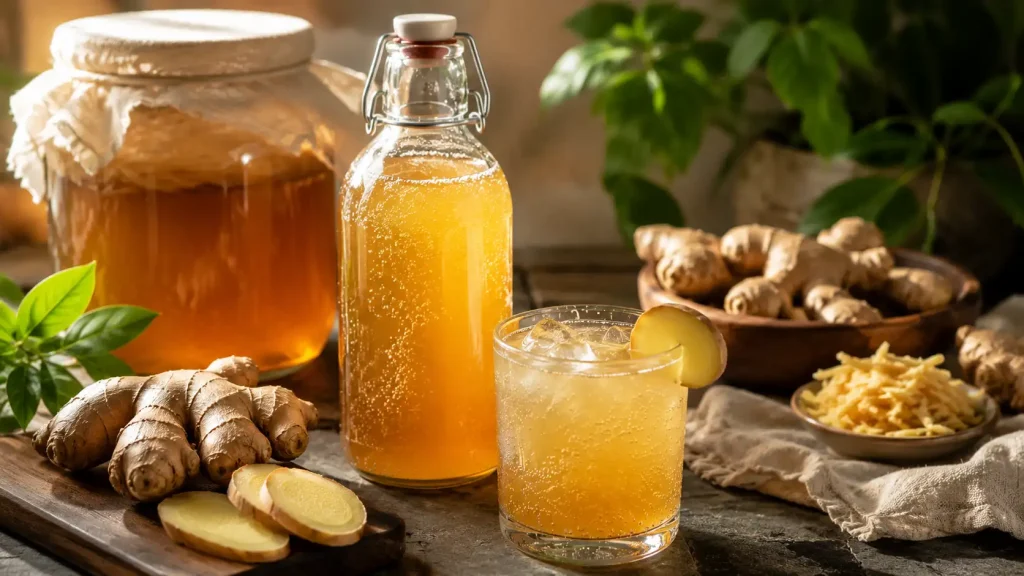
Ginger kombucha recipe enthusiasts know that ginger is one of the very best additions to a second fermentation. A well-executed ginger kombucha recipe produces a spicy, effervescent drink with a satisfying warmth that elevates the natural tang of the base kombucha. Moreover, ginger’s natural sugars provide an excellent fuel source for yeast during the second ferment, typically resulting in stronger carbonation than many other flavoring additions.
This complete ginger kombucha recipe covers ingredient selection, step-by-step F2 preparation, timing, flavor variations, and practical tips for consistent, delicious results every time.
Why Ginger Is the Ideal Kombucha Flavoring
Ginger and kombucha share a natural affinity. The bright acidity of well-fermented kombucha and the warm, spicy heat of ginger complement each other in a way that feels both refreshing and invigorating. Furthermore, ginger contains natural sugars and compounds that feed the yeast during second fermentation, contributing to the robust carbonation that makes ginger kombucha so satisfying.
Commercial ginger kombucha is consistently one of the top-selling flavors in the market — a clear indication of how well this pairing resonates with a broad range of palates. For this reason, ginger is typically one of the first flavors home brewers try after completing their initial unflavored batches.
Dried Ginger vs. Fresh Ginger in This Ginger Kombucha Recipe
Both fresh and dried ginger work in a ginger kombucha recipe, but they produce somewhat different results. Fresh ginger delivers a brighter, more immediate spice with a slightly citrusy edge. Dried ginger produces a deeper, more concentrated, and slightly earthier warmth that many brewers prefer for its intensity and consistency.
From a practical standpoint, dried ginger is more convenient and more predictable. Organic dried ginger cut and sifted requires no peeling, slicing, or refrigeration. It dissolves more readily into the kombucha liquid than fresh ginger chunks, and it eliminates the surface bacteria risk associated with adding raw produce to a fermentation environment.
For a fresh-forward ginger profile, use fresh ginger at two to three times the quantity you would use dried. For a deep, spiced ginger character, dried cut and sifted ginger at one to two teaspoons per 16-ounce bottle delivers excellent results.
Step-by-Step Ginger Kombucha Recipe
This ginger kombucha recipe assumes you have completed a first fermentation and have your base kombucha ready to bottle.
Step one: Clean and sanitize your F2 bottles. Flip-top glass bottles (Grolsch style) or screw-top glass bottles are both suitable. Avoid plastic for second fermentation — it provides unreliable pressure resistance and can absorb odors.
Step two: Add one to two teaspoons of dried ginger cut and sifted directly to each 16-ounce bottle. For a milder result, start with one teaspoon. Additionally, add one teaspoon of plain cane sugar or a tablespoon of fresh-pressed apple juice per bottle to ensure strong carbonation. The additional sugar gives the yeast sufficient fuel even if the base kombucha is well fermented and low on residual sugars.
Step three: Pour your base kombucha into each bottle, leaving approximately one inch of headspace at the top. Seal immediately.
Step four: Store sealed bottles at room temperature — ideally between 68-78°F — away from direct sunlight. Ferment for 48-72 hours. Burp each bottle daily by opening the cap briefly and then resealing to manage pressure buildup.
Step five: After 48 hours, taste a bottle by opening it carefully over a sink. Assess carbonation and flavor. If carbonation is sufficient and the ginger flavor has developed well, transfer all bottles to the refrigerator. If you prefer more fizz or more ginger intensity, allow another 24 hours before refrigerating.
Flavor Variations for This Ginger Kombucha Recipe
A basic ginger kombucha is excellent on its own, but combining ginger with complementary herbs takes the flavor to another level. These three variations are especially popular:
Ginger Lemongrass: Combine one teaspoon of dried ginger with one teaspoon of organic lemongrass cut and sifted per 16-ounce bottle. The lemongrass adds a bright, citrusy note that amplifies the freshness of the ginger without competing with it. This combination produces a particularly clean, refreshing result.
Ginger Lemon: Add one teaspoon of dried ginger plus a one-inch piece of dried lemon peel cut and sifted per bottle. The lemon peel contributes a concentrated citrus flavor and additional aroma from the essential oils in the peel. This is one of the most crowd-pleasing kombucha combinations and works well for people who are new to home-brewed kombucha.
Ginger Turmeric: Combine one teaspoon of dried ginger with half a teaspoon of turmeric powder. Add a small pinch of black pepper to help with the fat-soluble turmeric compounds. This produces a golden, warmly spiced kombucha that draws on the same flavor logic as turmeric-ginger teas and golden milk drinks.
Carbonation Troubleshooting
Carbonation is often the first challenge home brewers encounter with a ginger kombucha recipe. If your bottles are consistently flat, consider these adjustments. First, ensure the base kombucha still has residual sugars — if F1 ran too long, the yeast may have consumed most available sugar. Second, add a slightly larger amount of additional sugar to F2. Third, check that your room temperature is at least 68°F, as cooler environments slow yeast activity considerably.
Conversely, over-carbonated bottles indicate that F2 ran too long or had too much sugar. Consequently, reduce F2 time by 12-24 hours or use less additional sugar in the next batch. Always burp bottles daily during F2 as a safety practice regardless.
Serving Your Ginger Kombucha
Ginger kombucha is best served very cold, poured gently into a glass to preserve carbonation. Avoid shaking the bottle before opening. Pour slowly at a slight angle, similar to pouring beer, to minimize foam. Serve over ice for maximum refreshment in warmer weather.
Ginger kombucha also makes an excellent mixer in mocktails. Combine it with fresh lime juice and a few muddled mint leaves for a kombucha mojito. Mix it with pomegranate juice and a splash of sparkling water for a festive, crimson non-alcoholic drink suitable for any occasion.
Safety Disclaimer
Kombucha is a fermented beverage that naturally contains small amounts of alcohol (typically 0.5-3% ABV depending on fermentation time and temperature). Pregnant women, immunocompromised individuals, and those with alcohol sensitivities should be aware of this. Homemade kombucha should always be brewed, bottled, and stored in food-safe, pressure-appropriate glass containers. Never use thin glass or compromised bottle seals for second fermentation. Ginger and lemongrass are common culinary botanicals with long histories of safe use in food and beverage preparation. This post is for informational and culinary purposes only and does not constitute medical advice.
Frequently Asked Questions
How much dried ginger should I use per bottle in a ginger kombucha recipe?
One to two teaspoons of dried ginger cut and sifted per 16-ounce bottle is the standard range. Start with one teaspoon for a mild ginger profile and increase to two for a more pronounced, spicy result. Taste after 48 hours and adjust in future batches based on your preference.
Why does my ginger kombucha have very little fizz?
Low carbonation usually results from insufficient residual sugar for yeast to consume, F2 temperature being too low, or F2 time being too short. Add one teaspoon of plain cane sugar per bottle in your next batch, ensure room temperature is above 68°F, and allow a full 72 hours before refrigerating.
Can I combine ginger with other spices in this kombucha recipe?
Absolutely. Ginger pairs well with turmeric, cinnamon, cardamom, lemon peel, and lemongrass. Use ginger as the primary flavoring and add the secondary spice at half the quantity. Taste-test after 48 hours and note the ratio for future batches.
How long does ginger kombucha keep after refrigerating?
Properly refrigerated ginger kombucha keeps for two to three weeks. The flavor continues to develop slowly in the refrigerator. Some brewers prefer the taste after a week or more of cold storage. Ensure bottles are sealed tightly and kept consistently cold throughout storage.
Stock up on organic dried ginger and explore our full range of dried herbs for kombucha flavoring to keep experimenting with new combinations in every batch.