A Formulator’s Guide to Organic Botanicals for Skincare
Creating effective, natural skincare products begins long before the formulation stage. It starts with the quality, traceability, and certification of every botanical ingredient that goes into the jar. For indie beauty brands, contract manufacturers, and estheticians developing their own product lines, finding a reliable organic botanicals cosmetics supplier is the single most important decision in the development process. The right supplier provides not just raw materials, but consistent lot quality, verifiable organic certification, certificates of analysis, and the breadth of catalog needed to develop full product lines without juggling multiple vendors.
This guide walks formulators through eight essential botanicals for skincare, explains how to evaluate supplier quality, covers safety and regulatory considerations, and answers the questions that arise most frequently when sourcing organic plant materials for cosmetic applications.
Why Choosing the Right Organic Botanicals Cosmetics Supplier Matters
The skincare industry has undergone a fundamental shift. Consumers now read ingredient lists carefully, research the origins of plant materials, and actively seek brands that use certified organic botanicals. This scrutiny flows upstream to formulators, who need suppliers capable of providing documentation that holds up to consumer questioning and regulatory review alike. A trusted supplier maintains current USDA Organic certification, offers lot-specific COAs, and processes botanicals under controlled conditions that preserve the active compounds formulators depend on. Working with a single, comprehensive supplier also eliminates the inconsistency that comes from piecing together ingredients from five or six different sources, each with different quality standards and documentation formats.
Calendula: The Golden Standard for Soothing Formulations
Few botanicals carry the skincare reputation that calendula (Calendula officinalis) enjoys. Its golden petals have been used in salves, balms, and infused oils for centuries, valued for their gentle nature and rich content of flavonoids and triterpenoids. For formulators, calendula petals infused in a carrier oil (such as jojoba or olive) produce a beautiful golden oil that serves as a base for facial serums, baby care products, and sensitive skin formulations.
Organic Calendula Petals Whole offer maximum surface area for oil infusions, while Organic Calendula Flowers Whole work well for water-based extractions and decorative inclusions in clear products. When selecting calendula from your organic botanicals cosmetics supplier, look for deeply colored petals with minimal brown discoloration, which indicates proper drying temperature and freshness.
Lavender: Versatility from Face to Bath
Lavender (Lavandula angustifolia) is the Swiss army knife of skincare botanicals. Its essential oil profile, dominated by linalool and linalyl acetate, provides a pleasant fragrance that also supports the overall sensory experience of skincare products. Whole lavender buds infuse beautifully into oils and witch hazel, creating toners, facial mists, and body oils with a distinctive floral character.
Hatton Naturals offers three lavender grades suited to different formulation needs. Lavender Flower Extra Whole provides excellent value for bulk infusions and soap making. Lavender Flower Ultra Whole delivers higher essential oil content for products where fragrance intensity matters. Choose based on your end product’s requirements and price positioning.
Rose Petals: Luxury Ingredient with Broad Appeal
Rose (Rosa spp.) occupies the luxury tier of botanical skincare. Rose-infused products command premium pricing, and consumers associate rose with elegance, self-care, and effective hydration. For formulators, rose petals contribute natural fragrance, visual beauty in clear serums and bath products, and a rich profile of polyphenols. Organic Rose Buds and Petals work beautifully in facial steam blends, bath soaks, and cold-infused oils. The buds maintain their shape well in transparent packaging, adding an artisanal aesthetic that photographs beautifully for e-commerce and social media marketing.
Rose also pairs naturally with other florals. A facial oil infused with both rose and calendula creates a gentle, luxurious product with broad consumer appeal. When sourcing rose petals from an organic botanicals cosmetics supplier, verify that the petals have been dried at low temperatures to preserve both color and aromatic compounds.
Chamomile: Gentle Enough for Every Skin Type
Chamomile (Matricaria chamomilla) brings a calming, apple-sweet character to skincare formulations. Its bisabolol and chamazulene content make it a popular choice for products targeting sensitive or easily irritated skin. Organic Chamomile Flowers Whole produce a golden infusion in both oil and water bases, lending a warm tone to finished products. Chamomile-infused facial toners, eye creams, and after-sun products are staple items for natural beauty brands.
In formulation, chamomile works as both a standalone ingredient and a blending partner. Combine chamomile with lavender for a calming facial oil, or pair it with calendula in a soothing balm. The three together form a “gentle botanicals trio” that many indie brands build their core product lines around.
Turmeric: Color and Character for Targeted Products
Turmeric (Curcuma longa) has moved from the kitchen to the skincare shelf with remarkable speed. Its vivid golden color and curcumin content make it a compelling ingredient for face masks, cleansing bars, and targeted treatment products. Organic Turmeric Powder disperses easily in clay mask bases, oil formulations, and emulsions. A little goes a long way: 1 to 3 percent by weight typically delivers visible color and the concentration formulators aim for without staining concerns at rinse-off.
Pair turmeric with Organic Neem Leaf Powder for a traditional Ayurvedic-inspired face mask that appeals to consumers interested in time-tested botanical wisdom. Both ingredients are available from Hatton Naturals, simplifying procurement for formulators building Ayurvedic or globally inspired product lines from a single organic botanicals cosmetics supplier.
Aloe Vera: The Hydration Workhorse
No skincare formulation toolkit is complete without aloe vera (Aloe barbadensis). While fresh aloe gel is impractical for most commercial formulations due to short shelf life and inconsistent potency, Organic Aloe Vera Leaf Powder solves both problems. This concentrated powder reconstitutes easily in water-based formulations, providing the mucopolysaccharides and vitamins that aloe is prized for, in a shelf-stable format that integrates seamlessly into manufacturing workflows.
Use aloe vera powder at 0.5 to 2 percent in facial mists and toners, or at higher concentrations in gel-based products and after-sun formulations. Its neutral flavor and mild scent make it compatible with virtually every other botanical on this list, and it serves as an excellent carrier for more aromatic ingredients like lavender or rose.
Neem and Moringa: Powerhouse Botanicals from Ayurvedic Tradition
Neem (Azadirachta indica) and moringa (Moringa oleifera) bring centuries of traditional use into modern skincare formulations. Our neem leaf powder has a distinctive, earthy aroma that signals potency to consumers familiar with Ayurvedic skincare. It works exceptionally well in cleansing products and wash-off masks where its strong scent is present only briefly. Organic Neem Leaf Powder integrates at 2 to 5 percent in mask formulations.
Organic Moringa Powder offers a milder, greener profile that works well in leave-on products. Rich in vitamins A, C, and E, moringa powder adds both functional and marketing value to serums, creams, and facial oils. The vibrant green color of moringa also creates visually appealing products that stand out on retail shelves. When evaluating any organic botanicals cosmetics supplier for these ingredients, confirm that powders are ground from leaves (not stems or bark) for the highest concentration of active compounds.
Building a Complete Botanical Skincare Line
Strategic ingredient selection allows a small number of botanicals to power an entire product line. Consider this framework for a six-product range built from the ingredients discussed in this guide. A calendula-lavender facial oil serves as the hero product. A chamomile-rose toner provides a complementary second step. A turmeric-neem clay mask offers a weekly treatment. An aloe vera facial mist delivers on-the-go hydration. A moringa-infused facial serum targets the “superfood skincare” trend. A lavender-chamomile body oil rounds out the line. Every ingredient in these six products can be sourced from the Organic Botanicals collection at Hatton Naturals, keeping procurement simple and certification consistent.
The key advantage of this approach is efficiency. Buying eight core botanicals in bulk powers six finished products (or more), with each ingredient appearing in multiple formulations. This reduces inventory complexity and allows volume purchasing that improves per-unit cost across your entire line.
Safety and Regulatory Considerations for Cosmetic Botanicals
Formulating with botanicals requires attention to regulatory frameworks that differ from food applications. In the United States, the FDA regulates cosmetics under the Federal Food, Drug, and Cosmetic Act. Products that claim to alter the structure or function of the body (for example, “reduces wrinkles” or “treats acne”) may be classified as drugs, triggering significantly more stringent requirements. Keep product claims focused on cosmetic benefits: cleansing, moisturizing, beautifying, and promoting an attractive appearance.
For products sold in the European Union, the EU Cosmetics Regulation requires a Product Information File, safety assessment by a qualified assessor, and notification through the CPNP portal. Certain botanical compounds (notably linalool from lavender and citral from lemongrass) are classified as fragrance allergens and must be declared on EU cosmetic labels above specified concentrations. Partnering with an organic botanicals cosmetics supplier that provides detailed COA documentation, including allergen-relevant compound levels, simplifies this compliance process considerably.
Always conduct stability testing on finished formulations, and consider challenge testing (preservative efficacy testing) for any water-containing product. Botanical infusions are nutrient-rich environments where microbial contamination can develop rapidly without adequate preservation.
Frequently Asked Questions
What certifications should I look for in a botanical skincare ingredient supplier?
At minimum, USDA Organic certification for organic claims. Additional valuable certifications include Kosher, non-GMO verification, and cGMP compliance for the processing facility. For international sales, EU Organic equivalency may also be important.
Can I use food-grade botanicals in cosmetic products?
Yes, in most cases. Food-grade botanicals that meet USDA Organic standards are suitable for cosmetic use. However, confirm that microbial testing meets cosmetic-grade standards, which may be stricter than food standards for certain organisms. Always request a COA and verify that the lot meets your formulation requirements.
How do I make a botanical oil infusion for skincare?
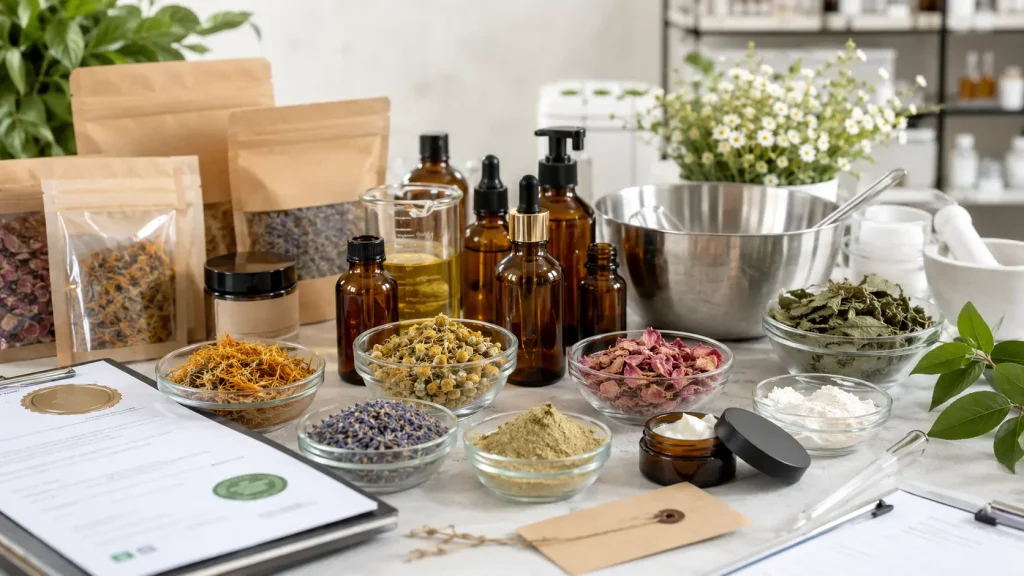
Place dried botanicals in a clean glass jar, cover with a carrier oil (jojoba, sweet almond, or olive), seal tightly, and store in a cool, dark place for four to six weeks, shaking gently every few days. Strain through cheesecloth and store the infused oil in amber bottles. This method works beautifully with calendula, lavender, chamomile, and rose from a trusted organic botanicals cosmetics supplier.
What is the typical shelf life of dried botanicals for skincare use?
Most dried botanicals maintain quality for 12 to 18 months when stored in airtight containers at room temperature, away from light and moisture. Powders (turmeric, neem, moringa, aloe vera) have slightly shorter optimal windows of eight to 12 months due to increased surface area exposure.
How much botanical material do I need per batch of product?
Usage rates vary by ingredient and formulation type. For oil infusions, a common ratio is one part dried botanicals to five parts carrier oil by weight. For powder inclusions in masks, 2 to 10 percent by weight is typical. Start with small test batches and scale after confirming sensory and stability outcomes.
Are there botanicals I should avoid combining in skincare?
Most gentle botanicals (calendula, chamomile, lavender, rose, aloe vera) combine safely. Exercise caution with strongly pigmented ingredients like turmeric in leave-on products, as staining can occur. Neem’s strong aroma may overpower delicate florals if used at high percentages. Test combinations at small scale before committing to production batches.
Do I need to list every botanical individually on my product label?
In the United States, cosmetic labeling follows INCI (International Nomenclature of Cosmetic Ingredients) conventions. Each botanical must be listed by its INCI name in descending order of concentration. For example, calendula petals used in an oil infusion would appear as “Calendula Officinalis Flower” in the ingredient list.
Can I claim my product is “organic” if I use organic botanicals?
Organic claims on cosmetics are complex. In the U.S., products containing 95 percent or more organic ingredients (by weight, excluding water and salt) may display the USDA Organic seal. Products with 70 to 95 percent organic content may state “made with organic ingredients.” Below 70 percent, you may only list individual organic ingredients in the ingredient panel. Consult a regulatory specialist for your specific formulation.
Building a successful botanical skincare line depends on the quality, consistency, and certification of every raw ingredient. By partnering with a reliable organic botanicals cosmetics supplier and selecting a focused palette of versatile botanicals, formulators can create compelling product lines that resonate with today’s ingredient-conscious consumers. Explore the full range of skincare-ready botanicals at Hatton Naturals and start formulating with confidence.