Angelica Root: History, Flavor and Traditional Uses
Angelica root is a fragrant, bittersweet botanical with a rich history in European kitchens and folk herbalism. You may have tasted it without knowing. It is a common ingredient in gin, vermouth and herbal liqueurs. This guide covers where angelica comes from, how it tastes, how to brew it, how to choose and store it, and how people use it today.
What Is Angelica Root?
Garden angelica (Angelica archangelica) is a tall plant in the carrot family. It grows in cool, damp regions of Northern Europe, including Scandinavia and Iceland. The plant can reach six feet tall and has large, round clusters of greenish white flowers. Herbalists and distillers mostly use the thick, aromatic root.
According to legend, an archangel revealed the plant’s value to a monk. That story explains its botanical name. In addition, the plant often blooms around the feast of Saint Michael in old calendars, which tied it even more closely to the archangel.
Root, Seed and Stem
Every part of angelica has a use. The root is the most aromatic, so distillers and herbalists prefer it. The seeds have a lighter, more floral scent and also appear in liqueurs. Meanwhile, the young green stems are candied in sugar syrup. Candied angelica was once a common bright green decoration on cakes in France and England.
A Short History
Angelica has grown wild in the far north for thousands of years. Vikings likely traded it, and Icelandic law once protected angelica gardens. Later, the plant spread south through monastery gardens in France, Germany and Switzerland.
During the Renaissance, angelica became a prized garden herb across Europe. People carried pieces of the root and hung it in homes. By the 1600s, apothecaries and distillers used it widely. Today, the French town of Niort is still famous for its candied angelica.
Angelica in Gin and Liqueurs
Distillers value angelica for one special reason. It acts as a fixative, so it helps lighter aromas last longer in the glass. For this reason, most London Dry gins list it right after juniper and coriander. In addition, vermouth makers use it to give their wines a dry, herbal backbone. Some old monastery recipes still guard the exact amount as a secret.
Flavor and Aroma
Angelica root tastes earthy, musky and slightly sweet, with a bitter finish. Its aroma has notes of celery, juniper and pine. As a result, it adds depth and structure to blends rather than a single bold flavor.
Some tasters also notice a light musk, almost like warm wood. For this reason, perfumers use angelica oil as a base note. In drinks, it works like a bass line. You may not pick it out alone, yet the blend feels flat without it.
Traditional Uses and Folklore
In Scandinavian folk tradition, angelica was a valued plant. Sami and Norwegian communities used it as food. European herbalists later included angelica root in bitter tonics and digestive formulas. Monasteries also used it in herbal liqueurs such as Chartreuse and Bénédictine.
Today, it remains one of the core botanicals in gin, along with juniper and coriander. It also appears in many classic aperitif bitters. This article shares traditional background only and does not offer medical advice.
Angelica in the Kitchen
Cooks use angelica in small amounts. For example, a small piece of root can simmer in a fruit compote with rhubarb, which softens the tartness. Also, ground root adds an earthy note to spice cakes and gingerbread. In Nordic cooking, the stems flavor jams, fish dishes and breads.
Recipe: Rhubarb Compote With Angelica
- Chop 1 pound of fresh rhubarb into small pieces.
- Add it to a saucepan with 1/3 cup of sugar and 2 tablespoons of water.
- Tie 1 teaspoon of cut angelica root in a small piece of cheesecloth.
- Drop the bundle into the pan with a strip of orange peel.
- Simmer gently for 10 to 12 minutes, until the rhubarb is soft.
- Remove the bundle and the peel, then let the compote cool.
Serve it over yogurt, oatmeal or vanilla ice cream. The angelica softens the sour edge, so you can use less sugar.
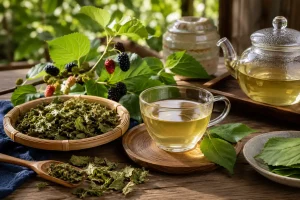
How to Brew Angelica Tea
- Add 1 teaspoon of wild harvested angelica root to a small saucepan.
- Pour in 1 1/2 cups of cold water.
- Bring the water to a boil, then lower the heat.
- Cover and simmer for 10 to 15 minutes.
- Strain the tea and sweeten it with honey if you like.
The tea tastes bitter and aromatic. For a smoother cup, blend it with organic fennel seeds, ginger root or peppermint.
Roots are dense, so they need a simmer rather than a quick steep. This method is called a decoction. If you add leafy herbs such as peppermint, stir them in after you turn off the heat. Then let them steep for 5 minutes before you strain.
Easy Blends to Try
The table below lists easy blends for one large mug. Simmer the roots and seeds first, then add the leaves off the heat.
| Blend | Ingredients | Flavor |
|---|---|---|
| Nordic Warmth | 1/2 tsp angelica, 1/2 tsp ginger, 1 strip orange peel | Spicy and earthy |
| Sweet Anise | 1/2 tsp angelica, 1 tsp fennel seed | Soft and licorice like |
| Fresh Garden | 1/2 tsp angelica, 1 tsp peppermint | Cool and bitter |
| Spiced Citrus | 1/2 tsp angelica, 2 cardamom pods, orange peel | Bright and aromatic |
Not sure which herb belongs in your next blend? Take our quick tea blend ingredient quiz to find out.
Homemade Bitters and Drinks
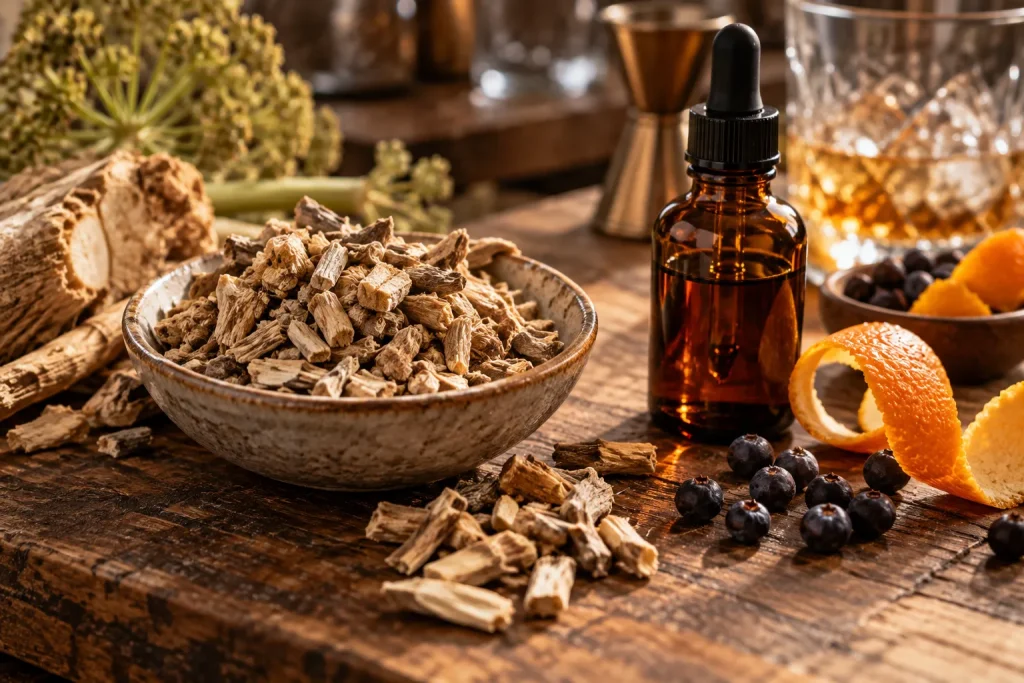
Home bartenders often use angelica root in homemade bitters. Combine it with organic orange peel, juniper berries and green cardamom. Then steep the mix in a neutral spirit for two to three weeks. In addition, a small piece adds earthy depth to homemade cordials and syrups. If you enjoy bitter botanicals, read our guide to gentian root.
Simple Angelica Orange Bitters
- Add 1 tablespoon of angelica root to a clean 8 ounce glass jar.
- Add 2 tablespoons of dried orange peel and 1 teaspoon of juniper berries.
- Crack 3 green cardamom pods and add them too.
- Fill the jar with high proof vodka and seal it tightly.
- Shake the jar daily for 14 to 21 days.
- Strain through a coffee filter and bottle it in dropper bottles.
Use 2 or 3 dashes in an Old Fashioned, a spritz or plain soda water. Also, label the bottle with the date, because flavors keep developing for a few weeks.
Angelica vs Other Bitter Roots
Angelica is only one of several classic bitter roots. Each one brings a different character to a blend:
- Angelica: musky, earthy and lightly sweet, with a gentle bitterness.
- Gentian: intensely bitter, the backbone of many aperitifs.
- Burdock: mild, earthy and a little sweet, popular in Japanese cooking.
- Dandelion root: roasted, it tastes nutty and coffee like.
- Licorice root: very sweet, often used to round off bitter blends.
So if gentian feels too harsh, angelica is a softer place to start.
Safety Notes
Angelica contains compounds that may increase sensitivity to sunlight. Pregnant or breastfeeding women should avoid it. People who take blood thinners should talk with a healthcare provider first. Also, never harvest wild angelica yourself unless you are an expert. It closely resembles poisonous plants such as water hemlock. If you take any medications, ask your healthcare provider before using angelica regularly.
How to Choose and Store Angelica Root
Good dried angelica root is light tan to grayish brown on the outside and pale inside. It should smell strongly musky and sweet when you open the bag. On the other hand, a faint smell or dusty texture means the root is old. Cut and sifted pieces work best for teas and tinctures, since they release flavor evenly.
Keep it in an airtight container away from light and moisture. Cut root keeps its aroma for about one to two years. Glass jars are ideal, because they do not absorb the strong scent.
Wild Harvested vs Cultivated Angelica
You will find both types on the market. Wild harvested root grows naturally in the mountains and northern meadows. Many herbalists feel it has a deeper, more complex aroma. Cultivated angelica, on the other hand, grows in farm fields and is often more uniform in size.
Both work well for tea, bitters and cooking. The key is responsible harvesting, so the wild stands can regrow each year. For this reason, buy from suppliers who know where their roots come from. Then check the aroma, color and lot information when your bag arrives.
Frequently Asked Questions About Angelica Root
Is angelica root used in gin?
Yes. Angelica root is one of the most common gin botanicals. It adds an earthy base and helps hold the other aromas together.
What is the difference between angelica and dong quai?
They are related plants. Dong quai (Angelica sinensis) comes from China, while garden angelica comes from Northern Europe.
How should I store dried angelica root?
Keep it in an airtight container away from light and moisture. Cut root keeps its aroma for about one to two years.
Can I cook with angelica root?
Yes, in small amounts. A small piece adds earthy depth to fruit compotes, spice cakes and syrups. Remove the piece before serving.
Why is angelica sometimes called the holy ghost root?
The nickname comes from European folklore. People linked the plant to the archangel Michael and to protection, so it earned several religious names.
Does angelica root tea contain caffeine?
No. Angelica root is naturally caffeine free. However, its flavor is strong and bitter, so many people prefer it in small amounts or blended with sweeter herbs such as fennel and orange peel.
How much angelica root should I use in a recipe?
Start small. About 1/2 to 1 teaspoon of cut root flavors a mug of tea or a pot of compote. Its musky taste builds quickly, so add more only after tasting.
Explore This Classic Botanical at Home
Angelica root links Nordic folk tradition, monastery liqueurs and modern gin. Its earthy, musky flavor brings depth to teas, bitters and syrups. Start with a simple decoction, then try a blend or a jar of homemade bitters. Order our wild harvested angelica root and discover this classic botanical for yourself.