Mulberry Leaf Tea: A Mild Green Brew
Mulberry leaf tea is one of the quieter stars of Asian botanical herbalism — mild, slightly sweet, and carrying a history that stretches back thousands of years. Made from the dried leaves of the white mulberry tree (Morus alba), this herbal infusion has been part of traditional Chinese and Japanese herbalism for centuries. Today, it is gaining popularity among herbal tea enthusiasts worldwide who appreciate its gentle flavor and its deep cultural roots.
The History of Mulberry Leaf in Asian Herbalism
Mulberry has played an important role in East Asian culture for millennia, primarily because of its role in silk production — silkworms feed exclusively on mulberry leaves. However, the leaves themselves have long been used for their own sake in Chinese herbal medicine, where they appear in traditional texts dating back to the Shennong Bencao Jing, one of the oldest Chinese herbalism compendiums.
In traditional Chinese medicine, mulberry leaf is categorized as a cooling herb and is associated with the lung and liver meridians. Furthermore, it has been used in Japanese herbal tea culture, where it is known as kuwa cha and drunk as an everyday wellness beverage. As a result, mulberry leaf tea carries both deep cultural significance and a practical brewing tradition.
Flavor and Aroma Profile
Mulberry leaf tea has a distinctly mild, slightly grassy flavor with a faint natural sweetness. Unlike strongly flavored herbs, it does not overpower the palate. Moreover, it lacks the strong tannins found in Camellia sinensis teas, making it naturally caffeine-free and easy to drink at any time of day.
The aroma is fresh and subtly green — similar to a very mild green tea but without the vegetal intensity. When steeped lightly, the flavor is delicate and almost neutral. A longer steep brings out more of its earthy, slightly sweet notes. Many people find mulberry leaf tea a welcoming entry point into herbal teas precisely because of its approachable flavor.
How to Brew Mulberry Leaf Tea
Brewing mulberry leaf tea is simple. Use one to two teaspoons of dried mulberry leaf per eight ounces of water heated to around 185–200°F. Steep for five to eight minutes, then strain. Because the flavor is mild, you can steep longer without risk of excessive bitterness.
Additionally, mulberry leaf tea works well as a cold brew. Place two tablespoons of dried leaf in a pitcher with four cups of cold water and refrigerate overnight. The resulting brew is especially smooth and refreshing. Therefore, it is a practical option for those who prefer cold herbal beverages during warmer months.
You can source quality wild-harvested mulberry leaf in a cut and sifted form that is ideal for loose-leaf steeping. Wild-harvested mulberry leaf provides a more authentic connection to traditional Asian brewing practices than cultivated alternatives.
Mulberry Leaf Tea in Traditional Practice
In traditional Chinese herbal medicine, mulberry leaf is classified as a dispersing herb used to address wind-heat patterns — a concept in TCM that corresponds roughly to conditions involving fever, sore throat, or eye redness. Herbalists value it as a gentle, versatile leaf suited to general wellness teas.
In Japanese health culture, kuwa cha is consumed as a daily tea with meals, particularly to complement diets high in carbohydrates. It is believed in folk tradition to support healthy blood sugar management, though this has not been conclusively established by clinical research. Consequently, mulberry leaf tea has attracted significant interest from modern researchers studying its bioactive compounds, including alkaloids like DNJ (1-deoxynojirimycin).
Furthermore, in Korean traditional medicine (hanbang), mulberry leaf appears in formulas designed to nourish the blood and calm the nerves. This cross-cultural use across East Asian healing traditions speaks to the herb’s broad traditional significance.
Blending Mulberry Leaf with Other Herbs
Because of its mild flavor, mulberry leaf tea is an excellent blending base. Its subtle sweetness and neutral green character allow stronger herbs to shine without clashing. Additionally, it adds body to lighter floral blends without overpowering them.
A popular combination is mulberry leaf with nettle leaf, which adds a mineral-rich, slightly grassy depth to the blend. Together, these two herbs create a nutritive, grounding tea that herbalists often recommend as an everyday wellness infusion. Similarly, pairing mulberry with mint or lemon verbena brightens the cup considerably.
For those who enjoy sweeter blends, adding a small amount of licorice root or a few dried rose petals enhances mulberry leaf’s natural sweetness further. As a result, the tea becomes more approachable for those accustomed to flavored commercial teas.
Sourcing and Storage Tips
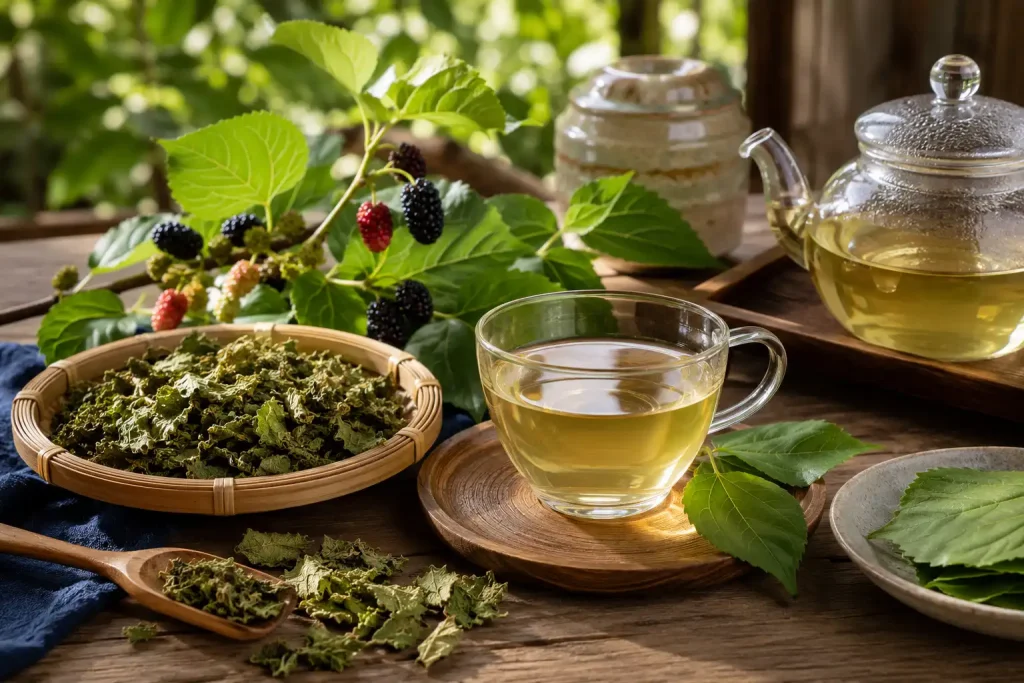
Quality mulberry leaf should be greenish to pale green in color when dried, indicating it has retained its chlorophyll and aromatic compounds. Yellowing or browning suggests over-aging or poor storage conditions. The aroma should be faintly fresh and grassy — not dusty or completely neutral.
Store dried mulberry leaf in an airtight container away from heat, light, and moisture. Properly stored, it will retain its flavor for twelve to eighteen months. Meanwhile, purchasing in quantities you will use within that timeframe ensures consistent quality in every cup.
Safety and Precautions
Mulberry leaf tea is generally considered safe for most healthy adults. However, individuals with diabetes or those taking blood sugar-lowering medications should exercise caution, as some research suggests mulberry leaf compounds may affect glucose metabolism. Consult a healthcare provider before drinking mulberry leaf tea regularly if you manage blood sugar with medication. Pregnant or breastfeeding individuals should also seek medical guidance before use. This content is informational only and is not medical advice.
Frequently Asked Questions
What does mulberry leaf tea taste like?
Mulberry leaf tea has a mild, slightly grassy flavor with a faint natural sweetness. It is one of the more neutral herbal teas, making it easy to drink and blend. The flavor is often compared to a very light green tea, but without any bitterness or caffeine.
Is mulberry leaf tea caffeinated?
No. Mulberry leaf tea is naturally caffeine-free, as it comes from the mulberry tree rather than the Camellia sinensis plant. This makes it suitable as an evening tea or for those avoiding caffeine for any reason.
How long should I steep mulberry leaf tea?
Five to eight minutes at 185–200°F is a good starting point. Because the flavor is mild and low in tannins, you can steep longer without producing excessive bitterness. Experimenting with steep time is the best way to find your preferred strength.
Can mulberry leaf tea be made as a cold brew?
Yes. Cold brewing mulberry leaf produces an especially smooth, mild tea. Use two tablespoons of dried leaf per four cups of cold water and refrigerate for eight to twelve hours. The resulting brew is refreshing and very easy to drink without any sweeteners.
If you are looking to expand your herbal tea collection with something gentle, historically rich, and genuinely pleasant to drink, mulberry leaf tea is an excellent choice. Explore our wild-harvested mulberry leaf and bring a touch of East Asian herbal tradition into your daily routine.