Dried Basil: How to Use It, Convert It and Keep It Fresh
Cooking with dried basil is a little different from cooking with the fresh leaves, and knowing the difference can make or break a dish. Drying concentrates basil’s flavor and shifts it slightly, so the measurements, timing and even the texture of a recipe need small adjustments. In this guide, we cover the flavor change, the fresh to dried conversion, the best dishes for it, a simple homemade seasoning blend, common mistakes and how to store it so it stays fragrant for months.
How Drying Changes Basil’s Flavor
Fresh basil is bright, sweet and slightly peppery, with a strong aroma that fades quickly once the leaves are cut. The dried leaf loses some of that sweetness, but it gains a more concentrated, slightly minty and anise-like note. As a result, it tastes less like a fresh garnish and more like a background seasoning, which is exactly why it works so well simmered into sauces rather than sprinkled on top at the end.
Because the flavor is concentrated, a little goes further than the same volume of fresh. However, that concentrated flavor also fades over time once the jar is opened, so the freshest basil you can find will always give the best result.
Dried Basil to Fresh Basil Conversion
The standard kitchen conversion is 1 teaspoon of the dried leaf for every 1 tablespoon of chopped fresh basil, which is a 1 to 3 ratio by volume. In other words, dried herbs are roughly three times more concentrated than their fresh counterparts.
| Fresh Basil | Dried Equivalent |
|---|---|
| 1 tablespoon chopped | 1 teaspoon |
| 1/4 cup chopped | 4 teaspoons |
| 1/2 cup chopped | 2 tablespoons and 2 teaspoons |
| 1 cup chopped | about 5 tablespoons |
If a recipe calls for fresh basil as a finishing garnish, the dried form is not a true substitute for that specific job. Instead, use it earlier in the cooking process, where its deeper flavor has time to blend into the dish.
When to Add Basil While Cooking
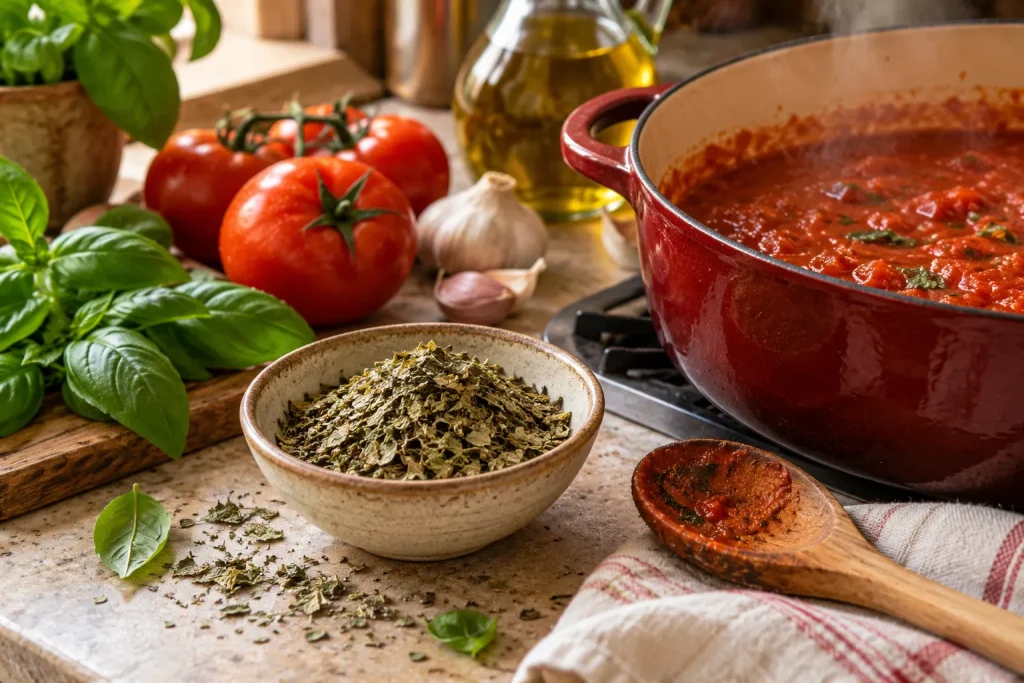
Unlike fresh basil, which is often added at the very end to preserve its bright flavor, this dried herb benefits from earlier cooking. Add it with the onions and garlic at the start of a sauce, or stir it in partway through a simmering soup, so the heat and moisture have time to rehydrate the leaves and release their oils.
Before adding it to a dish, crush the leaves lightly between your fingers or with the back of a spoon. This breaks open the leaf structure and helps the flavor bloom faster once it hits the pan. For a quick flavor boost, you can also bloom it in warm oil for 30 seconds before adding other ingredients, which draws out its aroma right away.
Best Dishes and Amounts for Basil
This pantry staple is a workhorse in Italian-leaning cooking, but it also shows up well beyond pasta sauce. The table below gives a starting point for common dishes, though you can always adjust to taste.
| Dish | Suggested Amount | When to Add |
|---|---|---|
| Tomato pasta sauce | 1 to 2 tsp per 2 cups sauce | With the onions and garlic |
| Minestrone or vegetable soup | 1 tsp per quart | Midway through simmering |
| Homemade Italian seasoning | 2 tbsp in a blend | Mixed dry, used anytime |
| Marinades for chicken or vegetables | 1 tsp per cup of marinade | Whisked in before marinating |
| Salad dressings | 1/2 tsp per cup of dressing | Whisked in, rest 10 minutes |
| Pizza sauce | 1 tsp per cup of sauce | Added before spreading |
Step by Step: Homemade Italian Seasoning Blend
A homemade Italian seasoning blend is one of the easiest ways to put this herb to work in the pantry, and it comes together in a few minutes.
- Measure 2 tablespoons of organic cut and sifted basil into a small bowl.
- Add 2 tablespoons of organic marjoram and 1 tablespoon of organic rosemary, crushed slightly.
- Add 1 tablespoon of organic thyme leaves.
- Stir in 1 teaspoon of organic black pepper powder.
- Mix thoroughly and transfer to a small airtight jar.
- Use 1 to 2 teaspoons per dish, adding it early in cooking so the flavors have time to develop.
This blend keeps for about six months in a sealed jar, stored away from heat and light, and it is a convenient way to season sauces, roasted vegetables and bread dough without reaching for five separate jars.
Basil Varieties Worth Knowing
Most dried basil products for cooking contain sweet basil, the familiar variety that gives Italian dishes their signature flavor. However, other varieties bring their own character. Thai basil has a more pronounced anise note and holds up well in stir-fries, while holy basil, also called tulsi, offers peppery and clove-like notes. People traditionally brew tulsi as a tea rather than use it as a savory seasoning. If you want to explore tulsi on its own, our organic tulsi leaves offer a good starting point, though most people consider tulsi a separate herb from culinary basil rather than a direct substitute.
The dried leaf also appears in a well known hot tea, made simply by steeping it in hot water for a few minutes. That preparation is worth trying on its own, but it is a short detour from the savory cooking focus of this guide.
Herb Substitutes for Basil
If you run out mid recipe, a few herbs can stand in, though each shifts the flavor slightly. Dried oregano is the closest match in most Italian dishes, since the two herbs are often paired together already. Dried marjoram, which is sweeter and milder than oregano, is another reasonable substitute, especially in soups and roasted vegetable dishes.
In a pinch, a combination of dried thyme and a small pinch of dried mint can approximate basil’s herbal, slightly sweet quality, though it is not an exact match. Whichever substitute you choose, start with a slightly smaller amount than the recipe calls for, then taste and adjust, since every dried herb has its own intensity.
If the recipe is a pesto or another dish built specifically around basil’s fresh, sweet flavor, it is often better to skip the substitution altogether and choose a different sauce instead. Dried herbs are excellent in simmered dishes, but they rarely recreate the particular character of a fresh basil pesto, no matter how the ratios are adjusted.
Common Mistakes When Cooking With This Herb
- Adding it at the very end of cooking, as if it were fresh, which leaves it tasting dusty instead of blended into the dish.
- Using a 1 to 1 swap for fresh basil instead of the 1 to 3 conversion, which can make a dish taste overwhelmingly herbal.
- Storing the jar above the stove, where heat steadily breaks down its flavor.
- Skipping the crush step, so the whole dried leaves never fully release their oils into the dish.
- Keeping a jar for years without replacing it, long after the aroma has faded.
How to Choose and Store Dried Basil
When choosing it, look for leaves that are green rather than brownish, with a clearly herbal aroma when you open the jar. A faded color or weak smell usually means the leaf has been sitting too long and will add little flavor to a dish. Cut and sifted basil, which is broken into smaller pieces rather than left as whole leaves, tends to release its flavor a bit faster once it hits a hot pan, which makes it a convenient everyday choice.
Store it in an airtight container, away from direct light, heat and moisture. A cabinet shelf works better than a spot above the stove or next to the oven, since repeated heat exposure speeds up flavor loss. Properly stored, this herb keeps good flavor for about one to two years, though it is best used within the first year for the strongest taste. If you are unsure whether a jar is still worth using, crush a small pinch between your fingers. If the aroma is faint, it is time to restock.
Buying it in a size you will actually use within a year is also worth considering. A large jar that sits half full for several years will lose flavor well before it runs out, so a smaller, more frequently restocked container often gives better results in the kitchen than one oversized jar bought to save a trip to the pantry shelf.
Frequently Asked Questions
Can I substitute dried basil for fresh basil in any recipe?
In most cooked dishes, yes, as long as you use the 1 to 3 conversion and add it earlier in the cooking process. However, for recipes like a fresh caprese salad or a pesto, where fresh basil is the star, the dried leaf will not give the same result.
Why does my basil taste bitter?
Bitterness usually comes from either an old jar that has oxidized or from adding too much at once. Start with a smaller amount, add it earlier in cooking, and replace basil that has been open for more than a year.
Is dried basil the same as basil powder?
No, this herb is usually sold as whole or cut and sifted leaves, while basil powder is ground much finer. Powder blends into a dish faster and more invisibly, so it is best used in smaller amounts than the leaf form.
Does this herb lose flavor over time?
Yes, like most dried herbs, it gradually loses its essential oils once the jar is opened. Keeping it sealed, away from heat and light, slows that process, but no dried herb stays at peak flavor forever.
Can I grow basil and dry it myself at home?
Yes, home gardeners often dry basil by hanging small bunches upside down in a warm, dry spot, or by using a food dehydrator on a low setting. Once fully dry and crumbly, store it the same way as the store bought leaf.
Stock Your Pantry With This Reliable Herb
A well stocked pantry always has a jar of this herb within reach, ready for sauces, soups and homemade seasoning blends. If you are building out a wider collection to go with it, consider pairing it with rosemary, marjoram and thyme for a well rounded Italian pantry shelf. Not sure which organic spice belongs in your kitchen? Take our quick quiz: Which Organic Spice Belongs in Your Kitchen?