Barberry Root Tea: A Bold Bitter Brew
Barberry root tea is one of the boldest brews in the herbal world. Made from the dried root bark of Berberis vulgaris, this tea carries an intensely bitter, earthy flavor that reflects the plant’s rich concentration of alkaloids — most notably berberine, a bright yellow compound that has drawn significant scientific interest in recent years.
If you enjoy strongly flavored botanicals like dandelion root or gentian, barberry root tea will feel familiar. It is not a casual, pleasant-tasting cup. It is a serious herbal brew with centuries of use in folk herbalism traditions across Europe, the Middle East, and Persia.
What Is Barberry Root?
Barberry is a thorny shrub native to Europe, western Asia, and parts of North Africa. The plant produces small, tart red berries used in Persian cuisine — particularly the Persian rice dish zereshk polo — and the root bark has been used medicinally for thousands of years.
The root bark contains the highest concentration of berberine of any part of the plant. Berberine gives barberry its characteristic bright yellow color, which was historically used as a fabric dye. The same yellow compound is present in goldenseal, Oregon grape root, and goldthread — herbs that share a similar bitter, intense flavor profile.
In traditional Persian, Ayurvedic, and European folk medicine, barberry root preparations were used to support digestion, liver function, and overall vitality. The herb has a long record of use as a bitter tonic — a category of herbs traditionally taken to stimulate digestive processes and support appetite.
What Does Barberry Root Tea Taste Like?
Barberry root tea has a powerfully bitter, earthy flavor with a slight astringency and a long-lasting aftertaste. The bitterness is immediate and strong — this is not a tea you can mistake for something mild. Some people detect a faint woody quality beneath the bitterness, along with a dry, slightly tannic finish.
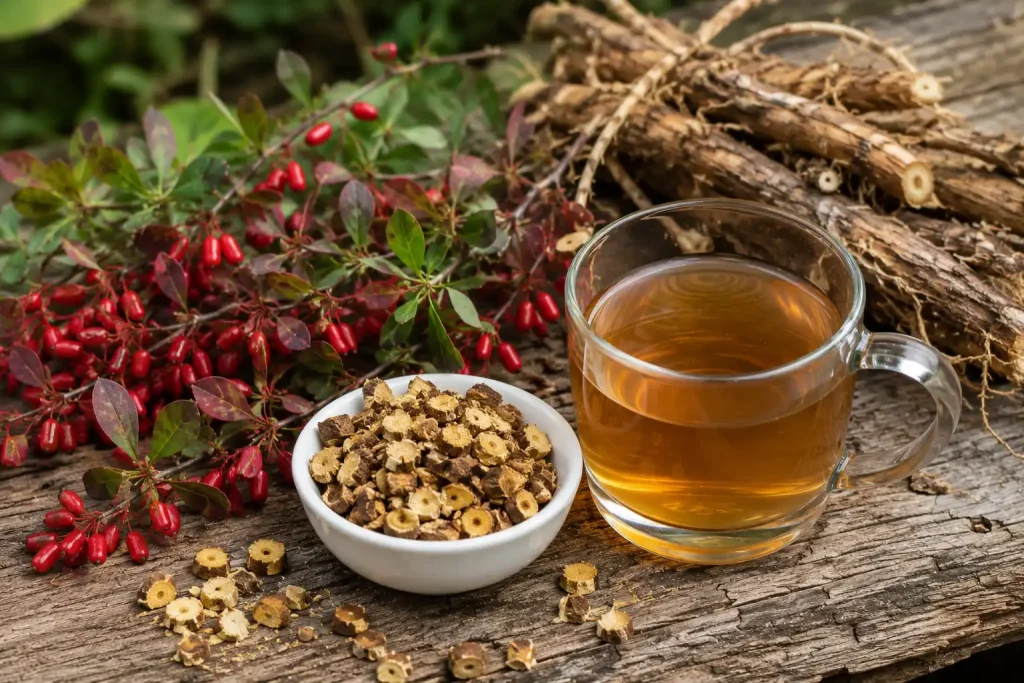
The color of the brewed tea is distinctly yellow to golden-orange, which comes from the berberine content. A well-brewed cup looks like a deep amber liquid with a warm glow — visually striking compared to most herbal teas.
Because of its intensity, barberry root tea is most often consumed in small amounts — half a cup to one cup — rather than large quantities. Many herbalists recommend starting with a small serving to assess tolerance, especially if you are new to strong bitters.
How to Brew Barberry Root Tea
Brewing barberry root tea requires a bit more time and heat than typical leaf teas. The root bark is dense and woody, which means it needs a longer extraction time to release its compounds fully.
Start with one teaspoon of dried barberry root bark per eight ounces of cold water. Bring the water to a full boil, add the herb, then reduce to a simmer. Let it simmer gently for fifteen to twenty minutes — this decoction method is standard for tough plant material like roots and bark.
Strain the liquid and let it cool slightly before drinking. The tea should be a deep amber color with a clear, bright quality. Drink it plain or with a small amount of honey to soften the bitterness. Adding lemon can also help balance the intensity.
Alternatively, you can make a cold infusion. Combine the herb with cold water and let it steep in the refrigerator for eight to twelve hours. Cold extraction tends to produce a slightly less bitter result, which some people prefer.
You can find wildcrafted barberry root bark, cut and sifted, at Hatton Naturals — sustainably harvested and ready for brewing.
Barberry Root Tea Blends and Pairings
Because barberry root is intensely bitter, it blends well with herbs that soften or complement that bitterness. Roasted dandelion root is a natural pairing — it has its own earthy bitterness but with caramel-like roasted notes that round out the sharpness of barberry. Dandelion root cut and sifted is easy to blend in equal parts with barberry for a more complex, layered bitter tea.
Ginger is another excellent companion. It adds warmth and a bright, spicy note that cuts through barberry’s bitterness and makes the tea more approachable. Add a quarter teaspoon of ginger cut and sifted to your barberry decoction during the last five minutes of simmering.
Licorice root is a classic addition to bitter herb blends. Its natural sweetness — from the compound glycyrrhizin — creates a pleasant counterpoint to barberry’s bitterness without adding refined sugar. Add a small piece of licorice root to your pot during the decoction.
Orange peel, cardamom, and cloves are other aromatic additions that work well with the earthy, yellow tones of barberry. A Persian-inspired spiced blend of barberry root, dried orange peel, cardamom, and a piece of cinnamon makes a warming, aromatic decoction that pays homage to the herb’s Middle Eastern roots.
Barberry Root in Folk Herbalism Traditions
Barberry root has a long history in multiple herbalism traditions. In traditional Persian medicine, it was used as a bitter digestive tonic and a treatment for liver and gallbladder complaints. Medieval European herbalists used barberry preparations for similar purposes, often combining it with other bitters and aromatic herbs.
In Ayurvedic medicine, barberry root is classified as a bitter herb with cooling properties. It appears in traditional formulations aimed at clearing excess heat and supporting digestive fire. The Ayurvedic concept of bitter herbs — “tikta rasa” in Sanskrit — positions plants like barberry as important tools for balancing digestion and clearing stagnation.
North American indigenous peoples used species of barberry and related Berberis plants for similar digestive purposes and as a yellow dye plant. The wide cultural distribution of barberry’s traditional use reflects the plant’s potency and broad availability across Eurasia.
What to Look for When Buying Barberry Root
Quality barberry root bark should have a vibrant yellow to golden interior color when cut or broken. The yellow color is a direct indicator of berberine content — pale or tan-colored root bark may be old, improperly processed, or of lower quality.
Look for cut and sifted bark rather than whole root pieces when buying for tea preparation. The cut material has more surface area exposed, which makes it easier to extract during decoction. Whole root pieces require longer simmering or rough crushing before use.
Wildcrafted barberry is common, since the plant grows abundantly in the wild across much of its native range. Sustainably wildcrafted sources are preferable to ensure the population is not over-harvested. Reputable suppliers will note the harvesting practices and country of origin on the label.
Storage and Shelf Life
Dried barberry root bark stores well when kept in an airtight container away from light and moisture. The root’s hard, woody nature makes it relatively shelf-stable compared to delicate leaf herbs. Properly stored, quality barberry root bark retains its potency for two to three years.
The yellow color of the bark is a useful quality indicator over time. If the cut surfaces lose their bright yellow color and turn dull tan or grey, the herb has likely oxidized and lost much of its berberine content. Fresh, potent root should always show that characteristic yellow interior.
Note: Barberry root has a long history of traditional folk use. This post is for educational purposes only and does not constitute medical advice. Do not use barberry root during pregnancy. Consult a qualified healthcare provider before using barberry root, especially if you take medications or have a diagnosed health condition.
Frequently Asked Questions About Barberry Root Tea
Is barberry root tea safe to drink every day?
Barberry root tea is traditionally consumed in short courses rather than indefinitely. Most herbalists recommend using it for two to four weeks at a time with breaks in between. Because of its berberine content, daily long-term use without breaks is not generally recommended. Pregnant women should avoid it entirely. Consult a healthcare provider before regular use.
What does berberine in barberry root actually do?
Berberine is an alkaloid found in barberry and several other plants. It has been the subject of significant clinical research, particularly regarding blood sugar, cholesterol, and gut microbial activity. While results are promising in laboratory and clinical studies, barberry root tea is not a substitute for medical treatment. Always consult a healthcare provider regarding any health conditions.
Can I make barberry root tea from dried berries instead of root bark?
You can brew tea from dried barberry berries, but the flavor and composition differ significantly from root bark tea. The berries are tart and contain less berberine than the root bark. Berry tea has a more pleasant, sour-sweet flavor similar to hibiscus. Root bark tea is much more bitter and contains higher levels of the alkaloid compounds associated with traditional use.
What is the difference between barberry and Oregon grape root?
Both plants belong to the Berberis family and contain berberine, giving them similar bitter flavor profiles and traditionally overlapping uses. Oregon grape root (Mahonia aquifolium) is native to North America. Barberry (Berberis vulgaris) is native to Europe and western Asia. Their compositions are similar, and they are often used interchangeably in Western herbalism traditions.
Ready to explore bitter botanical teas? Shop wildcrafted barberry root bark, dandelion root, and ginger at Hatton Naturals — all available in bulk with wholesale pricing for serious herbalists.