Stevia Leaf Sweetener: A Natural Option
Stevia leaf sweetener has moved from South American obscurity to global mainstream in just a few decades, but the leaves of Stevia rebaudiana have sweetened food and drink in Paraguay and Brazil for centuries before the rest of the world discovered them. Indigenous Guaraní people called the plant ka’a he’ê — sweet herb — and used it to sweeten bitter mate and medicinal preparations long before European contact. Today, stevia is grown commercially across Asia, South America, and parts of Europe, and its extracts appear in thousands of food and beverage products worldwide.
The Chemistry of Stevia’s Sweetness
The sweetness of stevia comes from a group of compounds called steviol glycosides, found in the leaves of the plant. Stevioside and rebaudioside A are the most abundant and well-known of these compounds, with sweetness ranging from 200 to 400 times that of table sugar by weight. These glycosides are not metabolized for energy by the body, which is why stevia leaf sweetener provides sweetness without contributing to caloric load.
The concentration of steviol glycosides varies by plant variety, growing conditions, and leaf maturity at harvest. Furthermore, different glycosides have subtly different taste profiles — rebaudioside A is generally considered cleaner and less bitter than stevioside, which partially explains the variation in taste between commercial products and whole-leaf preparations.
Whole dried stevia leaf contains a complex mixture of these compounds along with chlorophyll, flavonoids, terpenes, and other plant constituents. As a result, whole-leaf stevia sweetener has a more complex flavor profile than highly purified extracts.
Whole Leaf vs. Processed Stevia Extracts
There is an important distinction between whole stevia leaf and the highly processed stevia extracts used in commercial sweeteners. Products like Truvia, PureVia, and most grocery-store stevia packets are based on purified or partially purified rebaudioside A, often combined with other ingredients like erythritol, natural flavors, or fillers.
Whole stevia leaf cut and sifted retains all of the plant’s naturally occurring compounds in their original proportions. Many people who prefer whole-food herbal approaches appreciate this unprocessed character. Additionally, whole-leaf preparations have the longest historical use record, while highly refined extracts have only existed for a few decades.
The trade-off is intensity and consistency — purified extracts deliver a more uniform sweetness with less of the grassy, slightly bitter background notes that whole leaf imparts. For tea sweetening, many people find whole leaf quite appealing; for baking and cooking, purified extracts are more practical.
How to Use Stevia Leaf in Tea
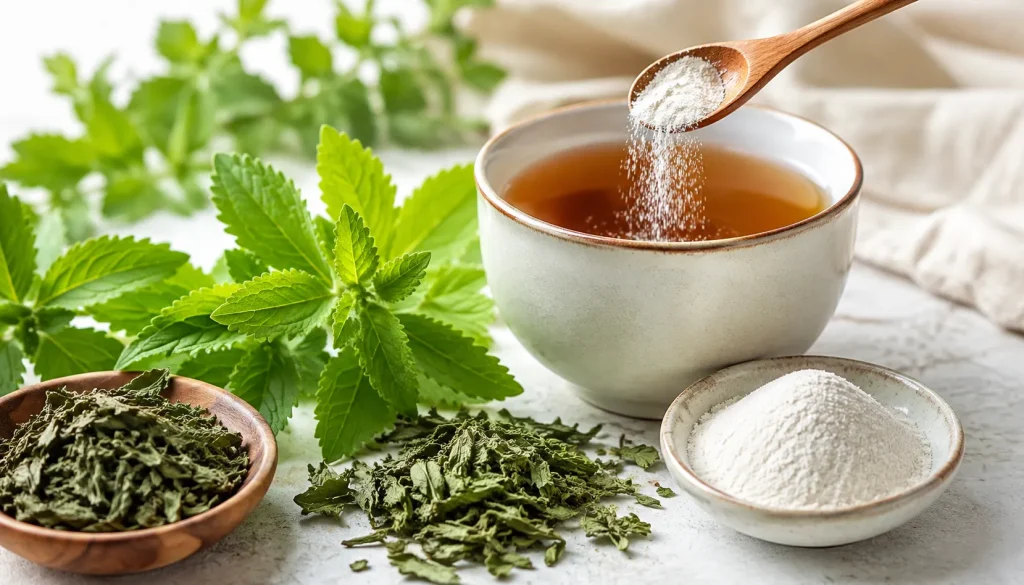
Using dried stevia leaf to sweeten herbal tea is simple and effective. Add just a few dried leaves — three to five leaves, or about a quarter teaspoon of cut and sifted herb — to your tea infuser alongside the herbs you are steeping. Steep together for five to ten minutes, and the stevia compounds will dissolve into the infusion, sweetening it naturally.
Start conservatively — stevia leaf is powerfully sweet and it is easy to over-sweeten a cup. A small amount goes a very long way. Moreover, stevia pairs particularly well with herbs that have a bitter or medicinal edge, such as green tea, peppermint, or chamomile blends, where its sweetness balances rather than competes.
A classic pairing is stevia leaf with peppermint cut and sifted — the sweetness of the stevia complements the cool, bright mint flavor beautifully, creating a refreshing and naturally sweet blend that requires no added sugar or honey. This makes it particularly suitable for those managing sugar intake.
Stevia Leaf Powder for Broader Use
For applications beyond tea, stevia leaf powder offers more versatility. The finely ground powder can be measured accurately for use in smoothies, homemade beverages, yogurt, and some baked applications. The powder dissolves more readily than cut herb and provides more surface area for extraction in liquid applications.
When substituting stevia leaf powder for sugar in recipes, keep in mind that stevia provides sweetness but not the bulk, browning, or moisture-binding properties of sugar. As a result, most recipes require significant adjustment beyond simply swapping sweeteners. Start by using one eighth to one quarter teaspoon of powder to replace one tablespoon of sugar, and adjust to taste.
In fermentation — particularly for kombucha and water kefir — stevia is interesting because the culture cannot metabolize steviol glycosides. The sweetness remains intact throughout fermentation, which can be useful for those wanting a finished product that is sweet without added residual sugars.
Growing Stevia at Home
Stevia is a tender perennial that can be grown as an annual in temperate climates. It thrives in full sun with well-drained, slightly acidic soil and consistent moisture. The plant grows readily from transplants available at garden centers and many online herb nurseries.
Harvest leaves when the plant is growing vigorously, before it flowers — flowering triggers a shift in leaf chemistry that can increase bitterness. Harvest in the morning when essential oil content is highest. Dry leaves quickly in a dehydrator at low heat or air-dry in a warm, ventilated location. Properly dried stevia leaves are intensely sweet and store well for one to two years in an airtight container.
Home-grown stevia provides the freshest possible whole-leaf sweetener, and many gardeners find it a rewarding plant to keep in a kitchen herb bed alongside basil, mint, and other culinary herbs.
Stevia Leaf in Traditional Paraguayan Medicine
Beyond its role as a sweetener, stevia leaf sweetener has traditional uses in Guaraní medicine that extend to blood sugar management, skin conditions, and digestive health. The Guaraní traditionally used stevia leaves for type 2 diabetes-like symptoms, lowering blood sugar levels, and treating skin infections and wounds.
Modern research has explored these traditional uses with considerable interest. Studies on stevioside and rebaudioside A suggest potential roles in blood sugar regulation, though the mechanisms and clinical relevance are still being investigated. Similarly, anti-inflammatory and antioxidant properties have been documented in laboratory settings.
These emerging areas of research add depth to stevia’s botanical story, positioning it as more than simply a zero-calorie sweetener. In fact, the whole leaf may offer a broader range of plant compounds than purified extracts can provide.
Safety and Considerations
Whole stevia leaf and purified stevia extracts have a strong safety record. The FDA classifies rebaudioside A as Generally Recognized as Safe (GRAS). However, whole stevia leaf has not been approved as a food additive in the US in the same way extracts have — it is sold as a dietary supplement. Individuals on blood sugar-lowering medications should monitor blood sugar levels when using stevia regularly, as it may have additive effects. Some people report mild digestive discomfort at high doses. This post is educational only and is not medical advice.
Frequently Asked Questions
Is whole stevia leaf the same as refined stevia sweetener?
No. Refined stevia products are extracted and processed to isolate specific steviol glycosides, often mixed with other sweeteners or fillers. Whole stevia leaf retains all naturally occurring plant compounds in their original form. The flavor, chemistry, and regulatory status differ between the two forms.
Does stevia leaf have an aftertaste?
Whole stevia leaf often has a noticeable aftertaste — a licorice-like or slightly bitter note that lingers after the initial sweetness fades. This is more pronounced with whole leaf than with purified rebaudioside A extracts. Using small amounts and combining with complementary herbs helps minimize it.
Can diabetics use stevia leaf sweetener?
Stevia is widely used by individuals managing blood sugar because its glycosides are not metabolized for energy and do not raise blood glucose. However, those on medication should consult a healthcare provider, as stevia may interact with blood sugar-lowering drugs. This is educational information, not medical advice.
How do I measure dried stevia leaf accurately?
Because stevia is so intensely sweet, small measurements matter. Use a standard measuring spoon and level it off for consistent results. When adding to tea, start with an eighth teaspoon of cut herb or two to three whole dried leaves and increase from there based on your sweetness preference.
Stevia leaf sweetener brings a fascinating botanical history and genuinely useful practical value to the herbal pantry. Explore our stevia leaf cut and sifted and browse our complete range of herbs and botanicals at the Hatton Naturals shop.