Birch Leaf Tea: A Mild Mineral-Rich Brew
Birch leaf tea occupies a unique place in European herbal tradition — quietly valued for centuries yet far less well known in North America than many other botanical teas. The graceful birch tree, Betula pendula and related species, has provided herbalists with leaves, bark, and sap throughout the forests of northern and central Europe, where its white papery bark is one of the most recognizable features of the boreal landscape.
The Birch Tree and Its Herbal Uses
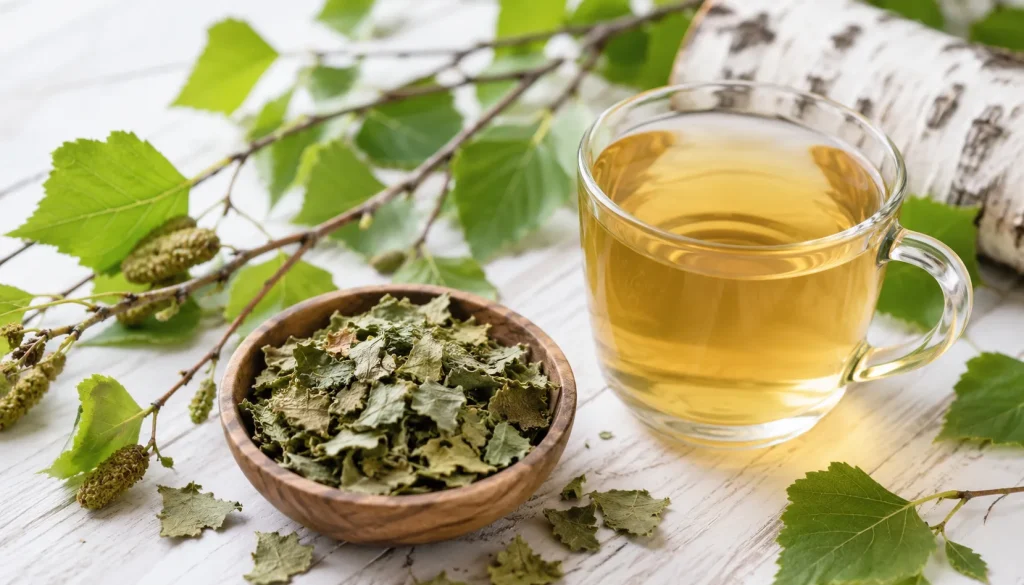
Birch trees belong to the genus Betula, a family of deciduous trees found across the cooler temperate regions of the Northern Hemisphere. Several species are used herbally, with silver birch (Betula pendula) and white birch (Betula pubescens) being the most common in European herbal practice. The young leaves, harvested in spring and early summer, are the primary part used for tea.
Traditional European herbalism valued birch leaves for their diuretic and kidney-supporting properties. In Scandinavian, German, and Eastern European traditions, birch leaf tea was a spring tonic — a cleansing brew consumed after the long winter months to support the kidneys, joints, and urinary tract. Furthermore, birch sap was tapped in early spring as a nutritive tonic drink, rich in minerals and natural sugars.
The leaves contain a range of active constituents including flavonoids (particularly hyperoside and quercetin derivatives), tannins, saponins, essential oils, and vitamin C. These compounds collectively contribute to the herb’s gentle astringency and mild diuretic character.
What Birch Leaf Tea Tastes Like
Birch leaf tea has a distinctive, mildly astringent flavor profile that is quite different from most herbal teas. The taste is fresh and slightly woody, with a faint wintergreen note contributed by methyl salicylate. A compound also found in birch bark and wintergreen leaves. This gives the tea a subtle, pleasant freshness that many people find more interesting than the generic “grassy” quality of many green herb teas.
The astringency is present but mild, especially if you avoid over-steeping. Additionally, there is a slight bitterness that becomes more pronounced with longer steeping times. Many people compare the experience to a very mild version of white tea with earthy, woodland undertones.
For a balanced cup, use birch leaf cut and sifted at a ratio of one to two teaspoons per eight ounces and steep for five to eight minutes in water just off the boil. Longer steeping deepens the astringency significantly.
Birch Leaf Tea in European Herbalism
In Germany, birch leaf is officially recognized in herbal medicine (German Commission E) as a diuretic herb for irrigation therapy — the practice of using diuretic herbs alongside high fluid intake to support urinary tract health. This endorsement reflects the herb’s long traditional use and gives it a degree of scientific credibility uncommon among many botanicals.
Traditional European healers used birch leaf tea to address joint discomfort, urinary conditions, and kidney function. In folk medicine, it was also applied topically — birch leaf poultices and washes were used for skin conditions and scalp health. The tannins and flavonoids were thought to tone and tighten tissue, a property that made birch a component of traditional hair rinses.
Moreover, birch leaf was commonly combined with other diuretic herbs such as dandelion leaf, nettle, and goldenrod in classical European kidney formulas. Nettle leaf remains a classic pairing with birch in contemporary herbal blending.
How to Brew the Perfect Cup
Brewing birch leaf tea well requires attention to both temperature and steeping time, as over-extraction quickly produces an unpleasantly bitter, harsh cup. Use filtered water heated to around 195-200°F — just off a rolling boil. Measure one heaping teaspoon of dried leaf per eight-ounce cup.
Pour hot water directly over the leaves and steep for five to seven minutes, then strain immediately. If you prefer a milder cup, steep for only three to four minutes. Conversely, if you enjoy stronger astringency, extend to eight to ten minutes.
Birch leaf tea is enjoyable both hot and iced. For an iced version, brew double-strength and pour over ice. A squeeze of lemon brightens the flavor and complements the natural astringency well. Blending with whole birch leaf can provide a slightly different extraction character, as the intact cell structure releases compounds more slowly.
Comparing Whole Leaf and Cut and Sifted Forms
Birch leaf is available in two main forms: whole dried leaf and cut and sifted (C&S). Each has its advantages depending on intended use. Whole leaves are well suited to loose-leaf steeping in a large infuser or strainer — they expand beautifully in hot water, releasing their compounds gradually. The whole leaf form is also preferred for topical applications such as poultices or rinses.
Cut and sifted leaf is more practical for everyday tea use and blending. The increased surface area allows for faster, more consistent extraction. For this reason, most tea drinkers and herbal blenders prefer the C&S form for their daily cup. However, the choice between the two comes down largely to personal preference and brewing method.
In either case, look for herb that is clearly green rather than yellowed or brown. Fresh-dried birch leaf should have a pleasant, mildly aromatic scent. Dull color and flat smell indicate age or poor drying conditions.
Sourcing and Storing Birch Leaf
Wild birch trees are abundant across much of North America and Europe, but harvesting from the wild carries risks — proper species identification is essential, as some trees are in protected areas or grow near pollution sources. As a result, purchasing from a reputable botanical supplier is the safest approach for consistent, clean herb.
Store dried birch leaf in an airtight glass jar away from light and heat. Properly stored, it maintains good quality for eighteen months to two years. Similarly, avoid storing near strong-smelling herbs or spices, as birch leaf can absorb foreign aromas over time.
Safety and Considerations
Birch leaf tea is generally considered safe for healthy adults. However, individuals with birch pollen allergies may experience cross-reactions, particularly during allergy season. Because birch leaf acts as a mild diuretic, it should be used cautiously by those on diuretic medications or with kidney disease, and always with adequate water intake. Consult a healthcare provider before using birch leaf therapeutically or during pregnancy. This post is educational in nature and does not constitute medical advice.
Frequently Asked Questions
Is birch leaf tea the same as birch bark tea?
No. Birch leaf and birch bark teas are distinct products from the same tree, but they have different flavors, constituents, and traditional uses. Birch bark contains higher concentrations of methyl salicylate and betulin, giving it a stronger, more medicinal taste. Leaf tea is milder and more suitable for everyday drinking.
Does birch leaf tea contain caffeine?
No. Birch leaf tea is caffeine-free, making it appropriate for sensitive individuals and suitable at any time of day, including evening.
Can people with aspirin sensitivity drink birch leaf tea?
Birch leaf contains methyl salicylate, which is chemically related to salicylates found in aspirin. Individuals with aspirin sensitivity or salicylate intolerance should exercise caution and consult a healthcare professional before drinking birch leaf tea regularly.
What is the best time of year to use birch leaf tea?
Traditional European herbalism emphasizes birch leaf tea as a spring tonic, consumed from March through May to support the kidneys after winter. However, dried herb is available year-round. And many herbalists use it throughout the year as a mild diuretic and mineral-rich everyday tea.
Birch leaf tea is one of the more underappreciated herbal teas available, offering a distinctive flavor and a rich European herbal heritage. Browse our full selection of birch leaf cut and sifted and explore more botanical teas at Hatton Naturals.