Schisandra Berry: Flavor, Brewing, and Blend Ideas
There’s a reason schisandra berry keeps showing up in serious tea rooms and small-batch apothecary shelves. It behaves like a flavor prism: bright and tart at first sip, then a soft resinous sweetness, then a drying, almost tea-like finish that makes you reach for another taste just to map it. For tea makers, that complexity is gold. It lets you build a blend with fewer ingredients and still get layers, especially when you pair it with a high-aroma leaf like lemon myrtle. The goal isn’t to bully the berries into submission. It’s to brew them in a way that keeps the top notes intact while extracting enough body to stand up in blends, syrups, and even lightly sparkling formats.
In this guide, you’ll get practical brewing parameters, blend architecture ideas, and production-minded details like scaling, filtration, and how to manage sediment. You’ll also get exact ratios in grams and teaspoons, plus troubleshooting for flat cups, overly tart batches, aroma loss, and the kind of haze that makes customers think something went wrong when it’s actually normal. By the end, you’ll be able to design a blend that tastes intentional, not “thrown together,” and you’ll know how to keep quality consistent from the first jar to the last.
What schisandra tastes like, and why it blends so well
On the palate, schisandra berry often reads as a tight, jewel-toned tartness (think cranberry-adjacent) with a subtle piney or cedar-like edge and a lingering sweetness that feels more like dried fruit skin than sugar. That resinous note is the secret weapon. It gives “structure” the way a good black tea does, even when you’re building a caffeine-free blend.
When you’re designing blends, think in three layers: top aroma, mid-palate fruit, and finish. The berries tend to own the mid-palate and the finish. So your job is to choose a top note that can float above the tartness without turning “bathroom cleaner.” Lemon myrtle is excellent here because it’s crisp and leafy-citrus rather than peel-like.
If you want a gentle warmth behind the fruit, pair in a root or bark that reads as round rather than sharp. Try adding cinnamon chips when you want a quiet bakery warmth that doesn’t hijack the cup. If you want lift and freshness without citrus peel, try fennel seed for a soft, sweet-anise sparkle that plays surprisingly well with tart berries.
Flavor architecture: schisandra berry + lemon myrtle done right
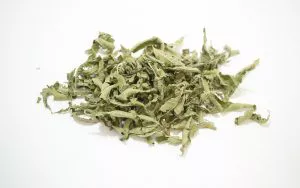
The pairing of schisandra berry with lemon myrtle works when you treat lemon myrtle like aroma, not bulk. Lemon myrtle can dominate if you dose it like a base leaf. Instead, use it as a high-note accent that hits early and then clears the way for the berry body.
Start with a simple rule for blend balance: berries for body, leaf for aroma, root for bass. In practice, that means your berry portion is usually the heaviest by weight, your lemon myrtle stays modest, and your roots or spices are optional, used to shape the finish.
For a clean, modern profile, keep it minimal: berries + lemon myrtle + one “rounding” element. Herbalists often build this way because it keeps the sensory message clear. If you want a smoother, longer finish without adding sweetness, licorice root can add a subtle, naturally sweet impression (use lightly so it doesn’t take over).
Try adding Organic Lemon Myrtle when you want a bright, aromatic top note that reads as fresh leaf citrus rather than peel. And if you’re building a stronger, café-style infusion that can handle milk-free “latte” formats, ginger root can add heat that pushes the berry tartness into something more dessert-like.
Brewing fundamentals: time, temperature, and extraction strategy
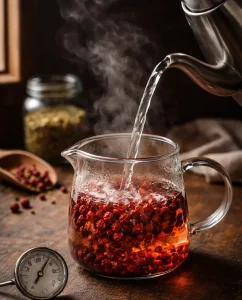 Think of berry brewing as two separate jobs: extraction of body (tartness, color, depth) and preservation of aroma (the delicate, high notes that make the cup feel alive). Berries like a slightly longer steep than leafy herbs, but lemon myrtle prefers shorter contact to avoid a harsh edge.
For a straightforward mug infusion, use water at 95°C to 100°C (203°F to 212°F) for the berries, then add lemon myrtle later or steep it separately. If you’re doing a single-steep method, keep the time controlled and accept a little less aroma rather than pushing the leaf too long.
Suggested parameters for consistent results:
- Berries alone: 10 to 12 minutes at near-boiling for full body.
- Lemon myrtle alone: 4 to 6 minutes at 90°C to 95°C (194°F to 203°F) for clean aroma.
- Combined steep: 7 to 9 minutes at 95°C (203°F), then strain promptly.
If you’re scaling for production, consider a two-stage brew: brew the berries strong, then blend in a shorter lemon myrtle infusion right before bottling or serving. That approach protects aroma and gives you a consistent tart backbone.
Exact ratios (grams + teaspoons) for blends, strong infusions, and syrup
Use these as starting points, then adjust by taste. Your berry size, cut, and freshness shift extraction slightly, so treat the first batch as calibration.
Everyday tea blend ratio (dry blend)
Per 100 g dry blend:
- 70 g Organic Schisandra Berry
- 20 g Organic Lemon Myrtle
- 10 g fennel seed (optional for a sweeter, rounder aroma)
Per 12 oz (355 ml) mug:
- 6 g total blend (about 2 teaspoons, depending on cut)
- Water: 95°C (203°F)
- Steep: 8 minutes
Berry-forward strong infusion (for iced tea or blending)
For 1 liter:
- 24 g berries (about 8 teaspoons)
- 6 g lemon myrtle (about 3 teaspoons)
Brew the berries first: 24 g in 1 liter at 98°C to 100°C (208°F to 212°F) for 12 minutes. Strain. Brew lemon myrtle separately: 6 g in 300 ml at 95°C (203°F) for 5 minutes. Combine to taste, then top with cold water or ice to desired strength.
Concentrate syrup (for sodas, mocktails, and sparkling formats)
For ~500 ml finished syrup:
- 40 g berries (about 13 teaspoons)
- 8 g lemon myrtle (about 4 teaspoons)
- 300 ml hot water
- 300 g sugar (or to your preferred sweetness level)
Steep berries in 300 ml near-boiling water for 15 minutes, covered. Strain through fine mesh. While warm, dissolve sugar fully. Steep lemon myrtle separately in 200 ml hot water for 5 minutes, strain, then blend into the syrup gradually until the aroma feels present but not sharp. Bottle cold.
For a simple sparkling serve, start with 30 ml syrup in a glass, add ice, then top with 200 to 250 ml sparkling water. This is where schisandra berry really shines: tart structure plus aromatic lift.
Blend ideas that taste intentional (not random)
Here are four blend directions you can build from, each with a clear sensory goal.
1) Bright and clean (apothecary citrus leaf)
Keep it minimal: berries + lemon myrtle. If you want a softer landing at the end of the sip, add a small amount of licorice root. Use it as a rounding tool, not the main character.
2) Warming tart (winter fruit impression)
Add cinnamon chips and a touch of ginger root. This turns the tartness into something that reads like spiced fruit, without needing citrus peel. The ginger should feel like a late warmth, not a throat punch.
3) Floral lift (delicate, airy top note)
Use a light floral that won’t compete with lemon myrtle’s brightness. Try adding organic elderflower to bring a soft, honeyed aroma that makes the cup feel more “high-end.” Keep florals restrained so the berries still anchor the blend.
4) Roasty-depth without caffeine (earthy support)
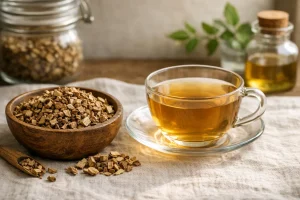
If you want depth and a grounding finish, a root addition can help. Try adding organic dandelion root for a roasted, toasted base that makes the infusion feel more substantial, especially served hot.
In all cases, the trick is keeping your “message” clear. Decide if you want bright, warm, floral, or deep, then choose one supporting ingredient that reinforces that choice.
Production notes: scaling, filtration, sediment, and consistency
In production, the biggest surprises with berry-based infusions are yield, haze, and aroma fade. Plan for them and you’ll look like a wizard. Ignore them and you’ll end up remixing batches at the last minute.
Scaling: When you scale from 1 liter to 10 liters, extraction doesn’t always scale linearly because heat retention changes. Larger batches often stay hotter longer, which can pull more tartness and tannin-like dryness. Taste at the same time stamp every batch (for example, at minute 10) so you can stop the brew consistently.
Filtration: A fine mesh strainer removes the big particles, but berry infusions can still throw a light sediment over time. For bottled products, consider a two-step strain: coarse strain first, then a second pass through a finer mesh. Avoid ultra-fine filtration unless you’re okay sacrificing some body.
Aroma management: Lemon myrtle aroma is volatile. If you’re bottling, blend in your lemon myrtle infusion when the berry base is warm, not steaming hot. Cap bottles quickly after filling, if you can. If you’re doing a café service, steep lemon myrtle to order and add it to a pre-brewed berry base.
Consistency hack: Make a “house concentrate” of berries at a fixed strength, then use it as a base for multiple menu items. That way, one core extraction drives your iced tea, hot tea, and sparkling options with minimal drift.
Troubleshooting: flat flavor, too tart, over-carbonation, sediment, aroma loss
Flat flavor: Usually under-dosed berries or too-short steep. Increase berry dose by 10% or extend steep by 2 minutes. If the cup is strong but still dull, add a small amount of lemon myrtle infusion at the end for lift rather than steeping the leaf longer.
Too tart: Reduce steep time for the berries by 2 minutes or drop the berry dose slightly. Another fix is to add a rounding element like a pinch of licorice root or a warming note like cinnamon chips, which can make tartness feel more balanced without adding acid.
Over-carbonation: If you’re using the syrup in a fermented or naturally carbonated format, keep sugar measured and fermentation time controlled. For simple sparkling water builds, the problem is usually pouring technique: add syrup first, then sparkling water slowly down the side of the glass to preserve fizz without explosive foaming.
Sediment: Normal with berry material. Double-strain while warm and let the infusion rest 10 minutes before the final pour, so heavier particles settle. If customers dislike haze, label it as a natural characteristic of berry infusions and keep presentation consistent.
Aroma loss: Lemon myrtle steeped too hot or too long, or left uncovered. Steep it covered, shorter, and add it later. If a batch already lost aroma, you can blend in a fresh, small lemon myrtle infusion rather than re-steeping the original blend.
Storage + quality: keeping berries vivid and lemon myrtle aromatic
Quality control for berry and leaf ingredients is mostly about air, humidity, and time. Store everything airtight, away from heat and light, and be extra cautious with lemon myrtle since its value is aroma.
Airtight storage: Use sealed containers with minimal headspace. If you’re in a humid environment, open containers quickly and close them immediately. Consider portioning into working jars so your bulk stock stays sealed most of the day.
Humidity cues: If berries feel tacky or clump, they’ve likely picked up moisture. That can dull flavor and increase sediment. Lemon myrtle that has lost its bright scent will taste thin even if it looks fine.
Color and scent cues: Berries should look richly colored and smell pleasantly tart and resinous. Lemon myrtle should hit your nose immediately with crisp, leafy citrus. If it smells faint or dusty, use it for R&D batches, not your flagship blend.
Brewed storage: Plain berry infusion holds up better than lemon myrtle infusion. If you need to prep ahead, store berry base chilled for up to 48 hours, then add lemon myrtle infusion closer to service. For syrup, keep refrigerated and use clean handling to avoid contamination.
Safety notes for responsible labeling and customer guidance
This article is for culinary tea-making and beverage formulation. Herbalists often use berries and aromatic leaves in traditional wellness routines, but you should avoid medical claims and keep language compliant. Focus on taste, tradition, and general enjoyment.
Use phrasing like “traditionally used,” “herbalists often use,” or “may support” in a general sense, without mentioning diseases or promising outcomes. If customers are pregnant, nursing, taking medications, or managing a health condition, the safest guidance is to consult a qualified health professional before making significant dietary changes. For retail products, include standard caution language and keep your marketing anchored in flavor, craftsmanship, and quality sourcing.
Conclusion: building a signature cup around schisandra berry
The easiest way to make schisandra berry feel premium is to respect its shape: tart body, resinous depth, and a finish that lingers like a well-made tea. Pair it with lemon myrtle as a controlled aromatic layer, then decide whether you want warmth, floral lift, or roasted depth. Keep your parameters tight (temperature, time, dose), and your batches will taste consistent even as you scale. Do that, and you’ll end up with a signature infusion that works hot, iced, and sparkling without feeling like three different products.
FAQ
What does schisandra berry taste like in tea?
It’s typically tart and fruit-forward with a subtle resinous depth and a drying finish that can feel tea-like.
Can I steep schisandra berry and lemon myrtle together?
Yes, but keep the time moderate (about 7 to 9 minutes) so lemon myrtle stays aromatic and doesn’t turn harsh.
Why is my schisandra berry infusion cloudy?
Berry material can produce natural haze and fine particles. Double-strain and let the brew rest briefly before bottling.
How do I make schisandra berry taste less tart?
Reduce berry steep time slightly, or add a rounding note like a small amount of licorice root or gentle warmth like cinnamon chips.
Does lemon myrtle lose aroma if I brew it too hot?
It can. Steep it covered and shorter, and consider blending it into a berry base after the base cools slightly.
What’s the best format for serving schisandra berry in summer?
A strong berry base over ice with a late-added lemon myrtle infusion works well. Syrup topped with sparkling water is also excellent.
Can I use schisandra berry syrup in kombucha 2F?
Yes, use measured syrup amounts to control sugar, and monitor pressure carefully to avoid excessive carbonation.
How long do dried berries and lemon myrtle stay fresh?
Stored airtight, cool, and dry, they can remain enjoyable for months, but lemon myrtle aroma fades faster. Rotate stock and trust scent cues.