Yerba Mate Caffeine in Traditional Daily Ritual
Yerba mate caffeine has a special place in the world of traditional herbal drinks because it offers stimulation, flavor, and ritual at the same time. Unlike beverages that are rushed or purely functional, mate is often prepared with intention. The leaves carry a green, toasty, grassy character, and the experience is shaped not only by strength, but by temperature, vessel, steeping method, and the herbs blended around it. In South America, this infusion has long been part of conversation, work, hospitality, and everyday rhythm. For tea makers and herbalists, that makes it especially interesting: the plant is not only about energy, but about structure, aroma, and habit.
When people ask about yerba mate caffeine, they are usually trying to understand whether it feels more like coffee or tea. The honest answer is that it sits in its own category. It can be brisk and lifting, but also rounded, steady, and easier to shape in a blend. A simple change in leaf ratio, water temperature, or companion herb can make it feel brighter, cooler, softer, or deeper. That flexibility is why mate works so well both as a solo daily infusion and as the backbone of thoughtful herbal formulas.
What Yerba Mate Is in Traditional Herbal Use
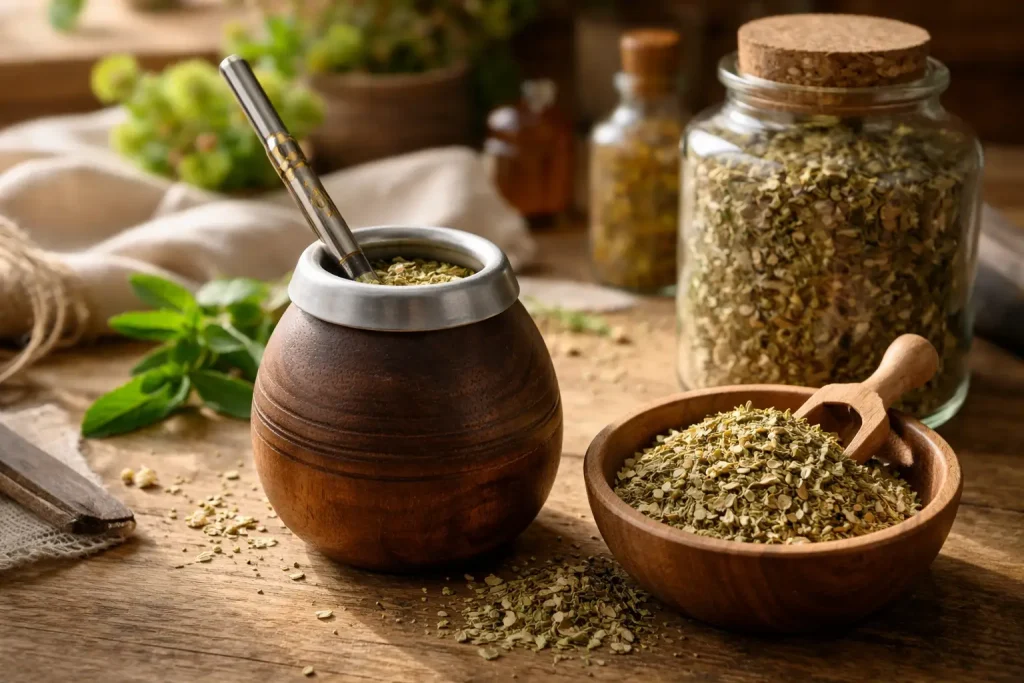
Yerba mate comes from the leaves of Ilex paraguariensis, a South American tree traditionally prepared as an infusion. Depending on cut, aging, and processing style, the flavor can lean fresh and leafy or toasted and earthy. In traditional service, mate is often prepared in a gourd and repeatedly infused, which changes the pace of extraction and gives the drink a very different personality from a one-and-done mug of tea.
Part of the appeal of yerba mate caffeine is that it arrives through a leafy plant infusion rather than through a dark roasted bean. The leaf brings more herbal nuance to the cup, which gives blenders room to work with mint, citrus-like peels, roots, and flowers without losing structure.
For a clean daily cup, start with yerba mate leaf c/s as the foundation. It gives the blend body, color, and a familiar traditional profile that still works beautifully in loose-leaf tea service.
Yerba Mate Caffeine Compared With Coffee and Tea
The experience of yerba mate caffeine is often described as somewhere between coffee and black tea, but that comparison only goes so far. Coffee tends to hit with roast, density, and immediate intensity. Black tea usually brings a more direct tannic line and a narrower infusion style. Mate, by contrast, can feel greener, broader, and more adaptable over several pours.
That difference matters for daily ritual. Coffee is usually measured for speed. Mate is often measured for continuity. The drink can be sipped alone, shared in rounds, or turned into a thermos-based work companion. For many people, the practical value of yerba mate caffeine is less about chasing maximum force and more about creating a sustained beverage habit that feels alive in the mouth.
In flavor terms, mate also welcomes cooling companions. Try adding organic peppermint leaf c/s when you want the cup to feel cleaner, brighter, and more lifted without masking the leaf itself.
How Preparation Changes the Feel of the Cup
The same herb can feel surprisingly different depending on how it is extracted. If you want a softer, rounder presentation, keep the water below a full boil. Water that is too hot can flatten aroma and push bitterness to the front. For most loose preparation styles, a useful range is 70 to 80°C (158 to 176°F). Traditional gourd service often starts in that neighborhood for the same reason.
A standard mug infusion can be made with 6 to 8 grams of yerba mate per 240 ml water. That is about 2 to 3 teaspoons, depending on cut density. Steep 4 to 6 minutes for a balanced cup. For a stronger tea-house style brew, use 10 grams per 300 ml water, roughly 4 teaspoons.
For a balanced blend:
- 8 g yerba mate leaf (about 3 tsp)
- 2 g peppermint leaf (about 2 tsp loosely measured)
- 300 ml water at 75°C (167°F)
- Infuse 5 minutes
A gentler afternoon version:
- 5 g yerba mate leaf (about 2 tsp)
- 1 g chamomile flowers (about 1 tsp)
- 1 g lemon balm leaf (about 1 tsp)
- 300 ml water at 75°C (167°F)
- Infuse 4 to 5 minutes
These ratios matter because yerba mate caffeine is not just about how much leaf you use. It is also about how quickly the cup extracts and how the companion herbs widen or soften the effect.
Building a Daily Ritual Around Yerba Mate
One reason people return to mate is that it lends shape to the day. It can start the morning without feeling heavy, or it can carry a long work block when served in repeated pours. This ritual aspect helps explain the staying power of yerba mate caffeine in traditional households. The beverage invites pacing.
For solo drinkers, one of the easiest ways to use mate is as a prepared thermos infusion. Brew a small concentrate, then dilute to taste over time. This keeps the drink flexible and prevents the first cup from being too aggressive while the last one feels weak.
For a warmer, softer herbal profile, try chamomile flowers in the late-day blend. For a fresher green edge, add lemon balm leaf. Both herbs help the cup feel composed rather than sharp.
Best Flavor Pairings for Tea Makers
Mate is generous in blends, but it still needs respect. It can dominate delicate florals if overused, and it can taste hollow if paired only with light top notes. Good blending usually means giving it one herb for lift, one for roundness, and one optional accent.
A few dependable pairing directions:
- Cooling and bright: mate + peppermint
- Soft and meadow-like: mate + chamomile
- Green and calm: mate + lemon balm
- Warm and rooted: mate + licorice root
- Fresh and lightly floral: mate + calendula petals
- Crisp and orchard-like: mate + dried apple pieces
For tea makers designing a retail-friendly formula, licorice can round edges without requiring much weight. Try adding licorice root cut when you want a fuller middle and a naturally smoother finish. For visual appeal and a soft golden note, calendula petals work beautifully in clear jars and sachet blends. For a softer fruit impression without strong acidity, dried apple pieces can give mate a friendlier everyday profile.
Troubleshooting Yerba Mate Blends
A good mate blend should feel alive, aromatic, and clean on the palate. When it misses the mark, the issue is usually process rather than the herb itself.
Flat flavor
This often comes from stale leaf, water that is too cool, or too much softening herb in the blend. Increase the mate slightly, refresh your stock, and make sure the water is warm enough to wake the leaf.
Too tart
This can happen when fruit components or certain floral accents push the blend out of balance. Reduce fruit additions and bring in a rounder companion like licorice or chamomile.
Over-carbonation
If you are using mate in sparkling tea or herbal soda experiments, the issue is usually sugar level or bottling timing rather than the leaf. Chill earlier, use a more controlled base, and test in small batches.
Sediment
Some sediment is natural with broken leaf and fine cuts. Use a finer filter, let the liquor settle briefly, or adjust your cut size if the blend is meant for a clearer teapot presentation.
Aroma loss
Mate loses charm when stored poorly or exposed to heat. Keep blends away from light and humidity, and avoid leaving opened bags near steam or direct sun.
A practical reminder for formulators: yerba mate caffeine will feel harsher when the leaf is tired or when aromatic herbs have already faded. Freshness is part of the sensory structure, not a side detail.
Storage + Quality
Store mate and companion herbs in airtight containers, away from humidity, heat, and repeated light exposure. This is especially important for leafy ingredients, which can lose color and aroma faster than roots or bark. Good yerba mate should still smell green, toasted, and alive. If it smells dusty, flat, or vaguely papery, it has likely lost too much character.
Watch the color as well. A healthy leaf blend should look natural and expressive, not gray or damp-looking. Peppermint should still show lively green. Chamomile should keep some warm golden tone. Calendula should remain bright, not browned out.
In a working tea station, smaller refill containers are often better than opening a large bulk bag every day. This protects aroma and keeps the cup more consistent from batch to batch. The cleaner the raw material, the more clearly yerba mate caffeine expresses itself in the final infusion.
Safety
Yerba mate belongs in responsible, informed beverage use. This article is about traditional use, flavor, and preparation, not medical treatment. Herbalists often use mate as part of everyday beverage culture, but individual tolerance can vary. Some people prefer smaller servings, lower temperatures, or softer blends, especially later in the day.
Avoid turning the conversation into claims the herb was never meant to carry. It is better to describe mate as stimulating, traditional, grassy, toasty, and adaptable than to promise specific outcomes. Keep labels and product descriptions compliant, sensory, and practical. Yerba mate caffeine is best presented as part of a beverage ritual and a flavor experience.
Conclusion: Why Yerba Mate Still Feels Distinct
What makes yerba mate endure is not only chemistry, but culture and form. Yerba mate caffeine matters, but it matters inside a wider experience that includes repeated pours, shared service, leafy aroma, and the ability to shape the cup with other herbs. That is why mate remains so useful for both herbal traditionalists and modern tea makers.
If you want a clean place to begin, start with a simple two-herb formula: mate for structure, peppermint for lift. From there, soften with chamomile, round with licorice, brighten with calendula, or make it more approachable with apple. The beauty of yerba mate caffeine is that it does not have to be isolated from ritual, flavor, or craftsmanship. It can live inside all three.
FAQ
What is yerba mate caffeine most similar to?
Yerba mate caffeine is often compared to coffee and black tea, but the drinking experience is usually greener, more herbal, and more adaptable across repeated infusions.
Does yerba mate taste like green tea?
Not exactly. It can share a leafy freshness, but mate is usually toastier, earthier, and more savory.
What water temperature is best for mate?
A practical range is 70 to 80°C (158 to 176°F). Boiling water can make the cup taste harsher and duller.
Can I blend mate with mint?
Yes. Organic peppermint leaf c/s is one of the easiest and most reliable ways to brighten a mate blend.
How much mate should I use per mug?
A useful starting point is 6 to 8 grams, or about 2 to 3 teaspoons, per 240 ml water.
Why does my mate taste flat?
Usually because of stale leaf, weak extraction, or poor storage. Freshness and water temperature matter more than many people expect.
Can mate be used in sparkling herbal drinks?
Yes, but test carefully. If a batch becomes too fizzy, the issue is usually process and sugar control, not the leaf itself.
How should I describe yerba mate caffeine in product copy?
Use beverage language. Describe tradition, flavor, ritual, and preparation instead of medical or disease-related claims.