How to Make Valerian Root Tea Properly
Learning how to make valerian root tea is partly a matter of technique and partly a matter of expectation. Valerian is not a bright, delicate, instantly charming herb. It is deep, earthy, musky, and unusually distinctive. Herbalists have respected it for generations precisely because it does not behave like a pretty floral. It carries a dense underground character, shaped by the root itself, and asks to be brewed with a little patience. Once you understand that, the tea becomes much easier to appreciate. A good cup is less about hiding valerian completely and more about bringing its weight into balance so the infusion feels grounded, rounded, and drinkable.
For tea makers and herbal drinkers, this matters because valerian behaves differently from lighter leaves and petals. It wants more time, thoughtful pairing, and clean storage. Its aroma can be surprising when you first open the bag. Its flavor can go from pleasantly earthy to rough if the ratio is too high. But when brewed with care, valerian root tea has a steady, old-fashioned herbal quality that many people find deeply satisfying as part of an evening routine. This guide explains how to make valerian root tea in a practical way, with clear ratios, flavor adjustments, storage guidance, and realistic expectations from cup to cup.
What Valerian Root Brings to the Cup
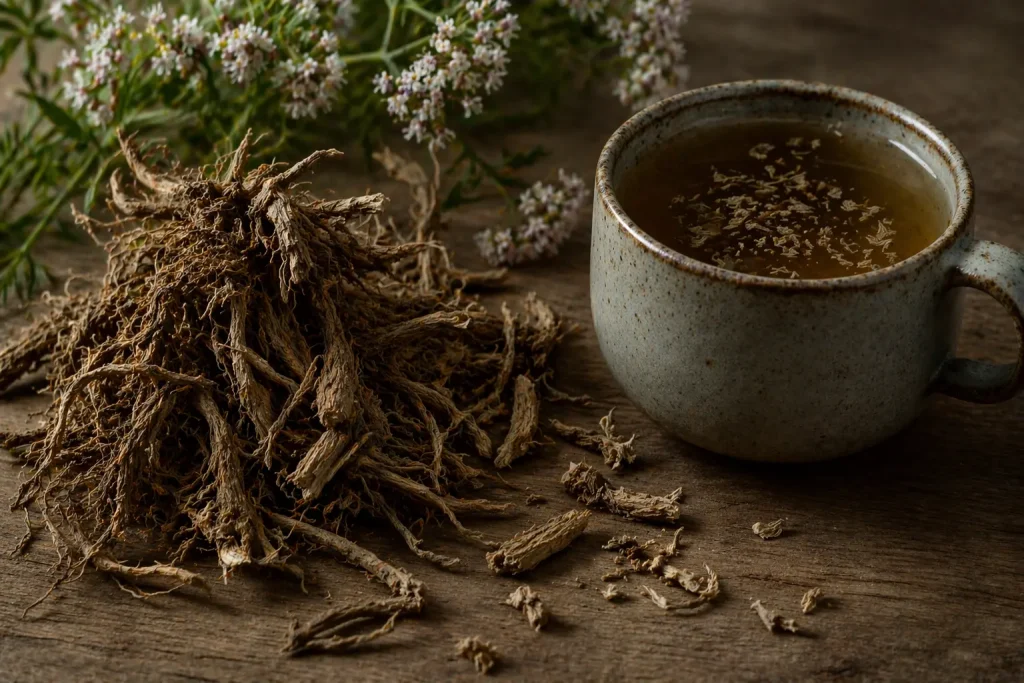
Before discussing how to make valerian root tea, it helps to know what kind of herb you are working with. Valerian root is not grown for brightness or visual elegance. It is valued for the dense character of the root itself. In aroma, it can come across as earthy, woody, musky, and faintly sweet, with a deep underground tone that some people love immediately and others need time to understand.
In flavor, valerian is usually fuller and heavier than most common herbal teas. It does not have the tart snap of fruit, the coolness of mint, or the soft meadow-like quality of chamomile. Instead, it gives the cup a root-built body. This is one reason it is often paired with gentler herbs. Good companions can soften its edges without erasing its identity.
For a straightforward evening-style infusion, dried valerian root c/s gives you the cleanest starting point and makes measuring much easier than working with irregular whole root pieces.
How to Make Valerian Root Tea with the Right Ratio
The most important step in learning how to make valerian root tea is getting the ratio right. Too little and the brew feels thin and unconvincing. Too much and the cup becomes rough, overly pungent, and harder to enjoy. For a standard single mug, start with 2 to 3 grams of dried valerian root cut and sifted per 8 ounces of water. In teaspoon terms, that is usually about 1.5 to 2 teaspoons, depending on cut size and density.
Use water just off the boil, around 205°F to 212°F (96°C to 100°C). Pour over the root, cover the vessel, and steep 10 to 15 minutes. Covering matters because aromatic compounds escape quickly if left open. If you want a deeper root extraction, some herbalists prefer a short simmer or decoction-style approach of 5 to 10 minutes followed by resting off heat.
A practical starting formula is:
- 2.5 grams dried valerian root c/s
- 8 ounces water
- 1.5 to 2 teaspoons valerian root
- 10 to 15 minutes covered steep, or 5 minutes gentle simmer plus 5 minutes covered rest
This basic method answers the technical side of how to make valerian root tea, but flavor often improves further when the root is paired wisely.
Why Brewing Time Changes the Character
Brewing time matters more with valerian than many people expect. A shorter infusion may preserve a gentler profile, though sometimes at the cost of depth. A longer steep pulls more body from the root and often produces a more serious herbal cup. The trade-off is that stronger earthy and musky notes become more obvious.
This is why how to make valerian root tea is not just one recipe. It is a small range of methods depending on preference. If you are new to valerian, start lighter and shorter. If you already enjoy stronger root teas, you may prefer a longer covered infusion or brief decoction.
Tea makers working in small batches should also note that cut size changes extraction speed. A finer cut releases flavor faster than chunkier root. That is another reason to test carefully and take notes. Once you find the profile you like, keep the method stable.
If you want to soften the rooty intensity without turning the blend sweet, chamomile flowers are one of the easiest and most classic balancing herbs.
Flavor Pairing: Making Valerian More Drinkable
A pure valerian infusion can be worthwhile, but many people prefer it blended. The best companions do not try to erase valerian completely. They round it, cool it, or add a softer aromatic top note. Chamomile, lemon balm, peppermint, and lavender are all useful depending on the effect you want.
Here is a balanced evening blend:
- 2 grams valerian root c/s (about 1.5 teaspoons)
- 1 gram chamomile flowers (about 1 tablespoon whole flowers)
- 0.5 gram lemon balm (about 1 teaspoon)
- 8 to 10 ounces water at 205°F (96°C)
- Steep covered for 10 minutes
For a fresher version:
- 2 grams valerian root
- 0.75 gram peppermint leaf
- 0.5 gram chamomile
- 8 ounces water
- Steep 8 to 10 minutes
These kinds of blends help teach how to make valerian root tea in a way that respects the root while making the cup easier to return to regularly.
For a brighter herbal lift that helps lighten the root’s heavier edges, lemon balm leaf is especially useful in evening blends.
Why Herbalists Use Valerian Root Tea
Valerian has a long history in traditional herbal practice, and that is part of why people continue learning how to make valerian root tea today. Herbalists often use valerian as part of an evening routine or in formulas intended to feel settling and grounded. The root has an old apothecary reputation, less elegant than floral herbs but often valued for the depth it brings to nighttime blends.
Its place in traditional use is one reason many people seek it out, but the experience is still very personal. Some enjoy valerian on its own. Others prefer it only in a blend. Some appreciate the aroma right away, while others find it better after pairing it with softer herbs. That variation is normal.
From a beverage maker’s perspective, valerian is also interesting because it teaches restraint. You do not need much. A little can shape the whole cup. That makes it useful in carefully designed formulas where the goal is not loud flavor but steady character.
If you want a softer floral layer above the earthiness, lavender flowers can bring a clean aromatic top note when used sparingly.
Troubleshooting
Flat flavor usually means the ratio is too low, the root is old, or the steep was too short for the cut size. Increase the root slightly or extend the covered steep.
Too tart is not usually a valerian problem unless acidic herbs were added to the blend. Reduce sharp ingredients first rather than blaming the root.
Over-carbonation only becomes relevant if valerian tea is used as a base for a fermented or sparkling beverage. The herb itself is not the cause, but any sweetened tea base can become unstable if bottled improperly.
Sediment often comes from very fine cut root or rough handling of the herb. Use a tighter filter, double strain, or let the cup rest briefly before pouring.
Aroma loss is a major sign of age or poor storage. Valerian should smell strong and unmistakably root-like. If it smells faint and papery, the lot is fading.
For a cleaner finish that can reduce the perception of heaviness, peppermint leaf works well in test blends when the root feels too dense.
Storage + Quality
Valerian root should be stored with more care than casual drinkers often give it. Keep it airtight, dry, and away from light, heat, and kitchen humidity. Because the root has a strong natural aroma, it is best stored separately from delicate herbs that may absorb scent.
Quality cues are simple. Good valerian root usually shows a natural brown to tan root color and a strong, unmistakable smell. The aroma may be surprising, but it should not feel moldy or stale. The cut should look reasonably clean and consistent, not dusty beyond normal handling.
If you are building an herbal tea program or offering valerian as part of a wellness line, work from smaller containers and refill them from master stock. That reduces repeated exposure and helps preserve the herb’s more volatile character. Freshness matters here. A tired valerian lot quickly loses the intensity that makes the tea worthwhile in the first place.
For warmer, spiced root-style evening blends, cinnamon chips can add roundness and make the overall profile feel more approachable.
Safety
Valerian root tea belongs in the category of traditional herbal beverages, and it should be described responsibly. Herbalists often use it as part of evening routines, and it may support a sense of relaxation and settling for some people, but it should not be presented as a cure, treatment, or substitute for medical advice. Keep claims grounded and compliant.
Because valerian can feel quite strong, start with modest amounts rather than aggressive brewing. People respond to herbs differently, and that is especially true with roots that carry a distinct profile. If someone is pregnant, nursing, taking medication, or managing a medical condition, it is wise to speak with a qualified healthcare professional before using new herbs regularly.
The deeper lesson in how to make valerian root tea is that good brewing is about respect for the plant. Valerian is not trying to be charming. It is trying to be itself. When you brew it with the right ratio, protect its aroma, and pair it thoughtfully, the cup becomes much more than a harsh root infusion. It becomes steady, earthy, and quietly useful. That is why people continue returning to the question of how to make valerian root tea, and why the answer is best found through careful brewing rather than overcomplicating the method.
FAQ
How do you make valerian root tea at home?
Use 2 to 3 grams of dried valerian root c/s per 8 ounces of hot water and steep covered for 10 to 15 minutes.
What does valerian root tea taste like?
It is earthy, musky, woody, and much deeper than most floral herbal teas.
How to make valerian root tea taste better?
Blend it with chamomile, lemon balm, peppermint, or a small amount of lavender to round the flavor.
Can I simmer valerian root instead of steeping it?
Yes. A short gentle simmer followed by a covered rest can produce a fuller extraction.
Why does valerian root smell so strong?
That strong root aroma is normal and is part of what makes valerian distinctive.
How should I store dried valerian root?
Keep it airtight, dry, and away from light, heat, and strong humidity.
Why is my valerian tea weak?
The root may be old, the ratio may be too low, or the brew time may be too short.
Is learning how to make valerian root tea difficult?
No. Once you understand the ratio and respect the herb’s strong character, it is very straightforward.