Jasmine Tea Benefits: Fragrant and Light
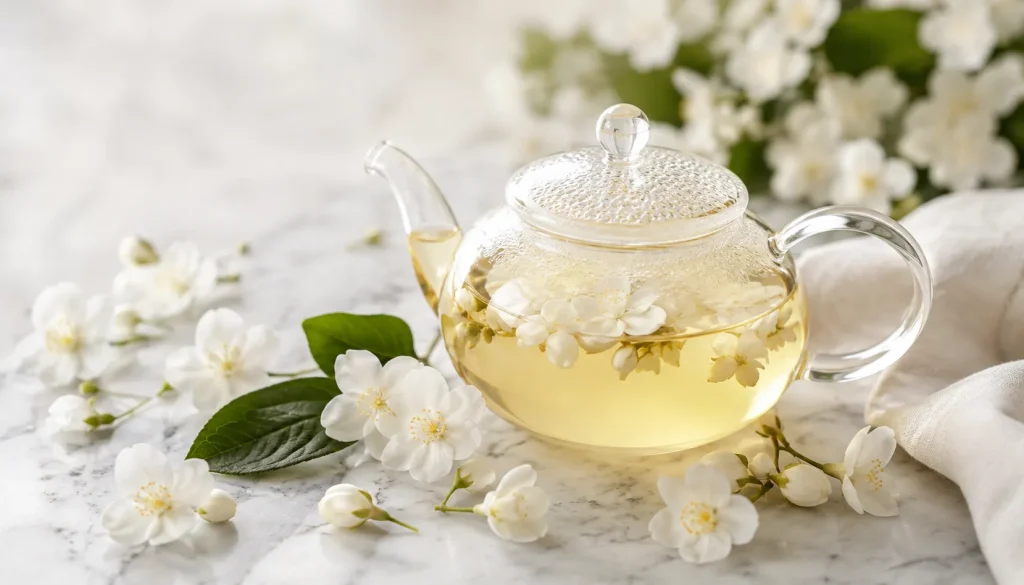
Jasmine tea benefits begin with one of the most beautiful aromas in the tea world. This elegant drink combines green tea leaves with the scent of fresh jasmine blossoms, creating a brew that is both fragrant and smooth. Furthermore, jasmine tea has a history stretching back over a thousand years in China, where it was traditionally enjoyed by imperial courts and common households alike.
In folk traditions across China and Southeast Asia, jasmine flowers have been used for their calming, uplifting qualities. Herbalists value jasmine as a nerve-soothing flower with a gentle, euphoric fragrance. Additionally, the combination of jasmine with green tea produces a beverage that offers both the well-documented benefits of green tea and the folk tradition of jasmine flower aromatherapy in a single cup.
How Jasmine Tea Is Made
Traditional jasmine tea is made through a scenting process rather than by blending dried jasmine flowers with tea leaves. Fresh jasmine blossoms (Jasminum sambac) are harvested at night when their fragrance peaks. The blossoms are then layered with green tea leaves and left to absorb the floral scent for several hours. Consequently, the tea leaves take on the jasmine fragrance naturally, producing a delicate and authentic aroma.
High-quality jasmine tea may undergo this scenting process multiple times. Moreover, the finest jasmine teas use multiple rounds of fresh blossoms to build a deeper, more complex floral character. In other words, the quality of jasmine tea is largely determined by how many times it was scented.
Jasmine Tea Benefits in Traditional Herbalism
In Chinese traditional herbalism, jasmine flowers have been used for centuries as a calming herb. The flowers are described in classical texts as warming and soothing to the emotions. Herbalists have traditionally valued jasmine for its mood-lifting and stress-relieving qualities. Furthermore, the inhalation of jasmine scent has been studied for its relaxing effects on the nervous system.
Key traditionally recognized jasmine tea benefits include:
- Calming and mood-lifting properties attributed to jasmine’s aromatherapy effect
- The antioxidant benefits of green tea, which have been extensively studied
- A gentle, soothing quality traditionally used before sleep or during stressful periods
- Digestive ease when consumed after meals, as valued in East Asian folk traditions
As a result, jasmine tea is one of the few herbal teas that offers both the tradition of floral herbalism and the established nutritional profile of green tea simultaneously.
How to Brew Jasmine Tea
Brewing jasmine green tea requires slightly more care than brewing other herbal teas, because the green tea base is delicate and can become bitter with boiling water or overly long steeps.
Follow these steps:
- Heat water to 175–185°F (80–85°C). This temperature is below boiling and is the standard for green teas.
- Add one to two teaspoons of jasmine green tea per eight ounces of water.
- Pour the water over the leaves and steep for two to three minutes.
- Strain immediately after the steep time to prevent bitterness.
- Enjoy plain. Jasmine tea is traditionally drunk without milk or sweetener, though a small amount of honey can complement it.
Furthermore, the same jasmine green tea leaves can often be steeped two to three times. In fact, many tea connoisseurs prefer the second and third steeps, as these produce a softer, more nuanced flavor than the first.
Jasmine Green Tea vs. Plain Green Tea
Jasmine green tea and plain green tea share the same base. However, the floral scenting process adds an aromatic dimension that makes jasmine tea noticeably more fragrant and approachable. Moreover, the jasmine fragrance softens the more astringent notes of green tea, making jasmine green tea a popular entry point for people new to green tea. On the other hand, dedicated green tea enthusiasts sometimes prefer plain green teas for their purity.
If you enjoy green tea and want to explore beyond jasmine, organic Chunmee green premium tea offers a clean, mellow green tea experience with light vegetal and slightly smoky notes.
Jasmine Benefits for Everyday Wellness
Jasmine green tea contains all the polyphenols and antioxidants found in regular green tea. These compounds, particularly EGCG (epigallocatechin gallate), have been extensively researched for their potential health properties. Furthermore, green tea’s L-theanine content is associated with calm alertness, making jasmine green tea a popular choice for focused work sessions.
The jasmine tea benefits extend to the ritual itself. In Chinese culture, the preparation and consumption of tea is considered a meditative practice. Consequently, brewing jasmine tea can be as much about the mindful act of preparation as it is about the drink itself.
Buying and Storing Jasmine
Quality jasmine tea should have a distinct, fresh floral aroma that hits you when you open the container. Avoid jasmine tea that smells like artificial fragrance or has little scent, as this indicates low-quality scenting or old material. Additionally, look for even-grade leaf material with consistent color.
Store jasmine green tea in an airtight, opaque container away from light, heat, and strong odors. Green tea absorbs nearby odors easily, which can compromise the jasmine fragrance. Properly stored, jasmine green tea retains its character for twelve to eighteen months.
Safety and Precautions
Jasmine green tea contains caffeine, as it is based on green tea leaves. Caffeine content is typically lower than black tea but still present. Therefore, those sensitive to caffeine should moderate their intake and avoid drinking jasmine tea late in the day. Additionally, jasmine is generally well-tolerated, but people with jasmine or olive family plant allergies (Oleaceae) should use caution. Pregnant individuals should consult a healthcare provider before consuming caffeinated teas regularly. This content is for educational purposes only and does not constitute medical advice.
Frequently Asked Questions
Does jasmine tea contain caffeine?
Yes. Because jasmine tea is based on green tea leaves, it contains caffeine — typically around 25–50mg per cup, which is less than black tea but more than herbal teas. As a result, it provides a gentler caffeine lift than a cup of black tea or coffee.
Is jasmine tea the same as jasmine herbal tea?
Not always. Traditional jasmine tea is green tea scented with jasmine flowers. However, some herbal blends labeled “jasmine tea” may consist purely of dried jasmine flowers without any tea base, making them caffeine-free. Check the ingredients when buying if caffeine content matters to you.
How many times can I steep jasmine tea?
High-quality jasmine green tea leaves can be re-steeped two to three times. Each subsequent steep typically adds thirty seconds to one minute to the steep time. Furthermore, many tea drinkers find that the second steep is the most balanced and least astringent of all the steeps.
Why does my jasmine tea taste bitter?
Bitterness in jasmine tea is usually caused by water that is too hot or a steep that is too long. Therefore, always use water below boiling (175–185°F) and limit the steep to two to three minutes. Additionally, using too many leaves can also contribute to bitterness.
Explore premium jasmine green tea and a wide selection of specialty teas at the Hatton Naturals shop.