High Quality Henna Powder Bulk Buying Guide
Buying henna in commercial quantities is not the same as buying a small pouch for personal use. In production, every weakness becomes visible faster. A powder that looks acceptable in a sample can become frustrating in real batch work if it is poorly sifted, stale, dull in color release, or inconsistent from lot to lot. That is why the phrase high quality henna powder bulk should mean more than attractive packaging or a low landed price. For salons, private label brands, formulators, importers, and botanical ingredient buyers, quality has to be measurable in texture, freshness, color potential, storage stability, and repeatability.
A serious high quality henna powder bulk search starts with one basic truth. Henna is a plant material, so it behaves like one. It changes with harvest conditions, drying, milling, storage, and handling. The best commercial buyers know this and evaluate henna as both a botanical and a manufacturing input. They ask what the powder feels like, how finely it is sifted, how fresh it smells, how it hydrates, how smooth the paste becomes, and whether the supplier can reproduce that performance across future orders. This guide breaks down what matters most when buying organic henna powder in bulk and how to avoid paying for problems that only reveal themselves after production begins.
What High Quality Henna Powder Bulk Really Means
The phrase high quality henna powder bulk should refer to performance, not just appearance. In practical terms, good henna should be finely milled, clean in aroma, vivid in natural green tone, smooth in paste formation, and reliable in color release when handled properly. Poor-quality henna often tells on itself quickly. It may feel coarse, smell dusty or old, hydrate unevenly, or leave visible grit in the paste.
Commercial buyers should also think beyond one successful test bowl. Bulk quality means the ingredient behaves predictably at scale. If you are mixing larger quantities, filling retail packs, or developing salon-ready systems, texture consistency matters as much as botanical identity. A powder that clumps, separates, or varies widely from lot to lot can create labor costs and customer dissatisfaction even if the raw material looked good on paper.
For buyers building a botanical color or beauty offering, organic henna powder should be evaluated first as a working ingredient, not just a label-friendly name.
Color, Aroma, and Texture: The First Signs of Quality
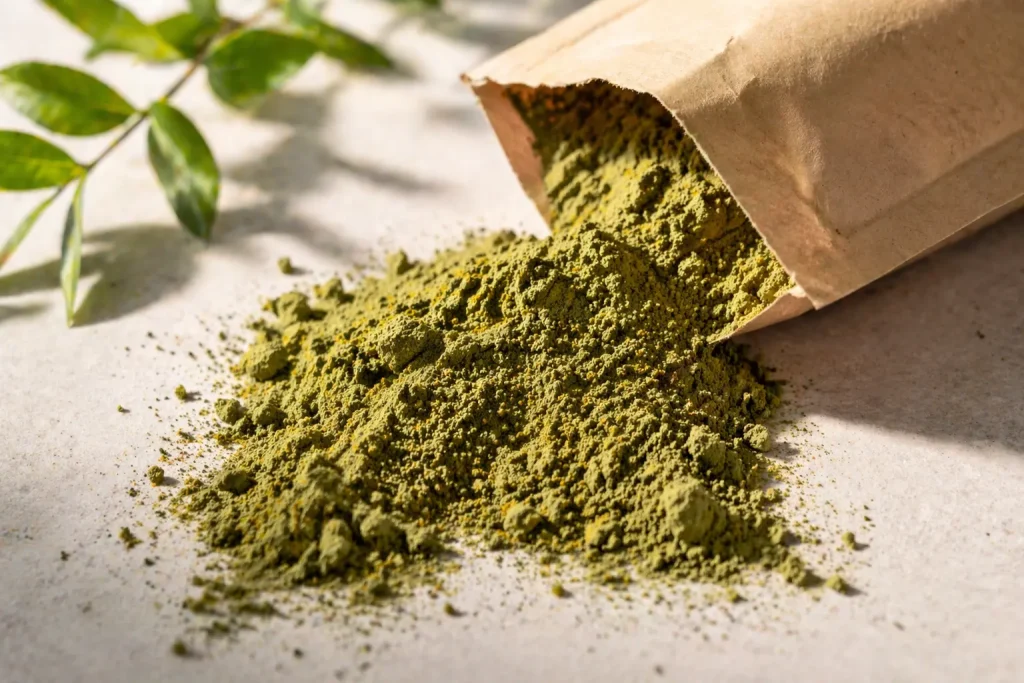
A fresh henna powder usually shows a natural green tone that feels alive rather than grayish or faded. Color alone is not enough, but it is a strong first clue. If the powder looks brownish, muted, or tired, freshness may already be slipping. The aroma should be clean, grassy, earthy, and distinctly botanical. It should not smell stale, moldy, or flat.
Texture is one of the most important quality indicators. High-grade henna should feel fine and soft between the fingers, not sandy or fibrous. In commercial use, a finer sift means smoother paste, easier application, and fewer complaints about drag or residue. This is where small differences in milling become very expensive if ignored.
For buyers comparing multiple samples, a simple dry test is useful. Place equal amounts on a neutral surface, rub lightly, and observe spread, softness, and visible plant fragments. Better powder usually looks more even and refined from the start.
If you want to build botanical mask or powder concepts around warm herbal tones, hibiscus flower powder can be a useful comparison point in dry blend texture testing.
Why Sift Matters More Than Many Buyers Expect
The word sift sounds minor until you start working with large quantities. In reality, sift affects almost every part of performance. A well-sifted henna powder hydrates more evenly, forms a smoother paste, and is easier to strain or apply. Poor sift means more visible leaf particles, a rougher feel, more mixing effort, and less elegant finished product.
This is especially important in bulk purchasing because buyers often focus on weight and forget labor. A cheaper henna that requires more mixing time, extra screening, or customer guidance may not be cheaper at all. Fine sift reduces friction in production. It also tends to signal a supplier who understands what serious buyers need.
The high quality henna powder bulk decision should always include a paste test. Mix a small batch, allow it to hydrate, then check for graininess, separation, and glide. If the paste feels silky and even, the sift is likely doing its job.
For brands experimenting with broader botanical beauty offerings, aloe vera powder is another ingredient where fine milling strongly affects customer experience.
Freshness and Crop Handling in Commercial Orders
Henna is a dried leaf product, so freshness is central to performance. Even excellent plant material can decline if dried carelessly, held too long, or stored under poor conditions. Fresh henna generally keeps a cleaner aroma, stronger color potential, and better hydration behavior. Older lots often feel duller, smell flatter, and perform less convincingly in paste.
A strong supplier should be able to speak clearly about freshness without turning the conversation into vague marketing. Ask when the lot was milled or packed, how it was stored, and how packaging protects it from humidity and light. Commercial buyers should also pay attention to transit time. Long exposure to heat or moisture during shipping can quietly reduce quality before the product even arrives.
This is where high quality henna powder bulk becomes a supply-chain question as much as a product question. If the seller cannot explain handling, storage, and lot continuity, you are taking on more risk than the invoice suggests.
If your catalog includes layered herbal powders for beauty or personal care themes, neem leaf powder is another ingredient where freshness shows quickly in aroma and texture.
Testing Henna for Bulk Purchase Decisions
The most reliable way to compare henna suppliers is through practical side-by-side testing. Do not rely only on photos or top-line claims. Set up identical bowls, hydration times, and ambient conditions. Compare color, texture, spread, and paste smoothness across the same time window.
A useful small test ratio is:
- 10 grams henna powder
- 30 to 35 grams warm liquid
- About 2 teaspoons henna powder to 2 to 2.5 teaspoons liquid by volume, depending on density
- Mix until smooth
- Rest covered for several hours based on your normal process
This ratio helps you compare hydration behavior without wasting material. A better powder usually takes liquid more evenly, forms fewer lumps, and creates a more refined paste. For production teams, document every test. Notes on flow, texture, staining performance, and scent are worth more than memory once multiple samples enter the room.
The high quality henna powder bulk choice becomes much clearer when you compare real working behavior, not just dry appearance.
For broader herbal testing panels, amla powder can serve as another useful benchmark when evaluating grind, hydration, and consistency across plant powders.
Packaging, Documentation, and Supplier Reliability
A quality ingredient can still become a bad commercial purchase if the supplier handles it poorly. Packaging matters. Henna should arrive in moisture-protective, well-sealed packaging that limits exposure to air, humidity, and strong odors. Bulk ingredients pick up environmental damage more easily than many new buyers realize.
Documentation also matters, even when your team is highly sensory-driven. A reliable commercial supplier should present the product clearly and consistently. They should identify what the material is, how it is packed, and what buyers should expect in terms of normal variation. If answers feel evasive, inconsistent, or improvised, that is usually a warning sign.
Repeatability is the real test. One good order is nice. A dependable relationship means you can reorder with confidence and avoid reformulating your process every few months. That is the practical value of taking supplier evaluation seriously from the start.
For brands building a wider dry botanical assortment, cassia powder can complement henna-focused product development when you want a gentler herbal powder option.
Troubleshooting
Flat performance usually points to stale henna, weak crop quality, or poor storage after milling. If a lot seems botanically lifeless, start by questioning freshness.
Too tart is not usually a henna issue on its own, but it can show up in formulas where acidic liquids are pushed too far during paste preparation. Balance matters.
Over-carbonation is generally irrelevant to henna itself, but it becomes relevant if a buyer stores or formulates nearby fermenting ingredients in shared production spaces with poor moisture control. Humidity and environmental instability can affect powder quality.
Sediment or grit usually means poor sift, coarse milling, or incomplete mixing. This is one of the clearest reasons to test bulk samples before committing.
Aroma loss often comes from repeated air exposure, warm storage, or weak packaging barriers. Once the powder smells tired, confidence in the lot should drop.
If you are comparing handling properties across dry botanical powders, rhassoul clay can be useful in texture and paste-formation trials.
Storage + Quality
Bulk henna should be stored in airtight conditions away from humidity, direct light, and heat. Once opened, master stock should remain sealed as much as possible, while smaller working containers are used for daily handling. This reduces repeated exposure and protects the rest of the lot.
Quality checks should be simple and regular. Look at color. Smell the powder. Feel the texture. Mix a quick test paste if anything seems off. Good henna usually stays vibrant in aroma and workable in texture when stored correctly. Poorly stored henna fades quietly and often reveals the problem only after the paste is made.
For commercial teams, a first-in, first-out system is especially useful. Label receipt dates and opening dates clearly. Even a strong lot can degrade if it sits too long in a warm room or is opened constantly.
The high quality henna powder bulk decision is only partly about what you buy. It is also about how well your team protects what you bought once it lands.
For botanical lines that emphasize plant purity and earthy beauty rituals, rose clay can fit naturally into adjacent product development and storage testing.
Safety
Henna should be marketed and handled with clear, practical language. Buy botanical-grade material from suppliers who present it honestly and keep handling standards consistent. Avoid exaggerated claims. Describe the product in terms of purity, texture, freshness, traditional use, and practical performance.
Keep compliance in mind if you sell finished products. Ingredient identity, storage practices, and labeling clarity all matter. It is also wise to encourage patch testing for end users where appropriate, since botanical materials can affect people differently. Commercial buyers should avoid blending unknown additives into their henna supply chain without full documentation and internal review.
The best high quality henna powder bulk purchase is not simply the greenest sample or the lowest quote. It is the lot that hydrates smoothly, smells fresh, performs predictably, and arrives protected from the kinds of quiet damage that ruin botanical materials. When a supplier can deliver that repeatedly, your production gets easier, your finished product improves, and your customers notice the difference. That is the real value behind a careful high quality henna powder bulk search.
FAQ
What does high quality henna powder bulk mean?
It refers to henna purchased in commercial quantities with strong standards for freshness, sift, texture, and consistent performance.
How can I tell if henna powder is fresh?
Fresh henna usually has a vivid green tone, a clean grassy aroma, and better paste performance.
Why is fine sift important in henna powder?
Fine sift creates smoother paste, easier application, and more reliable results in batch production.
What should I ask a henna supplier before buying in bulk?
Ask about freshness, packaging, storage, lot consistency, milling quality, and sample availability.
Why does my henna feel gritty?
That usually points to coarse milling, weak sift, or inconsistent particle size.
How should bulk henna be stored?
Keep it airtight, cool, dry, and away from light and repeated air exposure.
Can high quality henna powder bulk still vary from lot to lot?
Yes. It is a botanical material, so some natural variation exists, but strong suppliers manage it well.
What is the best way to compare bulk henna suppliers?
Run side-by-side tests for color, aroma, paste smoothness, and overall working consistency.