How to Start a Herbal Tea Business: Sourcing Ingredients
The herbal tea market continues to grow as consumers seek natural beverages that align with wellness-focused lifestyles. If you want to start herbal tea business bulk ingredients sourcing the right way, this guide covers everything you need to know about finding reliable suppliers, selecting your initial product range, and building a foundation that supports long-term growth. The barrier to entry for a tea brand has never been lower, but the businesses that succeed are the ones that treat ingredient quality as their primary differentiator from day one. Cutting corners on raw materials shows up in the cup, and today’s informed consumers can tell the difference.
Whether you are planning a direct-to-consumer brand, a local market operation, or a wholesale distribution business, your sourcing decisions shape everything from flavor consistency to regulatory compliance. This guide will walk you through the practical steps to start herbal tea business bulk ingredients procurement with confidence, covering supplier evaluation, essential starter products, quality documentation, and blend development strategies.
Defining Your Tea Business Model
Before contacting a single supplier, clarify your business model. Are you creating your own branded blends for retail sale? Are you offering private label services for other brands? Will you focus on online sales, farmers markets, local retail, or wholesale distribution? Each model has different requirements for minimum order quantities, packaging, labeling, and regulatory compliance. A direct-to-consumer brand selling through an online store can start with smaller ingredient quantities and scale gradually. A wholesale operation supplying cafes and restaurants needs larger volumes and more competitive pricing from the outset. Your business model also determines your blending approach. Some tea entrepreneurs create signature recipes with five to eight ingredients per blend, while others curate single-origin botanicals sold individually. Map out your first three to five products before you begin sourcing so you can calculate accurate ingredient needs and avoid over-ordering.
What Buyers Should Know About Supplier Selection
Finding the right supplier is the single most important step when you start herbal tea business bulk ingredients sourcing. Look for suppliers who specialize in organic botanicals and can provide full documentation for every product. Key criteria include USDA organic certification, availability of Certificates of Analysis for each lot, consistent inventory of core products, transparent pricing with clear volume breaks, and responsive customer service. A supplier like Hatton Naturals maintains a comprehensive Bulk Organic Herbs catalog alongside a dedicated Wholesale Herbal Tea program, giving new businesses access to both individual botanicals and volume pricing. Request samples before committing to any purchase. Evaluate each sample for aroma, color, taste, and consistency. A reliable supplier welcomes this process because they know their product speaks for itself.
Essential Starter Kit: Core Ingredients
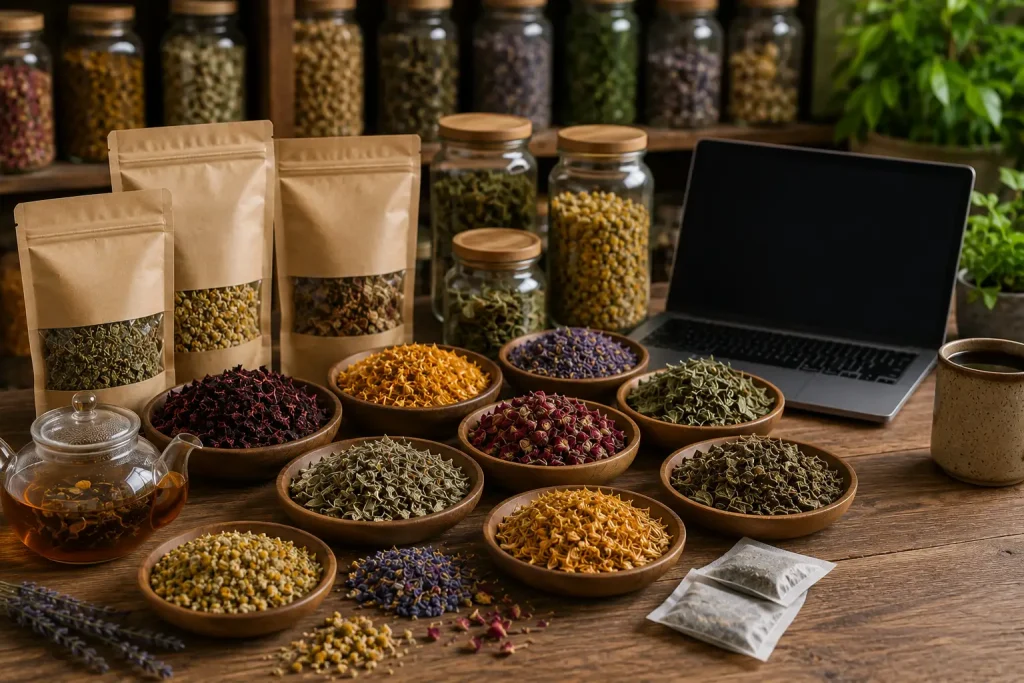
Building your initial ingredient inventory requires balancing variety with practicality. Here are eight foundational products that cover the most popular herbal tea categories and give you flexibility to create multiple blends. Chamomile Flowers Whole is essential for calming and bedtime blends. Peppermint Leaf Whole anchors digestive and refreshing formulations. Hibiscus Flowers bring vibrant color and tart flavor to fruit-forward blends. Ginger Root Cut and Sifted adds warmth and pairs with almost anything. Lavender Flower Whole provides floral elegance for wellness blends. Lemongrass Cut and Sifted delivers bright citrus notes. Ceylon Cinnamon Cut and Sifted rounds out spiced and chai-style recipes. And Elderflowers offer a delicate, sophisticated flavor profile. With these eight ingredients, you can create at least six distinct blends that cover relaxation, digestion, immunity, energy, floral, and spiced categories.
Understanding Quality Documentation
When you start herbal tea business bulk ingredients procurement, quality documentation is not optional. Certificates of Analysis confirm that each lot meets specifications for identity, purity, microbial limits, moisture content, and heavy metals. Your regulatory obligations require you to verify that incoming ingredients are safe and accurately represented. Hatton Naturals provides COAs for all products, and buyers can search lot-specific documentation through the dedicated COA search page. Beyond COAs, organic certificates verify that the product maintains its certified organic status through the entire supply chain. If you plan to label your finished products as USDA organic, you will need your own organic handling certification, and your ingredient suppliers must provide valid organic certificates for every lot. Keep a well-organized documentation file for each ingredient lot you receive. This protects your business during regulatory inspections and builds the traceability framework that wholesale buyers and retailers increasingly demand.
Sourcing and Quality Indicators
Experienced buyers evaluate botanical quality through multiple sensory and analytical indicators. Color should be vibrant and characteristic of the species. Faded or brownish herbs often indicate age, improper drying, or excessive light exposure. Aroma should be strong and true to the expected profile. Weak aroma suggests poor storage or old inventory. Particle size should be consistent within each lot, as uneven sizing causes irregular extraction during brewing. Moisture content should typically fall between eight and 12 percent. Product that feels damp or clumps together may have been improperly dried or exposed to humidity during storage. Foreign matter, including stems, non-target plant parts, and debris, should be minimal. When evaluating a new supplier to start herbal tea business bulk ingredients sourcing, order samples from at least two different lots to assess consistency. A single great sample means less than consistent quality across multiple shipments. Browse the full Hatton Naturals catalog to review available products and specifications.
Blend Development and Recipe Testing
Creating signature blends is where your brand identity takes shape. Start with a base herb that makes up 40 to 60 percent of the blend by weight. Add one or two supporting herbs at 20 to 30 percent each. Finish with accent herbs at five to 10 percent for complexity and visual interest. For example, a relaxation blend might use chamomile as the base, lemon balm as the support, and lavender as the accent. Document every recipe with exact weights, not approximations. Use a precision scale that reads to 0.1 grams for small batch development. Brew each test blend multiple times using your intended preparation method, whether that is a standard teacup, a commercial brewer, or a cold brew system. Taste the blend at different steep times and water temperatures. Take detailed notes on aroma, color, flavor, mouthfeel, and aftertaste. Invite others to taste blind samples and provide feedback. Refine your recipes over multiple rounds before committing to production. This discipline separates professional tea brands from hobbyist operations.
Regulatory Basics for Tea Businesses
Herbal tea businesses in the United States must comply with FDA regulations for food products. Your facility, even a home-based kitchen in some states, may need to meet specific sanitation and registration requirements. All products sold must be accurately labeled with ingredient lists, net weight, allergen declarations where applicable, and your business contact information. If you make health-related claims on your packaging or marketing, you enter a more complex regulatory environment. Structure-function claims require specific disclaimer language, and disease claims are prohibited for foods. Many states have cottage food laws that allow small-scale food production from home kitchens with certain limitations on sales volume and distribution channels. Research your state and local requirements thoroughly before your first sale. Consulting with a food business attorney or your local Small Business Development Center can help you navigate the regulatory landscape efficiently.
Scaling from Small Batches to Production Volume
Most tea businesses start herbal tea business bulk ingredients orders at relatively small volumes, typically five to 25 pounds per ingredient. As your brand grows and you validate which blends sell best, you will need to scale your purchasing. Communicate your projected growth to your supplier early. A good supplier can advise on volume price breaks, help you plan inventory around seasonal demand patterns, and ensure consistent supply of your core ingredients. Moving from hand-blending to semi-automated or fully automated blending equipment is a common milestone. Standardize your recipes by weight before making this transition, as volumetric measurements are unreliable across different botanical densities. Consider investing in proper storage infrastructure, such as food-grade bins, shelving, and climate control, before you scale. Inadequate storage leads to quality degradation that undermines all the careful sourcing work you have done. The Wholesale Herbal Tea program at Hatton Naturals is designed to support businesses at this growth stage with competitive volume pricing and reliable supply.
Building Your Brand Around Quality
In a crowded market, ingredient quality is your strongest brand differentiator. Consumers increasingly research where their tea comes from and how it was produced. Transparency about your sourcing builds trust and justifies premium pricing. Share the story of your ingredients on your packaging, website, and social media. Mention that you use certified organic botanicals. Explain why you chose specific origins and formats. Educate your customers about what makes a great cup of herbal tea. This approach attracts loyal customers who value quality over price and who become advocates for your brand. Consider featuring Organic Rooibos Red or Tulsi Krishna in limited edition or seasonal blends that showcase unique, high-quality ingredients your competitors may not carry. Differentiation through ingredient selection is more sustainable and harder to copy than competing on price alone.
Safety Considerations
As a tea business owner, you bear responsibility for the safety of every product you sell. Verify that all ingredients have been tested for common contaminants including heavy metals, pesticide residues, and microbial pathogens. Maintain clean production areas and follow good manufacturing practices even at small scale. Be aware of potential allergen cross-contact if you blend products containing tree nuts, soy, or other major allergens in the same facility. Label your products clearly and include any required warnings. Some botanicals have known interactions with medications or are not recommended for certain populations, including pregnant individuals. Include appropriate disclaimers on your packaging and website. Stay current on FDA recalls and safety alerts related to botanical ingredients. This content is provided for educational purposes and does not replace professional legal or regulatory consultation.
Frequently Asked Questions
How much money do I need to start herbal tea business bulk ingredients sourcing?
Initial ingredient costs vary widely based on your product range and order quantities. A focused launch with three to five blends using eight core ingredients might require an initial ingredient investment of $300 to $800 at wholesale pricing, depending on the botanicals selected and quantities ordered.
Do I need organic certification to sell organic tea?
If you want to label your finished products as USDA organic, you generally need organic handling certification. Businesses with annual organic sales under $5,000 may qualify for an exemption from certification but must still comply with organic handling requirements and cannot use the USDA organic seal.
How do I find the right supplier to start herbal tea business bulk ingredients procurement?
Look for suppliers who specialize in botanical ingredients, provide Certificates of Analysis, maintain organic certifications, and offer samples. Evaluate multiple suppliers before committing. Consistency across multiple orders matters more than a single impressive sample.
What is a Certificate of Analysis and why does it matter?
A Certificate of Analysis is a document from a third-party laboratory confirming that a specific lot of product meets defined quality specifications. COAs typically include results for identity, microbial testing, moisture, and heavy metals. You can review COA documentation at the Hatton Naturals COA search page.
How many blends should I launch with?
Three to five blends is a practical starting range. This gives customers enough variety to find something they love without overwhelming your inventory management and production logistics. You can expand your line once you understand which flavors resonate with your market.
Can I run a tea business from home?
Many states allow home-based food businesses under cottage food laws, though restrictions on sales channels and annual revenue vary. Some states require a separate licensed kitchen for tea blending. Research your specific state and local regulations before investing in equipment.
What packaging do I need for retail tea products?
Common retail packaging options include stand-up pouches with resealable zippers, tins, and paper boxes with inner liners. Your packaging must protect the product from light, air, and moisture while meeting FDA labeling requirements. Food-safe packaging materials are essential.
How long do dried herbal ingredients last in storage?
Most dried herbs maintain peak quality for 12 to 24 months when stored properly in airtight, light-blocking containers in cool, dry conditions. Always check supplier recommendations for specific ingredients and rotate inventory on a first-in, first-out basis.
Conclusion
Learning how to start herbal tea business bulk ingredients sourcing the right way sets the foundation for everything that follows. Invest time in choosing reliable suppliers, verifying quality documentation, developing recipes methodically, and understanding your regulatory obligations. The tea entrepreneurs who thrive are the ones who treat sourcing as a craft, not just a transaction. Start small, learn continuously, and let quality lead.