Sheep Sorrel Benefits: A Wild Herb Guide
Sheep sorrel benefits have been valued in folk herbalism for centuries, particularly in European and North American herbal traditions. This small, wild-growing plant — known botanically as Rumex acetosella — is recognizable by its arrow-shaped leaves and distinctly tart, lemony flavor. Herbalists and foragers alike have long appreciated this wild herb for its flavor, versatility, and deep roots in traditional botanical practice.
What Is Sheep Sorrel?
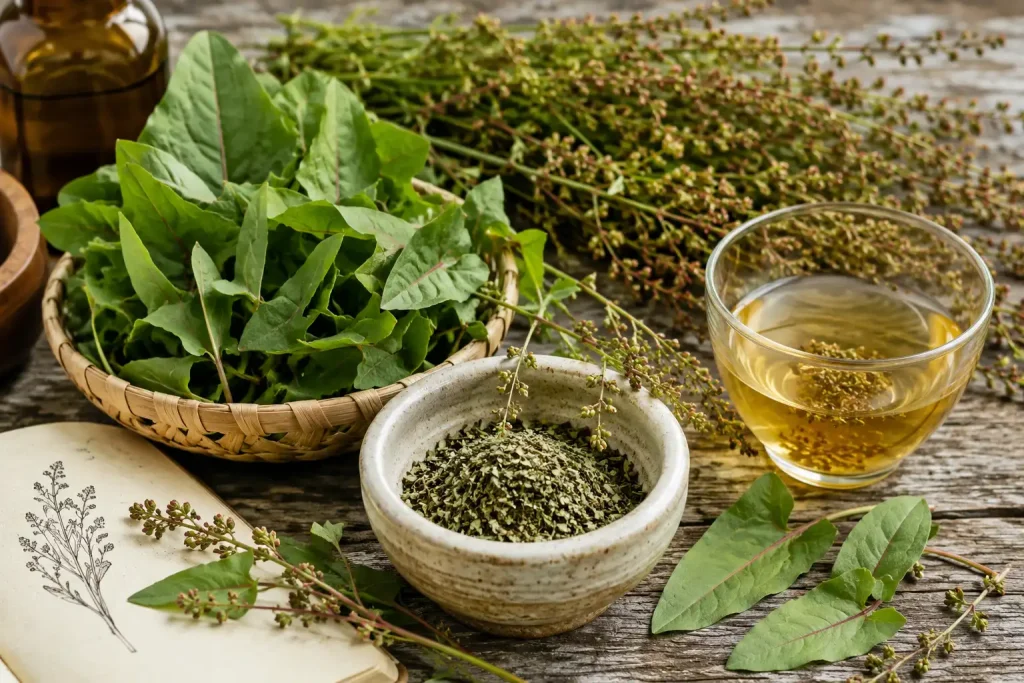
Sheep sorrel is a perennial herb that grows wild across meadows, roadsides, and open fields in North America, Europe, and parts of Asia. It belongs to the buckwheat family and is closely related to common garden sorrel, though it is smaller and more intensely flavored. The plant’s leaves contain oxalic acid, which gives them their characteristic tartness.
In the wild, sheep sorrel often grows in nutrient-poor, acidic soils where other plants struggle. Furthermore, it is highly adaptable and can thrive in disturbed habitats. For these reasons, it has historically been one of the most accessible wild herbs for foragers and herbalists.
Sheep Sorrel Benefits in Folk Herbalism
Traditional sheep sorrel benefits center on its use as a cooling, tonifying herb in European folk medicine. Herbalists in the 17th and 18th centuries documented its use in preparations aimed at supporting digestion and liver function. In folk herbalism, it was frequently included in spring tonic formulas designed to cleanse the system after winter.
Sheep sorrel is perhaps best known today for its inclusion in Essiac, a traditional herbal formula developed from Indigenous Canadian herbalism. This famous blend includes sheep sorrel alongside burdock root, slippery elm bark, and Turkish rhubarb root. Consequently, sheep sorrel gained significant attention in 20th-century alternative herbalism as a result of this association.
Additionally, herbalists have traditionally used sheep sorrel as a diuretic herb — meaning it was thought to support healthy fluid balance. Its high vitamin C content was also noted by early European settlers, who used sour-tasting plants like sorrel to combat nutritional deficiencies during long voyages.
The Flavor Profile of Sheep Sorrel
Sheep sorrel has an intensely tart, lemony flavor that sets it apart from most other dried herbs. The sourness comes from its oxalic acid content, which also gives fresh sorrel leaves their bright, tangy edge. When dried, the flavor mellows somewhat but retains a pleasant acidity.
In herbal teas, sheep sorrel adds a refreshing sour note that pairs well with naturally sweet herbs. Moreover, its tartness makes it a useful flavoring agent in herbal vinegars and culinary preparations. It is sometimes compared to hibiscus in its acidic profile, though the two have distinct flavor nuances.
How to Use Sheep Sorrel
The most common way to use dried sheep sorrel is as a tea infusion. Use one to two teaspoons of dried herb per eight ounces of hot water. Steep for five to eight minutes, then strain. The resulting tea has a bright, tart flavor that many people find refreshing served warm or chilled.
Sheep sorrel also works well in herbal blends. Its tartness balances sweeter herbs effectively. For example, pairing it with burdock root creates a blend with roots in the traditional Essiac formula — earthy burdock complementing the bright, sour sorrel beautifully.
Additionally, sheep sorrel can be incorporated into herbal vinegars, tinctures, and culinary herb blends. Its flavor intensity means a small amount goes a long way in most recipes.
Sourcing Quality
Wild-harvested sheep sorrel is the preferred form for most herbal applications, as foraging from natural habitats tends to produce more flavorful and nutrient-dense material than cultivated crops. Therefore, sourcing wild-harvested sheep sorrel ensures you are getting an herb with the full character of its natural growing environment.
When evaluating quality, look for dried sheep sorrel that retains a greenish color with some reddish tones — the natural coloring of the plant. The aroma should be faintly sour and earthy. In fact, a completely flat or musty smell indicates the herb has degraded and lost much of its value.
Cut and sifted sheep sorrel is the most practical form for tea brewing and blending. It allows for accurate measuring and consistent steeping without the need for additional processing.
Sheep Sorrel in Modern Herbal Practice
Today, sheep sorrel benefits continue to attract attention in the Western herbal community. Its role in traditional formulas like Essiac has kept it relevant among herbalists interested in historical botanical medicine. Moreover, its unique tart flavor makes it genuinely useful as a culinary and flavoring herb.
Many home herbalists include sheep sorrel in their pantry as a versatile, flavorful wild-harvested herb. Similarly, professional herbalists appreciate its historical significance and its compatibility with a wide range of other botanicals. As interest in wild-harvested and foraged herbs grows, sheep sorrel is finding a new generation of enthusiasts.
Safety and Precautions
Sheep sorrel contains oxalic acid, which in large amounts can interfere with calcium absorption and may contribute to kidney stone formation in susceptible individuals. Therefore, it should be consumed in moderation as a tea and is not recommended for daily large-dose use. Individuals with a history of kidney stones, kidney disease, or gout should consult a healthcare provider before using sheep sorrel regularly. It is also not recommended during pregnancy. This information is educational and does not constitute medical advice.
Frequently Asked Questions
What does sheep sorrel taste like?
Sheep sorrel has a bright, intensely tart and lemony flavor due to its oxalic acid content. When dried and brewed as a tea, the sourness mellows slightly but remains distinctive. It is refreshing when served chilled and pairs well with sweeter herbs in blended teas.
What is sheep sorrel used for in herbalism?
In folk herbalism, sheep sorrel has been used as a cooling tonic, digestive aid, and component of traditional cleansing formulas. It is best known as one of the four herbs in the traditional Essiac formula. Herbalists also value it for its flavor in herbal teas and vinegars.
Is wild-harvested sheep sorrel better than cultivated?
Wild-harvested sheep sorrel is generally preferred by herbalists because the plant grows in natural conditions that often produce more pronounced flavor and aroma compounds. Wild-harvested material also maintains stronger ties to the traditional foraging practices associated with this herb.
Can I blend sheep sorrel with other herbs?
Yes. Sheep sorrel blends well with earthy roots like burdock, as well as sweeter florals like chamomile and rose hips. Its tartness works as a natural flavoring agent in any blend that benefits from a bright, acidic note.
Whether you are exploring traditional herbal formulas or simply looking to add a uniquely tart botanical to your tea collection, sheep sorrel is a compelling choice. Browse our wild-harvested sheep sorrel and discover why this small wild plant has earned such a lasting place in herbal tradition.