Safflower Tea Benefits and Brewing Tips
Safflower tea benefits have been recognized in Asian herbal medicine for over two thousand years. Made from the dried florets of Carthamus tinctorius, safflower tea produces a vibrant golden-to-orange infusion with a mild, slightly sweet flavor. In traditional Chinese medicine (TCM), this striking flower holds an important place as a blood-moving herb, and its use has spread globally as interest in botanical teas grows.
What Is Safflower?
Safflower is an annual flowering plant that has been cultivated for thousands of years, primarily for its oil-rich seeds and its bright orange-red florets used in dye and herbalism. Originally from the Middle East and Central Asia, safflower cultivation spread across East Asia, India, and eventually Europe. Today, it is grown commercially in many countries, including the United States, India, and China.
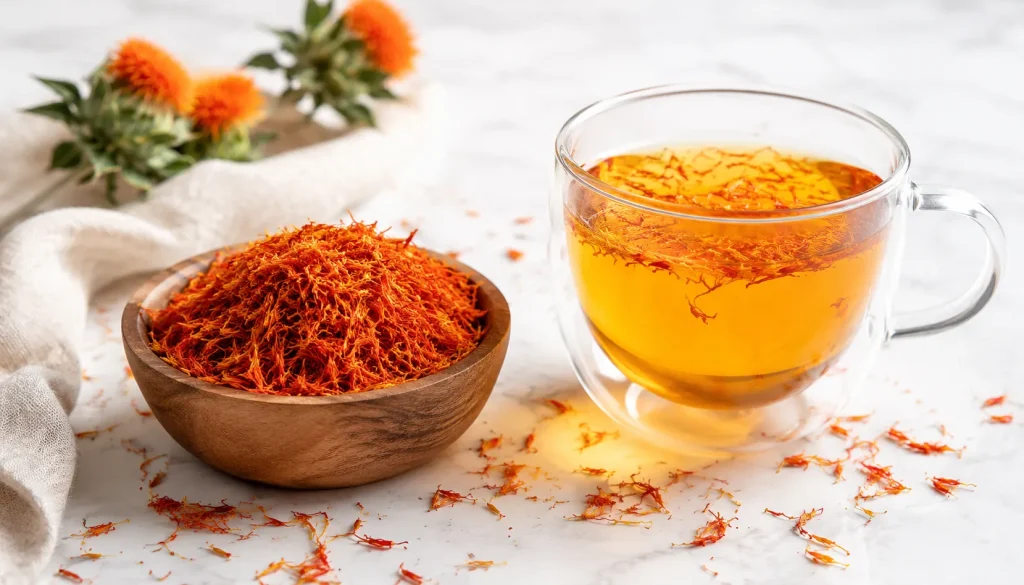
The florets — not the seeds — are used in herbal tea preparations. These dried florets produce a vivid golden-orange color when steeped. Furthermore, they contain compounds including flavonoids, polysaccharides, and the distinctive alkaloid safflomin, which contribute to both the color and the herb’s traditional reputation.
Safflower Tea Benefits in Traditional Chinese Medicine
In traditional Chinese medicine, safflower (known as hong hua, meaning “red flower”) is classified as a blood-invigorating herb. TCM practitioners traditionally used it to promote circulation and address what the tradition describes as “blood stasis” — a pattern associated with fixed pain, bruising, and menstrual irregularities. Consequently, hong hua has appeared in classical herbal formulas for thousands of years.
Safflower tea benefits in TCM also include its traditional role in supporting healthy menstrual flow. It was commonly used in formulas designed to address amenorrhea and dysmenorrhea. Additionally, it appeared in trauma formulas designed to address bruising and swelling from injury.
In Ayurvedic tradition, safflower is similarly valued as a warming herb that supports circulation. It is associated with reducing kapha (the dosha related to heaviness and stagnation) and warming the system. For this reason, safflower tea finds relevance across multiple Asian herbal traditions.
The Flavor and Color of Safflower Tea
One of the most immediately impressive safflower tea benefits is purely aesthetic — the brew is strikingly beautiful. Dried safflower florets produce a radiant golden-orange infusion that deepens to amber with longer steeping. The color alone makes it a visually stunning addition to any herbal collection.
The flavor is mild and gently sweet, with a faint floral quality and subtle earthiness. Unlike strongly flavored herbs, safflower does not dominate a blend. Moreover, its mild character makes it highly versatile — it can be drunk solo or blended easily with other botanicals.
How to Brew Safflower Tea
Brewing safflower tea is straightforward. Use one to two teaspoons of dried safflower florets per eight ounces of water at around 195–205°F. Steep for five to ten minutes, then strain. The longer the steep, the deeper the color and the more pronounced the flavor.
Safflower pairs beautifully with other florals and mild botanicals. Blending it with calendula petals creates a warm golden blend with complementary floral notes. Similarly, combining safflower with chamomile flowers produces an incredibly soothing, golden cup that balances chamomile’s apple-like sweetness with safflower’s earthy warmth.
Additionally, safflower works well in cold brew preparations. Its color is especially vivid in cold-brewed tea, making it popular for decorative iced tea presentations.
Sourcing and Quality Considerations
Quality dried safflower florets should be vibrant orange-red in color. Fading to pale yellow or beige indicates aging or improper storage. The florets should have a faint floral aroma — not dusty or completely neutral. In fact, vividly colored safflower typically produces a more visually impressive brew with a more pronounced flavor.
Wild-harvested safflower brings additional appeal for those interested in herbs with close connections to their natural growing environments. You can find wild-harvested safflower in dried floret form, ready for steeping. Choosing quality-sourced safflower ensures you get the full benefit of this ancient herb’s visual and aromatic character.
Safflower in Modern Herbal Practice
Beyond its traditional applications, safflower is increasingly valued in modern herbalism for its role as a visual and flavoring element in herbal blends. Tea blenders use it to add color and mild sweetness to herbal formulas. Moreover, its striking appearance makes it a popular ingredient in artisan tea blends sold at specialty shops.
Furthermore, safflower seed oil has received significant scientific attention for its fatty acid composition. While this is distinct from the floret tea, it reflects the broader interest in safflower as a multifaceted botanical plant. As a result, safflower occupies an interesting position between culinary, cosmetic, and herbal applications.
Safety and Precautions
Safflower tea is generally considered safe for most healthy adults in moderate amounts. However, safflower is traditionally contraindicated during pregnancy, as it has a long history of use as a uterine stimulant in TCM. Pregnant individuals should avoid safflower tea entirely. Those taking blood thinners or anticoagulant medications should consult a healthcare provider before use, as safflower may affect platelet aggregation. Individuals with bleeding disorders or scheduled for surgery should also exercise caution. This information is for educational purposes only and does not constitute medical advice.
Frequently Asked Questions
What does safflower tea taste like?
Safflower tea has a mild, slightly sweet, and subtly floral flavor with a light earthy undertone. It is not strongly flavored, making it very drinkable on its own and easy to blend with other herbs. The most striking quality is its vivid golden-orange color, which deepens to amber with longer steeping.
What are the main safflower tea benefits in TCM?
In traditional Chinese medicine, safflower is valued primarily as a blood-invigorating herb used to promote circulation and address blood stasis patterns. It has traditionally been used for menstrual irregularities, amenorrhea, and post-injury recovery formulas. These uses are based on centuries of traditional practice.
Can I blend safflower with other herbs?
Yes. Safflower’s mild flavor makes it an excellent blending herb. It pairs well with calendula, chamomile, rose petals, and hibiscus. Its vivid color enhances the visual appeal of any blend. It can also be added to otherwise plain herbal teas simply to improve their appearance.
Is safflower the same as saffron?
No. Safflower and saffron are completely different plants. Safflower is Carthamus tinctorius; saffron is Crocus sativus. However, safflower has historically been used as a less expensive substitute for saffron in cooking and dyeing because it produces a similar yellow color. The two plants have distinct flavor profiles, uses, and origins.
Safflower tea is a visually stunning, historically rich, and pleasantly mild botanical tea with one of the most distinctive colors in the herbal world. Discover our wild-harvested safflower and add this ancient floral herb to your collection today.