Rooibos Chai Recipe: Caffeine-Free Spice
Rooibos chai recipe fans have discovered one of the best caffeine-free alternatives to traditional masala chai. By swapping traditional black tea for red rooibos, you get all the warming spice of chai without the caffeine. Furthermore, rooibos has its own earthy sweetness that pairs exceptionally well with cinnamon, ginger, cardamom, and cloves.
In fact, rooibos from South Africa’s Cederberg region has a naturally sweet, mildly nutty flavor that acts as a perfect base for spiced chai blends. Additionally, it is rich in antioxidants and has been a traditional beverage in South Africa for generations. As a result, rooibos chai has become a popular choice for those who love the chai experience but want to avoid caffeine.
Why Use Rooibos as a Chai Base?
Traditional chai is brewed with black tea, which contains significant caffeine. On the other hand, rooibos is completely caffeine-free and naturally low in tannins. Consequently, it does not become bitter when steeped for longer periods, making it more forgiving than black tea when preparing a spiced brew.
Moreover, rooibos has a natural sweetness that reduces the need for added sugar. Its earthy, slightly vanilla-like flavor profile complements warm spices beautifully. Therefore, it is arguably the ideal base for a caffeine-free chai.
Rooibos Chai Recipe Ingredients
For two servings, you will need:
- 2 tablespoons of organic rooibos red superior
- 1 stick of Ceylon cinnamon cut and sifted
- 1 teaspoon of dried ginger cut and sifted
- 4 green cardamom pods, lightly crushed
- 3 whole cloves
- 1.5 cups water
- 1 cup milk of choice (dairy, oat, or almond)
- Honey or maple syrup to taste
Furthermore, you can add a pinch of black pepper for extra warmth, or a quarter teaspoon of vanilla extract at the end for a sweeter, more dessert-like profile.
Step-by-Step Rooibos Chai Recipe
- Simmer the spices first. Combine the water, cinnamon, ginger, crushed cardamom pods, and cloves in a small saucepan. Bring to a gentle simmer over medium heat and cook for five minutes. This releases the spice oils fully before adding the rooibos.
- Add the rooibos. Add the rooibos to the simmering spice water. Reduce heat to low and simmer for another three to five minutes.
- Add the milk. Pour in your milk of choice and increase heat slightly. Heat until the chai is steaming but not boiling. Stir regularly to prevent scorching.
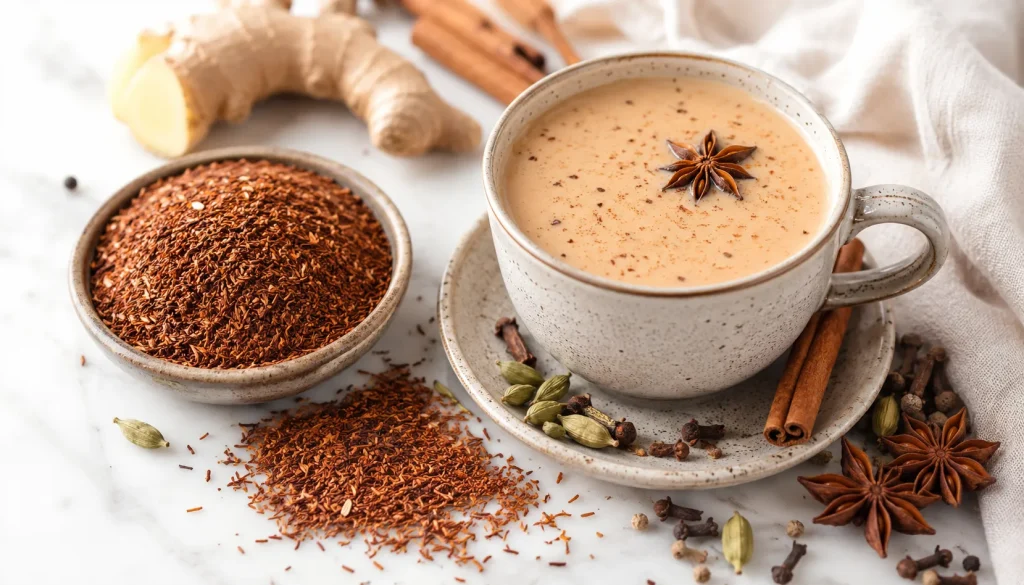
- Strain. Pour through a fine-mesh strainer into your mugs. The liquid should be a rich reddish-brown color with a fragrant, spiced aroma.
- Sweeten. Add honey or maple syrup to taste. Serve immediately.
Consequently, the whole process takes about fifteen minutes and produces a chai that rivals any café version. Moreover, because you control the spice levels, you can customize it precisely to your taste.
Adjusting Spice Levels in Your Rooibos Chai Recipe
Every chai drinker has a different spice preference. Here are some tips for adjusting the balance:
- More warming heat: Increase the ginger or add a pinch of black pepper or dried cayenne.
- Sweeter, more fragrant: Add an extra cardamom pod or a small piece of star anise.
- More cinnamon-forward: Use an extra half stick of Ceylon cinnamon. Note that true Ceylon cinnamon is sweeter and more delicate than cassia cinnamon.
- Lighter and less intense: Reduce the cloves to two and shorten the spice simmer time.
Additionally, the type of milk you use significantly affects the final flavor. Oat milk adds natural sweetness, almond milk keeps it light, and full-fat dairy produces the richest, creamiest result.
Iced Rooibos Chai
This rooibos chai recipe also makes an excellent iced drink. Brew the chai double-strength using the same method, then let it cool to room temperature. Pour over a glass packed with ice and add cold milk. In fact, iced rooibos chai is one of the most satisfying warm-weather drinks in the herbal tea world. Furthermore, it can be made ahead and stored in the refrigerator for up to two days.
About Ceylon Cinnamon in Chai
Not all cinnamon is created equal. Most grocery store cinnamon is cassia cinnamon (Cinnamomum cassia), which has a bold, sharp flavor. True Ceylon cinnamon (Cinnamomum verum) is softer, sweeter, and more delicate. In a rooibos chai recipe, Ceylon cinnamon allows the other spices to come through without dominating. Moreover, Ceylon cinnamon contains significantly less coumarin than cassia, making it a preferred choice for those who drink spiced teas regularly.
Traditional Roots of Chai
Masala chai has deep roots in Indian Ayurvedic tradition. Traditionally, spiced herbal decoctions known as kadha predate the addition of tea leaves by centuries. Herbalists in the Ayurvedic tradition valued ginger, cardamom, cinnamon, and cloves for their warming, digestive properties. As a result, the spice profile of chai has a long heritage in traditional South Asian herbalism. Rooibos chai adapts this tradition with a South African base, blending two great herbal cultures in a single cup.
Safety and Precautions
The spices used in this rooibos chai recipe are generally recognized as safe at culinary doses. However, those with sensitivity to any of the spices listed should adjust accordingly. Cloves in particular are quite strong and can irritate sensitive digestive systems in large quantities. Therefore, start with the amounts given and reduce any spice that does not agree with you. Pregnant individuals should consult a healthcare provider before consuming large amounts of cinnamon or cloves. This content is for educational purposes only and is not medical advice.
Frequently Asked Questions
Is rooibos chai caffeine-free?
Yes. Rooibos contains no caffeine, making this rooibos chai recipe completely caffeine-free. As a result, it is an excellent option for evening drinks or for those who are caffeine-sensitive.
What is the difference between rooibos chai and regular chai?
Regular chai is typically made with black tea as the base and contains caffeine. Rooibos chai replaces the black tea with rooibos, which is caffeine-free and lower in tannins. Furthermore, rooibos has a naturally sweet flavor that complements the warm spices without needing as much added sweetener.
Can I make rooibos chai in a slow cooker?
Yes. Combine all ingredients except the milk in a slow cooker and cook on low for two to four hours. Add the milk in the last thirty minutes. Strain and serve. Additionally, this method allows the flavors to develop more deeply than stovetop brewing.
What milk works best for rooibos chai?
Full-fat dairy milk produces the creamiest result. However, oat milk is an excellent plant-based option, as its natural sweetness complements the rooibos perfectly. Almond and coconut milk also work well and add their own subtle flavor notes to the rooibos chai recipe.
Start your rooibos chai at home with premium organic rooibos red superior and hand-selected spices from the Hatton Naturals shop.