Peppermint Tea Recipe: Cool and Crisp
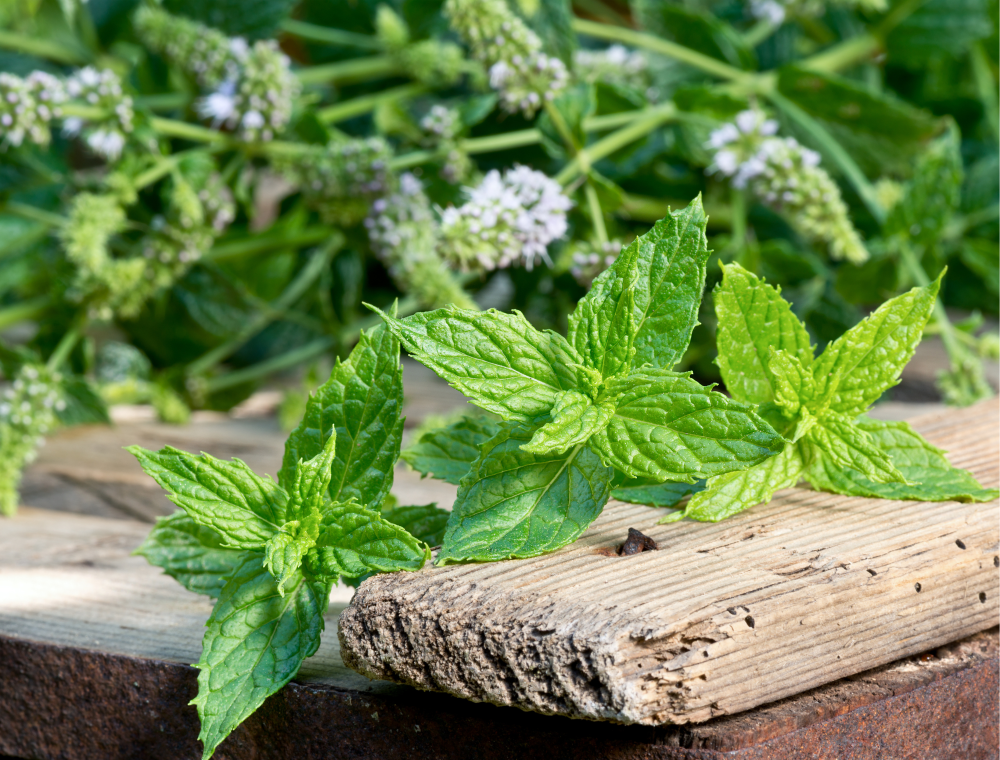
Peppermint tea recipe guides are among the most searched herbal tea topics online, and it is easy to understand why. Peppermint (Mentha × piperita) is one of the most beloved herbal teas in the world. Furthermore, its clean, cooling flavor and bright aroma make it a natural choice for both hot and iced preparations. Whether you are a long-time herbal tea drinker or just getting started, a good peppermint tea recipe is an essential skill.
In folk herbalism, peppermint has been traditionally used for digestive comfort, cooling the body, and clearing the airways. Herbalists across European traditions have valued it as a versatile remedy for centuries. Additionally, it is one of the most widely consumed herbal beverages globally, second only to chamomile in some markets.
Why This Peppermint Tea Recipe Works
The key to a great peppermint tea is controlling the steep. Unlike black tea, peppermint does not become bitter with a longer steep. However, it does become more intensely mentholated, which some people find overwhelming. As a result, the standard five to seven minute steep is a sweet spot for most drinkers.
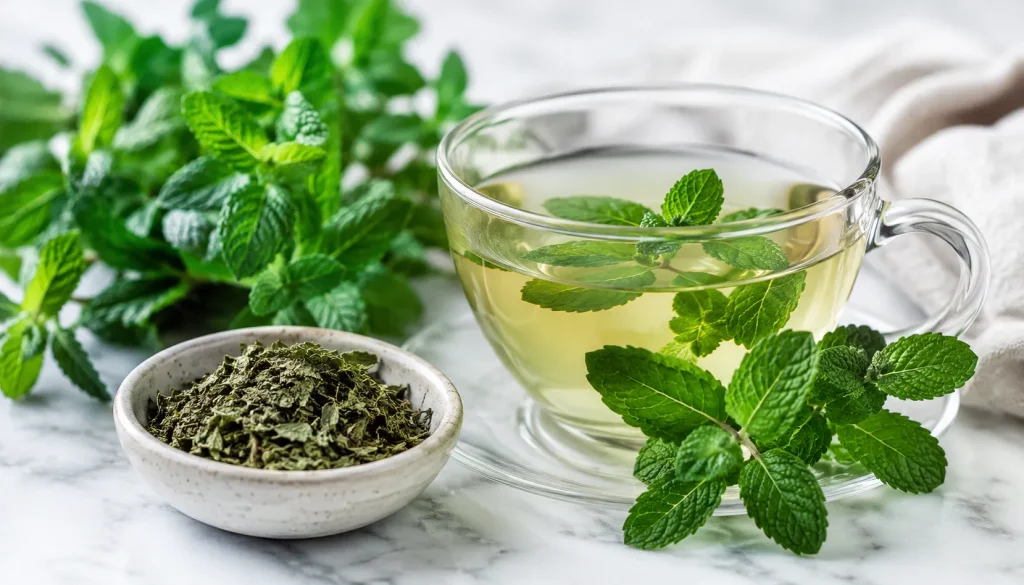
Furthermore, using high-quality dried peppermint makes a significant difference. Fresh leaves are aromatic but contain more water, which dilutes the menthol concentration. On the other hand, well-dried peppermint leaf delivers a consistent, potent brew every time.
What You Need
For one cup of peppermint tea:
- 1–2 teaspoons of peppermint cut and sifted
- 8 ounces of filtered water
- Optional: honey, lemon, or a small pinch of stevia
Alternatively, you can use peppermint leaf whole in a larger teapot or French press for a more rustic brew with a slightly different texture in the liquor.
Step-by-Step Peppermint Tea Recipe
- Boil water. Bring filtered water to a full boil, 212°F (100°C). Unlike many herbal teas, peppermint handles boiling water well and benefits from the higher temperature.
- Measure your herb. Place one teaspoon of dried peppermint in a tea infuser or teapot. Use two teaspoons for a stronger, more mentholated cup.
- Pour and cover. Pour boiling water over the leaves and immediately cover the cup or pot. Covering is critical because menthol is a volatile compound that evaporates quickly in open steam.
- Steep for five to seven minutes. Five minutes gives a light, fresh mint flavor. Seven minutes produces a bolder, more intensely cooling cup.
- Strain and serve. Remove the leaves and enjoy. Add honey for sweetness or lemon for a citrus note.
In fact, the covering step is one that most people skip, but it makes a noticeable difference in the potency and menthol strength of the finished cup.
Iced Peppermint Tea
Peppermint makes an outstanding iced tea. There are two methods:
Hot-brew-then-chill method: Brew double-strength peppermint tea using two teaspoons of leaf per four ounces of water. Steep for seven minutes, strain, and pour over a glass packed with ice. The ice will dilute the concentrate to the right strength. Moreover, this method gives you a bright, clear iced tea with a strong mint flavor.
Cold-brew method: Combine two tablespoons of dried peppermint with two cups of cold filtered water. Refrigerate for six to eight hours. Strain and serve over ice. Additionally, cold-brewed peppermint tea has a softer, less sharp menthol quality that many people prefer in warm weather.
Peppermint Tea Recipe Variations
Peppermint pairs beautifully with a wide range of herbs. Try these blends:
- Peppermint and Chamomile: Combine with chamomile flowers whole for a calming, floral-minty blend. This is one of the most popular herbal tea combinations in the world.
- Peppermint and Spearmint: Blend equal parts peppermint and organic spearmint cut and sifted for a gentler, layered mint flavor. Spearmint is less intense than peppermint and adds a slightly sweet quality.
- Peppermint and Lemon Balm: A bright, citrusy mint blend that is light and refreshing.
- Peppermint and Licorice Root: A naturally sweet combination that requires no added sweetener.
Peppermint vs. Spearmint: Which to Use?
Both mints work well for tea but offer different experiences. Peppermint has a bold, cool, intensely mentholated flavor. Spearmint is softer, slightly sweeter, and less cooling. Furthermore, peppermint contains a significantly higher concentration of menthol than spearmint, which is why it produces the characteristic cooling sensation.
For a standard peppermint tea recipe, Mentha × piperita (true peppermint) is the appropriate choice. However, spearmint is a great option for those who find pure peppermint too intense, particularly for children or sensitive individuals.
Traditional Use of Peppermint in Folk Herbalism
Peppermint has been used medicinally since ancient times. Ancient Egyptians used dried mint leaves, and Greek and Roman physicians prescribed it for digestive complaints. In European folk herbalism, peppermint tea has been traditionally used for nausea, indigestion, and headaches. Herbalists have traditionally recommended it as a carminative herb, meaning it helps relieve gas and digestive discomfort. Moreover, its cooling menthol makes it a traditional remedy for fever and congestion.
Safety and Precautions
Peppermint tea is generally considered very safe for most adults and older children. However, peppermint can relax the lower esophageal sphincter, which may worsen symptoms in people with acid reflux or GERD. For this reason, individuals with these conditions should use peppermint tea with caution. Additionally, pure peppermint essential oil should never be applied near the face of infants or young children, though peppermint tea in culinary amounts is generally regarded as safe for older children. Pregnant individuals should consult a healthcare provider. This content is for educational purposes only.
Frequently Asked Questions
Should I use boiling water for peppermint tea?
Yes, boiling water at 212°F (100°C) is recommended for peppermint tea. Unlike delicate green teas, peppermint benefits from full boiling temperature to fully release its menthol compounds. Furthermore, always cover the cup immediately after pouring to trap volatile oils.
How long should I steep peppermint tea?
Five to seven minutes is the standard range. Shorter steeps give a lighter mint flavor. Longer steeps are more intensely cooling and mentholated. Additionally, peppermint does not become bitter with extended steeping, making it quite forgiving.
Can I use fresh peppermint instead of dried?
Yes, fresh peppermint makes a pleasant tea. Use five to seven fresh leaves per cup. However, dried peppermint produces a more consistently potent cup because the drying process concentrates the essential oils. As a result, most herbalists prefer dried leaf for a reliable peppermint tea recipe.
What does peppermint tea taste like?
Peppermint tea has a clean, bright, intensely cooling flavor with a menthol sensation. It is refreshing and crisp rather than sweet or bitter. The aftertaste is characteristically cool, making it one of the most distinctive herbal teas available.
Brew the perfect cup with peppermint cut and sifted from Hatton Naturals — explore our full selection of premium mint and herbal teas in the shop.