This guide explores the full picture of couch grass root. Its history, its chemistry, how to brew it, how to pair it with complementary herbs, and what you should know before adding it to your routine.
The Botanical Identity of Couch Grass
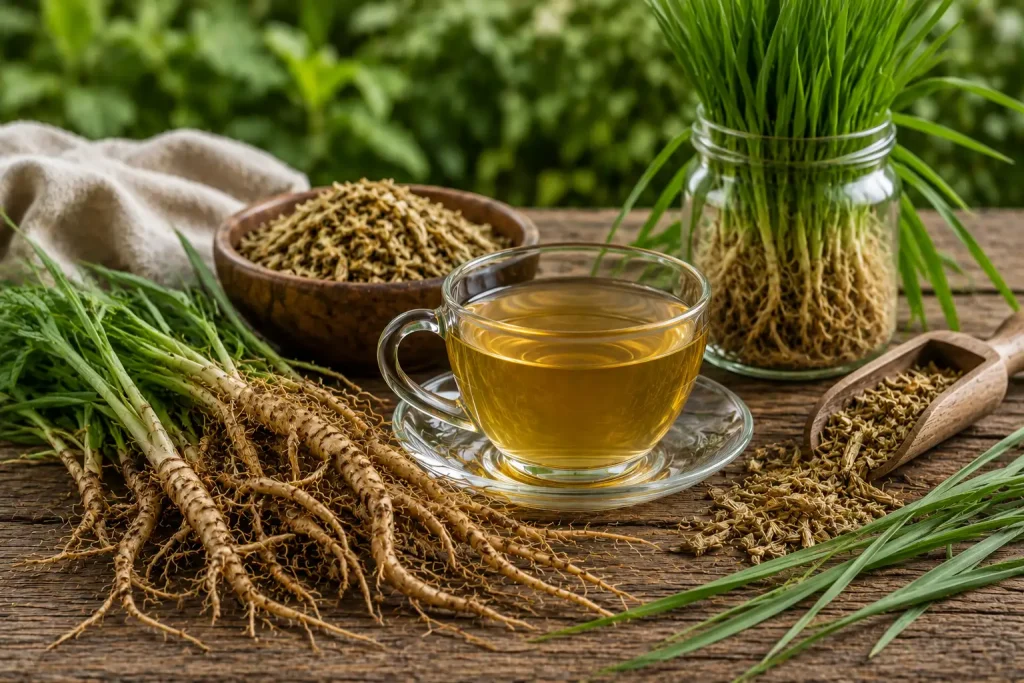
Couch grass is a perennial grass native to Europe and western Asia that has naturalized widely across North America and other temperate regions. It grows aggressively through underground rhizomes, which are the part used medicinally. The rhizomes are long, pale yellow, and fibrous, with a slightly sweet flavor that becomes more pronounced when dried.
The plant goes by many common names including twitch grass, quackgrass, dog grass, and witchgrass. This variety of names reflects how widely it was known across different cultures and how many separate traditions arrived at similar uses. European folk medicine, Ayurvedic practice, and traditional Chinese medicine have all documented uses of the root for urinary and kidney applications.
For herbal use, the rhizomes are harvested in spring or autumn, cleaned, dried, and cut into short pieces suited for decoction. Hatton Naturals offers Organic Couch Grass C/S in bulk form, making it accessible for herbalists and formulators alike.
Active Compounds That Support Couch Grass Root Benefits
The chemistry of couch grass root helps explain why it has been consistently used across so many herbal traditions. The rhizomes contain a significant amount of triticin, a polysaccharide fructan related to inulin. Inulin-type compounds are well established in their ability to support the gut microbiome and have mild diuretic properties.
Couch grass also contains mucilaginous polysaccharides, which coat and soothe mucous membranes, including those lining the urinary tract. This soothing, coating quality is one of the main reasons the herb appears in traditional formulas for urinary discomfort.
Additionally, the root contains essential oils including agropyrene (or apiole), glycosides, malic acid, and various vitamins. Agropyrene has been studied for its antimicrobial properties in vitro, though human clinical evidence remains limited. The combination of these compounds, particularly the mucilage and the mild diuretic action, gives couch grass a well-rounded profile suited for urinary support applications.
Traditional Uses of Couch Grass Root
Across its long history of use, couch grass root benefits have been primarily associated with the urinary system. Herbalists in the European tradition used it to encourage urine flow, ease urinary discomfort, and support kidney function during periods of mild strain. The German Commission E, which evaluated herbal medicines for the German government, approved couch grass for use as an irrigation therapy for urinary tract irritation.
In folk practice, couch grass was also used as a spring cleansing herb, consumed in teas to encourage fluid movement through the body after winter. It appeared in traditional kidney and bladder teas alongside other urinary herbs.
Beyond the urinary system, some traditions have used couch grass root for its mild anti-inflammatory properties and as a tonic for general weakness and fatigue. Its mucilaginous quality was also applied to soothe digestive irritation in some European folk traditions, though this is a secondary use compared to its urinary applications.
How to Brew a Couch Grass Root Decoction
Unlike leaf or flower herbs that infuse with simply hot water, roots and rhizomes typically require a decoction, meaning you simmer them rather than just steep them. This breaks down the tougher plant cell walls and extracts the full range of water-soluble compounds.
Here is a simple decoction method:
- Add one to two teaspoons of cut couch grass root per cup of cold water to a small saucepan.
- Bring the water slowly to a simmer over medium heat.
- Reduce heat and continue simmering for 15 to 20 minutes with the lid on.
- Remove from heat and allow to steep for an additional five to ten minutes.
- Strain through a fine mesh strainer and drink warm.
The resulting liquid is pale amber with a mildly sweet, slightly earthy flavor. Some people find it pleasant enough to drink alone; others prefer to blend it with sweeter or more aromatic herbs to improve palatability.
Pairing Couch Grass Root With Complementary Herbs
Couch grass root works particularly well in combination with other urinary herbs that offer complementary actions. Its mildly sweet flavor blends well with earthy and slightly floral herbs. And its mucilaginous quality is enhanced by pairing with other demulcent plants.
Couch Grass Root and Marshmallow Root
Marshmallow root is perhaps the most natural companion for couch grass in urinary support blends. Both herbs contain mucilaginous polysaccharides that soothe irritated mucous membranes, and their combined demulcent action is considered more effective in traditional formulations than either herb alone. Hatton Naturals carries Organic Marshmallow Root C/S for exactly this purpose. Simmer equal parts of both roots together for a rich, smooth tea with excellent mouthfeel.
Couch Grass Root and Nettle
Nettle leaf complements couch grass root well in blends designed to support kidney and urinary function. Nettle is a well-established diuretic herb in European folk medicine and adds a mineral-rich, slightly grassy note to the blend. Hatton Naturals offers Nettle Leaf Cut and Sifted as a high-quality addition to any kidney-support blend. Decoct the couch grass root first, then add nettle leaf off the heat and steep for 10 minutes before straining.
A Classic Three-Herb Urinary Blend
Combining couch grass root, marshmallow root, and nettle leaf creates a well-rounded, traditional urinary support tea with multiple complementary mechanisms. Use two parts couch grass root, two parts marshmallow root, and one part nettle leaf. Decoct the roots first, then add nettle at the end of simmering. This formula has deep roots in European herbal tradition and is highly palatable for most users.
Couch Grass Root in Commercial Herbal Formulations
For supplement formulators, tea brands, and bulk herbal product developers, couch grass root benefits offer a compelling ingredient story. It has a long documented history of use. Appears in the German Commission E monographs, and carries consumer recognition in European markets where kidney teas have a strong tradition.
In North America, couch grass is less widely known, which creates an opportunity for brands willing to educate their audience. Positioning it in a kidney or urinary wellness tea blend alongside more recognizable herbs like nettle and marshmallow can help bridge the familiarity gap.
Bulk buyers should look for cut-and-sifted rhizome material that is properly dried and free from mold or off-odors. Consistent particle size matters for commercial tea production, particularly for tea bags, where uniformity affects brew time and strength. Hatton Naturals provides Organic Couch Grass C/S with the quality standards that product developers need.
Safety Information
Couch grass root is generally considered safe for most adults when used as an herbal beverage in normal culinary or traditional quantities. However, several cautions apply:
- Couch grass should not be used as the primary approach to managing any diagnosed kidney or urinary condition. Urinary symptoms can signal serious underlying conditions requiring medical diagnosis.
- Due to its diuretic properties, couch grass should be used cautiously by individuals taking prescription diuretics or those with conditions affected by fluid balance.
- Like oat straw, couch grass is a grass, and individuals with grass allergies may want to proceed cautiously and consult a healthcare provider.
- Pregnant and nursing individuals should consult a healthcare provider before using couch grass root, as safety has not been established in those populations.
- When using couch grass as an irrigation therapy (drinking increased fluids to flush the urinary tract), adequate water intake is essential. Insufficient fluid intake alongside diuretic herbs can be counterproductive.
- This information is for educational purposes and does not constitute medical advice.
Frequently Asked Questions About Couch Grass Root
What is couch grass root used for in traditional herbalism?
Couch grass root has been used primarily for urinary tract support, including easing urinary discomfort and encouraging healthy urine flow. It appears in traditional European, Ayurvedic, and Chinese herbal systems for kidney and bladder wellness.
How does couch grass root taste?
The root has a mild, slightly sweet, and faintly earthy flavor. It is more palatable than many root herbs and blends easily with other tea herbs. The mucilaginous quality gives the decoction a slightly smooth mouthfeel.
Is couch grass the same as quackgrass?
Yes. Couch grass (Elymus repens) is commonly known by several names, including quackgrass, twitch grass, and dog grass. All these names refer to the same plant species. The root or rhizome is the part used medicinally.
Can I combine couch grass root with marshmallow root?
Yes, and it is actually one of the most recommended traditional combinations. Both roots are demulcent herbs that soothe the mucous membranes of the urinary tract. Decocting them together produces a smooth, pleasant tea with complementary benefits.
How much couch grass root tea should I drink per day?
Traditional recommendations generally suggest two to three cups of couch grass root decoction per day when using it for urinary support. Always increase plain water intake alongside the tea, as proper hydration is essential when using any diuretic herb.
Does couch grass root contain gluten?
Couch grass is a grass, not a wheat plant, though it is in the same grass family. Traditional herbalism does not associate it with gluten, but individuals with severe grass allergies or grain sensitivities should consult a healthcare provider before using it.
Where can I buy organic couch grass root in bulk?
Hatton Naturals offers Organic Couch Grass C/S in bulk. The cut-and-sifted format is ideal for decoctions, blending, and commercial tea formulation.
Conclusion
Couch grass root benefits are well-established in traditional herbal medicine and deserve more attention from modern wellness enthusiasts and product developers. Its soothing mucilaginous quality, mild diuretic properties, and compatibility with herbs like marshmallow root and nettle make it an excellent cornerstone of urinary support blends. Explore bulk-quality Organic Couch Grass C/S from Hatton Naturals and give this underrated herb the place it deserves.