Blackberry Leaf Tea: A Mild Fruity Brew
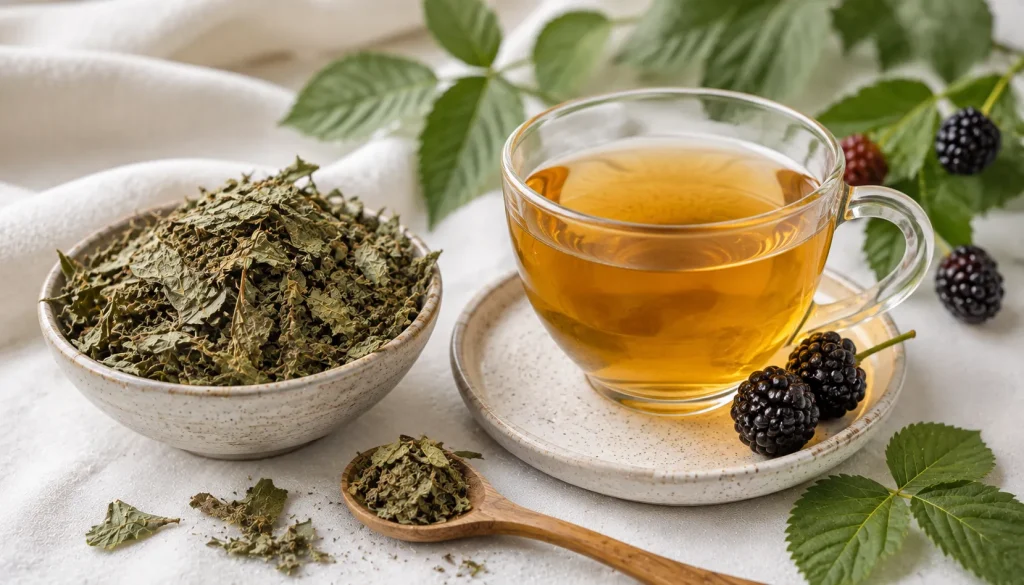
Blackberry leaf tea occupies a quiet but respected place in the world of herbal beverages. Made from the dried leaves of the blackberry plant (Rubus fruticosus), it produces a mildly tannic, gently fruity brew that has been enjoyed across Europe and the British Isles for generations. It is approachable, versatile, and easy to brew.
What Does Blackberry Leaf Tea Taste Like?
Blackberry leaf tea is not sweet like blackberry juice or jam. Instead, it carries a mild, slightly woody, and gently astringent flavor with faint fruity undertones. The tannins in blackberry leaves give the tea a structure similar to a light green tea, without the grassy notes. The fruitiness is subtle — more of a background impression than a dominant note.
This gentle flavor profile makes blackberry leaf tea a good candidate for blending. It pairs well with fruit-forward herbs like hibiscus, rose hips, or elderberry, which add color and brightness. Furthermore, it blends pleasantly with mints, lemon balm, and chamomile for a calming, layered cup.
Drunk on its own, it is mild enough to enjoy without sweetener. A touch of honey or a slice of lemon elevates the experience without masking the leaf’s natural character.
The European Herbal Tradition Behind Blackberry Leaves
Herbalists across Europe — particularly in Germany, France, and the British Isles — have used blackberry leaves in traditional botanical preparations for centuries. The plant was abundant in hedgerows and woodlands, making the leaves an easily accessible resource for rural communities.
Traditional European herbalism categorized blackberry leaves as an astringent botanical, valued for their tannin content. Herbalists valued them as a drying and toning herb in traditional formulations. Nicholas Culpeper, the 17th-century English herbalist, wrote about blackberry in his Complete Herbal, noting its widespread traditional use throughout the countryside.
Today, blackberry leaf tea continues to be popular in Europe, particularly in Germany where it appears in commercial herbal tea blends. It is also gaining renewed interest among herbal tea drinkers in North America who are exploring beyond mainstream botanicals.
Sweet vs. Common Blackberry Leaf
Two types of blackberry leaf are commonly available for tea: sweet blackberry leaf and common blackberry leaf. Our blackberry sweet leaf cut and sifted offers a slightly milder, more delicate flavor profile. It is often preferred for single-ingredient teas or light blends.
Our common blackberry leaf whole provides a more robust, tannic character. The whole leaf format retains volatiles better during storage and is popular among herbalists who prefer to customize their grind before use. Both options bring the characteristic blackberry leaf flavor — the difference is in intensity and texture.
Additionally, blackberry leaf pairs naturally with raspberry leaf. Our raspberry leaves cut and sifted make an excellent companion in blends, as the two leaves share a similar botanical family (Rosaceae) and flavor profile, creating a harmonious cup.
How to Brew Blackberry Leaf Tea
Brewing blackberry leaf tea is simple. Use 1–2 teaspoons of dried leaf per 8 oz of water. Bring water to just below boiling — around 195–205°F. Steep for 5–10 minutes depending on desired strength. Longer steeping extracts more tannins, producing a more astringent cup.
For a milder brew, steep for 5 minutes. For more body and astringency, go to 8–10 minutes. Strain and serve as-is, or with honey, lemon, or a cinnamon stick. Moreover, blackberry leaf tea works well as a cold brew — combine with water in a pitcher and refrigerate for 8–12 hours. The result is a clean, lightly fruity iced tea without bitterness.
In blended formulas, blackberry leaf typically makes up 20–40% of the blend. It provides body and a tannic base without overwhelming floral or fruity partners.
Comparing Blackberry Leaf to Other Berry Leaf Teas
Raspberry leaf is the most well-known berry leaf tea, with a longer track record in the herbal tea market. It is slightly more herbaceous and a little less astringent than blackberry leaf. Strawberry leaf tea has a very gentle flavor and lower tannin content. Blackberry leaf sits between raspberry and currant leaf in terms of intensity and structure.
For tea drinkers exploring botanical variety, alternating among these berry leaf teas across a week is an enjoyable way to appreciate their subtle differences. Each brings its own character while sharing a common family of earthy, mildly fruity notes.
Consequently, herbalists who work with Rubus species often keep multiple leaf varieties on hand for different blend purposes. Blackberry leaf adds body; raspberry leaf adds a touch of green herbaceousness; together, they produce a well-rounded base for fruit herb blends.
Blending Ideas for Blackberry Leaf Tea
Blackberry leaf tea is a natural base for creative blending. Try combining it with hibiscus and rose hips for a tart, vibrant red blend. Add dried elderberries and a pinch of clove for a warming winter blend. Mix with chamomile, lemon balm, and peppermint for a calming evening tea.
For a fruity summer blend, pair blackberry leaf with dried mango, hibiscus, and orange peel. Chill after brewing for an iced tea that is naturally sweet and complex. Furthermore, it works in kombucha and fermented tea applications as a secondary flavor layer when combined with a primary fermentation base.
Safety Note
Blackberry leaf tea is generally considered safe for most adults. It contains tannins, so very large quantities on an empty stomach may cause mild digestive discomfort in sensitive individuals. As with any herbal tea, moderate consumption is advisable. Pregnant or nursing individuals should consult a healthcare provider before using any new herbal preparation consistently.
Frequently Asked Questions
Can I harvest my own blackberry leaves for tea?
Yes, if you have access to unsprayed blackberry plants. Harvest young, healthy leaves in spring or early summer before the plant flowers. Rinse well, dry thoroughly at low heat, and store in an airtight container. For consistent quality and guaranteed pesticide-free sourcing, purchasing dried blackberry leaf from a certified organic supplier is a reliable alternative.
Does blackberry leaf tea contain caffeine?
No. Blackberry leaf tea is naturally caffeine-free, making it suitable for any time of day, including evenings. It is a good option for those reducing caffeine intake who still want a flavorful, tea-like beverage with body and structure.
How does blackberry leaf tea differ from blackberry fruit tea?
Blackberry fruit tea is made from dried blackberry pieces and has a pronounced sweet-tart flavor with vibrant color. Blackberry leaf tea is subtler — mildly tannic and gently fruity, closer in character to a green tea than a fruit infusion. They can be combined in a blend to bring together the structure of the leaf and the brightness of the fruit.
What is the shelf life of dried blackberry leaves?
Properly stored dried blackberry leaves remain fresh for 1–2 years. Store in an airtight container away from heat, light, and moisture. The flavor is best within the first year. Whole leaves generally retain their aroma longer than pre-cut or sifted material, which has more surface area exposed to oxygen.
Explore the world of berry leaf teas. Shop blackberry sweet leaf, common blackberry leaf, and raspberry leaf — available in bulk for herbalists, tea blenders, and wellness-minded home brewers.