Lemongrass Tea Benefits: Citrusy Brew
Lemongrass tea benefits have made this citrusy herbal brew one of the most popular herbal teas in tropical and subtropical regions worldwide. Made from the dried stalks and leaves of Cymbopogon citratus, lemongrass tea has a bright, clean citrus flavor that is refreshing both hot and iced. Furthermore, it has been a staple in Southeast Asian, South Asian, and Latin American folk herbalism for generations.
In fact, lemongrass is one of the most versatile plants in traditional herbalism. It appears in everything from culinary cooking to aromatherapy to folk medicine. Additionally, its primary aromatic compound, citral, is responsible for the herb’s distinctive lemon-like scent and flavor.
What Are the Lemongrass Tea Benefits?
In traditional herbalism, lemongrass tea has been valued for a wide range of purposes. Herbalists in Southeast Asia have traditionally recommended it as a calming, digestive, and refreshing herb. Moreover, folk practitioners in Brazil and parts of West Africa have incorporated lemongrass tea into their traditional wellness practices for centuries.
Key traditionally recognized benefits include:
- Digestive support: traditionally used to ease bloating and stomach discomfort after meals
- Calming properties: herbalists value lemongrass as a mild nerve-calming herb in folk traditions
- Refreshing and cooling: widely used as a cooling tea in tropical climates
- Aromatic antioxidant compounds: citral and other compounds have been studied for their antioxidant properties
As a result, lemongrass tea occupies an important place in herbal traditions across multiple continents. However, it is important to note that these are folk uses, and lemongrass tea is not a substitute for medical treatment.
Flavor Profile of Lemongrass Tea
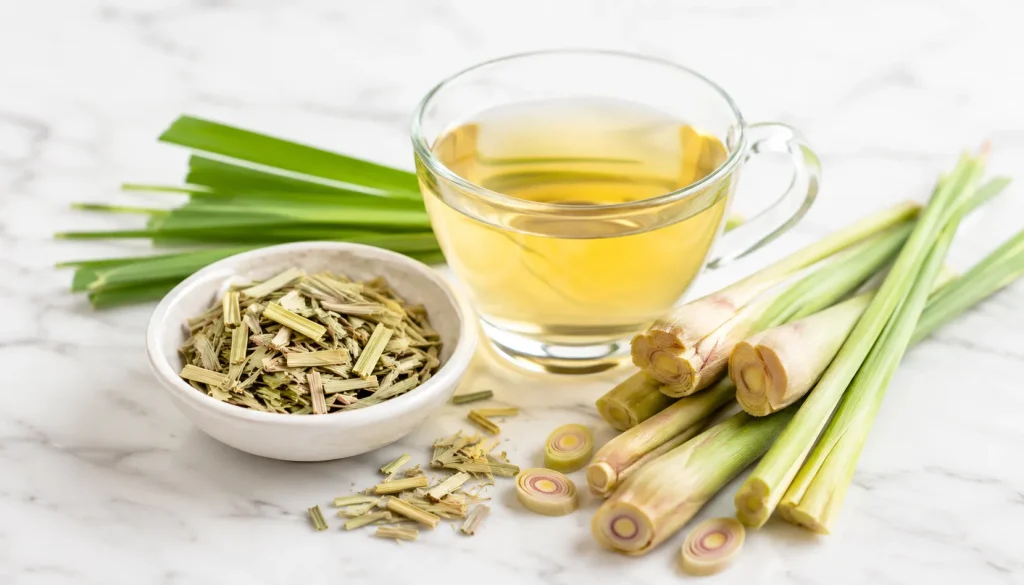
Lemongrass tea has a clean, bright citrus flavor that is softer and less acidic than actual lemon juice. In other words, it delivers the essence of lemon without the tartness. The tea is typically pale yellow to golden when brewed and has a light, refreshing aroma. Additionally, the flavor has subtle grassy and floral undertones that distinguish it from other citrus herbs.
It pairs beautifully with ginger, mint, and hibiscus. Furthermore, lemongrass is one of the best herbs for making herbal iced tea because its bright flavor holds up well over ice without becoming flat.
How to Brew Lemongrass Tea
Follow these steps to brew a clean, flavorful cup:
- Heat water to just below boiling, around 200°F (93°C).
- Add two teaspoons of organic lemongrass cut and sifted per eight ounces of water.
- Pour the hot water over the lemongrass and cover.
- Steep for five to ten minutes. Longer steeps deepen the citrus flavor.
- Strain and serve hot, or pour over ice for a refreshing iced tea.
For an enhanced brew, combine lemongrass with a half teaspoon of dried ginger before steeping. This pairing is popular in Southeast Asian folk traditions and adds a warm, spicy note to the bright citrus base.
Lemongrass Tea Benefits in Traditional Southeast Asian Herbalism
In Thailand, Vietnam, and Indonesia, lemongrass has long been an integral part of both the kitchen and the folk medicine cabinet. Traditionally, lemongrass tea was prepared as a digestive drink after meals and as a cooling tea during hot weather. Moreover, in Ayurvedic tradition from the Indian subcontinent, lemongrass is described as a herb that balances and cools the body. Herbalists across these traditions value it for its gentle, refreshing qualities that make it appropriate for daily use.
Lemongrass Tea Blends
Lemongrass is an excellent blending herb. It brightens any tea blend with its citrus notes. Consider these combinations:
- Lemongrass and Ginger: A warming and refreshing blend with Southeast Asian roots. The ginger adds heat while the lemongrass provides brightness.
- Lemongrass and Peppermint: Combine with peppermint cut and sifted for a cooling, bright blend ideal for summer iced tea.
- Lemongrass and Hibiscus: A vibrant combination with deep color and tangy sweetness.
- Lemongrass and Chamomile: A calming blend that balances the bright citrus with gentle floral notes.
Furthermore, lemongrass combines well with other citrus herbs such as lemon balm and lemon verbena for multi-layered citrus tea blends.
Cold Brew Lemongrass Tea
Lemongrass is one of the finest herbs for cold brewing. To cold brew, combine three tablespoons of dried lemongrass with three cups of cold filtered water. Cover and refrigerate overnight, eight to twelve hours. Strain and serve over ice. In fact, cold-brewed lemongrass tea has an even cleaner, crisper citrus flavor than the hot-brewed version. Additionally, it makes an excellent base for sparkling water cocktails.
Buying and Storing Lemongrass
Look for dried lemongrass that is pale to light green in color with a strong lemon aroma. Avoid material that has lost its fragrance, as aroma is the best indicator of freshness. Store in an airtight container away from heat and light. Properly stored, dried lemongrass retains its aromatic quality for up to two years.
Safety and Precautions
Lemongrass tea is widely considered safe for most healthy adults and is consumed as both food and herbal tea without significant concerns. However, pregnant individuals should use lemongrass with caution, as it has traditionally been used to stimulate menstruation in folk herbalism. Additionally, some people with grass pollen allergies may react to lemongrass, which belongs to the grass family. For this reason, if you have significant grass allergies, consult a healthcare provider before adding lemongrass tea to your routine. This content is educational only and does not constitute medical advice.
Frequently Asked Questions
Is lemongrass tea the same as lemon tea?
No, they are different. Lemongrass tea is made from the dried stalks of Cymbopogon citratus and has a soft citrus flavor without acidity. Lemon tea typically refers to black or green tea with added lemon juice. The lemongrass tea benefits come from the herb itself, not from actual lemon fruit.
How much lemongrass should I use per cup?
Two teaspoons of dried lemongrass cut and sifted per eight ounces of water is the standard measure. You can adjust to taste. Similarly, for iced tea, use slightly more lemongrass to account for dilution by ice.
Can I drink lemongrass tea every day?
For most healthy adults, one to three cups of lemongrass tea per day is considered a moderate and generally well-tolerated amount. However, pregnant individuals and those with grass allergies should consult a healthcare provider before daily use.
What does lemongrass tea taste like?
Lemongrass tea tastes like a mild, clean lemon flavor without the tartness of actual lemon juice. It is light, refreshing, and slightly grassy. In fact, many people who find lemon tea too sharp enjoy lemongrass tea as a gentler alternative.
Discover fresh, aromatic organic lemongrass cut and sifted and the full range of herbal teas at the Hatton Naturals shop.