Strawberry Leaves Tea: A Gentle Herbal Tea
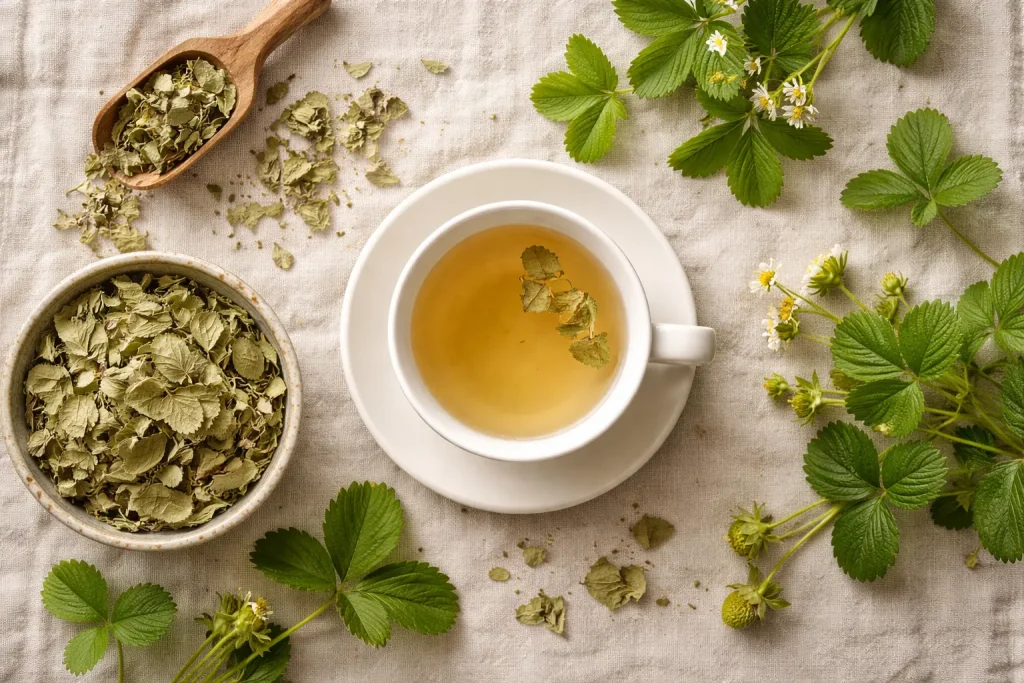
Strawberry leaves tea is one of those quiet herbal preparations that rarely makes headlines but has been sitting on herbalists’ shelves for centuries. While the fruit gets all the attention, the leaf carries its own distinct character: mildly astringent, slightly grassy, with a soft earthiness that makes it an easy daily drinker. Traditional European herbalism documented its use long before the hybrid garden strawberry existed, drawing primarily from Fragaria vesca, the small wild strawberry whose leaves are more tannin-dense than their cultivated cousins. Today, dried strawberry leaf is available cut and sifted, making it straightforward to work with at home whether you’re blending a simple infusion or building a more complex tea. This article covers everything you need to get the most from strawberry leaves tea: the plant’s history, how to brew it properly, exact ratios, complementary herbs, what to watch for in quality dried leaf, and how to store it so it stays useful.
The Traditional Roots of Strawberry Leaves Tea
The written record of strawberry leaf use stretches back at least to the 15th century in European herbalism. Maude Grieve, in “A Modern Herbal” (1931), describes the leaf infusion as traditionally used for its mild astringent properties, noting that herbalists often turned to it as a cooling, toning preparation. Nicholas Culpeper, writing in the 17th century, attributed cooling and binding qualities to the whole plant, leaves included.
What made the leaf valuable in traditional practice was precisely what the fruit lacks: tannin content. Tannins are polyphenolic compounds that give an astringent sensation on the palate and contribute to the leaf’s traditional reputation as a digestive herb. The fruit is sweet and low in tannins. The leaf is the opposite.
Wild Fragaria vesca leaf was the standard in most historical preparations. It produces smaller leaves than garden varieties but with a more concentrated flavor and higher tannin density. Modern dried strawberry leaf C/S is typically sourced from cultivated varieties, which still delivers a pleasant and functional cup, just with a somewhat milder character than the wild-crafted leaf.
What Strawberry Leaves Tea Tastes Like
This is often the first question from someone new to the herb, and the honest answer is: mild. Strawberry leaves tea does not taste like strawberry fruit. There is no sweetness, no berry brightness. What you get instead is a clean, slightly dry, grassy infusion with a gentle astringent finish that lingers pleasantly on the sides of the tongue.
The flavor profile sits somewhere between green tea (without the vegetal sharpness) and raspberry leaf (without the pronounced fruitiness). It is approachable and undemanding, which makes it an excellent base for blending with more assertive herbs.
At higher concentrations or longer steep times, the astringency increases noticeably. This is useful information for calibrating your brew: a light steep gives you a very gentle cup, while a longer steep pushes the tannins forward and produces something more structured.
Blending organic lemon balm leaf C/S with strawberry leaves tea adds a bright citrus lift that opens up the flavor considerably. The two herbs balance each other well, lemon balm’s aromatic volatile oils cutting through the earthiness of the strawberry leaf.
How to Brew Strawberry Leaves Tea: Exact Ratios
Getting the water temperature and steep time right matters more with tannin-containing herbs than with most others. Too hot or too long and the cup turns bitter and drying. Here are working measurements for both single servings and larger batches.
Single cup (8 oz / 240 ml):
- Strawberry leaf C/S: 2 g (approximately 1 teaspoon loosely packed)
- Water temperature: 200°F / 93°C (just off boil, rested 30 seconds)
- Steep time: 5 to 7 minutes
- Strain and serve as-is or with a small amount of honey
Strawberry and lemon balm blend, single cup:
- Strawberry leaf C/S: 2 g (approximately 1 teaspoon)
- Lemon balm leaf C/S: 1 g (approximately 1/2 teaspoon)
- Water temperature: 200°F / 93°C
- Steep time: 5 minutes
Four-cup batch:
- Strawberry leaf C/S: 8 g (approximately 4 teaspoons)
- Lemon balm leaf C/S: 4 g (approximately 2 teaspoons)
- Water: 32 oz / 950 ml at 200°F / 93°C
- Steep time: 5 to 6 minutes, then strain fully before storing
Do not leave the herbs in contact with the water after steeping. Tannin extraction continues as long as plant material is present, and a cup that was pleasant at six minutes becomes noticeably harsh at fifteen.
Building a Strawberry Leaves Tea Blend
Strawberry leaves tea is at its most interesting as a component in a blend rather than a solo infusion. Its mild, astringent base supports more aromatic herbs without competing with them, and its neutral color (pale yellow to light amber) takes on tints from co-herbs nicely.
Some combinations that work well in practice:
Calming blend: Pair strawberry leaf with lemon balm leaf C/S and chamomile flowers at a 2:1:1 ratio by weight. The chamomile adds apple-like sweetness and a floral note that rounds out the blend. This is a good evening cup.
Digestive blend: Combine strawberry leaf with peppermint leaf at 3:1 by weight. Peppermint’s cooling menthol plays well against the mild astringency. Keep the peppermint proportion modest or it overwhelms everything else.
Floral blend: Add elderflower at 1 g per cup to a standard strawberry leaf infusion. The elderflower contributes a delicate, honey-adjacent sweetness that lifts the whole cup.
Mineral-forward blend: Combine with nettle leaf at 1:1 by weight for a more robust, earthy infusion traditionally used as a daily wellness tea. Nettle adds body and a green depth that makes the blend feel more substantial.
Each of these builds on the structural foundation that strawberry leaves tea provides without masking what makes the herb worth using in the first place.
Strawberry Leaves Tea and Traditional Herbal Use
Herbalists traditionally used strawberry leaves tea as a mild digestive tonic, particularly valued for its astringent character. The tannins in the leaf were understood to have a toning effect on mucous membranes lining the digestive tract, and the infusion was often recommended as a gentle daily preparation rather than an acute remedy.
In folk traditions across Germany, France, and England, strawberry leaf appeared in preparations for general digestive comfort and was sometimes used alongside other mild herbs as a spring tonic. The leaves were considered cooling in the traditional humoral sense, making them a seasonal fit for late spring and summer use when the fresh plant was at peak leaf production.
Contemporary herbalists often use strawberry leaves tea as an accessible introduction to astringent herbs for people who find raspberry leaf too strongly flavored. The milder tannin profile and easy drinkability make it suitable for daily use without the palate fatigue that some stronger herbs produce.
Maude Grieve also noted the root’s use in earlier periods as a stronger astringent preparation, but the leaf infusion became the standard in modern practice precisely because it is gentler and more pleasant to drink regularly.
Selecting Quality Dried Strawberry Leaf
Not all dried strawberry leaf is equal. What to look for when evaluating dried leaf for strawberry leaves tea:
Color: Quality dried leaf holds a medium to pale green color. Yellow indicates light degradation or age. Brown or tan means heat damage during processing or storage. Both reduce tannin content and flavor.
Aroma: Fresh dried strawberry leaf has a mild, slightly grassy scent with a faint earthy undertone. It is not strongly aromatic like peppermint or lavender. A musty or hay-like smell indicates moisture exposure or excessive age.
Texture: Properly dried cut and sifted leaf snaps cleanly when bent. Leaf that bends without breaking has residual moisture and will not store well.
Cut size: C/S (cut and sifted) is the standard preparation for tea. It extracts more evenly than whole leaf and fits standard infusers. Fine powder-grade leaf over-extracts rapidly and produces a murky, often overly astringent cup.
Strawberry leaf C/S sourced from a quality supplier should meet these standards consistently. If your dried leaf looks pale yellow and smells like old paper, it will produce a thin, flavorless infusion regardless of brewing technique.
Storage and Quality for Strawberry Leaves Tea
Dried strawberry leaf has a milder volatile profile than strongly aromatic herbs, which means it is more susceptible to flavor and potency loss over time. Proper storage extends usable life significantly.
Store in airtight glass jars with minimal headspace. Amber or dark glass offers additional light protection. Clear glass works if stored in a cabinet or drawer away from direct light.
Temperature: below 65°F / 18°C is ideal. Avoid storage near the stove, oven, or any heat source. The pantry or a dedicated herb cabinet is appropriate. Do not refrigerate: daily temperature cycling introduces condensation that degrades the leaf faster than stable room temperature storage.
Humidity: this is the most common cause of premature quality loss. Even brief exposure to a steamy kitchen can introduce enough moisture to begin degradation. Keep jars closed when not in use and open them quickly when measuring.
Shelf life: well-stored dried strawberry leaf holds useful quality for 12 to 18 months. After that, tannin content drops and the infusion becomes thin and flat. Label jars with the purchase or harvest date so you know where you stand.
Troubleshooting Your Strawberry Leaves Tea
Flat, flavorless cup: Most likely cause is old or poorly stored leaf. Check color and aroma first. If the leaf passes quality checks, try increasing the leaf quantity by 25% and extending steep time to 8 minutes.
Too astringent or bitter: You steeped too long or used water that was too hot. Pull the leaf at 5 minutes and use water that has rested off the boil for 30 to 45 seconds. Also check your leaf-to-water ratio: more than 3 g per 8 oz pushes astringency significantly.
Weak aroma: Strawberry leaves tea is inherently mild in aroma. If it smells like nothing at all, the leaf is likely past its prime. A blend with lemon balm or peppermint restores aromatic interest without masking the strawberry leaf base.
Murky or cloudy infusion: Usually caused by fine leaf particles getting through the infuser. Use a finer mesh strainer for a second pass. Some cloudiness is also normal with very fresh dried leaf that still has high tannin content.
Sediment in the cup: Tannin-protein complexes can precipitate as the tea cools, leaving a faint sediment. This is normal, harmless, and more pronounced in hard water. A brief stir before drinking addresses it.
Loss of green color in the cup: The infusion from dried strawberry leaves tea is naturally pale amber to yellow-green. It will not produce a bright green cup. If you want color, blend with hibiscus flowers for a deep rose-red that contrasts beautifully with the mild strawberry leaf base.
Safety Considerations
Strawberry leaves tea has a long history of traditional use without documented serious adverse effects at normal serving quantities. However, a few considerations are worth noting.
Individuals with known allergies to the Rosaceae plant family, which includes strawberry, rose, raspberry, and related plants, should approach strawberry leaf with appropriate caution. Cross-reactivity is possible, though strawberry leaf allergy is not commonly reported.
Tannin-containing herbs may reduce the absorption of non-heme iron when consumed alongside meals. Standard guidance applies: drink herbal teas between meals if iron status is a concern.
Strawberry leaves tea is traditionally used as a daily wellness beverage and is not intended to treat, diagnose, or cure any medical condition. Pregnant or nursing individuals and anyone taking prescription medications should consult a qualified healthcare provider before regular use of any herbal preparation.
As with all herbs, start with one cup per day and observe how your body responds before increasing frequency.
Frequently Asked Questions
Q: Does strawberry leaves tea actually taste like strawberries? A: No. Strawberry leaves tea has a mild, astringent, and slightly grassy flavor with no berry sweetness. It tastes like a gentle, tannin-forward herb tea rather than anything fruit-flavored.
Q: How many cups of strawberry leaves tea can I drink per day? A: One to three cups is the standard traditional range for daily use. There is no strong contraindication to moderate daily use in healthy adults, but as with any herb, variety in your herbal routine is a sensible practice.
Q: Can I use fresh strawberry leaves instead of dried? A: Yes, though the flavor profile differs. Fresh leaves are milder and lower in tannin than well-dried leaf. Use approximately 4 to 5 grams of fresh leaf per cup to approximate the flavor of 2 grams dried. Be certain the leaves are free of pesticide exposure.
Q: What is the best way to sweeten strawberry leaves tea? A: Raw honey added after steeping is the most common choice. It complements the mild earthiness without masking it. Avoid adding sweetener during steeping as it can affect tannin extraction.
Q: Is strawberry leaves tea safe during pregnancy? A: Insufficient clinical data exists to make a definitive safety statement. Consult your healthcare provider before use during pregnancy or while nursing.
Q: What herbs pair best with strawberry leaves tea? A: Lemon balm, chamomile, peppermint, elderflower, and nettle all work well. Lemon balm is the most complementary for flavor balance in strawberry leaves tea specifically.
Q: How long does dried strawberry leaf stay fresh? A: In proper airtight, cool, dark storage: 12 to 18 months. After that, quality declines noticeably.
Q: Can I cold-steep strawberry leaves tea? A: Yes. Use 3 g of leaf per 8 oz of cold water and steep in the refrigerator for 8 to 12 hours. The cold infusion is lighter and less astringent than a hot brew, with a subtler flavor that works well over ice.