Black Cohosh Uses: A Woodland Root Guide
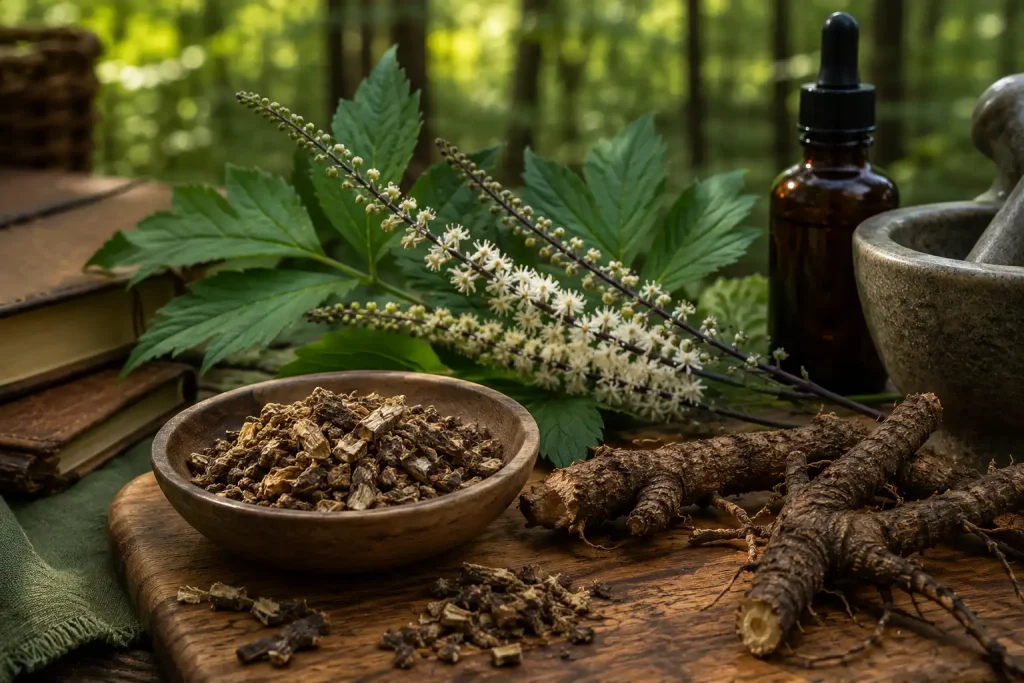
Black cohosh uses have deep roots in the herbal traditions of North America, where indigenous nations recognized this woodland plant as one of their most significant medicinal botanicals. Known botanically as Actaea racemosa (formerly Cimicifuga racemosa), black cohosh grows in the shaded understory of eastern North American forests. Its gnarly, dark rhizome and roots have been harvested and used in herbal preparations for hundreds of years.
What Is Black Cohosh?
Black cohosh is a tall, flowering perennial native to eastern North America, from Ontario south to Georgia and west to Arkansas. It grows in rich, moist, deciduous woodlands, often alongside plants like trillium, wild ginger, and mayapple. The plant produces striking white flower spikes in summer and grows from a thick, knotted rhizome system underground.
The name “cohosh” is derived from an Algonquian word meaning rough, which refers to the plant’s gnarled root system. Furthermore, the “black” distinguishes it from blue cohosh (Caulophyllum thalictroides), an unrelated plant used for different purposes. Today, black cohosh root and rhizome are available in dried cut and sifted form from wild-harvested sources.
Black Cohosh Uses in Native American Herbalism
The most significant historical black cohosh uses come from Native American healing traditions. The Iroquois, Cherokee, Algonquin, and other eastern nations used black cohosh root extensively in their herbal practices. In these traditions, it was commonly prepared as a decoction — a long-simmered root tea — rather than a simple infusion.
Cherokee herbalists traditionally used black cohosh for conditions related to women’s reproductive health, including menstrual irregularities and the transition of menopause. Additionally, the Algonquin people used it as a treatment for rheumatic pain and sore throat. Consequently, early European settlers quickly adopted the herb into their own folk medicine after observing its uses among indigenous peoples.
By the 19th century, black cohosh had become one of the most widely used herbs in American botanical medicine. It featured prominently in the Eclectic physician movement, a school of American medicine that emphasized botanical therapeutics. In fact, it was listed in the United States Pharmacopeia from 1820 to 1926.
Modern Herbal Uses of Black Cohosh
Today, black cohosh is among the best-researched botanical herbs in Western herbalism. Its most studied modern black cohosh uses center on menopause symptom management, particularly hot flashes and sleep disturbance. Germany’s Commission E has approved black cohosh preparations for symptoms of PMS and menopause, making it one of the few herbs with formal regulatory recognition in Europe.
Herbalists also value black cohosh for its traditional role as a musculoskeletal herb. In folk herbalism, it was used for achy, heavy, dull muscle and joint discomfort — particularly the kind associated with weather changes or chronic tension. Moreover, it has been used in blends aimed at supporting relaxation and easing nervous system tension.
Red clover is often used alongside black cohosh in women’s wellness herbal formulas. Red clover contains isoflavones that may complement black cohosh’s activity in menopause support blends, making the two botanicals natural companions in herbal practice.
How to Prepare Black Cohosh Root
Black cohosh root requires a decoction rather than a simple infusion because its active compounds are not easily extracted by brief steeping. To make a decoction, simmer one to two teaspoons of cut and sifted black cohosh root in two cups of water for twenty to thirty minutes. Strain thoroughly before drinking.
The resulting liquid has a bitter, slightly earthy flavor. Therefore, many herbalists blend it with sweetening herbs like licorice root or pair it with warming spices to make it more palatable. It can also be prepared as an alcohol tincture, which is one of the most common commercial preparations.
You can source quality wild-harvested black cohosh in cut and sifted form for home decoctions and blends. Wild-harvested black cohosh connects you to the plant’s long history as a foraged woodland herb.
Sustainability Considerations
Black cohosh is listed as a species of conservation concern in several U.S. states due to overharvesting and habitat loss. As demand for the herb has grown, wild populations have faced significant pressure in some regions. For this reason, choosing sustainably sourced and responsibly wild-harvested black cohosh is important for herbal consumers.
When purchasing, look for suppliers who work with ethical wildcrafters who harvest using sustainable practices — taking no more than ten percent of any given patch and avoiding vulnerable or protected areas. Additionally, some suppliers now offer cultivated black cohosh, which reduces pressure on wild populations. Supporting sustainable sourcing practices helps ensure this woodland herb remains available for future generations.
Interactions and Special Populations
Black cohosh has a well-established traditional safety record when used at standard doses. However, it is not appropriate for everyone, and understanding the contraindications is essential before use.
Safety and Precautions
Black cohosh is not recommended during pregnancy or breastfeeding. It should also be avoided by individuals with hormone-sensitive conditions such as breast cancer, uterine fibroids, or endometriosis, unless under supervision of a qualified healthcare provider. Rare cases of liver injury have been associated with black cohosh use, though causality has not been definitively established. Individuals with existing liver conditions should consult a physician before use. Additionally, those taking blood pressure medications, hormonal therapies, or sedative medications should consult a healthcare provider due to potential interactions. Do not exceed recommended doses. This content is for informational purposes only and does not constitute medical advice.
Frequently Asked Questions
What were the traditional black cohosh uses among Native Americans?
Native American nations, including the Cherokee and Iroquois, traditionally used black cohosh for women’s reproductive health, including menstrual irregularities and menopausal symptoms. It was also used for rheumatic pain and as a general tonic herb. These traditions were documented by European settlers and eventually incorporated into American botanical medicine.
How is black cohosh root prepared?
Black cohosh requires a decoction — a long simmering of the root in water — rather than a brief steeping. Simmer one to two teaspoons in two cups of water for twenty to thirty minutes. The bitter flavor can be improved by blending with licorice root or warming spices.
Is black cohosh safe to use long-term?
Most clinical studies and traditional use patterns support short to medium-term use of three to six months. Long-term safety data beyond six months is limited. Given rare reports of liver-related side effects, periodic breaks from use are generally recommended by herbal practitioners.
Is wild-harvested black cohosh sustainable?
Wild-harvested black cohosh can be sustainable when sourced responsibly. Look for suppliers who work with ethical wildcrafters following United Plant Savers guidelines. Cultivated black cohosh is also available and reduces pressure on wild populations where the species faces conservation concerns.
Black cohosh is one of North America’s most historically significant herbs, with a legacy that spans indigenous tradition, 19th-century botanical medicine, and modern clinical research. Explore our wild-harvested black cohosh root and connect with a botanical tradition that runs deep in American herbal history.