Manjistha Powder Benefits for Hair: Traditional Use Guide
If you are looking into manjistha powder benefits for hair, you are probably after two things at once: tradition you can trust, and a method you can repeat. Herbalists have long treated manjistha as a deep red root ally, valued for its place in classic beauty rituals and its relationship to “tone” and “clarity” in the body’s systems, which is why it shows up so often in hair and scalp traditions.
For modern makers, it is also a practical ingredient because it is a powder that measures cleanly, infuses predictably when you control the water and time, and plays well with other botanicals like indigo. In this guide, you will get production-minded ratios, a kombucha 2F method you can standardize, and quality cues that keep your batches consistent. We will keep the language compliant, the steps specific, and the outcomes framed the way herbalists frame them: traditionally used, sensory-led, and routine-based.
What manjistha is and why hair traditions keep it close
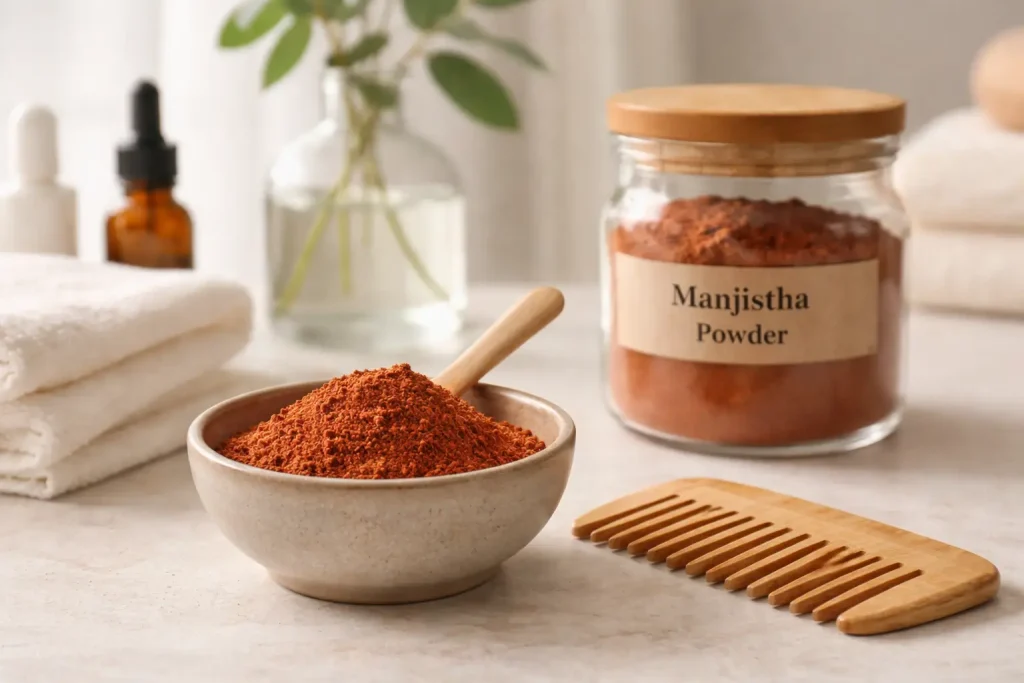
Manjistha is a red root powder with a naturally earthy, slightly sweet, almost clay-like aroma. In traditional herbal practice, manjistha is often grouped with botanicals used to “support cleansing” and “cooling” routines, which is why it appears in beauty preparations where the goal is a calmer-looking scalp and hair that feels less weighed down by buildup. When people talk about manjistha powder benefits for hair, they usually mean two categories of use.
First is topical ritual: oils, masks, and rinses where the powder becomes a staining, tinting, conditioning paste. Second is internal beverage use in tiny amounts, usually as an infusion, where the emphasis is not quick results but steady routine and a sense of balance. For kombucha makers, manjistha belongs to the “micro-dose botanical” family. A little goes a long way, it adds color, and it can add a subtle rooty backbone when you keep it clean and not muddy.
Try pairing it with manjistha powder when you want a rooted, earthy base note that feels intentional in small doses.
Manjistha powder benefits for hair (what herbalists mean, in compliant wording)
When herbalists discuss manjistha powder benefits for hair, they are usually describing tradition and observed routine effects rather than a single dramatic promise. The traditional lens is that hair and scalp reflect internal steadiness: sleep, stress, hydration, and digestion show up in the way hair feels and sheds. Manjistha is traditionally used as part of “beauty from within” routines, often alongside gentle teas, warm oiling rituals, and scalp massage.
In topical use, manjistha is valued for the way it can lend a warm tone and a polished look to hair when used as a mask or rinse, especially when paired with other plant powders. In beverage use, the traditional framing is that it may support a sense of internal clarity and balance over time, which herbalists often connect to skin and hair appearance. For kombucha makers, the practical “benefit” is more measurable: manjistha can create a distinctive color cue and an earthy, grounding profile when you use a controlled concentrate method.
Try blending indigo powder with manjistha in classic hair traditions where plant powders are used as a paired ritual.
Choosing manjistha powder and indigo powder for predictable results
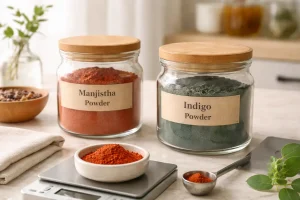 Powders behave like ingredients, not like magic. If you want repeatability, choose powders that are dry, fine, and aromatic. Manjistha should smell clean and earthy, not dusty or stale. Indigo should smell green, slightly hay-like, and not musty. For manjistha powder benefits for hair routines, freshness matters because stale powder tends to smell flat and can feel gritty.
Production-minded checks:
Color: manjistha should be a rich brick red to reddish-brown. Indigo should be deep green to blue-green.
Flow: powder should pour, not clump.
Aroma: clean, plant-forward, no basement note.
Texture: fine enough to suspend briefly in water, but it will still settle if you do nothing (normal).
If you are building a broader botanical pantry for tea and kombucha, consider complementary ingredients that keep blends bright and not heavy. Try adding organic dried rose petals for a soft floral lift when root notes feel too grounded. Add orange peel powder when you want a clean citrus top note. Add organic tulsi for a warm herbal backbone that reads “comforting” without turning bitter.
Exact ratios for tea, rinses, and masks (grams and teaspoons)
This section is designed for measurement, not guesswork. If you are exploring manjistha powder benefits for hair, these ratios help you test gently and track what your body and hair like over time.
For a simple manjistha tea infusion (mild, routine-friendly):
Manjistha powder: 1.0 g (about 1/2 tsp)
Hot water: 240 ml (8 oz) at 90 to 95°C (194 to 203°F)
Steep: 10 to 12 minutes
Strain: use a fine mesh or coffee filter for a cleaner cup
Used as a rinse base for a stronger infusion (topical, not for kombucha):
Manjistha powder: 3.0 g (about 1 1/2 tsp)
Hot water: 300 ml
Steep: 15 minutes
Cool fully before use, then pour through a fine filter to reduce sediment
For a manjistha and indigo mask (classic plant powder style):
Manjistha powder: 10 g (about 1 tbsp)
Indigo powder: 5 g (about 1 1/2 tsp)
Warm water: 30 to 45 ml, added slowly
Mix: to a yogurt-like paste
Rest: 10 minutes for hydration
Apply: damp hair, cover, 20 to 40 minutes
Rinse: thoroughly, no harsh scrubbing
If you want a smoother paste, add a small amount of floral tea as the liquid base. Try steeping organic dried rose petals and using that cooled tea to mix the powders.
Flavor pairing notes for beverage makers (keeping it clean, not muddy)
Manjistha can go earthy fast. In kombucha, that can read “root cellar” if you dose high or skip filtration. To keep manjistha powder benefits for hair content relevant for beverage makers, treat manjistha as a background note, not the star.
Good pairing logic:
Bright top notes keep manjistha elegant: citrus peel, light florals.
Warm aromatic structure keeps it balanced: tulsi, gentle spice.
Roasty roots can clash if you stack too many deep notes.
Pairing examples you can actually batch:
Manjistha + orange peel: earthy base with clean citrus lift
Manjistha + rose: softens edges, makes it feel “spa”
Manjistha + tulsi: warm herbal body, less sharp than spice
Manjistha + dandelion root tea (light): deeper profile, but keep the dandelion low to avoid heaviness
Try adding our organic orange peel powder when you want manjistha to feel brighter and more drinkable in 2F. Try adding dandelion root tea if you want a roasty depth, but keep the dose restrained.
Kombucha 2F method (strict and repeatable)
This is the production section. You will get two options. Option A is recommended because it controls grit and makes your sensory results repeatable. Option B is optional if you accept sediment and want the “raw botanical” look.
Batch assumptions:
Finished 1F kombucha is fully fermented to your preferred tartness
Bottles are 16 oz / 473 ml
You are targeting consistent flavor across bottles
Option A (recommended): Tea concentrate dosing
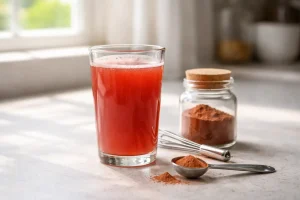
Make a filtered manjistha concentrate
Manjistha powder: 6 g
Water: 300 ml at 90 to 95°C
Steep: 12 minutes
Filter: coffee filter or very fine cloth until the liquid is clear-ish (red, but not gritty)
Cool completely
Optional brightener (recommended for flavor):
Add orange peel powder: 1 g (about 1/2 tsp) to the hot steep, then filter well
This keeps the aroma clean and makes the root note feel intentional.
Dose per 16 oz / 473 ml bottle
Manjistha concentrate: 15 to 30 ml per bottle
Start at 15 ml if you want subtle, go to 30 ml for more color and root presence.
Add sugar for carbonation control (if needed)
If your base is very dry, add:
2 to 4 g sugar (about 1/2 to 1 tsp) per bottle
Keep it consistent across bottles.
Fill and cap
Add concentrate first
Add kombucha, leaving 2 to 3 cm headspace
Cap tightly
Ferment 2F
Time: 24 to 72 hours depending on room temp and yeast activity
Temperature target: 22 to 26°C (72 to 79°F)
Chill and evaluate
Refrigerate at least 12 hours before opening
Log: date, dosing ml, sugar grams, time, and sensory notes
Dosage ranges per bottle:
Manjistha concentrate: 15 to 30 ml
Optional orange peel powder in concentrate: 1 g per 300 ml batch
Optional sugar: 2 to 4 g
Consistency tips:
Always weigh powders (grams) before steeping
Always filter concentrate (sediment changes perception)
Use the same steep time and water temp
Keep a batch notebook and write “ml per bottle” clearly
Try building your concentrate with organic manjistha powder and brightening with organic orange peel powder for a cleaner, repeatable profile.
Option B (optional): Direct botanicals in bottle
This method is simpler but less consistent. Sediment is expected, and aroma can shift bottle to bottle.
Per 16 oz / 473 ml bottle:
Manjistha powder: 0.2 to 0.5 g (a pinch up to 1/4 tsp)
Optional orange peel powder: 0.1 to 0.2 g (tiny pinch)
Optional sugar: 2 to 4 g if needed for carbonation
Method:
Add powders to bottle
Add a splash of kombucha, swirl to wet the powder
Top up with kombucha, cap, 2F 24 to 72 hours
Chill, then open slowly
Pour gently to leave sediment behind if desired
If you want the “spa” aroma without extra grit, steep organic dried rose petals separately, cool, and add 10 to 20 ml rose tea per bottle.
A simple “hair ritual beverage” blend (for makers who want a signature)
If your audience is searching manjistha powder benefits for hair, they tend to like routines. A signature blend that tastes clean and feels ritual-ready can be more useful than a complex formula.
Blend concept for concentrate (makes ~300 ml):
Manjistha powder: 6 g
Organic tulsi: 2 g
Orange peel powder: 1 g
Water: 300 ml at 90 to 95°C
Steep: 10 minutes
Filter very well and cool
Dose 15 to 25 ml per 16 oz bottle in 2F. This keeps the profile warm, bright, and not muddy.
Try building your base with organic tulsi for a soft herbal body that supports manjistha’s earthiness.
Troubleshooting (flavor, fizz, sediment, aroma)
Flat flavor:
Cause: under-dosing concentrate or filtering too aggressively without enough aroma
Fix: increase concentrate by 5 ml per bottle next batch, or add a citrus lift using orange peel in the concentrate
Too tart:
Cause: 1F too dry before 2F
Fix: shorten 1F slightly next time, or add 2 to 4 g sugar per bottle for balance and carbonation
Over-carbonation:
Cause: too much sugar, warm temps, long 2F
Fix: reduce sugar, shorten 2F to 24 to 48 hours, chill longer before opening
Sediment overload:
Cause: direct powder dosing or poor filtration
Fix: switch to Option A, filter through coffee filter, and decant gently
Aroma loss:
Cause: heat damage, long steep, or stale powder
Fix: keep steep times tight, store powders airtight, add brighteners like citrus peel or rose
If your profile feels heavy, add a small floral lift. Try adding organic dried rose petals for a cleaner, airy finish.
Storage + quality (airtight, humidity, scent cues)
Powders are humidity magnets. If you want consistent manjistha powder benefits for hair routines and consistent beverage batches, treat storage like production.
Storage rules:
Airtight jar with a tight seal
Keep away from steam and stove heat
Use a dry spoon every time
If you live in high humidity, consider storing in a cabinet with a desiccant nearby (not inside the powder)
Quality cues:
Fresh manjistha smells earthy and clean, color stays rich
Stale manjistha smells dusty, color looks dull, clumps form
Indigo that smells musty or looks gray-green is past its best
For a premium pantry system, store indigo powder and manjistha powder separately, tightly sealed, and label the open date so you can track freshness.
Safety and compliant language (keep it responsible)
This guide uses tradition-forward wording on purpose. Manjistha powder benefits for hair are discussed in the way herbalists typically frame them: as part of routines, not as cures. Everyone’s body and scalp are different. If you are pregnant, nursing, managing a medical condition, or taking medications, consult a qualified professional before using new botanicals internally. For topical use, patch test any plant powder mixture first, especially if you have sensitive skin.
In kombucha, keep doses small and consistent. If a batch tastes off, smells unpleasant, or shows unusual contamination, discard it. Do not use kombucha as a substitute for medical care. Treat it as a beverage with tradition, process control, and quality standards.
FAQ
What are manjistha powder benefits for hair in traditional use?
Manjistha powder benefits for hair are traditionally discussed as part of beauty routines that emphasize balance, cleansing traditions, and scalp comfort, often paired with topical rituals.
Can I combine manjistha with indigo for hair masks?
Yes. Many traditional routines pair manjistha with indigo in plant powder masks. Use measured ratios, mix to a smooth paste, and rinse thoroughly.
How much manjistha should I use in kombucha 2F?
Start small. For best consistency, use a filtered concentrate and dose 15 to 30 ml per 16 oz / 473 ml bottle.
Will manjistha powder dissolve fully in liquids?
No. It tends to settle. Filtering a concentrate is the cleanest method if you want consistent bottles and less sediment.
Does manjistha change kombucha carbonation?
Indirectly. It is not a sugar, but added sugar and warm temps drive carbonation. Keep sugar grams and 2F time consistent.
How do I keep the flavor from tasting muddy?
Use citrus or floral top notes and keep the dose low. Orange peel and rose are especially helpful, and filtering improves clarity.
How should I store manjistha powder for best quality?
Airtight, dry, away from heat and steam. Clumping, dull color, and dusty aroma are signs it is time to replace.
Can I use this as medical guidance for hair loss?
No. This is tradition-based, routine-focused information. For medical concerns, consult a qualified professional.
The most useful way to think about manjistha powder benefits for hair is as a routine ingredient that rewards measurement, patience, and good preparation. In topical traditions, it pairs beautifully with indigo in plant powder rituals. In beverage making, it shines when you treat it like a controlled micro-dose, ideally as a filtered concentrate for kombucha 2F. Keep your notes, keep your doses steady, store your powders like a maker, and let the sensory results guide your next batch.