Maca Powder in Coffee: How to Add It Without Clumps
Adding maca powder in coffee is one of the easiest ways to work an adaptogenic root into your morning routine without overhauling your habits. The earthy, malty flavor of maca pairs surprisingly well with the roasted bitterness of coffee, and the combination has become a staple for people looking to reduce their caffeine intake or simply boost their cup with a little extra nutrition. The challenge most people run into is clumping. Drop a teaspoon of maca directly into hot liquid and you end up with a grainy layer at the bottom of the mug that refuses to dissolve. That frustrating result puts a lot of people off, which is a shame because the fix is simple.
This guide walks through the exact mixing techniques that eliminate clumps, explains the flavor differences between maca varieties, covers ideal dosage for beginners and experienced users, and answers the most common questions people have when they start using maca powder in coffee every day.
Why Maca Powder Clumps in Hot Liquids
Maca root powder is a starchy, low-moisture material. When it hits hot water or hot coffee directly, the outer layer of each particle gelatinizes almost instantly, forming a shell that traps dry powder inside. That shell prevents water from penetrating further, and you get a cluster of half-hydrated grains sitting at the bottom of your mug. The problem is especially noticeable when the powder is added to an already-hot liquid rather than blended in before heat is applied.
Humidity during storage makes it worse. If your maca powder has been exposed to moisture in the pantry, particles partially clump before they even reach the cup. Keeping it in an airtight container is the first line of defense, but the real solution is technique.
The Cold-Start Method
The most reliable way to get maca powder in coffee to dissolve cleanly is to mix the powder into a cold or room-temperature liquid before adding heat or hot coffee. Here is how to do it step by step.
- Measure one to two teaspoons of maca powder into your mug or a small bowl.
- Add about two tablespoons of cold water, cold milk, or cold plant milk.
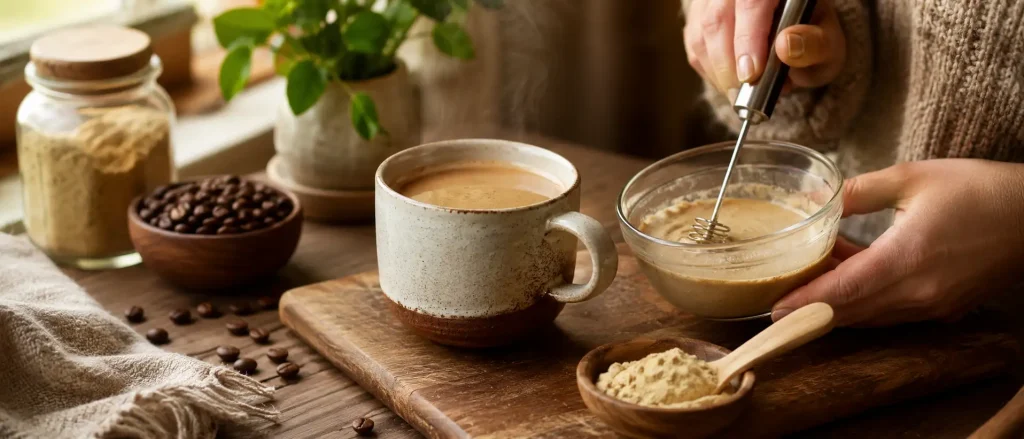
- Whisk vigorously with a small hand whisk or a frother for 20 to 30 seconds. The powder will form a smooth, lump-free paste.
- Pour your freshly brewed coffee over the paste while stirring.
- The hot coffee thins the paste instantly and distributes it evenly through the cup.
This approach works because the starch particles hydrate slowly in cold liquid before heat can seal them. By the time hot coffee arrives, there is nothing left to clump.
Using a Milk Frother or Blender
A handheld milk frother is one of the most underrated tools for anyone who regularly puts maca powder in coffee. Add your maca and a splash of room-temperature liquid to the mug, run the frother for 15 seconds, then pour in the coffee and froth again. You get a lightly foamy cup with zero graininess.
A countertop blender works even better. Add brewed coffee, maca, and any other additions like cinnamon or coconut milk powder to the blender and run it for 20 seconds. This method also creates a creamy, cafe-style texture. A pinch of organic cinnamon powder added at this stage rounds out the flavor and pairs beautifully with maca’s caramel-malt notes. If you enjoy a mocha-style drink, toss in a small handful of cacao nibs before blending for a rich, chocolatey variation.
Gelatinized Maca vs. Raw Maca Powder for Coffee
The type of maca you use matters more than most people expect. Raw maca powder is made from dried, ground maca root. It retains all of its native starch, which is what causes the clumping behavior described above. Gelatinized maca has been gently cooked under pressure and then dried, which breaks down most of that starch. The result is a powder that dissolves far more easily in any liquid, hot or cold. People with sensitive digestion also tend to tolerate gelatinized maca better because the process reduces the raw starch content that can cause bloating in some individuals.
If you are new to using maca powder in coffee and clumping has been your main frustration, switching to the gelatinized version will solve most of the problem before you even adjust your technique. Raw organic maca powder remains an excellent choice for smoothies, overnight oats, and baked goods where texture is less of a concern.
Flavor Profiles and What to Expect
Maca has a distinct flavor: earthy, malty, and slightly nutty with a faint butterscotch quality. In coffee, that profile actually complements the bitter and roasted notes rather than fighting them. Most people describe the result as a coffee that tastes slightly richer and more complex.
Yellow maca, the most common variety, is the mildest and the easiest to pair with coffee. Red maca is slightly sweeter and is a good option for people who find yellow maca’s earthiness too strong. Black maca is the boldest and most intensely flavored, and works best for people who are already accustomed to drinking maca regularly.
If you are sensitive to earthy flavors, start with just half a teaspoon and build up. Adding a sprinkle of cinnamon or a small pour of vanilla extract helps smooth out the earthy edge considerably.
Dosage Guidelines for Daily Use
Most adults start with one teaspoon (roughly two to three grams) of maca powder in coffee per day and work up to one tablespoon (six to nine grams) over the course of a few weeks. Starting low allows your digestive system to adjust and lets you gauge how the adaptogen affects your energy and focus before committing to a higher amount.
Traditional use in Peru involved consuming maca as a food staple in quantities of 20 to 50 grams per day, so the amounts used in a morning coffee are well within the range of what has been consumed historically. Still, it makes sense to start low, especially if you have not used adaptogens before. Cycling maca (five days on, two days off, for example) is a common practice among regular users who prefer to avoid tolerance plateaus.
Combining Maca Coffee with Other Morning Additions
Maca plays well with other functional ingredients. The combinations below work especially well when using the cold-start or blender method.
- Cinnamon: Adds warmth and natural sweetness. Half a teaspoon pairs perfectly with maca’s malty character.
- Coconut oil or MCT oil: Creates a butter-coffee style drink. The fat also helps fat-soluble compounds absorb more efficiently.
- Cacao powder or nibs: Turns your maca coffee into a mocha. The bitterness of cacao and the maltiness of maca balance each other nicely.
- Collagen peptides: Dissolve easily and add protein without changing the flavor.
- Plant milk: Oat milk adds creaminess and a touch of sweetness. Almond milk keeps the calorie count low.
Storage and Quality
Maca powder should be stored in an airtight container, away from heat and direct light. A cool pantry or kitchen cupboard works well. Avoid storing it above the stove or near the kettle, where steam and heat fluctuations speed up moisture absorption. When stored properly, maca powder maintains potency and flavor for 12 to 24 months. If your powder has developed a stale or rancid smell, that is a sign it has absorbed too much moisture or has simply aged past its prime. Fresh maca should smell mildly earthy and slightly sweet.
Always check that your maca is certified organic and sourced from the Peruvian highlands, where traditional cultivation methods produce the most nutrient-dense roots. The color of the packaging matters less than the sourcing transparency.
Safety
Maca is widely regarded as a safe food ingredient for most adults when consumed in typical culinary amounts. It has been used as a dietary staple in the Peruvian Andes for centuries. That said, a few considerations are worth noting. Maca is a cruciferous vegetable and contains glucosinolates, compounds that may affect thyroid function in very large quantities. People with thyroid conditions should discuss use with a healthcare provider. Because maca may support hormone balance, individuals with hormone-sensitive conditions such as endometriosis, uterine fibroids, or certain hormone-sensitive cancers should seek medical advice before adding it to their routine. Pregnant and breastfeeding individuals should also consult a doctor before using maca regularly. Start with small amounts and discontinue use if you notice any adverse reactions.
Troubleshooting Common Problems
Still getting clumps after trying the cold-start method? Make sure you are whisking the powder into the cold liquid for long enough. Twenty seconds of active whisking is the minimum. A frother works faster and more reliably than a spoon.
Powder settles to the bottom after a few minutes? This is normal for raw maca powder. Stir before each sip or switch to gelatinized maca, which stays suspended longer.
Flavor is too strong? Reduce to half a teaspoon and add a pinch of cinnamon. Dark roast coffee masks the earthiness better than light roast.
Feeling jittery after your maca coffee? Maca does not contain caffeine, but the combination of an adaptogen and coffee may feel stimulating at first. Try adding maca to decaf or reducing your coffee volume slightly.
Digestive discomfort? Switch from raw to gelatinized maca and drop the dose back to half a teaspoon while your system adjusts.
Frequently Asked Questions
Does heat destroy the nutrients in maca powder?
Some heat-sensitive compounds, including certain glucosinolates, may degrade at high temperatures. Using the cold-start method means the maca spends very little time at high heat. Gelatinized maca has already been processed with heat and is designed to retain its nutritional profile through that process.
How much maca powder should I add to one cup of coffee?
One teaspoon per cup is a good starting point. Experienced users often go up to one tablespoon. Measure by volume rather than estimating to keep your intake consistent.
Can I add maca powder in coffee to cold brew or iced coffee?
Yes, and cold brew is actually an ideal base because you are already working with cold liquid. Mix the maca with a splash of liquid first, then combine with cold brew. Gelatinized maca dissolves especially well in cold applications.
Will maca powder in coffee replace my need for a second cup?
Many people report that maca may support sustained energy and focus, which can reduce the urge for a second or third cup of coffee. Results vary by individual, and maca is not a stimulant in the same way caffeine is.
Does maca powder change the color of coffee?
Yes, maca gives coffee a slightly lighter, more tan hue, similar to adding a dash of milk. The change is subtle and does not significantly alter the appearance of a dark roast.
Is it safe to take maca powder in coffee every day?
For most healthy adults, daily use in culinary amounts is considered safe. Cycling use (taking breaks of two days per week or one week per month) is a common practice, though it is not strictly necessary for everyone. Listen to your body and consult a healthcare provider if you have underlying health conditions.
What is the difference between red, yellow, and black maca in coffee?
Yellow maca is the mildest and most neutral, making it the most versatile for coffee. Red maca is slightly sweeter. Black maca is the most potent-tasting and is usually preferred by experienced maca users. All three dissolve the same way in coffee.
Can I mix maca powder into espresso shots?
Yes. Use the paste method: mix the maca with a few drops of cold water to form a paste in the bottom of your cup, then pull the espresso shot directly over it. The high pressure of the espresso helps distribute the powder evenly.
Bringing It All Together
Using maca powder in coffee successfully comes down to two things: the right technique and the right form of maca. The cold-start or frother method eliminates clumping every time, and gelatinized maca makes the process even more foolproof. Start with a teaspoon, experiment with flavor additions like cinnamon or cacao, and give yourself a week or two to find the combination that fits your taste and routine.