How to Use Ashwagandha Powder Daily Without the Bitter Taste
If you have tried ashwagandha powder daily use and given up because of the taste, you are not alone. Ashwagandha has a flavor profile that is genuinely challenging: earthy, slightly musty, and bitter in a way that lingers. Traditional Ayurvedic preparations often combined ashwagandha with warm milk, fat, and sweeteners for exactly this reason. The bitterness has never been a secret. But in modern wellness culture, where ashwagandha powder gets dropped into cold water or taken plain, that flavor hits harder than it was ever intended to. The good news is that masking ashwagandha’s taste is entirely achievable with the right pairings, preparation methods, and a little creativity. This guide covers practical, tested strategies for working ashwagandha powder into your daily routine in a way that actually tastes good, or at least stops being something you dread.
Understanding Ashwagandha’s Flavor Profile
Before you can hide a flavor, it helps to understand what you are working with. Ashwagandha root powder has a distinct combination of bitterness, earthiness, and what many people describe as a slightly horse-like or barnyard quality. That last descriptor comes from the Sanskrit name itself: “ashwa” means horse and “gandha” means smell, referencing both the plant’s traditional reputation and its aroma.
The compounds responsible for ashwagandha’s bitterness include withanolides, alkaloids, and various other phytochemicals. These are the same compounds that give the root its traditionally valued properties, so you cannot process them away without reducing potency. The goal is to surround the flavor with complementary or overpowering tastes rather than eliminate it.
Ashwagandha powder mixes differently from something like cacao or cinnamon. It does not fully dissolve in cold liquids without a blender, and it can form a slightly gritty texture in poorly whisked drinks. Knowing this helps you choose preparation methods that minimize textural issues alongside the flavor challenge.
The Golden Milk Method
Warm milk preparations are the traditional answer to ashwagandha’s bitterness, and they remain one of the most effective. Golden milk, traditionally made with turmeric, ghee, and warm dairy or plant milk, is a natural base for ashwagandha.
The fat in milk is important. Fat-soluble compounds absorb differently when combined with dietary fat, and traditional preparations recognized this intuitively. Beyond the functional aspect, fat softens the bitter edge significantly. Whole dairy milk, full-fat coconut milk, or oat milk with added fat content all work better than skim or very low-fat options.
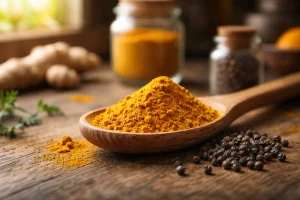
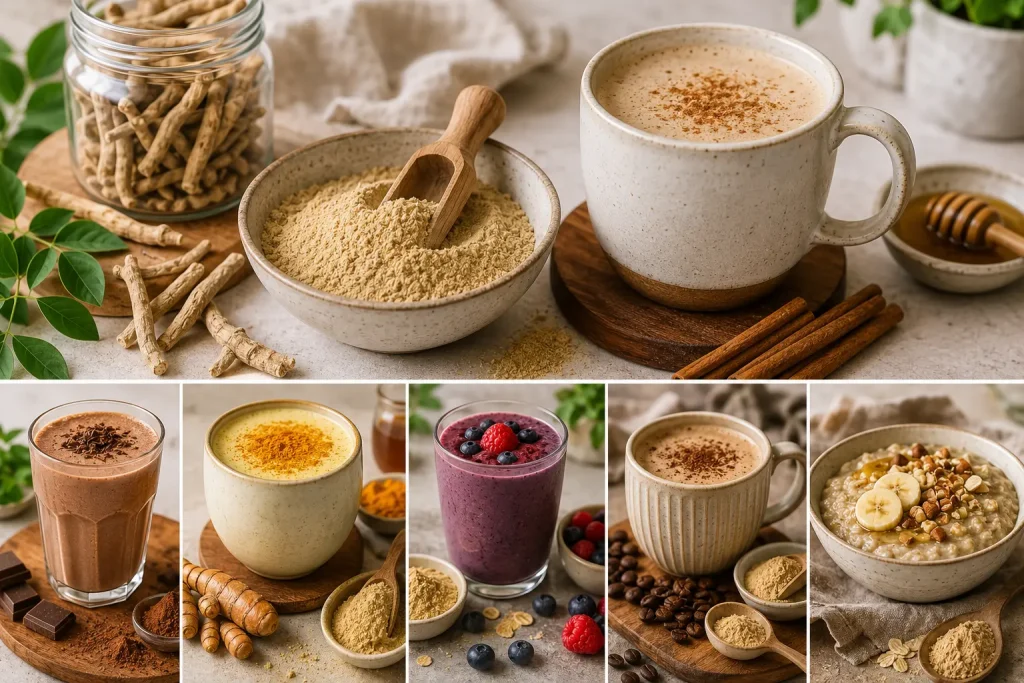
A simple ashwagandha golden milk: heat one cup of your preferred milk, whisk in half a teaspoon of ashwagandha powder, one quarter teaspoon turmeric, and one quarter teaspoon of cinnamon powder. Sweeten with honey or maple syrup to taste. The cinnamon and sweetener do significant work here, and the warmth of the milk rounds out the bitterness in a way cold preparations simply cannot match.
Smoothie Pairings That Actually Work
Smoothies are where many people attempt ashwagandha powder daily use and fail, usually because they pair it with mild or water-based ingredients where the flavor is not adequately masked.
Successful smoothie pairings share a common trait: strong, sweet, or creamy base flavors that command the palate. Here are combinations that work reliably:
Banana and peanut butter: Frozen banana provides sweetness and creaminess, and peanut butter’s fat and umami notes blend with ashwagandha’s earthiness rather than fighting it. Add a teaspoon of ashwagandha, one frozen banana, two tablespoons of peanut butter, one cup of oat milk, and a touch of honey.
Chocolate and maca: Cacao powder is one of the best flavor partners for ashwagandha. Its deep bitterness is familiar and pleasant, and it tends to override the less pleasant bitter notes of the ashwagandha. Maca powder adds a malty, caramel-like quality that rounds the whole blend. Try one teaspoon ashwagandha, one teaspoon maca, one tablespoon cacao, one frozen banana, and your choice of milk.
Dates and vanilla: Medjool dates blended with plant milk create an incredibly sweet, almost caramel-like base that absorbs ashwagandha’s bitterness efficiently. Add vanilla extract to reinforce the sweetness and mask the earthiness.
Morning Coffee and Latte Approaches
Coffee is a surprisingly effective vehicle for ashwagandha powder daily use. The deep roast bitterness of coffee and the earthy bitterness of ashwagandha are in the same flavor family, which means they do not clash the way ashwagandha does with, say, citrus or light herbal teas.
For a simple ashwagandha latte, pull a shot of espresso or brew a strong cup of coffee, then steam or heat plant milk separately. Whisk half a teaspoon of ashwagandha powder into the warm milk before combining with the coffee. Add cinnamon and sweeten to taste. The result is a morning drink that delivers both the caffeine most people want and a consistent daily ashwagandha dose without a separate supplement routine.
Chai-spiced lattes follow a similar logic. Cinnamon, cardamom, ginger, and clove are all strong enough to carry ashwagandha without revealing it. A homemade chai concentrate with added ashwagandha powder is an elegant solution for people who already drink chai regularly.
Food Applications for Ashwagandha Powder
Drinks are not the only option for ashwagandha powder daily use. Incorporating it into food can be even more effective at masking the flavor, because the complexity of a full meal provides more camouflage than any single beverage can.
Energy balls: Blended with Medjool dates, rolled oats, nut butter, cacao, and shredded coconut, ashwagandha powder disappears into the flavor matrix completely. These can be prepared in batches, refrigerated, and consumed as a daily snack, making the consistency of your ashwagandha routine essentially automatic.
Overnight oats: Stir half a teaspoon into overnight oats along with honey, cinnamon, and vanilla. After soaking overnight, the flavor integrates into the oat mixture and is significantly less detectable than it would be in a fresh preparation.
Soups and broths: Savory applications are underused for ashwagandha. A small amount stirred into a lentil soup, a miso broth, or a root vegetable stew adds no perceptible off-flavor while the savory, earthy base of the soup provides excellent coverage. This is particularly useful for people who do not enjoy sweet preparations.
Chocolate treats: Ashwagandha blends exceptionally well into dark chocolate bark, homemade granola bars with cacao, or chocolate-based smoothie bowls. The rule is simple: if cacao is a primary flavor, ashwagandha will hide effectively.
Timing Your Daily Dose
Consistency matters more than perfect timing for most botanical wellness routines, but timing can affect both the experience and the utility of ashwagandha powder daily use.
Traditional preparations often placed ashwagandha in the evening with warm milk, partly for practical reasons related to the plant’s traditionally calming associations. Many modern users find that incorporating ashwagandha into an evening routine, whether in warm milk, a calming herbal latte, or stirred into dinner, aligns well with their goals and is easier to sustain than morning routines that require extra preparation before work.
Others prefer morning consumption, particularly those who combine ashwagandha with coffee or a morning smoothie and want to consolidate supplements into a single preparation step. There is no universal correct answer. The best time is the time you will actually maintain consistently.
Starting with half a teaspoon per day and working up to a full teaspoon allows your palate to adjust gradually, which many people find makes the transition to regular use easier than jumping straight to a full serving.
Using Ashwagandha Root Cut and Sifted for Tea
If the powder format is simply not working for you, ashwagandha root cut and sifted offers an alternative approach. Simmering the root pieces in water for 15 to 20 minutes produces a decoction that is milder in flavor than the concentrated powder and can be more pleasant to consume as a tea base.
Strain the decoction and combine it with warm milk, honey, and cinnamon for a traditional warm preparation. Because the root is not as finely ground, the bitterness is somewhat less concentrated, making this a gentler entry point for people who find the powder overwhelming.
The cut and sifted form also works well in slow-cooker preparations where the long, gentle heat extracts the root’s properties over several hours into a broth or milk base, then the pieces are strained out before serving.
Flavor Partners That Work Best
Certain flavors reliably succeed at masking ashwagandha’s bitterness. Building your daily preparations around these partners makes the habit sustainable.
Cinnamon is perhaps the single most effective partner. It is warm, sweet, slightly spicy, and earthy in a pleasant way that directly competes with and overpowers ashwagandha’s less pleasant earthiness. Cinnamon cassia powder is a bold, high-intensity choice that performs particularly well in this role.
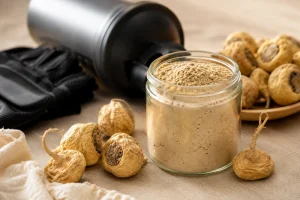
Maca powder brings a malty, butterscotch-adjacent sweetness that pairs well with ashwagandha in smoothies and energy balls. The two adaptogens blend together without competing. Organic maca powder is a worthwhile addition to any ashwagandha preparation that will tolerate a slightly caramel note.
Cacao is the most reliable masking agent for the bitter-earthy profile. Dark chocolate and ashwagandha are a natural pairing.
Cardamom adds floral complexity that distracts from the earthiness. Used alongside cinnamon in a latte, it makes the whole preparation taste intentional rather than medicinal.
Honey and maple syrup are straightforward sweeteners that directly counteract bitterness. Do not underestimate their role in making ashwagandha palatable.
Safety and What to Know Before You Start
Ashwagandha has been used for generations in traditional wellness systems, but there are important considerations before making it part of your daily routine.
Ashwagandha may support thyroid function, which means individuals with thyroid conditions, particularly hyperthyroidism or those on thyroid medication, should consult a healthcare provider before regular use. Similarly, people taking immunosuppressant medications or sedatives should discuss ashwagandha use with their doctor, as the plant has traditionally been associated with effects relevant to both immune and nervous system function.
Pregnant individuals should avoid ashwagandha. It has been traditionally associated with uterine-stimulating effects, and its use during pregnancy is not supported by sufficient safety data for modern clinical standards.
Ashwagandha belongs to the nightshade family (Solanaceae). People with nightshade sensitivities should be aware of this, though reactions specifically to ashwagandha in nightshade-sensitive individuals are not common.
For most healthy adults, ashwagandha at culinary and typical supplement amounts is well-tolerated. Starting with a lower dose and increasing gradually is a sensible approach that also helps with the flavor adjustment process.
Frequently Asked Questions
How much ashwagandha powder should I use per day?
A common starting point is half a teaspoon per day, working up to one teaspoon as tolerated. Traditional preparations used varying amounts depending on the preparation method. If you are using ashwagandha as a supplement beyond culinary amounts, consult with a healthcare provider about appropriate dosing for your situation.
Can ashwagandha powder be taken with coffee?
Yes, and it is one of the better-tasting combinations. Whisked into warm milk before adding coffee, or blended into a cold brew smoothie, ashwagandha’s earthiness integrates reasonably well with coffee’s roasted bitterness.
Does heating ashwagandha powder reduce its effectiveness?
Traditional preparations commonly involved heat, including simmering in milk. Moderate cooking temperatures are unlikely to significantly degrade the primary active compounds. Avoid prolonged high-heat cooking, but whisking into a warm latte or stirring into a finished soup is considered appropriate.
What is the difference between ashwagandha root powder and ashwagandha extract?
Whole root powder contains the full spectrum of the root’s natural compounds at their naturally occurring ratios. Extracts are concentrated and standardized to specific withanolide percentages. This guide addresses whole root powder specifically, which is the form suited to culinary and beverage use.
Can I mix maca and ashwagandha together?
Yes. Maca and ashwagandha are frequently combined. Maca’s malty, caramel-like flavor helps mask ashwagandha’s bitterness, and the two powders blend smoothly in smoothies and energy balls.
How long does it take to notice benefits from ashwagandha powder daily use?
Traditional and modern use patterns suggest that consistent use over several weeks is typically needed before most people notice meaningful changes. Ashwagandha is not a compound that produces immediate acute effects like caffeine does. Consistency is more important than any specific timing within a day.
Does ashwagandha powder expire?
Properly stored ashwagandha powder maintains quality for 12 to 24 months. Store it in an airtight container away from heat, light, and moisture. If the powder develops an off smell significantly different from its baseline earthiness, or if it clumps due to moisture exposure, it is time to replace it.
Conclusion
Making ashwagandha powder daily use sustainable is really about building the right preparation habits around the right flavor partners. Cinnamon, cacao, maca, warm milk, and natural sweeteners all do heavy lifting. Find two or three preparations you genuinely enjoy and rotate between them to prevent palate fatigue. Browse Hatton Naturals for ashwagandha powder, ashwagandha root cut and sifted, maca, and cinnamon to build your complete daily routine.