Licorice Root Powder: Uses and Buying Tips
Licorice root powder has been prized by herbalists for centuries across Asia, Europe, and the Middle East. Its naturally sweet flavor — up to fifty times sweeter than sugar — makes it a fascinating ingredient in herbal blends, culinary applications, and DIY body care. Understanding how to select, store, and use it well unlocks a lot of potential.
What Is Licorice Root Powder?
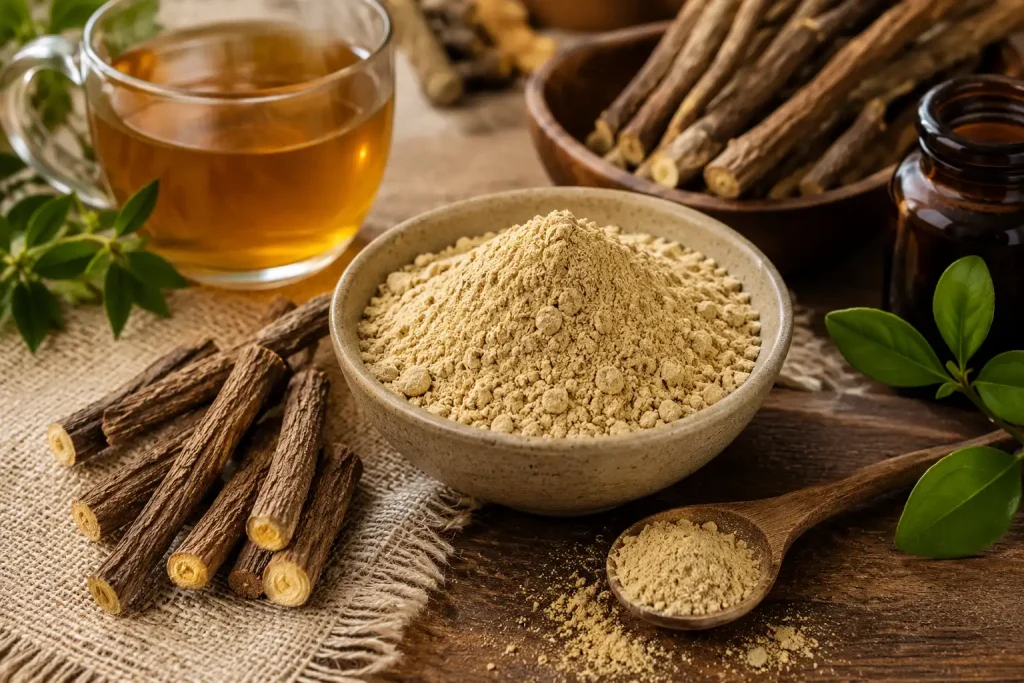
Licorice root comes from Glycyrrhiza glabra, a leguminous plant native to southern Europe and parts of Asia. The root is harvested, dried, and then ground into a fine powder. The resulting product carries the characteristic sweet, slightly anise-like aroma and flavor of fresh licorice root.
Glycyrrhizin, the compound responsible for the sweet taste, is found in concentrations roughly 50 times sweeter than sucrose. As a result, small amounts of licorice root powder go a long way in any application. It is commonly found in herbal tea blends, confectionery, and traditional herbal preparations worldwide.
Licorice Root Powder in Herbal Tea Blends
One of the most popular uses for licorice root powder is in herbal tea formulations. It acts as a natural sweetener that blends seamlessly into other herbs without overpowering them. Herbalists value it as a harmonizing ingredient — one that rounds out bitter or astringent herbs in a blend.
To use it in tea, start with a small amount — roughly ¼ teaspoon per cup of water. Steep with other dried herbs for 5–10 minutes. It pairs well with peppermint, ginger, chamomile, and fennel. Furthermore, it complements more pungent herbs like turmeric or echinacea by softening their edge.
Our licorice root powder is finely milled and sourced from organically cultivated roots. It dissolves easily into hot water and blends smoothly into tea sachets or loose blends.
Culinary Applications Beyond Tea
Licorice root powder is also used in cooking and baking, particularly in European and Middle Eastern cuisines. It appears in spice rubs for meats, sauces, and even confections. The powder adds a subtle sweetness and depth that is distinct from vanilla or cinnamon but equally compelling.
In Scandinavian and German culinary traditions, licorice flavor appears in candy, breads, and liqueurs. Moreover, it is used in certain Chinese spice blends and traditional five-spice formulations. A pinch added to a braised pork dish or a slow-cooked sauce introduces a nuanced sweetness that enhances savory flavors.
Bakers use it in small quantities to add complexity to dark chocolate recipes, spiced cookies, or gingerbread. The key is restraint — a little licorice root powder adds intrigue, while too much can overwhelm.
Licorice Root in DIY Skincare
Beyond the kitchen and the teacup, licorice root powder has a history in skincare preparations. Traditionally, herbalists have incorporated it into face masks, toners, and balms. Its use in Ayurvedic and traditional Chinese skincare dates back many generations.
To make a simple face mask, combine licorice root powder with kaolin clay, rose water, and a small amount of honey. Apply to clean skin, leave for 10–15 minutes, and rinse thoroughly. Many DIY skincare enthusiasts also add it to homemade serums or creams in small percentages.
Additionally, it is sometimes combined with powdered botanicals such as turmeric or neem in traditional formulations. Always patch-test any new skincare ingredient before applying to the full face.
How to Buy Quality Licorice Root Powder
When evaluating licorice root powder, several quality indicators stand out. Color should be a warm tan or light brown. Very pale or grayish powder may indicate age or adulteration. The aroma should be distinctly sweet and earthy — similar to natural licorice candy but without artificial notes.
Organic certification is worth seeking. Licorice root is grown in regions where pesticide use varies significantly. USDA Organic or equivalent certification gives confidence that the root was cultivated and processed responsibly.
Grind consistency matters depending on your use. For tea blends, a fine powder incorporates easily. For capsule filling or culinary use, fine or medium grind both work well. Our licorice root cut and sifted is also available for those who prefer whole dried root pieces for brewing or blending.
Storing Licorice Root Powder Correctly
Proper storage preserves the flavor and potency of licorice root powder. Store it in an airtight container away from heat, light, and moisture. A cool pantry or herb cabinet works well. Avoid storing near the stove or in a cabinet that receives afternoon sun.
Under proper conditions, licorice root powder stays fresh for up to two years. However, the sweet aroma and intensity are best within the first year. If the powder smells flat or musty, it has likely lost potency and should be replaced. Buying in quantities you will use within 12 months is a practical approach for most home users.
Safety Considerations for Licorice Root
Licorice root is generally considered safe when consumed in normal culinary and tea quantities. However, excessive consumption of glycyrrhizin — the active compound — over extended periods has been associated with elevated blood pressure and electrolyte imbalances. Individuals with hypertension, kidney conditions, or who are pregnant should consult a healthcare provider before using licorice root regularly. Use it as a flavoring ingredient in moderate amounts, not as a daily high-dose supplement.
Frequently Asked Questions
How much licorice root powder should I use in tea?
A typical starting amount is ¼ to ½ teaspoon per 8 oz of water. Licorice root is intensely sweet, so less is often more. Adjust to taste based on your blend. In a multi-herb blend, even smaller amounts — around ⅛ teaspoon — can add noticeable sweetness without dominating.
Does licorice root powder taste like licorice candy?
It shares the same root flavor profile as traditional licorice candy, but the taste is more complex and less one-dimensional. Natural licorice root has earthy, slightly woody undertones alongside the sweetness. Commercial licorice candy often uses artificial flavoring or anise oil, which tastes sharper and more synthetic than the real root.
Can I use licorice root powder as a sugar substitute?
In small amounts, yes — it can reduce the need for added sugar in herbal teas and some recipes. However, it is not a 1:1 sugar substitute and does not behave the same way in baking (it does not caramelize or add bulk). Think of it as a flavor-forward sweetener suitable for beverages and certain savory or spiced applications.
Is licorice root the same as anise?
No, though they share a similar flavor profile. Licorice root comes from Glycyrrhiza glabra and anise comes from Pimpinella anisum. Both contain compounds that produce that characteristic sweet, fennel-like taste, but they are botanically distinct. Licorice root is richer and earthier; anise is brighter and more aromatic.
Ready to explore? Shop licorice root powder and licorice root cut and sifted — both available in bulk for tea blenders, herbalists, and culinary creators.