Turmeric and Orange Peel Face Mask for Even Skin Tone
A turmeric orange peel mask is one of the most vibrant, fragrant, and traditionally celebrated preparations in natural skincare. Both turmeric and orange peel have long histories of use in Ayurvedic and folk beauty rituals across South and Southeast Asia, and combining them produces a mask that is as pleasant to use as it is simple to make.
Turmeric brings its legendary golden pigment and curcumin content, while orange peel powder contributes vitamin C-rich citrus compounds that have been traditionally used for brightening and toning the skin. Together, they form the foundation of a face mask that may support a more even, luminous complexion with regular use. In this post, you will find multiple recipes, application guidance, safety information, and answers to the most common questions about this classic herbal combination, all using high-quality organic powders you can order directly from Hatton Naturals.
Why Turmeric and Orange Peel Make a Great Pair
These two ingredients complement each other at both the sensory and the botanical level. Turmeric is warm, earthy, and deeply golden. Orange peel is bright, citrusy, and light. When blended, the sharper fragrance of orange peel softens turmeric’s more pungent notes, creating a mask that is genuinely pleasant to apply rather than something you have to endure for the sake of your skin.
Traditionally, turmeric has been used to promote an even complexion, reduce the appearance of dark spots, and lend skin a warm, healthy glow. Orange peel powder, made from dried and ground orange rinds, is traditionally used for its ability to tone the skin, tighten pores, and may support a brighter, more uniform appearance over time. In combination, these properties make the turmeric orange peel mask a popular choice for anyone dealing with dullness, hyperpigmentation, or uneven skin tone.
Understanding Your Ingredients
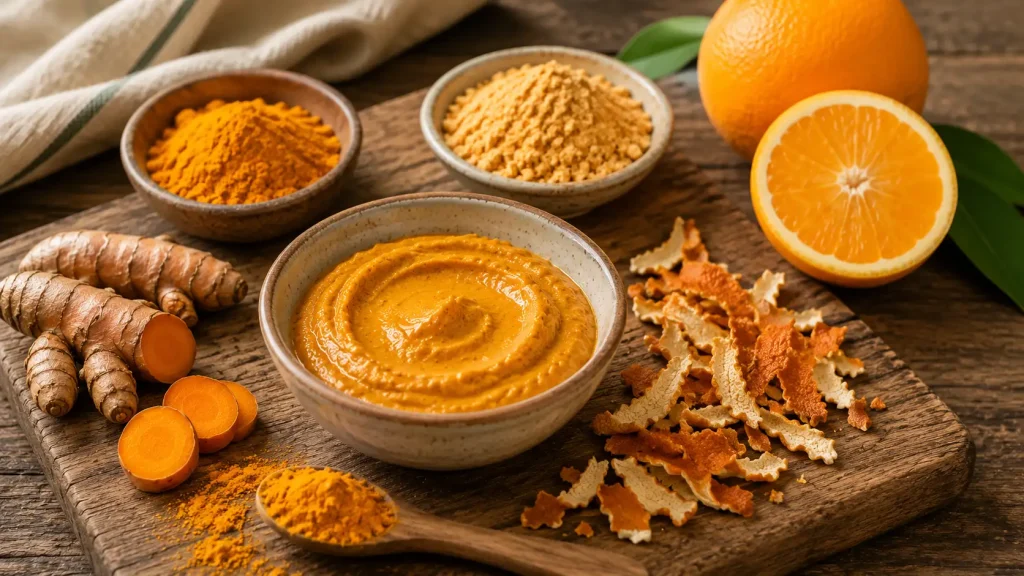
Turmeric Powder: Hatton Naturals Turmeric Powder is organically sourced and finely ground. Look for bright, vivid yellow color as a sign of quality. Pale or beige turmeric may have been sitting on the shelf too long or may be adulterated.
Orange Peel Powder: Hatton Naturals Orange Peel Powder is made from dried organic orange rinds. It has a pleasant citrus aroma and a fine texture that blends easily into pastes and masks.
Neem Leaf Powder: Hatton Naturals Neem Leaf Powder adds a clarifying, oil-controlling dimension to the mask, making it especially useful for combination or oily skin types.
Manjistha Powder: Hatton Naturals Manjistha Powder is traditionally used to address hyperpigmentation and post-blemish marks. Adding it to the base recipe amplifies the skin-tone-evening effect.
Liquid bases: Raw honey, plain yogurt, aloe vera gel, and rose water are all appropriate bases depending on your skin type and preferences.
Recipe 1: Classic Turmeric Orange Peel Mask
This is the foundational recipe and the best starting point for first-time users.
Ingredients:
- One teaspoon turmeric powder
- One teaspoon orange peel powder
- One tablespoon raw honey
- One to two teaspoons rose water
Instructions:
- Combine turmeric and orange peel powders in a small bowl. Stir to mix evenly.
- Add the honey and stir until incorporated.
- Add rose water gradually until you reach a smooth, spreadable consistency.
- Apply to a clean, dry face using clean fingertips or a silicone brush. Avoid the eye area.
- Leave on for 15 minutes.
- Rinse thoroughly with lukewarm water. Follow with a light moisturizer.
This mask is suitable for normal to dry skin and can be used one to two times per week.
Recipe 2: Turmeric Orange Peel and Neem Mask for Oily Skin
Adding neem to the base recipe creates a version better suited to oily, combination, or blemish-prone skin. Neem is traditionally used for its clarifying properties and pairs naturally with the brightening duo of turmeric and orange peel.
Ingredients:
- One teaspoon turmeric powder
- One teaspoon orange peel powder
- Half teaspoon neem leaf powder
- Two teaspoons plain yogurt (or rose water for a vegan option)
Instructions:
- Mix all three powders together in a bowl until evenly combined.
- Add yogurt or rose water and stir until smooth.
- Apply to cleansed skin, avoiding the eye area.
- Leave on for 15 minutes. You may notice a mild tingling sensation from the citrus and neem, which is generally expected.
- Rinse with cool or lukewarm water and follow with a non-comedogenic moisturizer.
Use this version once or twice a week. If you are new to neem, start with a quarter teaspoon and increase gradually.
Recipe 3: Full Brightening Blend with Manjistha
This is the most comprehensive version of the turmeric orange peel mask, incorporating all four botanicals for a mask that addresses dullness, uneven tone, and oiliness simultaneously.
Ingredients:
- One teaspoon turmeric powder
- One teaspoon orange peel powder
- One teaspoon manjistha powder
- Half teaspoon neem leaf powder
- One tablespoon honey
- One to two teaspoons aloe vera gel
Instructions:
- Combine all dry ingredients and stir well to ensure an even distribution of powders.
- Add honey and aloe vera gel, mixing until you have a smooth, uniform paste.
- Apply an even layer to cleansed skin. The mask will have a deep reddish-gold hue from the manjistha and turmeric.
- Leave on for 15 to 20 minutes.
- Rinse thoroughly with lukewarm water, massaging gently in circular motions as you rinse.
- Follow with your usual serum or moisturizer.
This recipe is best used once a week as a treatment mask.
Application Tips for Best Results
A few practical details can make a significant difference in how well your mask performs:
- Always start with a cleansed face. Applying a mask over sunscreen, makeup, or excess sebum reduces its contact with the skin.
- Apply the mask while your skin is slightly damp. This helps it adhere better and makes removal easier.
- Use a silicone mask brush for even coverage without absorbing product the way a cotton brush or your fingers might.
- Do not apply to your neck or chest for the first time without a patch test in that area, as skin sensitivity can differ by zone.
- Have an old towel nearby. Turmeric stains fabric instantly and does not wash out easily.
Managing Turmeric Staining
Turmeric staining is the most commonly reported issue with this mask. Here is what to know:
On skin, turmeric can leave a yellowish tint that fades within 30 to 60 minutes after rinsing. Using a gentle cleanser as a second rinse step speeds up removal. On very fair skin, the orange peel powder and manjistha may add additional warm or pink tones temporarily. All of this is normal and will fade.
On fabric, turmeric staining is far more persistent. Use an old towel and avoid letting the mask drip onto clothing. If turmeric does land on fabric, rinse immediately with cold water and treat with dish soap before laundering.
On grout, tiles, and countertops, turmeric will stain if left. Wipe spills immediately with a damp cloth.
Safety
Before trying any new face mask, including this turmeric orange peel mask, perform a patch test. Apply a small amount of the mixed paste to the inside of your wrist or the side of your neck and wait 24 hours. Orange peel powder is citrus-derived and may cause sensitivity in people who react to citrus. If you experience stinging, burning, significant redness, or swelling, rinse immediately and do not proceed with full-face application. Avoid applying this mask to sunburned, broken, or actively irritated skin.
This mask contains citrus, which can increase photosensitivity. Avoid sun exposure for several hours after use, or apply the mask in the evening and follow up with broad-spectrum SPF the next morning. These recipes are for external use only and are not a substitute for professional dermatological care. If you are pregnant, breastfeeding, or using prescription topical medications, consult your healthcare provider before adding new herbal preparations to your routine.
Frequently Asked Questions
How often should I use a turmeric orange peel mask?
For most skin types, one to two times per week is a reasonable starting point. If your skin is sensitive, begin with once a week and observe the response over several weeks before increasing frequency.
Will the turmeric permanently stain my skin?
No. The yellowish tint left by turmeric on skin is temporary and will fade within an hour after rinsing. Washing with a gentle cleanser accelerates removal. No permanent staining occurs.
Can I use this mask if I have sensitive skin?
Yes, with adjustments. For sensitive skin, reduce the amount of orange peel powder by half and omit neem from the recipe. Use honey and aloe vera as your liquid base, as both are soothing. Always patch test first.
What is the best time of day to use this mask?
Evening application is recommended because the citrus in orange peel powder can increase photosensitivity. Applying the mask before bed and following up with SPF in the morning is the safest approach.
Can I add essential oils to the mask?
Yes, but with care. A single drop of lavender, frankincense, or geranium essential oil can be added to the mask for fragrance and additional skin benefits. Always ensure any essential oil is diluted appropriately and skin-safe. Do not add more than one or two drops per single-use mask application.
How do I store leftover powder blends?
You can pre-mix the dry powders together and store them in an airtight glass jar in a cool, dark location for up to several months. Add the liquid base only when you are ready to use the mask, as wet preparations do not store well and can harbor bacteria.
Is this mask suitable for dark skin tones?
Yes. The brightening and tone-evening effects of turmeric, orange peel, and manjistha are traditionally used for all skin tones. The temporary staining from turmeric will still occur on darker skin, but it fades at the same rate. Many people of South Asian heritage have used these preparations for generations.
What if my mask is too thick or too runny?
If the paste is too thick, add rose water or aloe vera gel one teaspoon at a time until you reach the desired consistency. If it is too thin, add a small pinch of one of the dry powders and let the mixture rest for two minutes before reassessing.
Conclusion
Making a turmeric orange peel mask at home is one of the most rewarding and cost-effective natural beauty rituals you can adopt. With four powerful botanicals working in harmony, these recipes offer a customizable, tradition-rooted approach to achieving a more even, glowing complexion. Try the basic recipe first, then build toward the full four-herb blend as you grow comfortable with the ingredients.