
USDA Organic vs Conventional Herbs: What Buyers Need to Know
The distinction between organic and conventional herbs goes far beyond a label on the package. Understanding the USDA organic herbs difference is essential for any buyer who wants to make informed sourcing decisions, whether you are formulating consumer products, stocking a retail store, or building a wellness brand. Organic certification represents a comprehensive set of standards governing how herbs are grown, harvested, processed, and handled throughout the supply chain. Conventional herbs, by contrast, may be produced using synthetic pesticides, chemical fertilizers, and processing aids that organic regulations prohibit.
For buyers serving health-conscious consumers, the choice between organic and conventional often determines brand positioning, pricing strategy, and customer trust. This guide explores the USDA organic herbs difference in practical detail, covering what the certification actually requires, how it affects quality and safety, what documentation to look for, and how to evaluate organic products from a buyer perspective. By the end, you will have a clear framework for deciding when organic is the right choice for your business.
Botanical Profile: What Defines an Herb
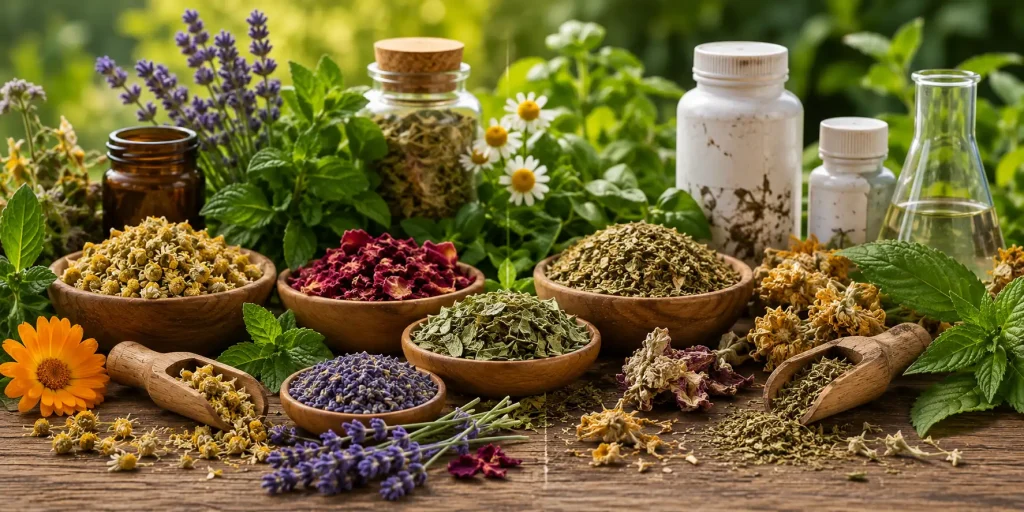
Before examining certification differences, it helps to understand what we mean by herbs in a commercial context. Botanical herbs encompass leaves, flowers, roots, seeds, bark, and berries from plants used for tea, culinary, cosmetic, and wellness applications. These include familiar products like chamomile flowers, peppermint leaves, ginger root, and lavender blossoms. Each botanical has specific growing requirements, harvest timing, and post-harvest processing methods that affect its final quality. The species does not change between organic and conventional production, but the agricultural practices surrounding that species differ significantly. An organic Calendula Flower and a conventional calendula flower are the same Calendula officinalis plant. The USDA organic herbs difference lies in what happened during cultivation and processing, not in the botanical identity itself. This distinction matters because it frames organic certification as a process standard rather than a product characteristic.
Traditional and Modern Uses of Certified Organic Herbs
Herbs have been used in traditional medicine, culinary arts, and personal care for thousands of years across every culture. Modern applications have expanded to include dietary supplements, functional beverages, aromatherapy products, natural cosmetics, and pet care formulations. The rise of organic certification has given buyers and consumers a standardized framework for verifying production quality that traditional sourcing could not provide. In the wellness industry, organic herbs are often preferred because customers associate the certification with purity and environmental responsibility.
Tea brands, in particular, have driven organic adoption because tea preparation involves steeping plant material directly in hot water, meaning any residual contaminants transfer readily to the final beverage. Organic herbs from suppliers like Hatton Naturals Bulk Organic Herbs meet the standards that modern buyers and consumers expect. Products such as Chamomile Flowers Whole, Peppermint Leaf Whole, and Tulsi Krishna carry organic certification that traces back through the entire supply chain to the farm level.
What USDA Organic Certification Actually Requires
The USDA National Organic Program establishes the federal standards for organic agricultural products in the United States. For herbs to carry the USDA organic label, they must be produced according to strict rules. Synthetic pesticides and herbicides are prohibited. Only approved natural pest management methods are allowed. Synthetic fertilizers cannot be used. Soil fertility must be maintained through crop rotation, composting, and other natural methods. Genetically modified organisms are not permitted. Irradiation for sterilization is prohibited. The land used for organic production must have been free of prohibited substances for at least three years prior to harvest.
Processing facilities must prevent commingling of organic and conventional products. Every entity in the supply chain, from the farm through processing, packing, and distribution, must be certified by a USDA-accredited certifying agent. Annual inspections verify ongoing compliance. This comprehensive, farm-to-shelf oversight is the core of the USDA organic herbs difference and what separates it from vague or unverified marketing claims.
How Organic Differs from Conventional in Practice
In conventional herb farming, growers have access to a much wider range of agricultural inputs. Synthetic pesticides control insects and fungal diseases. Chemical herbicides manage weeds. Synthetic nitrogen fertilizers boost growth rates. These inputs can increase yields and reduce labor costs, which often translates to lower wholesale prices. However, residues from these chemicals may persist on the dried plant material. Conventional herbs may also be treated with fumigants or sterilization agents during post-harvest processing, methods that organic standards prohibit. The USDA organic herbs difference becomes most apparent when you review third-party lab testing.
Pesticide residue panels on organic herbs typically show non-detectable results across a wide range of analytes. Conventional herbs may show detectable residues, sometimes within legal limits and occasionally above them. For buyers producing ingestible products like tea, tinctures, or capsules, this distinction carries significant implications for consumer safety and brand integrity. Products like Nettle Leaf Whole and Dandelion Root demonstrate the commitment to clean growing practices when sourced as certified organic.
How to Use Organic Certification in Your Business
If you decide to source organic herbs, understanding how to leverage that certification properly adds value to your brand. First, if you want to label finished products as organic, your own facility must be certified as an organic handler. This involves an application process, facility inspection, and annual renewal through a USDA-accredited certifying agent. Once certified, you can use the USDA organic seal on products that contain 95 percent or more organic ingredients by weight. Products with 70 to 95 percent organic ingredients can state “made with organic” specified ingredients but cannot display the seal. Second, maintain complete documentation linking every organic ingredient in your product to its supplier certificate and lot-specific Certificate of Analysis.
Third, train your team on organic handling procedures, including preventing commingling with conventional products, using approved cleaning agents, and maintaining audit trails. Fourth, communicate the USDA organic herbs difference to your customers through educational content on your website, packaging inserts, and social media. Consumers who understand what organic certification means are more willing to pay the premium it commands. Hatton Naturals supports buyers with documentation including COAs accessible through the COA search page.
Quality Comparison: Organic vs Conventional
A common question is whether organic herbs are inherently higher quality than conventional. The answer is nuanced. Organic certification guarantees compliance with production standards. It does not automatically guarantee superior flavor, aroma, or potency. However, organic farming practices often correlate with higher quality for several reasons. Organic farms tend to be smaller and more carefully managed. Harvest timing is often more precise because organic growers cannot rely on chemical preservation to mask the effects of poor timing. Drying and processing at organic facilities follow strict protocols that preserve volatile compounds.
Many premium herb origins, such as Egyptian chamomile and Indian tulsi, have strong organic farming traditions that produce exceptional products. That said, some conventional herbs from reputable growers can be quite good. The key difference is traceability and verification. With organic herbs like Lavender Flower Whole or Elderflowers, you have documented proof of how the product was grown and handled. With conventional herbs, you rely on supplier assurances without the same level of third-party oversight.
Pricing and Cost Considerations
Organic herbs typically cost more than their conventional equivalents. The price premium usually ranges from 15 to 50 percent depending on the specific botanical, origin, and market conditions. Several factors drive this premium. Organic farming generally yields less per acre than conventional methods. Labor costs are higher because weed and pest management require more manual intervention. Certification fees and compliance documentation add overhead. Supply chain segregation to prevent commingling adds handling costs.
For buyers, the USDA organic herbs difference in price must be weighed against the value it creates. If your target market expects organic products and will pay accordingly, the premium is an investment in brand positioning rather than a pure cost increase. Many successful brands find that the organic premium at the ingredient level is a small fraction of the final retail price, making it an efficient way to differentiate. Buying in volume through programs like the Hatton Naturals Wholesale Herbal Tea program helps offset the organic premium through better per-unit pricing.
Common Misconceptions About Organic Herbs
Several myths surround organic certification that buyers should be aware of. First, organic does not mean pesticide-free. Organic farmers can use approved natural pesticides, such as neem oil and pyrethrin. The distinction is that synthetic chemical pesticides are prohibited. Second, organic does not mean the product was grown locally. Organic herbs are sourced globally, and the USDA organic standard is recognized and enforced in countries around the world through equivalency agreements and accredited certifying agents.
Third, organic certification does not test the final product. It certifies the process. Third-party lab testing, documented through COAs, verifies the actual composition and purity of the finished product. Fourth, the claim “all natural” is not equivalent to organic. “Natural” has no regulated definition for most food and herb products. Only “USDA Organic” carries legally enforceable standards. Understanding these nuances helps buyers communicate the USDA organic herbs difference accurately to their customers without making misleading statements.
Evaluating Organic Suppliers
Not all organic suppliers are equal. When sourcing certified organic herbs, evaluate suppliers on several criteria beyond just having the certification. Verify that their organic certificate is current and issued by a USDA-accredited certifying body. Confirm that specific products on their certificate match what you intend to purchase. Review their COA documentation for thoroughness. A comprehensive COA should include identity verification, microbial testing, moisture content, heavy metals, and pesticide residue screening. Assess their quality control processes, including how they prevent cross-contamination between organic and conventional products. Evaluate their consistency by ordering samples from multiple lots over time. Consider their transparency about sourcing origins and supply chain practices. Products like Ashwagandha Root and Moringa Leaf should come with clear origin documentation and complete traceability. The best suppliers treat documentation as a service to their customers, not an inconvenience.
Safety Considerations
Whether organic or conventional, all herbs should be evaluated for safety before use in consumer products. Organic certification reduces exposure to synthetic pesticide residues but does not eliminate all potential safety concerns. Herbs can contain naturally occurring heavy metals absorbed from soil, microbial contamination from processing environments, and allergens inherent to the plant species. Buyers should always review COAs for each lot and verify that results fall within acceptable limits for the intended application. Some herbs interact with medications or are not suitable for certain populations, including children, pregnant individuals, or people with specific medical conditions. Organic status does not change these inherent botanical properties. Maintain awareness of FDA safety alerts and recalls related to botanical products. Proper storage and handling at your facility are equally important for product safety. This content is provided for educational purposes only and does not constitute professional regulatory or medical advice.
Frequently Asked Questions
What is the main USDA organic herbs difference compared to conventional?
The primary difference is that USDA organic herbs must be grown without synthetic pesticides, chemical fertilizers, or GMOs, and processed without irradiation or prohibited substances. Every step from farm to shelf is verified through third-party certification and annual inspections.
Are organic herbs safer than conventional herbs?
Organic herbs have lower risk of synthetic pesticide residues because those substances are prohibited in organic production. However, both organic and conventional herbs should be tested for contaminants including heavy metals and microbial pathogens through third-party laboratory analysis.
Do organic herbs taste better than conventional?
Taste depends on many factors including variety, growing conditions, harvest timing, and processing methods. Organic farming practices often correlate with careful cultivation that produces excellent flavor, but organic certification alone does not guarantee superior taste.
How can I verify that herbs are truly USDA organic?
Request the supplier current organic certificate issued by a USDA-accredited certifying agent. Verify the certifying agent status on the USDA organic integrity database. The certificate should list the specific products covered and include an expiration date.
Is the USDA organic herbs difference worth the higher cost?
For brands targeting health-conscious consumers, the organic premium is typically justified by higher retail pricing, stronger brand trust, and alignment with customer expectations. The ingredient cost premium is often a small percentage of the final retail price.
Can I label my product organic if I use organic ingredients?
To use the USDA organic seal, your facility must be certified as an organic handler and your product must contain 95 percent or more organic ingredients by weight. Products with 70 to 95 percent organic content can state “made with organic” specific ingredients.
What documentation should I keep for organic herbs?
Maintain supplier organic certificates, lot-specific Certificates of Analysis, transaction certificates for imported products, purchase records, and inventory logs. This documentation supports regulatory compliance and protects your business during audits.
Where can I find COAs for organic herbs from Hatton Naturals?
Hatton Naturals provides lot-specific Certificates of Analysis through their dedicated COA search page. Buyers can look up documentation for any product by lot number to verify quality specifications before or after purchase.
Conclusion
The USDA organic herbs difference represents a verified, comprehensive standard that gives buyers and consumers confidence in how their botanical ingredients were produced. Whether the organic path is right for your business depends on your market, your values, and your customers. Evaluate the full picture, including quality, documentation, cost, and brand alignment, and make the choice that serves your long-term goals best.


